Who would you like me to pray to or with?
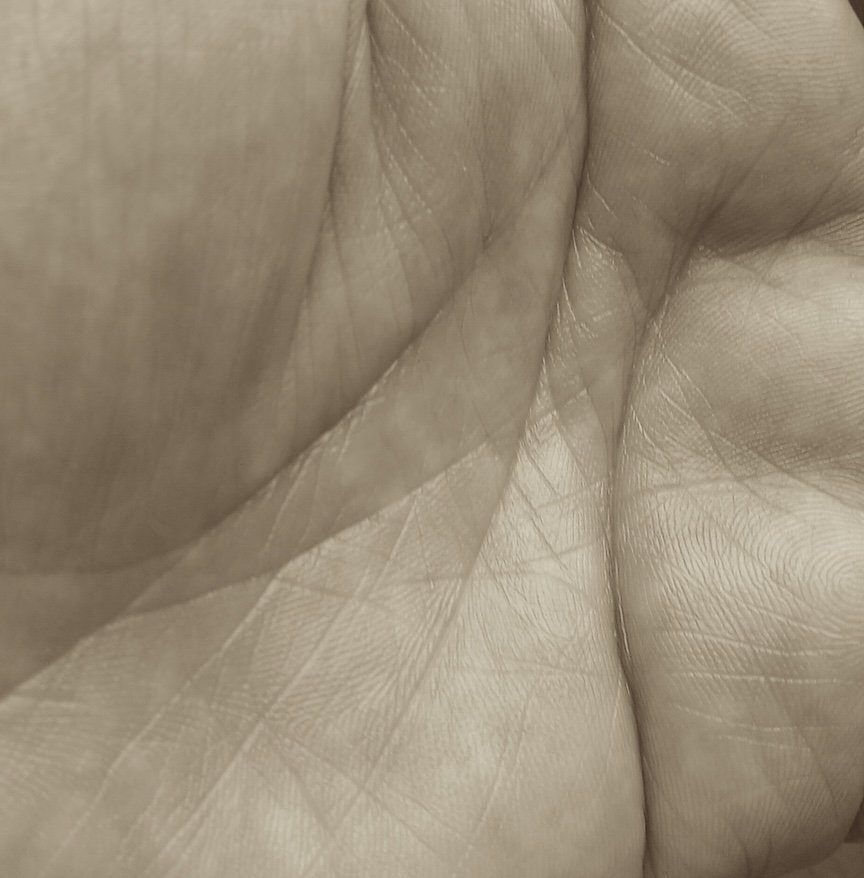
Photo: Nicolás Dumit Estévez Raful
My impulse is to title this piece The Chaplain is Present, alluding to Marina Abramović’s performance The Artist is Present, which launched at the Museum of Modern Art, MoMA, in New York City in 2010. No. I was one of those hesitant to lock eyes with a transfixed artist sitting face-to-face with one person at time. The museum lines were long and the attendees’ expectations, I guessed, matched the height of the tall ceilings. The raving comments spoke of how transcendental this experience was for those being in the presence of the art star. For me, witnessing the action from a distance afforded me the opportunity to avoid an energetic dissolution with the celebrity, while at the same time partaking vicariously of the goings on in the gallery. I was content to be part of the outer circle that surrounded this mise-en-scène. For those who like me, have grown accustomed to meandering on the margins, I was right at home in the outskirts of the energetic whirlpool on sight, hence avoiding an exchange I was suspicious to join. In this reflection I discuss performance art and the work of two icons in this field: Linda Mary Montano and Marina Abramović, to ponder on prayer as it relates to spiritual companionship.
Abramović is, I would say, the equivalent of a Picasso in the performance art scene, simply because those one least expects to know anything about this once uncanny medium have heard about one of her thrilling pieces. For example, The Lovers: The Great Wall Walk, where in 1988 Marina and her partner Ulay traversed by foot the Great Wall of China, journeying to each other from opposite directions until they would coincide and get married. It is not difficult to imagine the behind-the-scenes preparations and tweaks that an undertaking of this magnitude asked for. Why in heaven am I deploying the memory of The Artist is Present more than a decade after in a discussion on companionship from the perspective of chaplaincy and its inroads into the day-to-day? Because to me the extreme hardships that performance art tends to impose on its practitioners matches those characterizing life’s rough course. This is however one might be looking at the glass, whether half full or half empty—or the obstacles many have to ward off continuously just to keep afloat—as in an art endurance—only, that this might be a situation one has not entered voluntarily as a creative endeavor.
In Abramović’s case, MoMA acted as a temple of culture that automatically canonized a series of strange, but equally uneventful encounters officiated by a high priestess of Art. And who am I to attest to the humdrum of all of this when I was only voyeur, a fly on the white museum walls? How would all or some of this converse or not with the work I am doing within the realms of spiritual companionship, given my formal training and research as an artist and theologian and yet, my disavowal of titles and most institutions? What happens when the work to be performed by the chaplain does not rely on commandments or tenets and allows itself to get lost at the crossroads of religions and spiritualities, traversing areas of knowing and being that dissolve boundaries or that tighten upon contact? At this stage in my life, I could not be a chaplain without being a performance artist, and the other way around is also true. Marina and Linda are for this reason, the idoneous people to refer to when contemplating sawing a door into the sheetrock of expectations, through which one can crossover–matter of fact–to get to that place where one is called or must be. Abramović would show me how to do this in 2011, not at MoMA, but at Union Theological Seminary, where I was pursuing a degree in Church and Society. Marina had been invited by AA Bronson, one of the members of General Idea, the collective that during the AIDS epidemic spoke of the “gay cancer” without fear. At Union Theological Seminary, Marina was given centerstage at James Chapel to discuss performance art. Her first gesture was to call a full house to move our chairs closer and closer, so we could have an intimate conversation with her. I opened up to Abramović this time, and the sound of my chair sliding on the floor of the chapel joined that of several hundreds. Celestial trumpets the day of Armageddon. We were the called ones for an hour or so! Montano would teach me how to get to the other side using dematerialization, like in the piece that she gifted to the UN Chapel without having to ask for their consent—and where she makes astral appearances. No tools needed to pick the locks!
“Who would you like to pray to or with?” I asked one of the people who called the Care Line I volunteer for late at night when she requested a prayer. The reality is that this question was as much for the caller as it was for me. Anyhow, my practice of chaplaincy makes a straightforward narrative almost impossible, since the work I find myself doing flows through life—life itself— with its ups and downs and the valleys where I stop by to catch one breath in and one out. How would my seedling of some kind of ministry germinate organically within the realms of the creative, and inform the several encounters in this piece of writing that suggest the mixing of roles in spiritual companionship as it relates to the sacred and the arts? What happens when the walls collapse and there is no need for doors? “What is your religion?” inquires the tailor in the Caribbean who sews my vestment for a ritual at the White Cliffs of Dover with The Bee Trust Fund? I respond by commissioning two rather long separate capes, one cascading out of my right shoulder, and the other out of my left one, that those walking with me along the English Channel can shake. The 20 plus see-through pockets on the front of my vestment are meant to hold some of the pebbles in the surroundings: for grounding, to enjoy gravity, to invite play and levity, to slow down time, to bring about a silent prayer with the elements.
“Would you like me to pray for you or with you?” Is my follow up question to the being on the other side of the Care Line. No fancy garments. No rituals. I asked while sitting on my rescued office chair, with my Android resting on a school desk salvaged from a curb in the South Bronx. A brown fleece covered in golden cat hair. Long johns under faded Levi’s jeans. Worn out slippers that last year went through the harshest winter I have lived on the US East Coast. The damp cold of New Yok City making my legs and toes numb. A swift body scan before gathering the courage to summon a higher presence into our dyad. I needed to figure out how to welcome us all as equal: caller, higher power, and myself. It was close to midnight. I wrestled with a theological concept outside of my comfort zone—heaven—and in dissonance with my view on the ethical responsibility of religion and spirituality to bring about a just world instead of ultimately focusing on a cushy thereafter. The prayer I uttered is one that took the shape of active listening, hence giving volume to the story shared with me and at the core of loneliness and the urgent desire for friendships. I reminded the caller that I was here, that we were here in this liminal space that seemed to exist between talk therapy, an invocation, and enfleshed compassion. There were no chairs to push closer to one another, like in Marina’s talk and I imagined myself intercepting the gaps with silent phrases, “The chaplain is present and so is the artist in us.” Now that I think about it in retrospect—creativity—might have been the hand helping to sculpt the caller’s words—coming up my throat and out of my mouth—into a prayer. I pictured this as a Spanish falla, the monumental pieces fashioned out of papier-mâché that are eventually set on fire. No need to store any remains of our encounter, but to set them free to find the recipient at their exact cosmic address.
In 2007 I undertook a pilgrimage to Linda Mary Montano at her herstoric Art/Life Institute in Kingston, New York. This journey did not take the traditional format of traveling to deity by foot or on one’s knees. I got there by car from the Bronx and out of the Big Apple’s contours. To some in New York State, upstate does not officially start until one is at least four hours away from the city, proving how subjective geography like boundaries and roles can be. I arrived at the Institute to find one of the living saints of performance art dressed in different tints of orange. The atmosphere was serene, with the place acting as an archive for a significant history of performance art in the United States. I met Linda through an email exchange in 2006, when I was at Yaddo, an artist residency in Saratoga Springs, New York, where I was organizing materials for an artist book on For Art’s Sake, a series of pilgrimages that I undertook to seven museums in the New York City metropolitan area and vicinity, including Jersey City in New Jersey.
Montano being a key figure whose work centers on art and religion, a former Maryknoll sister, and a real Catholic artist—as she describes herself—I had to meet this one in a millennium creative. Ever since, we remained close friends and have collaborated in several performances and writings. I attribute to Montano so much of my formation as a performance artist and my confidence in continuing to explore religion and spirituality within the arts in ways that were not welcome a decade ago. This is, before healing and rituals became trendy and hence validated by museums and galleries’ gatekeepers. At the institute, Montano and I spoke of future collaborations, looked at photographs of her performances with Annie Sprinkle, and Tehching Hseih, among others.
Following a pause during our visit, I found Linda and myself in the middle of a prayer initiated by her, and serving as an agreement between the two of us. This was an oral document stating how we would go about co-creating, and that spoke to treating each other with respect, kindness, and being truthful to the process of making art in everyday life. Montano is known around the world for her artistic incursions into the day-to-day, for example Dad Art, in which she took care of her elder father as he was facing illness and death. I thought then: what if instead of written contracts and legal documents, such as wills and durable power of attorney, people were to compose these as prayers? What would be the amount of trust that this would take when I could not pull a document of this importance out of a drawer to protect myself? How would lawyers respond if they found themselves in the role of spiritual companions? How would chaplains respond at having to redact such narratives in-situ among two parties who might be at odds or defending their personal interests? How would agreements look and what would be their effect on many of us if they were honored as spiritual covenants? My time with Linda at the Art / Life Institute provided me with an unplanned lesson in honesty, friendship, collaboration and the boundaries that I would proceed to test through decades when it came to performance art, art in everyday life and religion and spirituality. Linda and I have continued to talk as prayer over the phone, anticipating my involvement with the Care Line, where anyone can call about almost anything and prayer can take the most unexpected detour.
I opened my cell phone mic to a familiar voice. The person calling wished for silence. What would otherwise be a conversation that used words consisted of communicating mainly through sounds that emerged on both sides: inhalations and exhalations, gulps, and the reverberation produced by my fridge. The acoustic ecology around the caller was imperceptible, and yet the energy arising from his body became almost visible to me. “How can we be during this moment together?” I said, piercing the cool dark space that we appeared to be co-creating; a cave in which to introspect. She, the caller, was fine with what it was, the way it was, and as we were at this encounter. I sensed a hybrid melding of prayer and meditation of a non-theistic nature. This was a valuable exercise on how sacredness without God might looked like. I focused quietly on attuning our breathing, sometimes retreating to my own to find reassurance in reclaiming my individual self. Other times, I let go to dissolve with the person I was accompanying. With no deity to reach out to on sight, I was pushed to face the moment both as divine and eternal, knowing as well that this transpersonal exchange was limited to a mere 20 minutes. The pings from other callers disturbed the calmness of the night, the darkness, the coolness, the nonverbal language that the two of us had started to develop. The good thing was that I was the only one who could hear them. As we parted, I wondered about the extent to which intimate happenstances such as ours emulated prayer in its capacity to say, without literally verbalizing it: I am not alone, you are not alone, we are not alone. This is because praying automatically implies that there is someone listening to me. Is it possible for prayer to be secular? What happens when prayer is not theistic or directed to a higher power or being, but it manifests as a non-hierarchical conversation with a partner, lover, friend? I never intended to answer any of the questions in this piece, as I would like for them to remain open (and so, I deploy no period to close this last paragraph)
A prayer with the Elements
To be potentially performed at the White Cliffs of Dover
Creative Force who has given shape to water and air, fire and earth
To you I call upon today as I seek to be one with you through movement
You, who with no rush sculpt from modest pebbles to massive canyons
From giant waves to friendly brooks
Let me hear your voice through the winds that carve this landscape and seascape
Who chises skin to have this tell stories of journeys long lived along the tumultuous roads take
Creative force, I come to you with respect
A humble effort to honor you in all of your manifestations
The meek flower with one day to show its beauty to whoever might catch a glimpse
Or to have it vanish with the sun or moon as witnesses
And that is good enough
Creative Force, make me aware of your emotional alphabet
I have seen you express anger, sadness, frustration
Your humbling storms
Your volcanic eruptions
Show me how-to-walk in trust with you
Knowing you can give or claim life in a second
Creative Force help me feel alive as I submerge myself in your depths
The mysteries of the ocean
The Sunrays above
The touch of winds
The gravity I become complicit with in my desire to enter a moment of communion with Earth
Creative Force, may this encounter with the elements at the White Cliff be infused with love
For all beings visible and invisible
Large and puny
Winged like bees
Crawling ones
Swimming ones
Slithering ones
With you I enter this prayer as comrades treading El Camino of Life and Death
And so be it
With the dew
The droughts
The dust
The silence
My thanks to Linda Mary Montano, Doctor Luke Dixon, and Marina Abramović, for helping me investigate the scope of prayer through performance art and chaplaincy.
Who Would You Like to Pray to or with? ©2026 Nicolás Dumit Estévez Raful
To return to Out There main menu, click HERE