Enacting Nuyoricanidad beyond the New York City Borderlands
A conversation Between Wanda Raimundi-Ortiz & Nicolás Dumit Estévez Raful Ovalles Morel Atrib
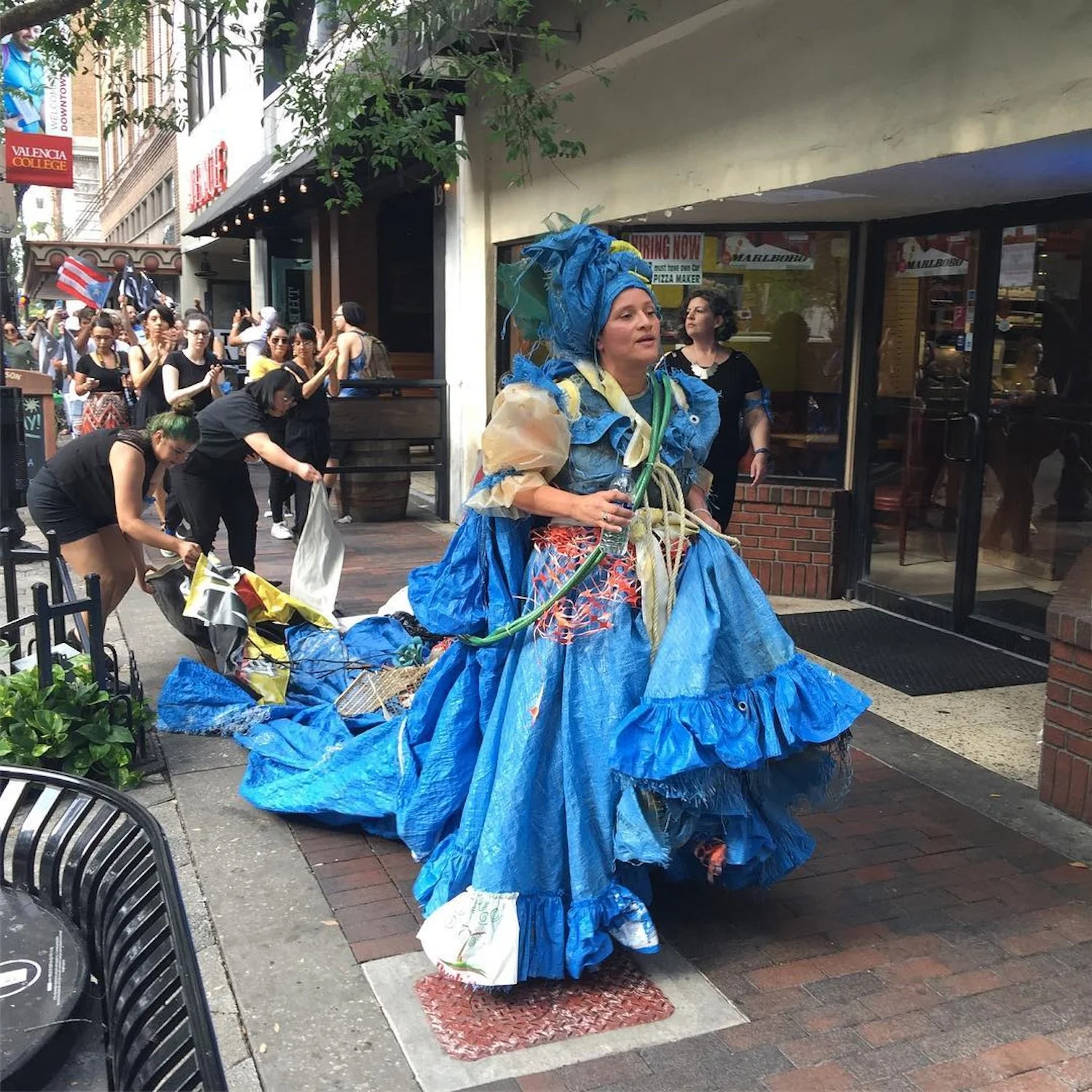
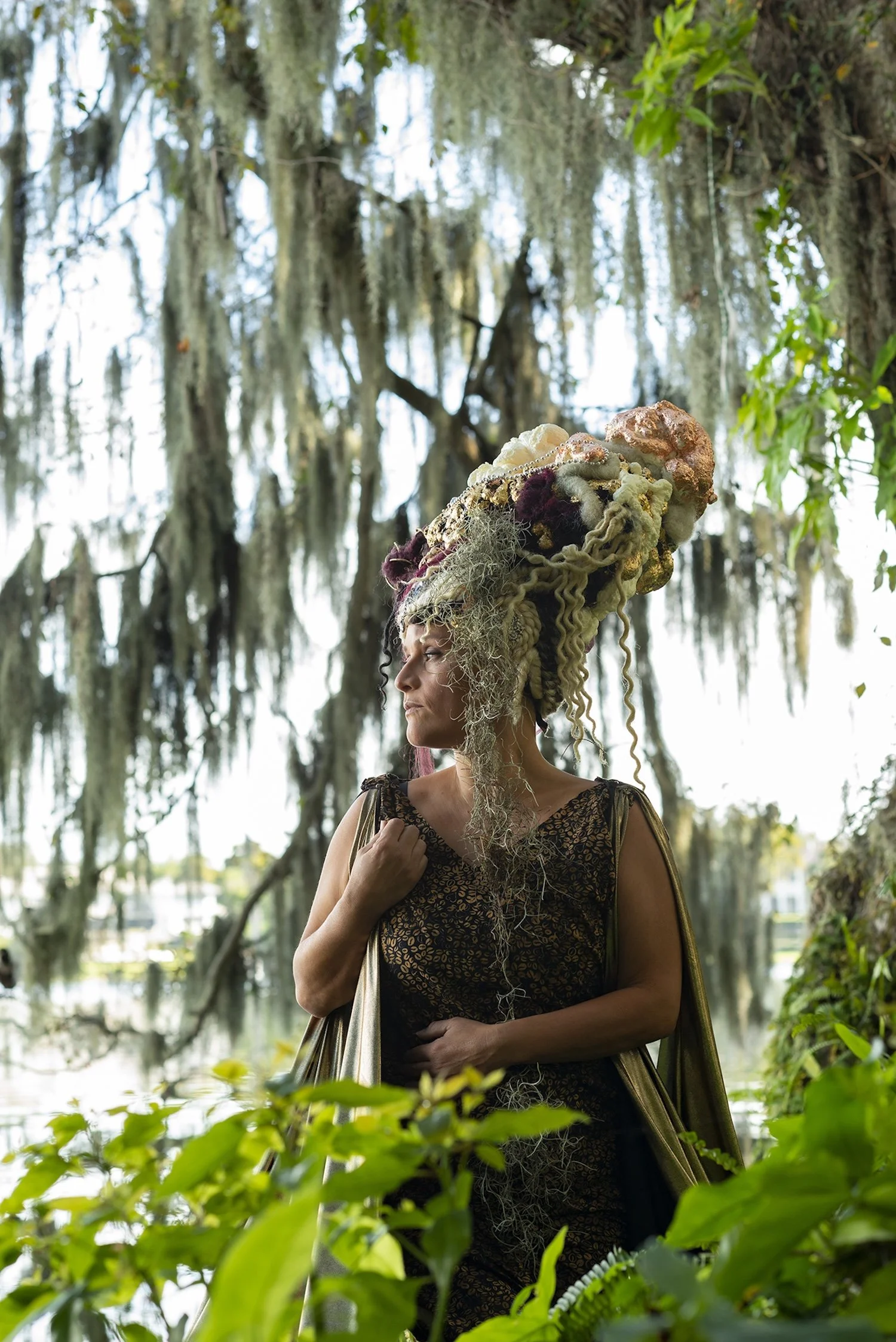
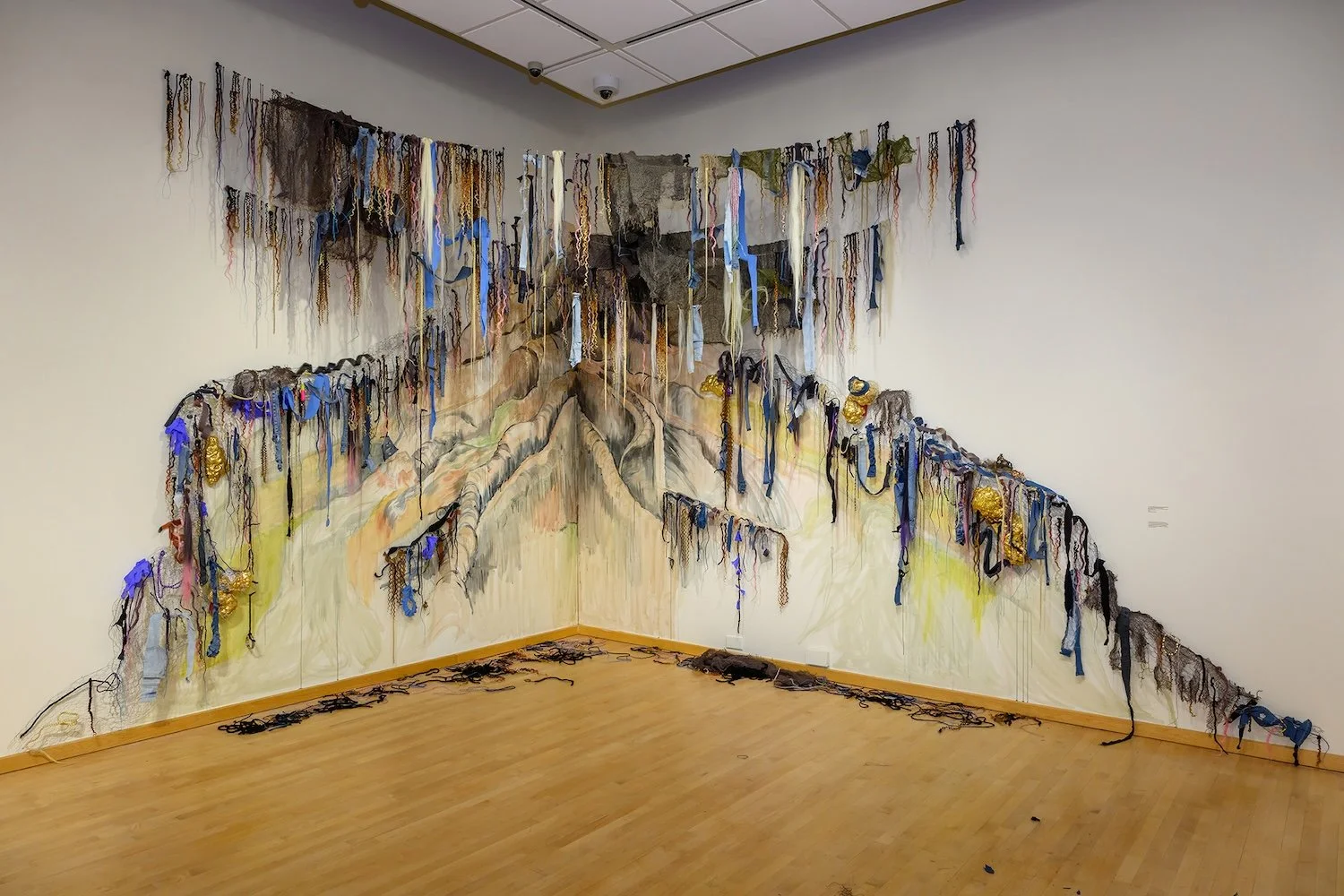
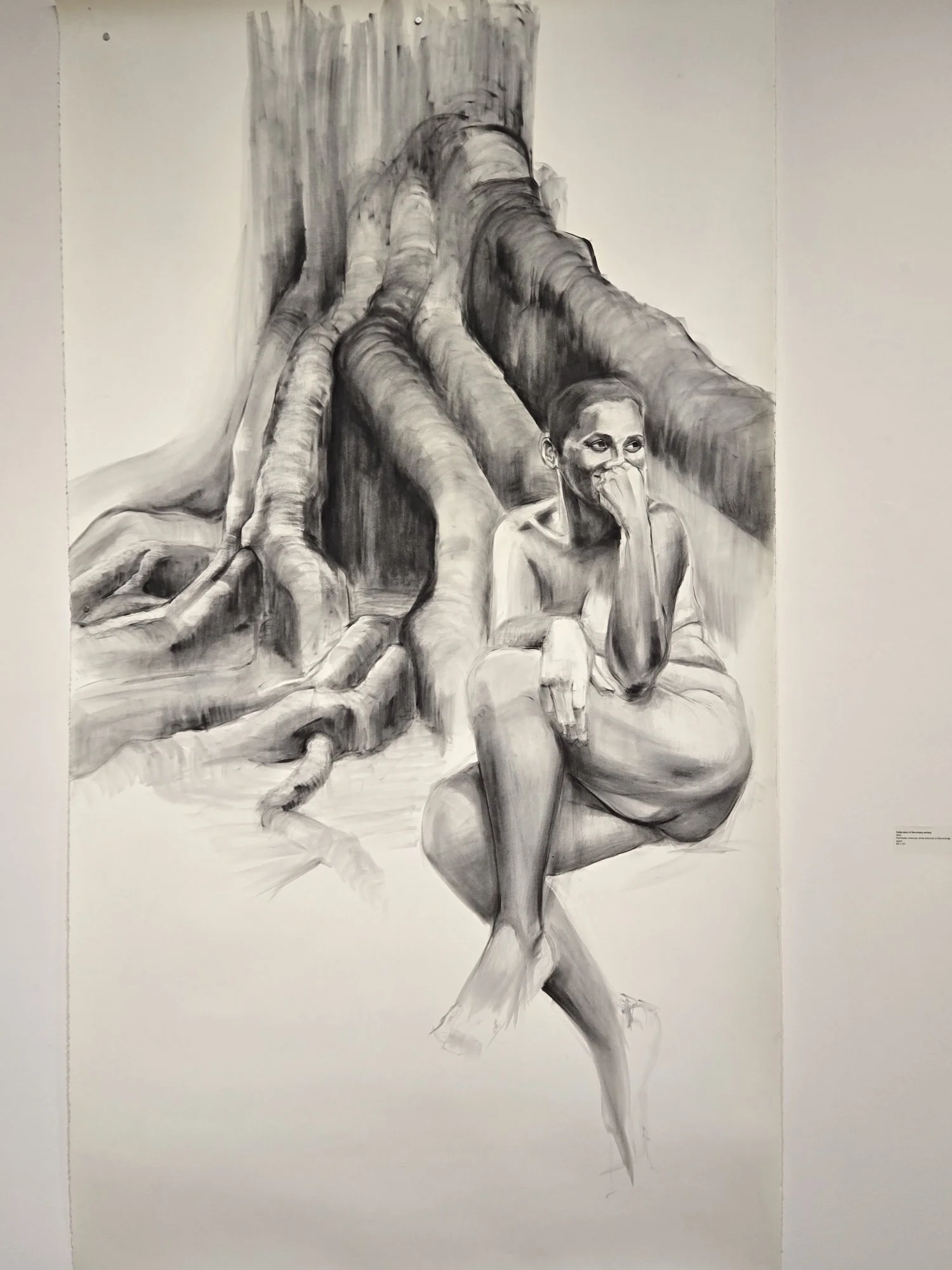
Nicolás Dumit Estévez Raful Espejo Ovalles Morel Atrib: We met in 2003 through the Bronx Council on the Arts and Edwin Ramoran at the very heart of the Bronx. What concepts were you engaged with as a Nuyorican while still living in our borough?
Wanda Raimundi-Ortiz: Yes, and what a time it was! 21 years ago, Dios Mío! At that time, I was very focused on staking a claim, working towards being seen, heard and accepted as an artist. I was focused on critiquing the art world’s bias toward Manhattan artists/galleries and ignoring the artists in the outer boroughs. I was convinced that I would make a huge noise, be seen and be invited and included. Instead, I think I turned myself into an outlaw of sorts!
NDEREOMA: I always joke with you in honest ways, as to how you must come back to the Bronx. I say this because of the gentrifying shifts that I am witnessing and how diasporic Puerto Rican families like yours have been central to what this place is so much about. How has it been for you to leave home?
WR-O: Leaving home was really difficult, but I felt it was a necessary decision. I felt, like most New Yorkers do, that I had failed, and I was throwing in the towel and admitting defeat by leaving the City. However, it was the best decision I could have made for myself.
NDEREOMA: Your work addresses issues of class that are missing in most art-related conversations in the US, and as Latin Americans, even if in diasporic forms, we know how crucial class is at the moment of understanding racism, sexism, and ageism, for example. Tell me how this comes forward in your work.
WR-O: We all reckon with the class we are born into. It informs how we even envision ourselves. I will never forget an artist I knew named Tim who, bluntly, told me that I wore my poverty like a badge of honor. That stuck out to me, because I think one survival strategy of living in the “hood” is to use the struggle as a sword and shield. This definitely shows up in the kind of anger, frustration that flowed through so much of the work I made, especially in the early days of my practice. I think I always felt like I had to prove my mettle to anyone that approached. That included curators, artists, my family, friends, classmates everyone. People like us aren’t supposed to aspire to be artists. That dream was not made for “us.” To press onward to become an artist is an audacious proposition. To pursue it is to cosign on to a life of strife.
Since my work is autobiographical, that pain, struggle and creating “in spite of” is evident across all of my work.
NDEREOMA: What about Wepa Woman, and Chuleta?
WR-O: Wepa Woman and Chuleta were the voices of the voiceless, my alter-egos, my public therapy sessions, my public battleground, my place to bleed. I let myself feel all of my rage and distress of being beyond the borders of hope and belonging. I made these drawings, huge public murals and intimate works on paper, where I let my feelings flow freely. Through these characters I gave myself permission to punch through the complexities of otherness, respectability politics, culture in-fighting among our own people, to say the things we are not supposed to say out loud in full view. These characters were my sharpened blades.
NDEREOMA: I would like to fast forward to talk about your relocation from Soundview; in the Bronx, to places like Orlando, Florida; and Fairfax, Virginia, to become a professor. What have been your experiences crossing what I call the New York City borderlands, where we Puerto Ricans and Dominicans represent a significant number of New Yorkers?
WR-O: I’ve never quite thought of it like that before, but yes we do make up a significant number of New Yorkers that defect to the rest of the Union. What I find is that our own instinct for tribalism immediately shines through, when you hear the familiar accent and try to pick out which borough/island the person hails from. Immediate familiarity ensues, as does the inherent need to recount how surviving in New York was becoming nearly impossible. The common sentiment is that of an exodus, an escape from imminent doom (at least that is the sentiment in Florida). In Fairfax, I find less New Yorkers, less Puerto Ricans, hardly any Dominicans at all. I find there to be a significant socioeconomic divide; lots of people from around the world, but not the Caribbean. It is the first time I’ve ever lived without the ability to quickly connect with folks adjacent to my Caribbean-ness and it is very destabilizing.
NDEREOMA: In 2023 I moved to Austin Texas to be a Senior Lecturer at the University of Texas at Austin. I have never been surrounded by that many Euro-Americans and felt a sense of dislocation like I have never lived before. With time, I was able to connect with the Chicanx and Latinx communities there, and with this came the realization that there are myriad ways to be Latinx in this country. What have you encountered as a Nuyorican along your travels through the East Coast and perhaps other states within the Union?
WR-O: Being Puerto Rican in NYC is very different from being Puerto Rican in the United States. I moved to Orlando in 2010 to teach at the University of Central Florida. It was clear that I was no longer in NYC. While Orlando has a huge Puerto Rican community—that is not where I ended up living. Things I took for granted, like foods of my culture, were not as easy to find in my local grocery store. I didn’t hear familiar sounds or see familiar faces. I became very aware of my otherness and felt the inherent urge to overcompensate in my presentation of self wherever I went. I performed “class” differently there. I became part of a different community through my job and salary. There were stark neighborhood/regional distinctions, and I was afforded to live in more “desirable” zip codes. I also clearly see why my presence in the classroom was so vital to students. I found myself serving a myriad of hyphenated others–Brown, multi-racial, queer/non-binary students that, I can imagine, viewed me as a person they could identify with. I can say with certainty that those students felt seen and I saw them, too. This experience has been consistent throughout my travels. Being “other” always makes you vigilant for people to hold onto. I listen for accents. I make sure to greet folks because I remember how alone it feels when you stick out in a crowd.
NDEREOMA: I have been pondering through the years as to the many meanings of flags and, in particular, the Puerto Rican one as a marker of presence. I am fu**ing here! Tell me about the Puerto Rican flag that you are displaying in front of your house in Virginia?
WR-O: As I think about this interview and this flag, as well as the one in my car and at my office door, I definitely feel the need to declare my presence. Being identified as a Puerto Rican has always been a thorny topic, since in NYC I was not easily pegged as Rican. Instead, an amalgam of many different identities, which totally tracks for NYC. Here, I feel significantly underrepresented, listening for the slightest hints of accents and immediately speaking Spanish, reaching for that connection, however slight. And, yes. My flag declares ¡I AM HERE, pa’ que lo sepas!
All images courtesy of Wanda Raimundi-Ortiz / None of these images should be used without written consent from the artist
Wanda Ortiz related links: website / Instagram / Facebook
Wanda Ortiz (B. 1973) is a nationally and internationally recognized, award winning interdisciplinary visual and performance artist. Her most recent works, Wig Variants, debuted at the A&H Museum in Maitland, Florida. Her project, Exodus|Pilgrimage debuted in 2019 at the Dr. Phillips Performing Arts Center in Orlando. In 2017 Pieta debuted at the Knowles Memorial Chapel at Rollins College and was presented as part of the Smithsonian National Portrait Gallery’s IDENTIFY: Performance as Portraiture series.
Ortiz is a 2020 Anonymous Was A Woman nominee. She was awarded a UCF 2018 Woman of Distinction Award, UCF LIFE award, 2018 Research Incentive Award; 2016 Franklin Furnace award; nominated for the 2016 United States Artist Fellowship; and named one of 2016 Woman Making History honoree by UCF’s Center for Success of Women Faculty. She was a 2016 Smithsonian National Portrait Gallery’s Outwin Boochever Portrait Competition semifinalist; top ten finalist for the statewide 2015 Orlando Museum of Art Florida Prize in Contemporary Art, FA; 2008 Rutgers University Mason Gross School of Art Ralph Bunche Fellow; AAS 1998 Fashion Institute of Technology, State University of New York; and a Skowhegan School of Painting and Sculpture alum, 2002. Selected exhibitions include Project 35: Last Call, Garage Museum, Moscow, Russia; The Florida Prize in Contemporary Art, Orlando; FL 2015, Manifesta 8, Murcia, Spain 2010; American Chambers, Gyeongnam Art Museum, Changwong City, South Korea; Performa 05 biennial, Artist Space, NY; The S Files 05; Artist in the Marketplace 25, Bronx Museum of the Arts; Mercury/Mercurio, Longwood Art Gallery @ Hostos; and The L Factor, Exit Art, New York. Collections include The Orlando Museum of Art, FL; El Museo del Barrio, NY; Jersey City Museum of Art, NJ; and private collections. Ortiz is a professor at George Mason University.