Susana González-Revilla
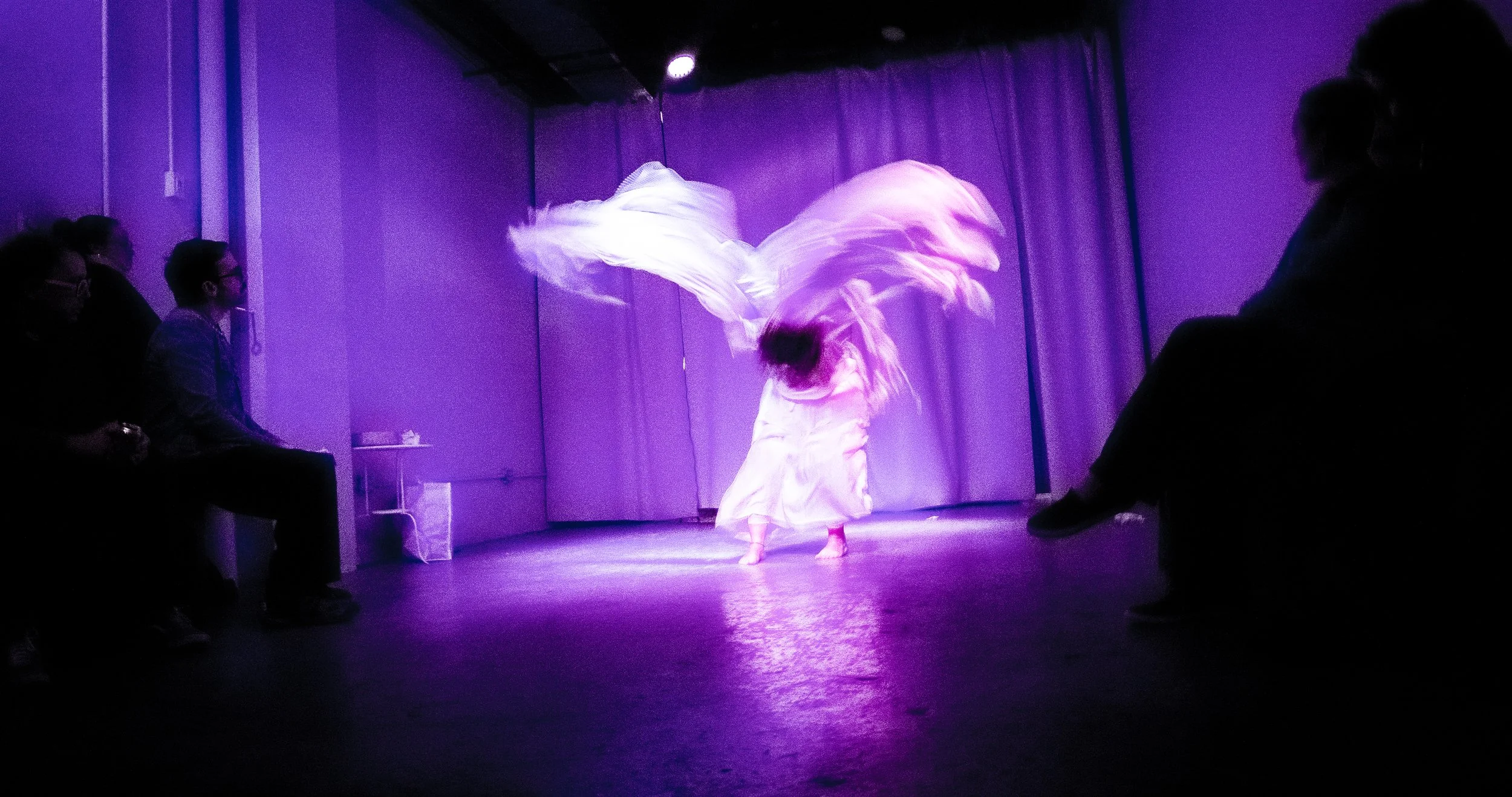
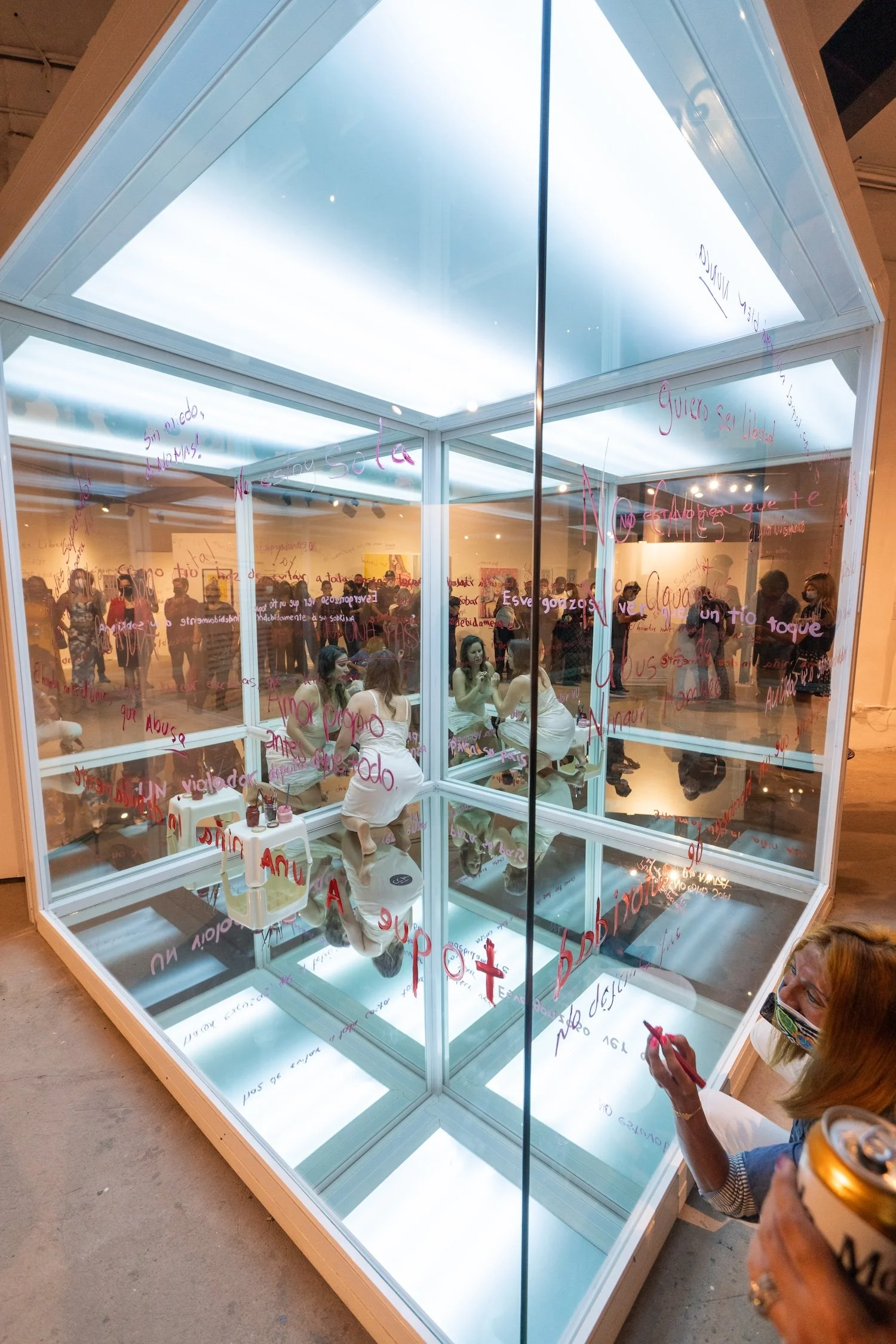

Nicolás Dumit Estévez Raful Espejo Ovalles Morel Atrib: Susana, we met through Pancho López, one of the figures of performance art and performance art curations in Mexico City. We all met for a meal in New York City and then took a walk, during which I had the opportunity to hear about not only your creative practice, but also your life story. Can you tell me about the spiritual threads that have informed what you do today in the arts?
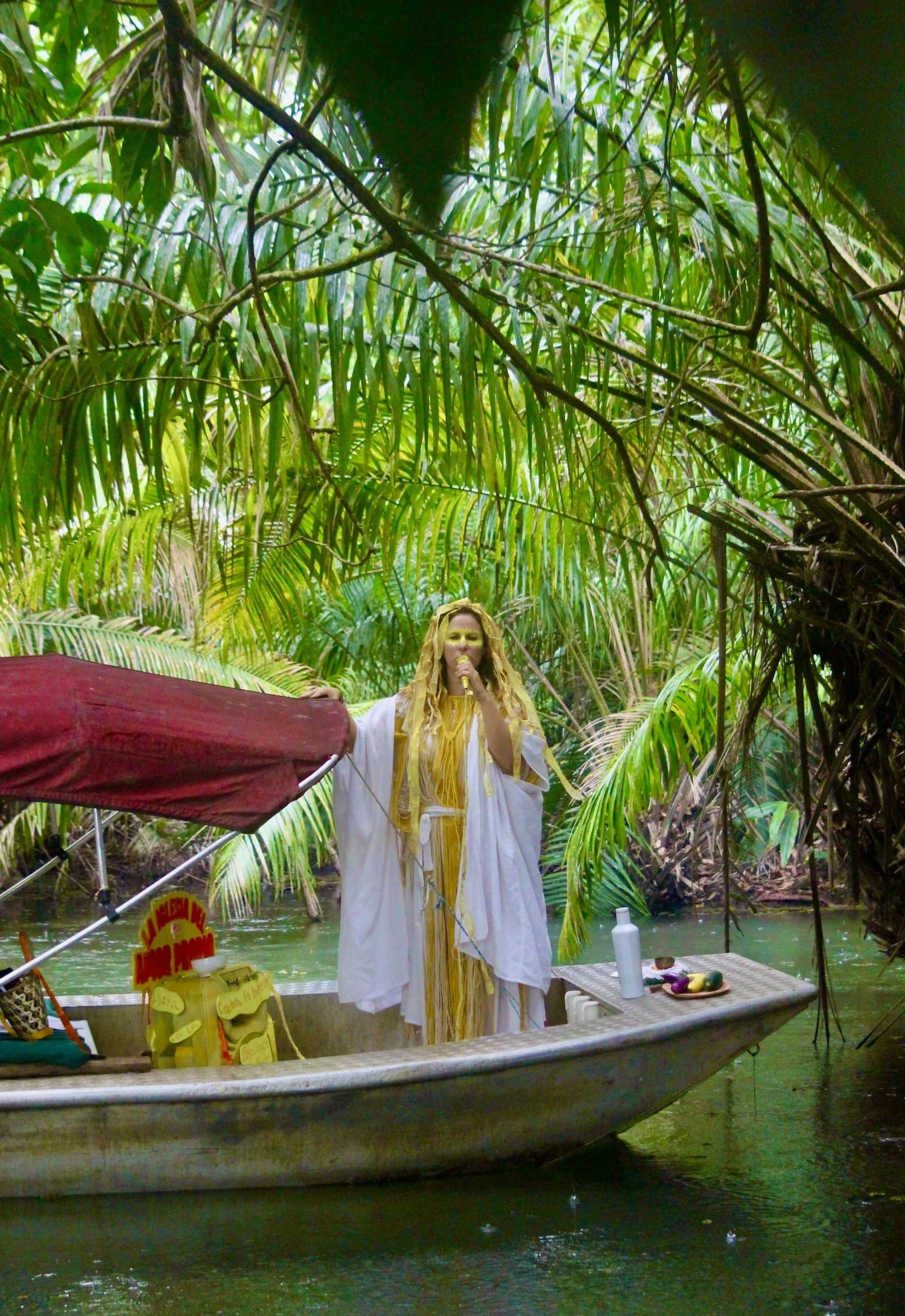
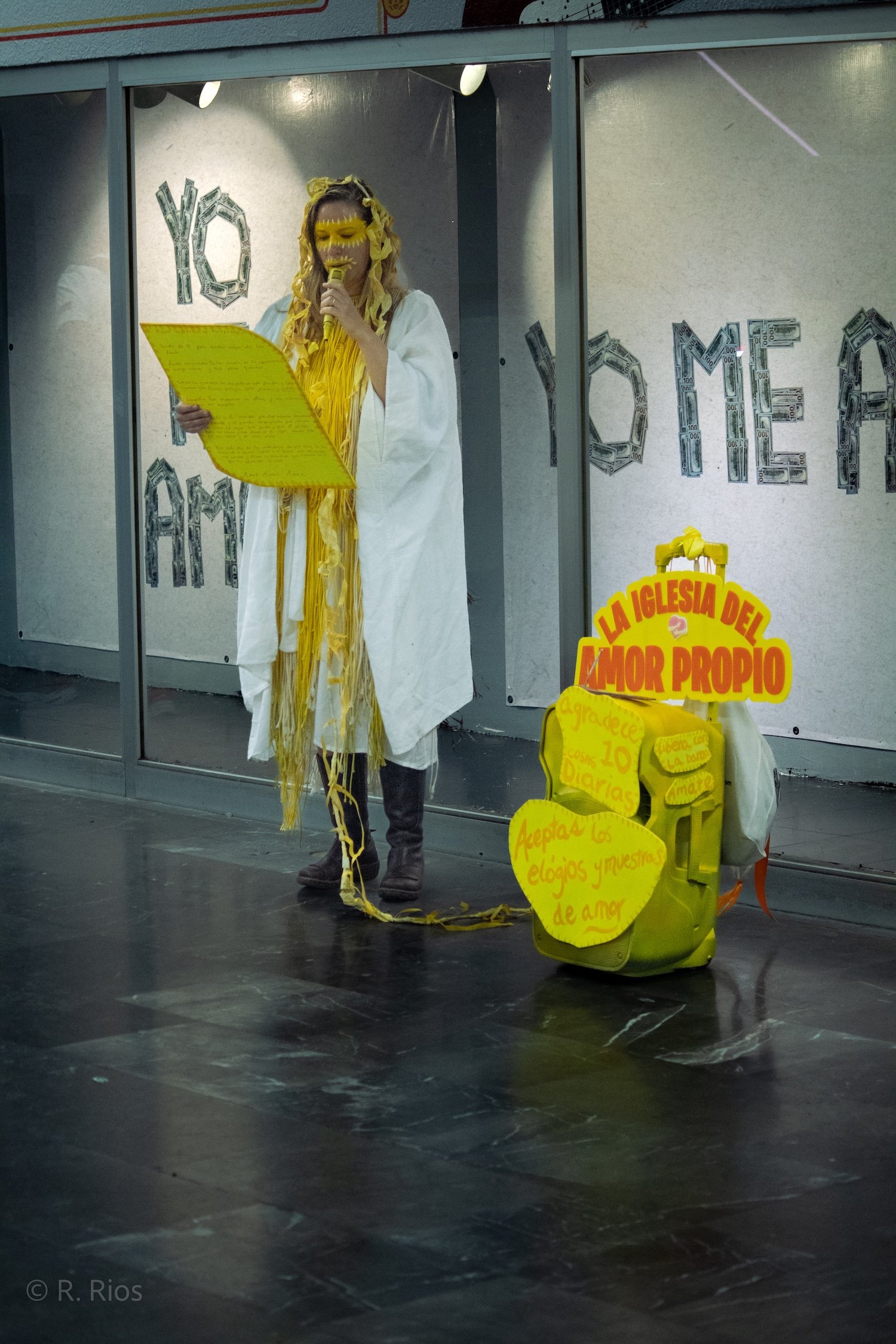
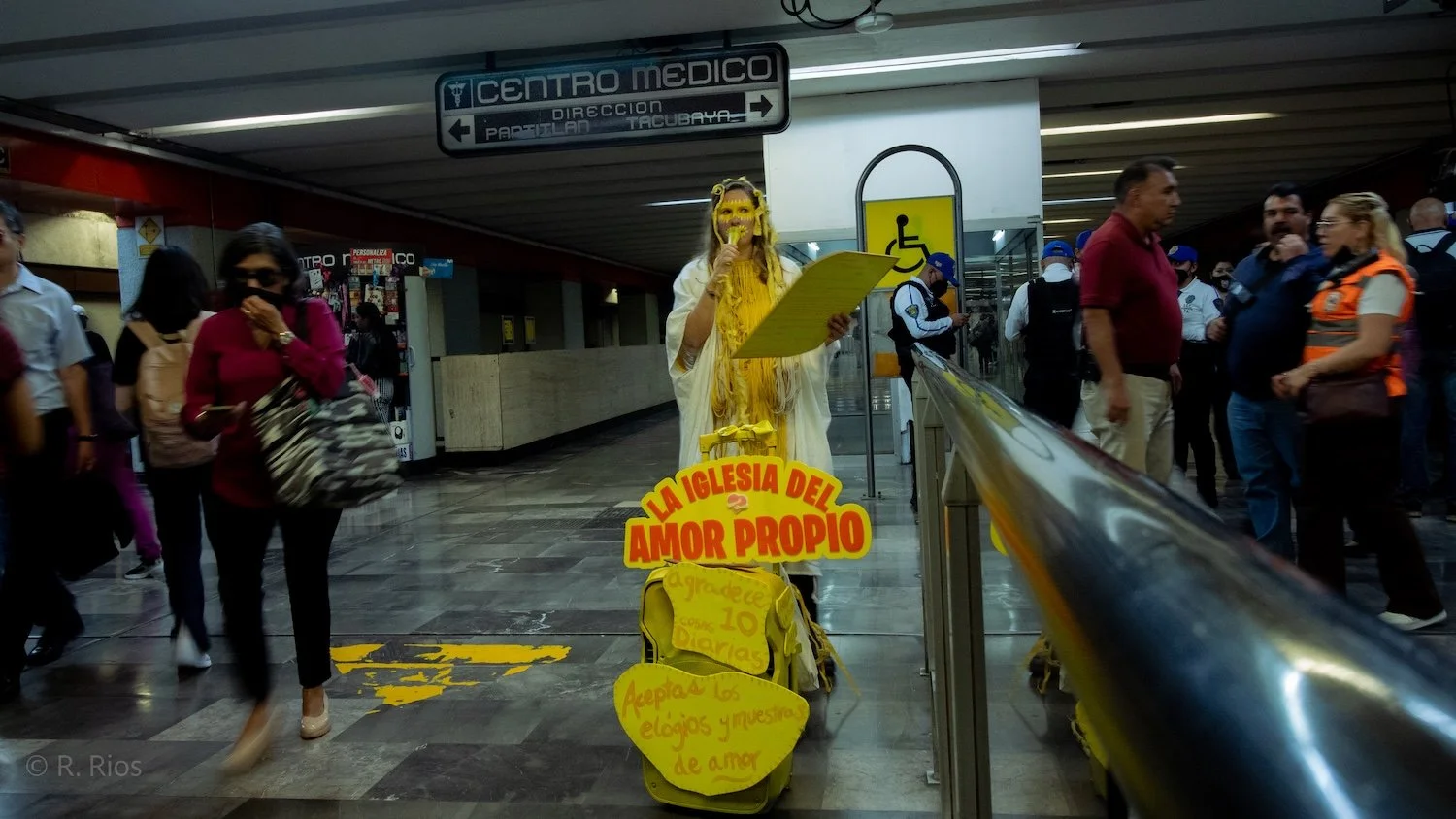
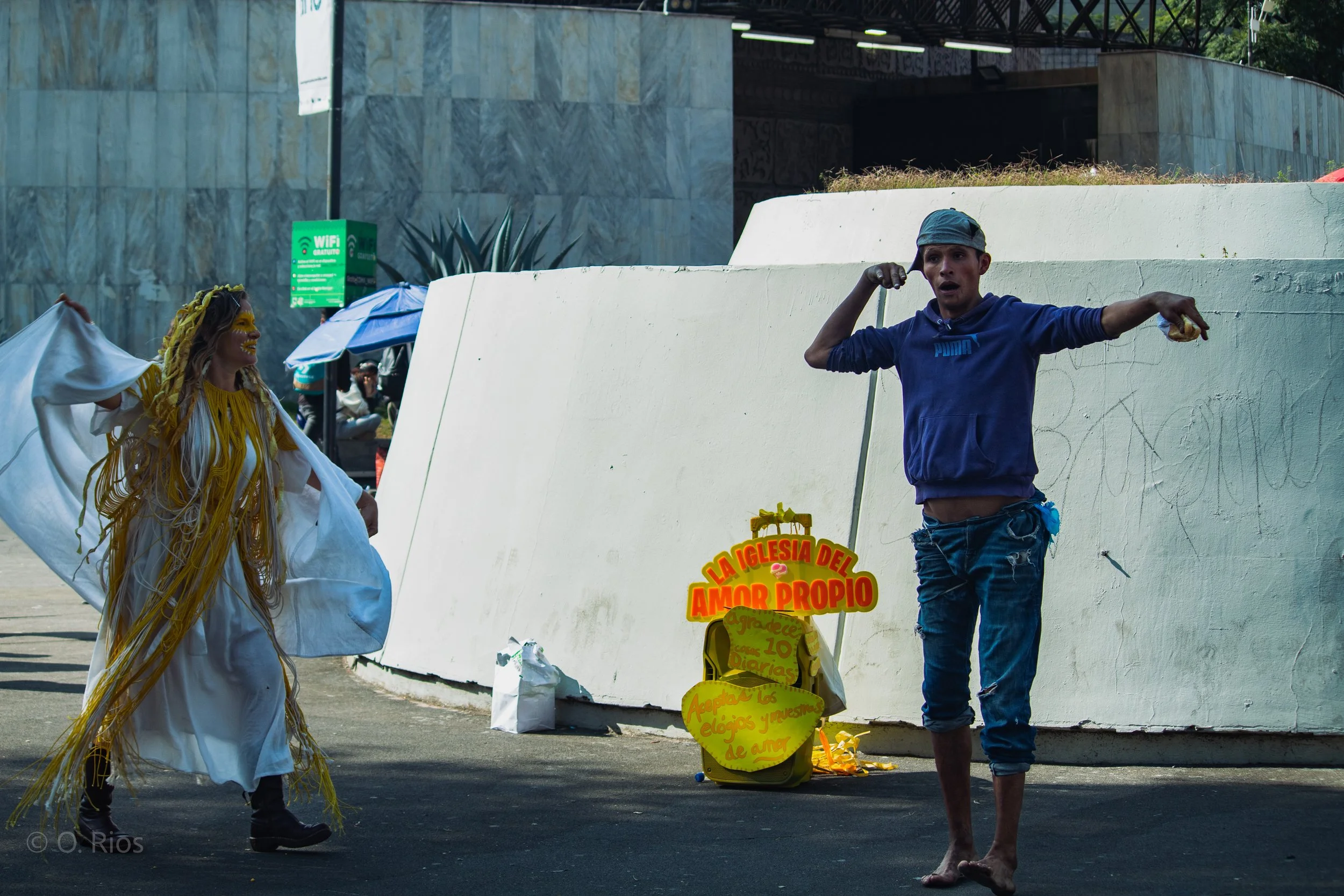
Susana Gonzalez-Revilla: Thanks for this very special publication and the opportunity to be a part of it. About the spiritual threads that tie my practice; I grew up Catholic so I did the sacraments of Baptism and First Communion from early in life. I had also performed the sacrament of Confirmation when I became of age. So, through Catholicism, I learned about ritual, worship, humility and service, witnessed devotion, and of course, spirituality. However, I’ve always been a curious child and I wasn’t satisfied with what I had been told under these dogmas, so I always kept my mind open and searched for spiritual experiences of my own. I have participated in many ceremonies of different kinds, have communed with shaman doctors and with them I walked the ancient Inca trails in the Peruvian altiplano, to the tropical Amazon forest and to the Arizonan desert. I learned from a wonderful psychiatrist, Carl Hammerschlag about the magic of clowning and mental health and using any excuse to make a connection with the other and reflect back their strengths. I Learned from people who gave me the opportunity to do so, like Patch Adams, so I learned about humanitarian clowning by doing it, and then studied with amazing clowns like Luis Regalia and Marina Barbera, so the natural step was to get the courage from my inner clown and create a character that would go to the street and—behind the guise of a church—called the church of love for the self, La Iglesia del Amor Propio, because it is actually a piece in Spanish. And recite the 17 tenets of the church, which happen to be tools to hack your brain into good self-esteem.
In 1988 my father took his own life in a tragic story of manic depression and he had brought to the world 5 girls with my mom, so I knew death first hand. I was alone in a house full of people. We all were. We were alone in a house full of people, we just were not able to connect. So, it would come naturally that I’d suffer from depression and mental illness—but that diagnosis came when I was about 17. Anyways, so when I was about 13, I first had an experience with Reiki. I did emotional psychological work as a form of support to allow myself to move through spaces in my mind that I never knew before. I was curious about it. Since then, I have taken many workshops and become part of experiences of different kinds, including a master in Reiki Usui, Access Bars, Angel Intuitive, and I have also participated in many ceremonies that include rituals of connection and experimentation with the subconscious mind and the earth mother and father sun.
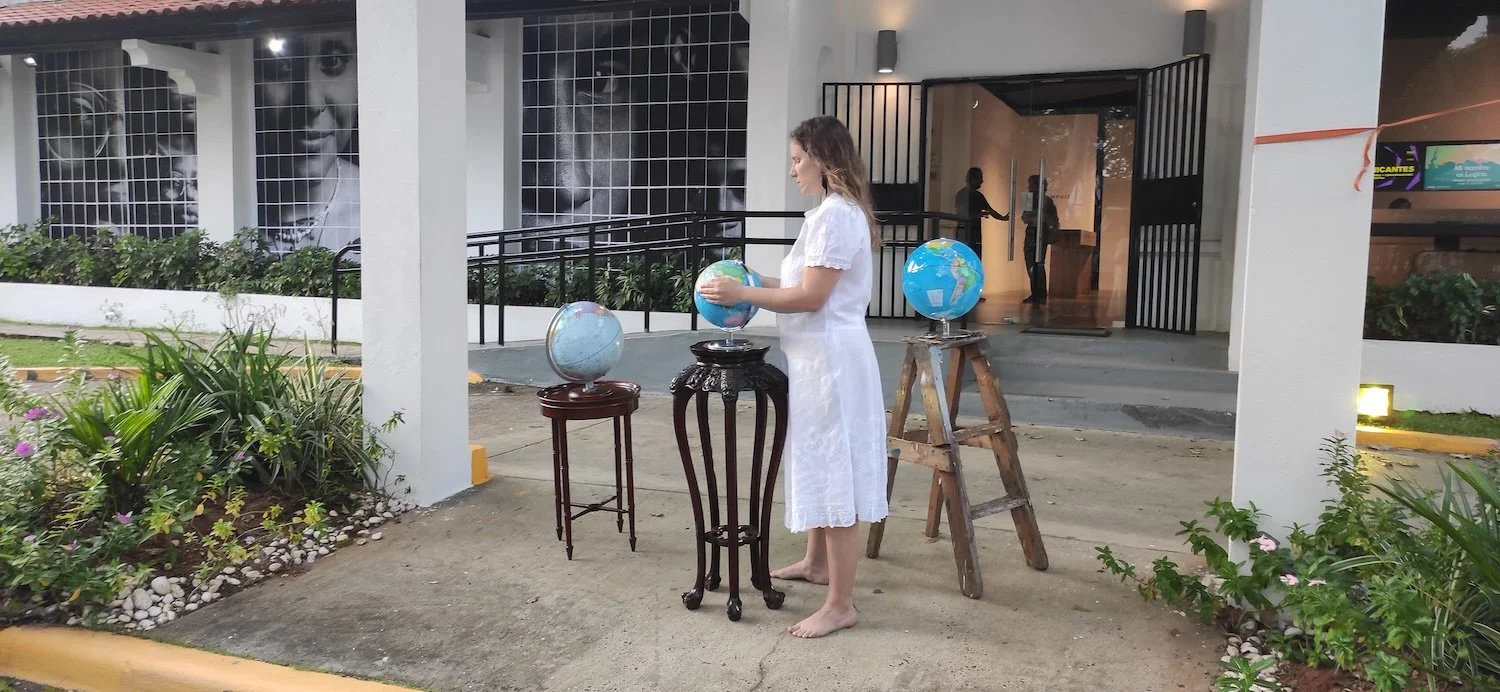
After the COVID-19 pandemic, I continuously attempted for my work to become some sort of offering on my part—as in what this body—this person—with this history and what I represent—can do with her art to give back in recognition of my privileges, and so this is when I did the 200 days and 500 nights project. For this, I gave Reiki to Earth globes in a performance that took place entirely online, via Instagram. This is when I shifted to doing pieces that are offerings, they can be physical or energetic offerings: a dance, prayer, word, a petition of forgiveness. I guess you could say that I have slowly been coming out of the “spiritual closet” with my mother. She introduced me to Reiki as well as to a variety of shamanic practices. She later turned and decided these were no longer to her interest, but she had already opened my eyes and perception to other manifestations of God or as I like to call it, the divine energy of creation. I sometimes feel she is embarrassed by my faith in nature and the shamanic drums I play, but then again, some people say I’m imagining it. Anyways, I’m trying to step away from self-doubt and recognize my role in all this.
NDEREOMA: I would like to hear more about what is at the core of your performance art. What does your search entail and where has it been taking you in regard to travels and communities?
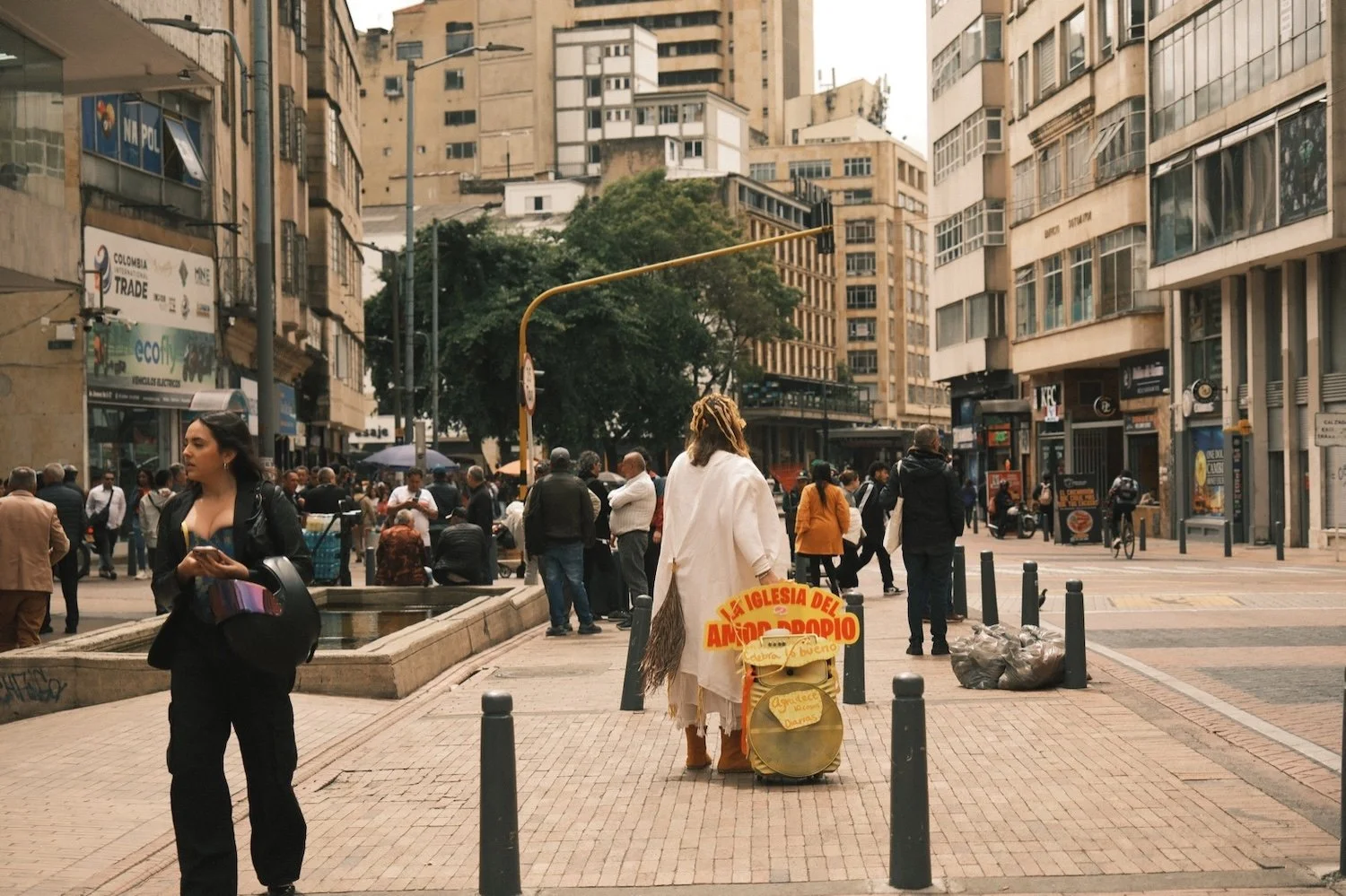
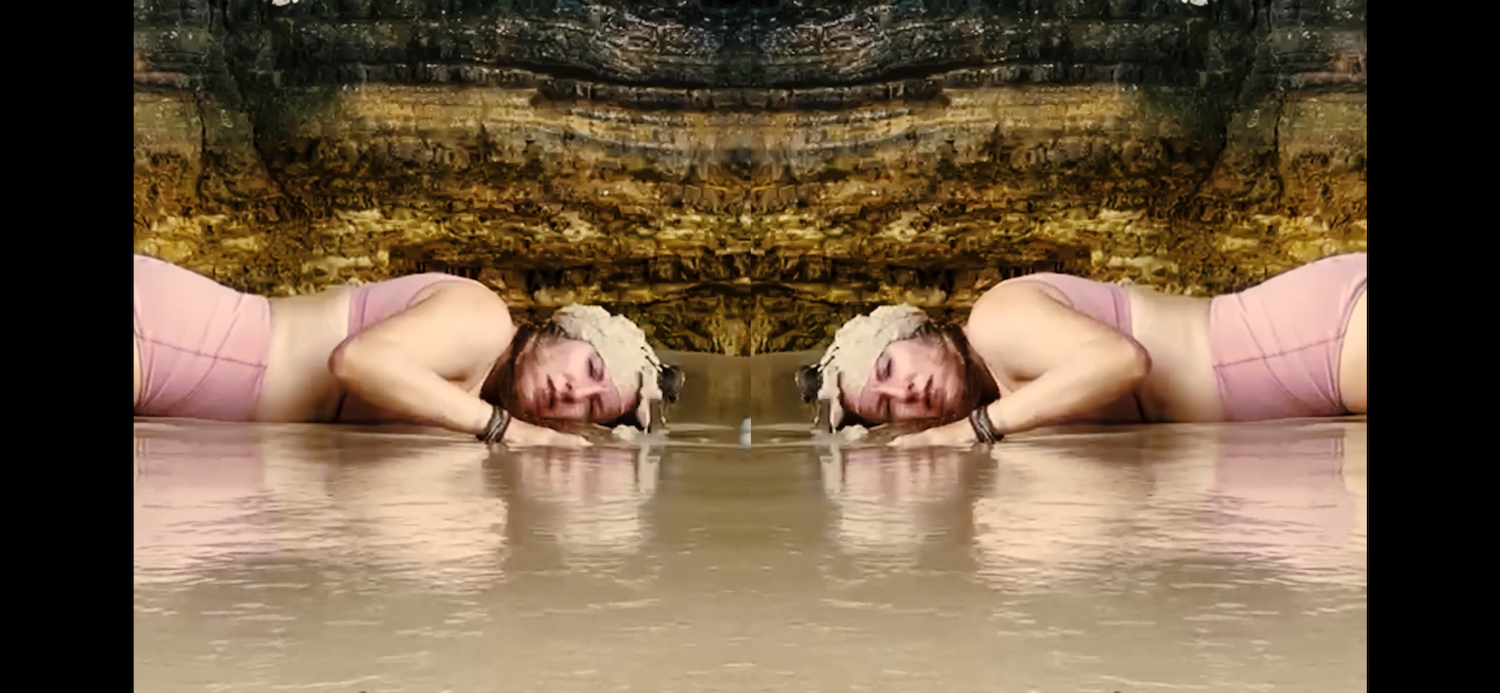
SG-R: Since my early twenties I have performed as a ‘humanitarian” clown in hospitals, prisons, orphanages, elderly homes, psychiatric wards, and with war veterans. I have done this as a healing practice. Paralleled to this is my career—my “artistic practice”—which relies on my physical presence in the same manner, but with a different purpose. After ten years of being a clown, motherhood took over my time and my work transitioned to be more representative, acknowledging the physical body I reside in; the vessel if you will. I am a Latina Vikinga from Panama, but when people see me, they see a white woman. What does my skin color represent? My eyes, my light hair— and after that, my economic status, my access to education, health and wealth. It so happened that during the pandemic I began to look inward and recognize all these moments where my body had already become my instrument. I also began observing my capabilities—the bodies I represent, and emotional shifts. I decided I needed to offer things through my pieces, things that I have had access to because of wealth. How can I share this with those that do not have access to therapy? This is how I created a performance piece that has the intention of promoting tools for care of the self, for connection with nature, for hacking one’s brain by giving thanks for 10 things every day. These are the first of the 17 tenets of the church I created. The piece consists of a person who visits nature and visits the city, and both of these actions are guided by spiritual, physical and energetic offerings. This action took place in key locations in Panama, Mexico, and most recently in Colombia. for the Bogota Biennial. This piece reaches North, Central and South America, wishing to offer tools for good mental health and connection to nature. These travels generated a performance film trilogy called La Iglesia del Amor Propio.
My performance practice started unexpectedly, as I was presenting a sculptural installation to my peers for which I was running a little late, so I was still in action putting things in place when the audience approached me and someone said, oh, this is a performance art piece. I just kept quiet and thought, if this is performance, it’s not as scary as I thought. ¡Jejé! Within a couple of years, I was part of the core team of the Gesundheit! Institute, founded by Patch Adams, who was actually nominated for a Nobel Peace Prize in 2021. We were clowns who visited prisons in the Amazon, hospitals in Guatemala, Ecuador and Costa Rica, and also homes for the elderly and an overwhelming amount of orphanages in Russia, and very marginalized communities like Belén in the Peruvian city of Iquitos. That was my base training.
When I delved into the world of the “humanitarian” clown, I was very depressed and as I went deeper and further into the practice, I felt my brain began to shift, and I started to recognize presence, BEING PRESENT. You see, when you are by the deathbed of a child who got a very rare form of a degenerative disease, you cannot be “in your head” thinking about what you are going to eat for lunch, because that would be a wild disrespect. In this practice of respect, I learned to shut off my monkey mind, and the concentration and presence began to linger more and more into my daily life. There was a moment however, when I had to make a decision about where my energy and efforts went, and so I pivoted back to my art.
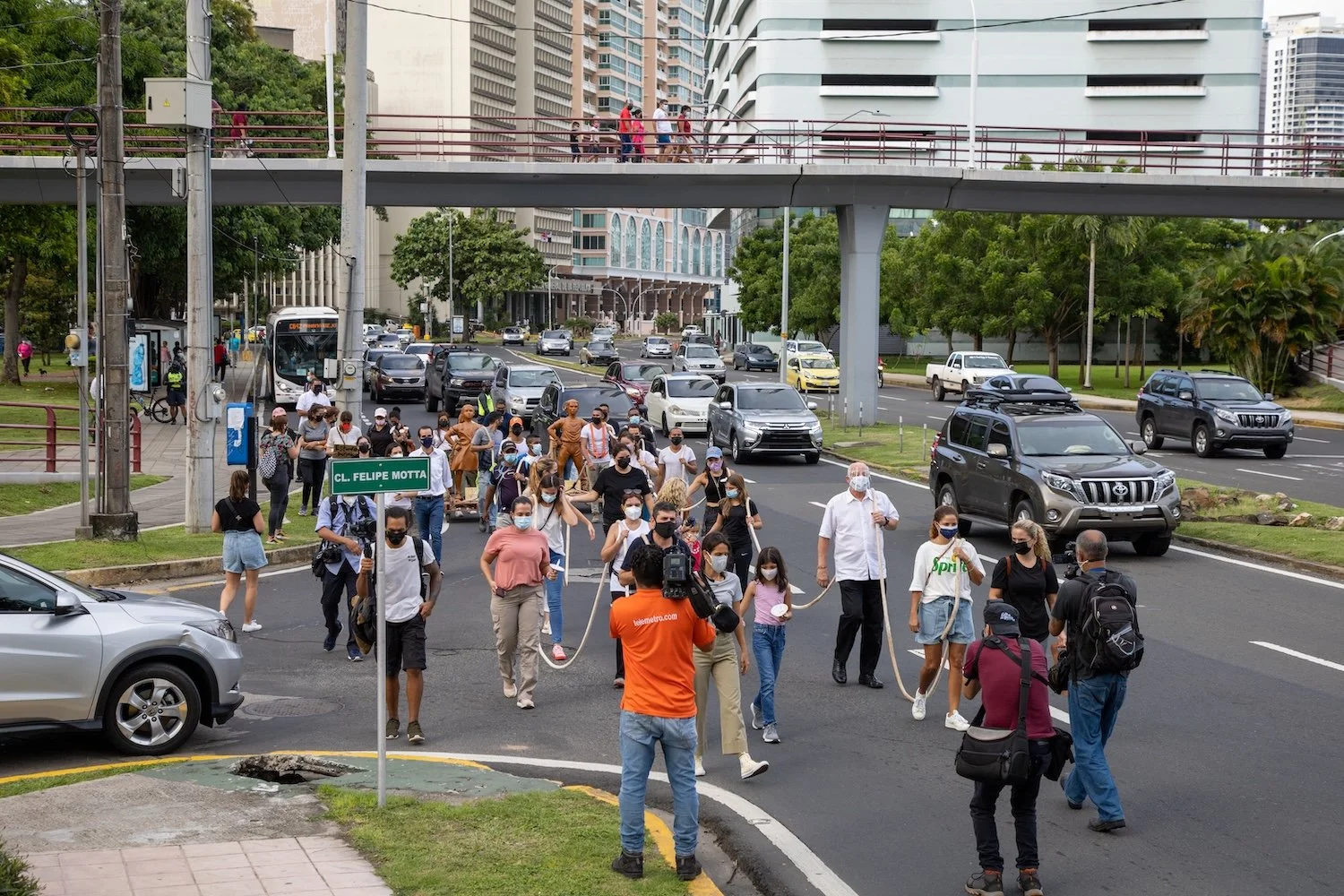
With a bag full of tricks about how to handle myself in a position of complete vulnerability and exposure, was when I mixed my activism with my art and was caught by all of the media in Panama while performing outside of the Supreme Court where I did the very simple exercise of cleaning this place—with a piece of cloth, a pump filled with water and essential oils—mainly clove—because this is a strong disinfectant. I cleaned for approximately four hours, the windows, the stairs and finally the bronze lettering that read “justice.” This was not my first public performance, but it was a pivotal moment in my career. This also made me feel vulnerable and redirect my approach to public art.
NDEREOMA: One of the indicators for me that I am still navigating a culture other than my own, as it deals with US-Anglo America, gets constantly revealed through affect and its physical manifestations. You have done work centered on hugging. I have written about my experiences hugging or trying to hug in the US and the many awkward moments I have been through with many people here not knowing how to respond to a hug! There are exceptions, of course, the USA Midwest being one of them, and a place where people tend to hug. Can you talk about your Two-Minute Hug action?
SG-R: Thanks so much for bringing this work to my attention. This is a very dear piece, and I find it particularly poignant at this moment when you mention about being outside of one’s culture, yes. I was not living at home when I created this piece. I asked my friend and colleague to help me with the sketch of a piece I was thinking about and she said yes. This was a little less than 20 years ago, in Melbourne, Australia, with Honor Eastly who collaborated with me on another piece. At first, I thought it was about queerness, and having an extended hug with someone to make people watch the hugging, and how that made them feel—to witness the physical embrace of two bodies. But now that you bring this subject to my attention, it must have been a bit of my unconscious missing this in life and wanting to have some of it. The final piece was a tiny book that documented the video of the hug, like those moving image books. I often think about remaking this action, but as you mentioned, the context is everything and now that I’m back in Panama it doesn’t feel as relevant.
NDEREOMA: I must say that I do not know much about Panama, other than in the Caribbean we tend to think of it as one of our wealthy neighbor. A considerable number of Dominicans have moved there for economic reasons. But you did a performance in which you invited people to Let’s Talk about It. What are the conversations that you had? Also, I do recall some of the complicated histories of Panama in terms of bringing in mainly black workers from nearby countries to work on the Canal and then having to wrestle with their presence, as many of them stayed.
SGR: Let’s Talk About It was a piece made in collaboration with a film director, Viviano Romero, for the commemoration of the 30 years of the invasion of the USA in Panama, “Operation Just Cause,” just cause. They were so obvious. On this performance, I sat and held space for people to watch a series of videos Viviano had collected from the internet with images documenting this pivotal moment in time. Let’s Talk About It was about wanting to listen to what people had to say after watching about our country during the invasion. Many were young adults, people who barely knew about the subject and were very upset to learn these things so late in life. Others were elders who had lived through it and recognized friends as traitors. Many had a personal experience with the event, one way or another, as we all did with Panama being such a small country. As for the relationship to the black workers who you mentioned, yes, I cannot speak for them but I do understand there was a large amount of segregation at the beginning of the settlement of the Canal Zone, but as the situation changed in the US, so it did here and many people of color held very important jobs regarding the Canal and its care, maintenance and administration. Some of these jobs have been in families for generations. But I cannot say that I am an expert on the matter, however, the “Operation Just Cause” hit places for most of the inhabitants here, and the Panamanian black community has been the population most psychologically affected by this trauma.
NDEREOMA: What are your connections to Earth and beyond nation. I am asking because of 500 Times 500 Years. In this performance you bring forward issues of belonging.
SG-R: Yes, this piece is about having a connection and a sense of belonging with the planet, with our Mother Earth. Take your shoes off and touch the grass—really feel it—try to feel each blade, each caress. What is the temperature of this? Is it dry, is it wet? How do your feet become present with the planet beneath them? I also question the nation theme because yes, nation to me is another one of the distractions created by the system to disconnect us from our essence, dividing us, trying to distract us with dogmas, definitions and screens. Here I grab the pledge of allegiance to the Panamanian flag and I turn in around into a pledge of allegiance to the land that holds us, so it is also a piece about noticing these tiny details. Words can change meanings: “Mi Tierra Panameña, Juro a Dios y a la Patria, Amarte, Respetarte y Defenderte, como Vínculo Sagrado con Nuestra Nación.” I only changed the words in italics.
NDEREOMA: You use money in many of your performances. This is such a complicated element to work with, to discuss, and to bring up in any conversation. My dear teacher Suzi Tucker talks about money as a form of exchange. What is in it for you?
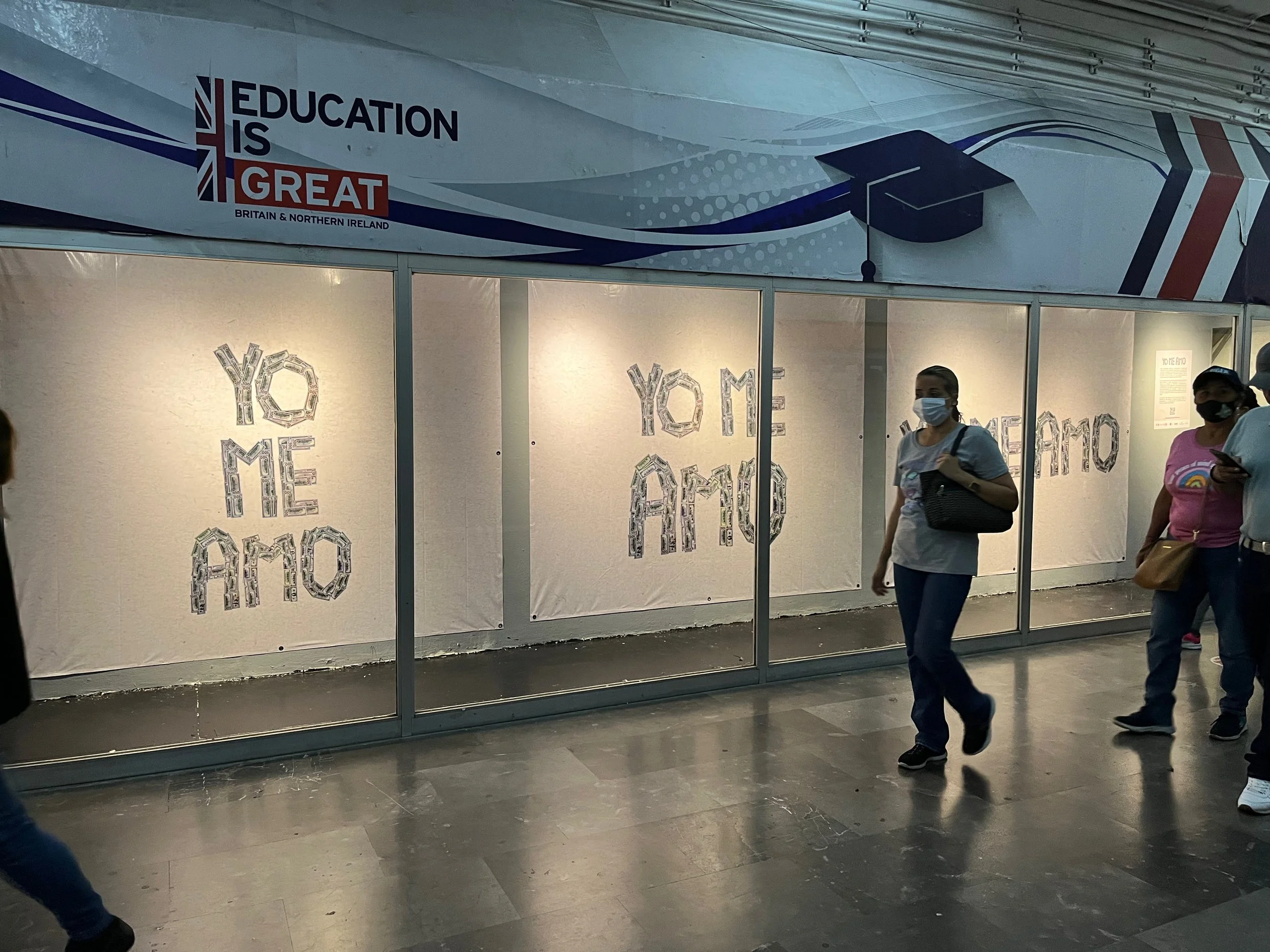
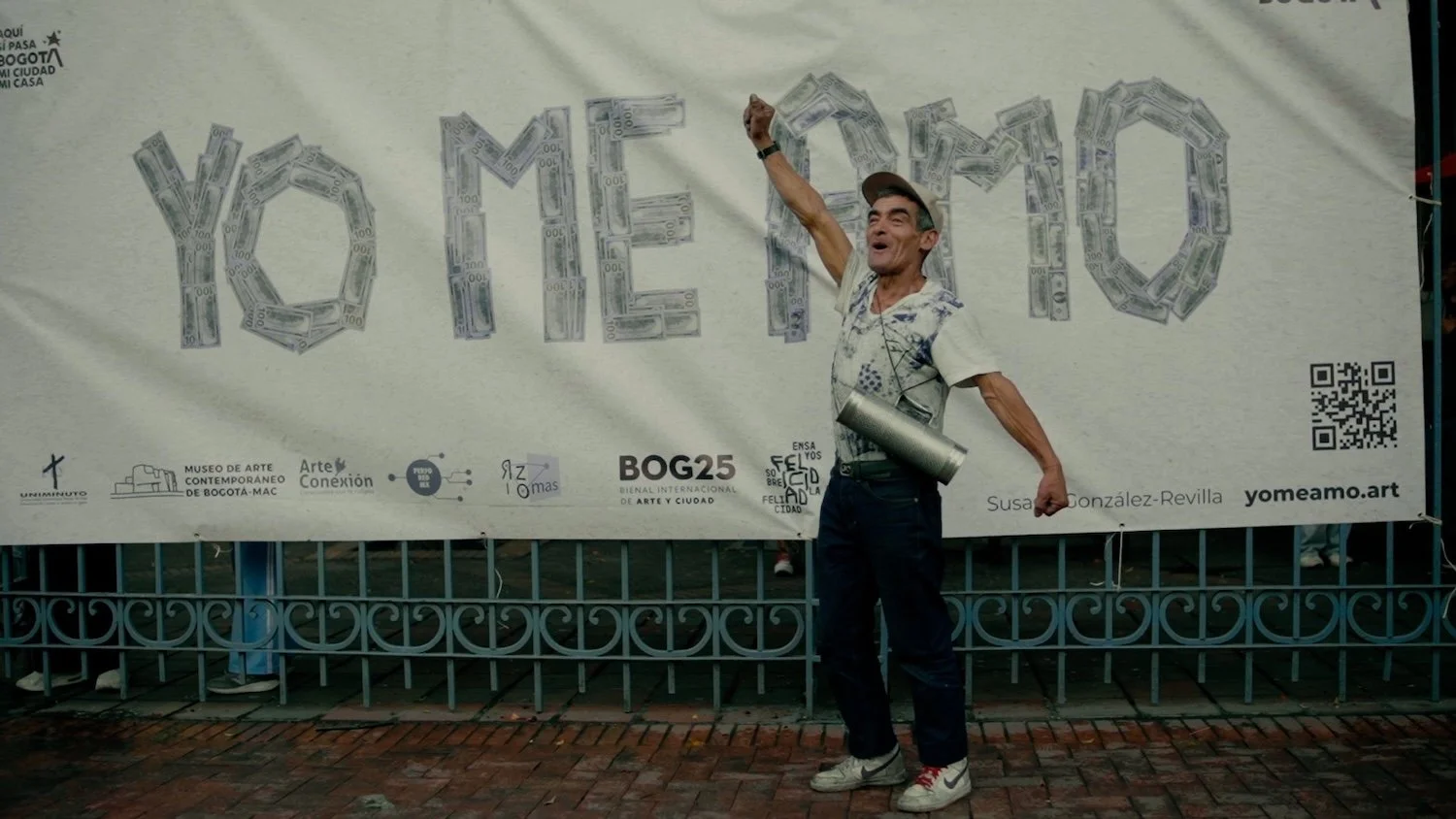
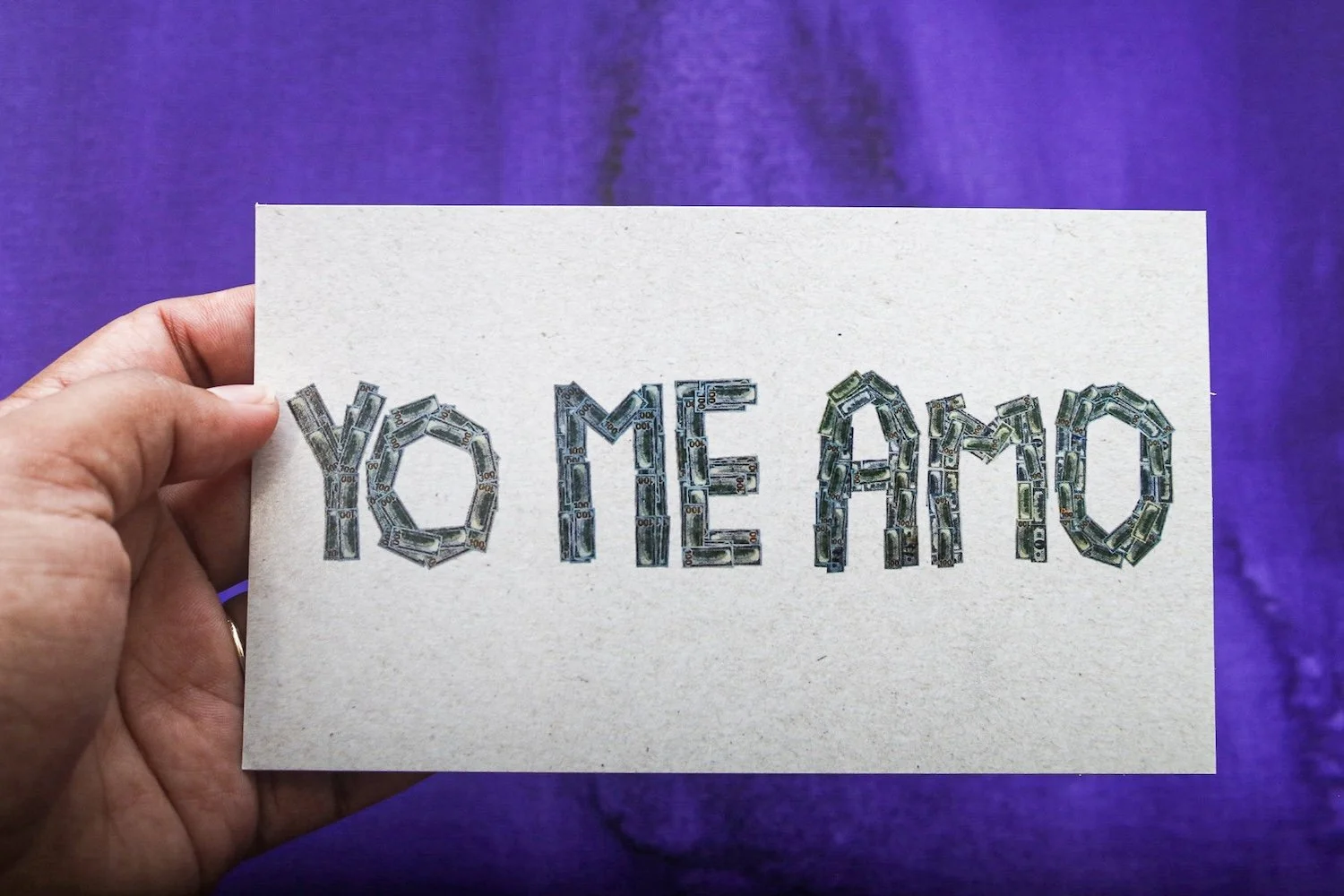
SG-R: Money IS a form of exchange. Always, no matter what angle you see it from. It is also a form of recognition, of value and of isolation. In my case, because I am a very lonely person as an artist, I have a perception of being excluded because I don’t “fit in” in most circles. For the people who have access to money I’m rejected because I’m too strange—or something, and for the “poor” artists, I couldn’t be taken seriously because I had access to a car and had grown up on the other side… or whatever. Once I hit the 40 years old mark, maturity kicked in and the rebel in me decided, well, if I had access to money, I was going to do something with it and put it to work for more than myself. This is when I decided to make a piece modeled after advertising campaigns that put ads in places where people see them every day without questioning it. There I work with the law of attraction, with the money being physically present. The bills are real, so the idea is a campaign that promotes self-love and prosperity. But yes, you are right. What is in it for me? Is to make people question everything, question the system, question its order, its time management, its priorities, because this system is clearly unsustainable, and should achieve coherence with the planet. My belief is that in order to do that, we must change radically as humans. What’s more radical than to play with the root of the capitalist economy, the physical item becomes medium, material. It stops from being a transferable object and become object that is being transformed.
NDEREOMA: We have common roots in Catholicism, and I find it fascinating how this informs the work that many of us raised within this church do as creatives. What is the Church of Self Love?
SG-R: The Church of Self Love, was a performance that embodied an entity/institution. It was created to promote mental health and connection with the source within and with the planet. It has a series of 17 tenets as its backbone, as well as a prayer that accompanies these tenets:
Agradece 10 cosas diarias. / Be grateful for ten things every day.
Protege a la madre tierra como nuestro primer y único hogar / Protect our mother earth as our first and only home
Libera intencionadamente al cuerpo con ejercicio o danza al menos una vez por semana / Practice intentional physical release dancing or any exercises you choose, once weekly
Evita el juicio hacia ti y hacia otros / Avoid judgement towards yourself and others
RESPIRA: alivia el cuerpo, alivia todo / BREATHE: alleviates the body, alleviates it all
Recibe y acepta los elogios y muestras de amor / Recieve and accept all flattery and demonstrations of love.
Celebra lo bueno / Celebrate the good things
Haz sonreír a alguien a diario (puedes ser tú misma) / Make someone smile daily, it can be yourself
Elógiate y apapáchate cuando lo mereces / Pamper and speak well of yourself when you deserve it
Hazte responsable de tus privilegios / Be responsible for your privileges
Cuida de ti para cuidar mejor de los demás / Take care of yourself so you can take better care of others
Ámate como nadie te ha amado / Love yourself like no one what’s ever loved you
Cohabita con y respeta a quienes luchan por la paz y el planeta / Cohabitate and respect those who fight to protect peace and the planet
Respeta las creencias de otres y espera respeto / Respect the believes of others, and expect respect from them
Perdónate: siempre hiciste lo mejor que podías. / Forgive yourself: you always did the best you could
Vive sabiendo que la divinidad habita en ti / Live knowing that the divine inhabits within you
Pon tus manos o pies sobre la tierra y conéctate con lo más íntimo que hay en ti / Place your hands or your feet on the earth and connect with your deepest self
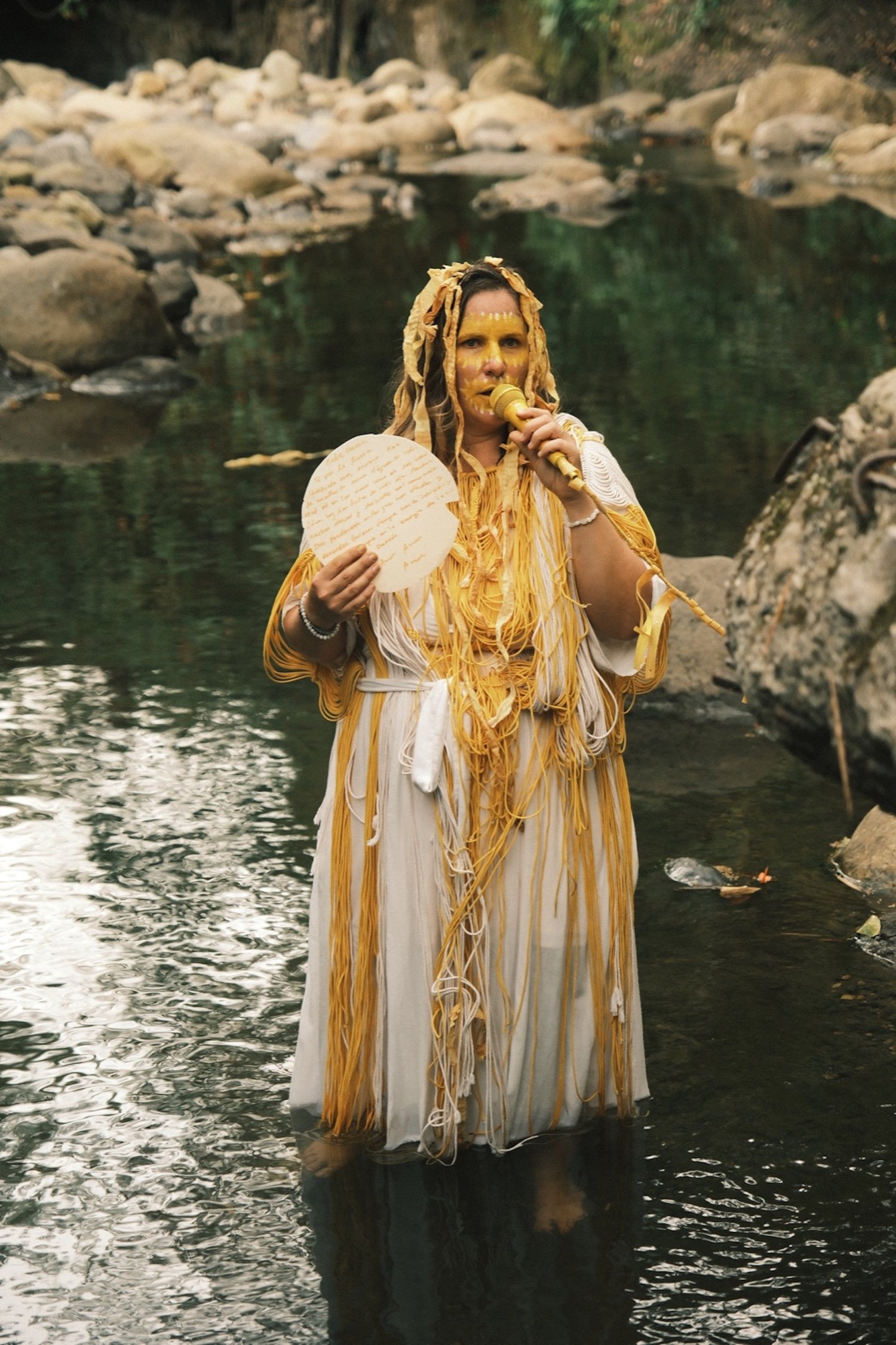
The church has two sides, it goes to nature where I speak to Mother Earth as a representative of the human race who asks for connection and forgiveness, who acts to foster redemption, and who gives both energetic and physical offerings. This avatar also visits the city, the performances personify the preaching of the 17 proposals or tenets, the tools are offered as a possibility for better mental health, connection with others and with he planet with intention. I must mention though that this piece has a sister piece, and an advertizing campaign of sorts called the I Love Me campaign. This uses the tools of a publicity campaign to promote prosperity and love for the self.
NDEREOMA: I would like to bring to your attention the work of Reverend Billy, as well as that of Beth Stephens and Annie Sprinkle. How did it start for you when of comes to ecology, Earth and the ecosexual connections that I see in what you do?
SG-R: I must confess I had read about Reverend Billy but had not heard about Beth Stephen and Annie Sprinkle. Thanks for opening my eyes. There are certainly many connections to what I do, so yes, if I have to dress up in transforming clothes and paint my face as if in a shamanic ritual to get your attention for the planet, I will do that—and yes, my clown definitely gave me the courage to gather strength and stand up and that is what I have been doing. But now that I have concluded the performance film trilogy of the Church of Self Love, I am left in a vacuum. I mention this because this would be one important difference with these artists who you mention. They have adopted a persona that stays with them, they have become these characters. Me, I chose to come up with something new. About ecosexuality, I would respectfully disagree in that my actions do not resemble treating the earth as a lover, because I understand the earth gives me so much more that I could ever give to it, so my actions are done out of reverence and respect rather than sexuality, but the end goal is the same, an offer to create a better relationship and more connection with the planet.
NDEREOMA: In the case of Beth and Annie, I understand that their work is rooted in art in everyday life, and so it transcends the idea of the character. I would dare to say the same thing about Reverend Billy. All of them are working in an expansive way, where so much is connected. Like you, all these three artists are passionate about advocating for Earth and have shown great love and care for this being. I find this inspiring.
When younger, you were involved in missionary work that you did with a therapist. While you have already spoken about it, it would be great to hear a little bit more. Would you be willing to discuss this?
SG-R: Aha! Yes, thanks for mentioning this! I guess you could call it missionary, we were missionaries of the Ghesundheit! Institute and we worked towards mental health. The lead psychiatrist, Dr. Carl Hammerschlag was a great person and healer, someone I had the privilege to call a friend. His teachings and example grew deep in me. We worked together for five years in the clinics he created as a part of the Festival de Belén, along with some health workers, the Huggins sisters, Carl’s granddaughter Haley, and a team of wonderful people from the BolaRoja crowd in Peru, and clowns who came together from around the world—clowns who were ALSO mental health practitioners. I guess these would be the missionaries, we were all part of the Festival de Belén that still goes on every year in Peru.
We would set up mental health clinics in different places throughout the dates of the festival and people would line up to have a chat, we were in the middle of the jungle. It was a ritual in which every time Dr. Carl Hammerschlag became a wonderful mirror. He would only speak with a person seeking to connect once, so he would offer them a blessed amulet which would visually remind them of the conversation they had. In this conversation he would always be able to reflect, no matter how grim their story was, their strength’s back to them. It was a wonderful exercise in presence, I became his festival translator for several years and I learned many things listening to him speak with both patients and colleagues. This was a wonderful experience, and I’m very grateful for it. Being a clown informs my performance art, as much as it informs my mental health and outlook on life. But to be clear, it wasn’t missionary work for any particular religion, it was a group of 120 clowns form around the world who got together to work with a very special community called Belén, in the state of Loreto, the Amazonian region of Peru.
NDEREOMA: All is clear about the impetus of the work. There is understandably great hesitation when the word missionary is used, and I totally get it. It is tied to histories of the most horrible colonialism, even at the present moment. I hear that your work was different from this and not associated to a religion. Your training as a clown is fascinating to me. I always feared them when I was a child, to the point of experiencing panic.
SG-R: Wow, you are such a wonderful listener! My relationship with performance has direct links with being a humanitarian clown, I mean because this clown, although not exclusively, but mostly, is a relational figure. As the archetypal meaning of the clown illustrates, the job of the clown is to use humor to navigate difficult emotions. I believe you can see that in my work, a somewhat naive foolish approach to difficult subjects, including, asking questions like, what am I doing in the world as a human who lives in this body and walks on this land? How can I talk about the crisis we are having as humanity, and the relational crisis we have with the planet? How can one approach such dense subjects without the tools of the clown?
What is it that I am doing to make myself and my art useful? Often, when one does not want to lie in despair, the one thing left to do is pray, not to a particular religion but with an intention, with the intention that the energies align, that we have some balance—that we allow ourselves to heal and connect with the planet. The pain the planet feels: the air, the soil, the trees, and the bodies of water, all echoes inside us. This pain shakes us in a manner we do not realize, but our spirit and energy do. So, as to not despair I pray, and what does this prayer look like for me? Foolish attempts to heal the earth, as I did in my Instagram project for 200 days and 500 nights. I performed this during the pandemic, never forgetting that I’m still a woman dressed in a certain way, giving energy to a plastic ball. But this ball represents our planet, and this woman, represents humanity in all our foolishness, so that’s me, a human who calls herself an artist because she can do nothing else. In doing so, she attempts to make herself a better human.
NDEREOMA: Returning to money, there is a piece in which you talk about manifesting. What are your thoughts about this layered subject? What do you see as your responsibilities as a creative and citizen to help end economic oppression?
SG-R: My responsibility would be to recognize my privilege and my possibilities and use these, together with my art to promote messages that help the survival and evolution of humanity in this planet. Economic oppression would end if the systems that placed them there ended, so my threat is to make things that question the system that holds it all together, so that we can start thinking about different ways of doing things—more sustainable ways—more harmonious ways of being with the planet and with our human nature. I also wanted to say that I would not call it manifesting. I would call it law of attraction, because money exists abundantly, we do not need to manifest it. We need to attract it and allow ourselves to receive it, be it by breaking patterns of belief or with tools to trick our brains into attracting it. Like the advertising campaigns do all the time.
NDEREOMA: I personally struggle with the concept of attraction when it comes to money becuase how many people and groups are oppressed by systems that make it impossible for them to get ahead, or even to survive and claim personhood in a capitalist-subjugated world, let alone attract financial resources.
I met your mother in New York. How does this relationship speak with or to your creative work? I sense her presence in your work, but will let you express thoughts.
SG-R: We have talked so much about religion, devotion and spirituality, and I’d say that my mother is present in all of that, as she offered faith to me as a way to help me deal with life very early on. It was my mother who taught me to be. A seeker, she showed me Reiki and took me on a walk through the Inca trail in the middle of the Amazonian jungle for five days, sleeping under the stars. She introduced me to Shama, a Peruvian medicine woman who gave me the opportunity to practice my first sound cleanse. She also taught me strength and resilience and being radical, so all these qualities one needs to become a performance artist, and to top it all off, and yes, it as a big privilege, when I graduated from the university and came back to reality, she helped me find a place that was safe and was affordable to rent as a studio. She believed in me, and that made all the difference.
NDEREOMA: Thank you for meeting for a meal and a walk on Riverside Drive Park. This is a place I very much enjoy. This park is in my former neighborhood on the Upper West Side. But I have moved to the Bronx and I try not to leave this borough, except when I have to or to meet interesting people like Pancho and your Mother!
SG-R: Thanks so much for sharing your time and your platform with me, I have been observing your work and I’m very moved by it. Thanks for giving us a tour of the Upper West Side, it is a charming neighborhood indeed! I hope I can share a meal with you in Panama sometime soon.
Susana González-Revilla’s related links: Website / Instagram / yo me amo
All images courtesy of Susana González-Revilla / None of these images should be used without written consent from the artist
Panamanian artist Susana Gonzalez-Revilla (b. 1982) channels a powerful duality. Harnessing her performative potency, her public art confronts violence and corruption through provocative actions at sites like Panama’s Palace of Justice. These interventions in public spaces thrive on the immediacy of the viewer's reaction.
In the refuge of her studio, however, her painting practice flows. Her intuitive dance of controlled chance and gestural freedom gives birth to poetic compositions—vibrant, expanding universes of stellar and microscopic forms that invite the viewer into a more contemplative stance.
This dynamic interplay of protest and poetry is showcased in her participation in the BOG25 Bienal and her solo exhibition at New York's Lichtundfire gallery.
Her extensive education, which includes a BFA from Sarah Lawrence College, studies at Florence’s Scuola Lorenzo de Medici, and the Victorian College of the Arts in Australia, provides the foundation for a career that confronts pressing social issues head-on.