Sarah Nicholls



Nicolás Dumit Estévez Raful Espejo Ovalles Morel Atrib: Sarah, we met at Center for Book Arts, where you were the Studio Manager and I was an Artist in Residence. Your focus is on bookmaking. What is the path that led you as a creative to this specific artform?
Sarah Nicholls: I had a painting professor in college who made artist books. I had never heard the term before, and asked her more about it. She showed me some of her books, and told me to go to the Center for Book Arts, that was the place to learn about making books. I grew up in a home full of books, it was just a form that gave me comfort. After college I eventually found the Center and took a bookbinding class. It got me hooked. I think I’ve been involved with it for so long because it is a flexible field, in that I can bring in writing and research and conceptual ideas but also at the same time, craft and making with my hands and an endless range of materials. It’s visual and verbal. It’s a physical, dimensional object but also time based. The end result is something that changes as you handle it, that’s tactile, that’s durational, it’s so many things at once.
When you came to the Center, it was a period of time when we had many performance based artists come work with us, and it made me think about the ways that the particular craft-based forms of bookmaking that we did there were in a way a kind of performance. There’s a lot of physical, repetitive labor involved over a long period of time to physically make books, that I think connects with endurance based performance work. That repetitive labor of craft also got me hooked; it’s very soothing for your nervous system, and really helped me in my life, not just my art, in terms of teaching me patience and attention to detail and how to be much more calm and present in the world.
NDEREOMA: Your Glasshouse publication is absolutely gorgeous, which gives me the opportunity to ask: How do you negotiate making books that are aesthetically pleasing, conceptually-informed and that can also land in the hands of those who cannot pay for the labor that goes into the making them? I do see that you publish your work online. Is this a way of making your art accessible to many?
SN: I basically make two different kinds of publications: expensive limited edition artist books, and affordable pamphlets. The main difference for me as a maker is the intended audience. The pamphlets are what I make for regular people. The focus there is on accessibility. I do them in editions of 250-300 and distribute them as widely as possible. They are hand made, but they are intended to be read as ephemeral, like a newsletter, but explicitly analog. They are a way for me to respond in the moment to the world around me, the places I care about, the history I want to explore, the issues I’m worried about, but in a self-consciously slower way than we are encouraged to communicate using digital media. I send them to subscribers, friends, strangers, in the mail, and have been doing so for many years now, maybe fourteen years as of this year. There’s a community of people who have been subscribing for a number of years who I feel very grateful for. People who subscribe to the pamphlets can nominate a friend to also receive copies for a year, as a way to widen the circle, and that way I get as many out the door and into the world as possible, and into the hands of people I don’t know and wouldn’t be able to reach otherwise.
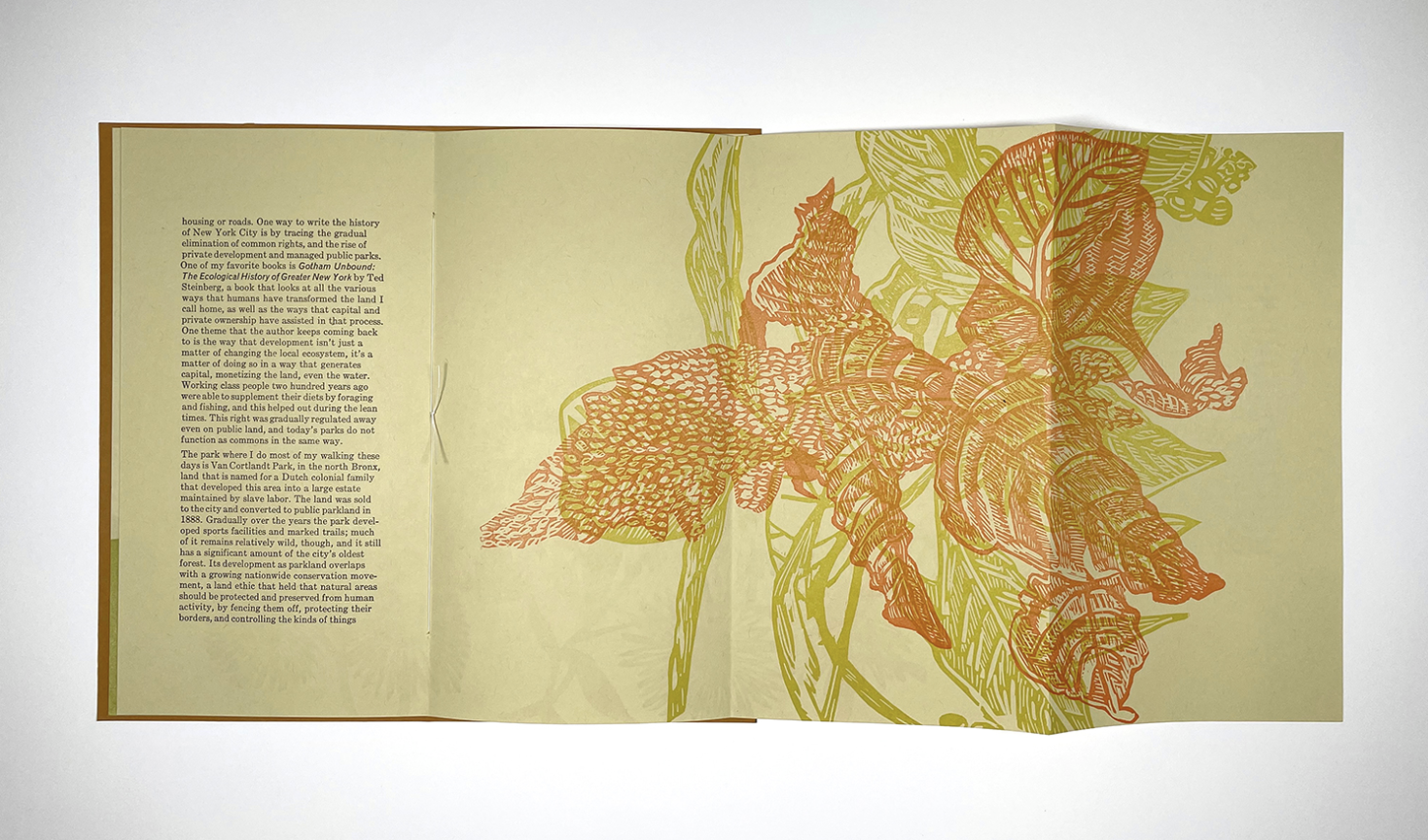
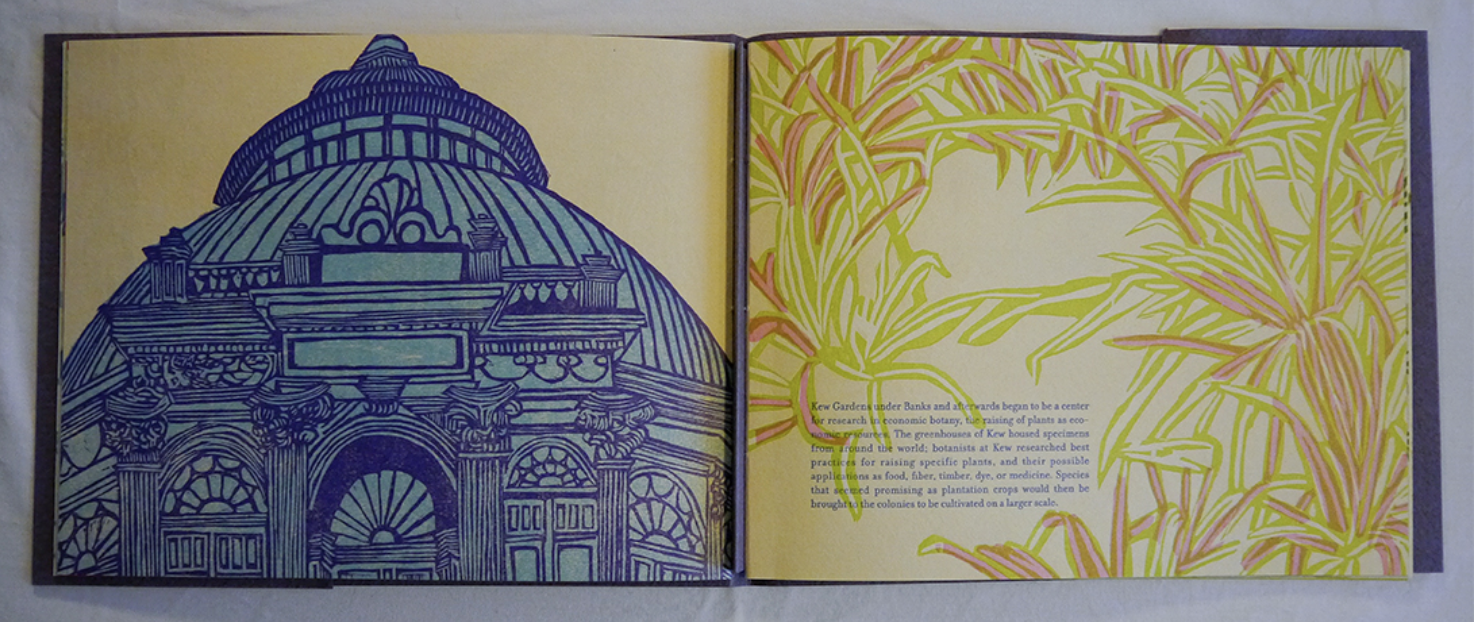
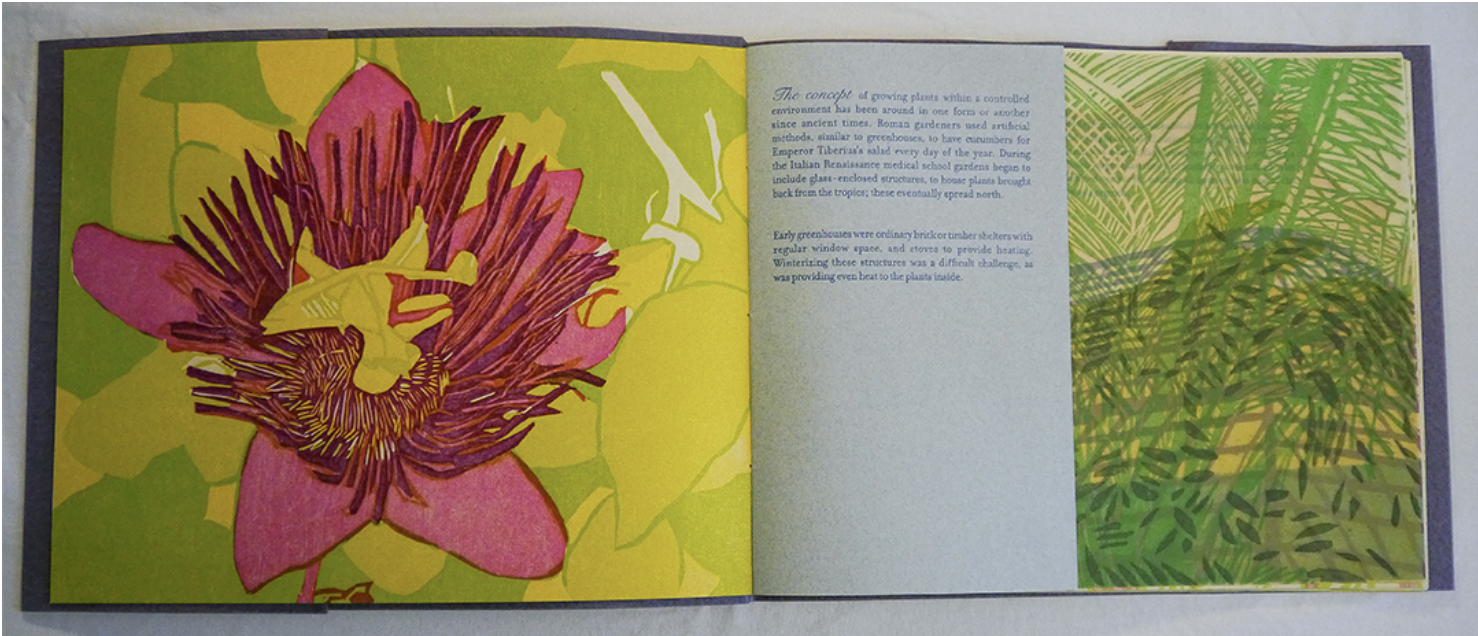
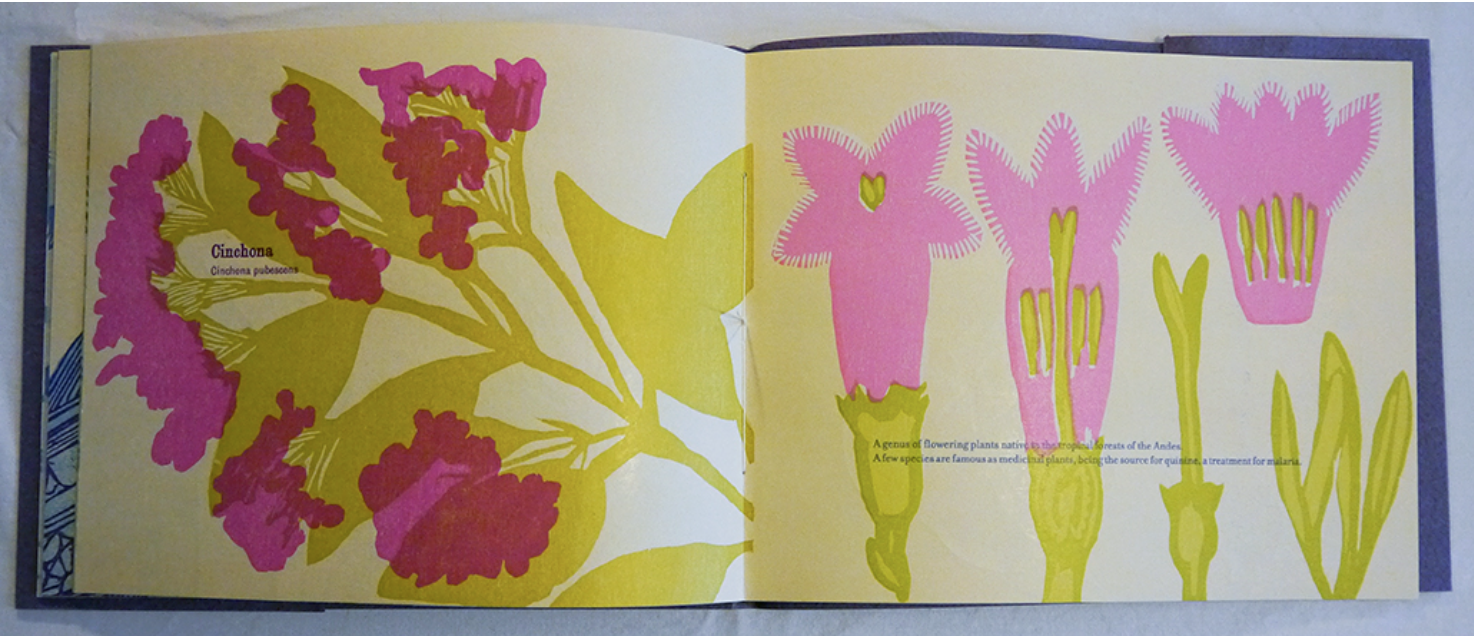
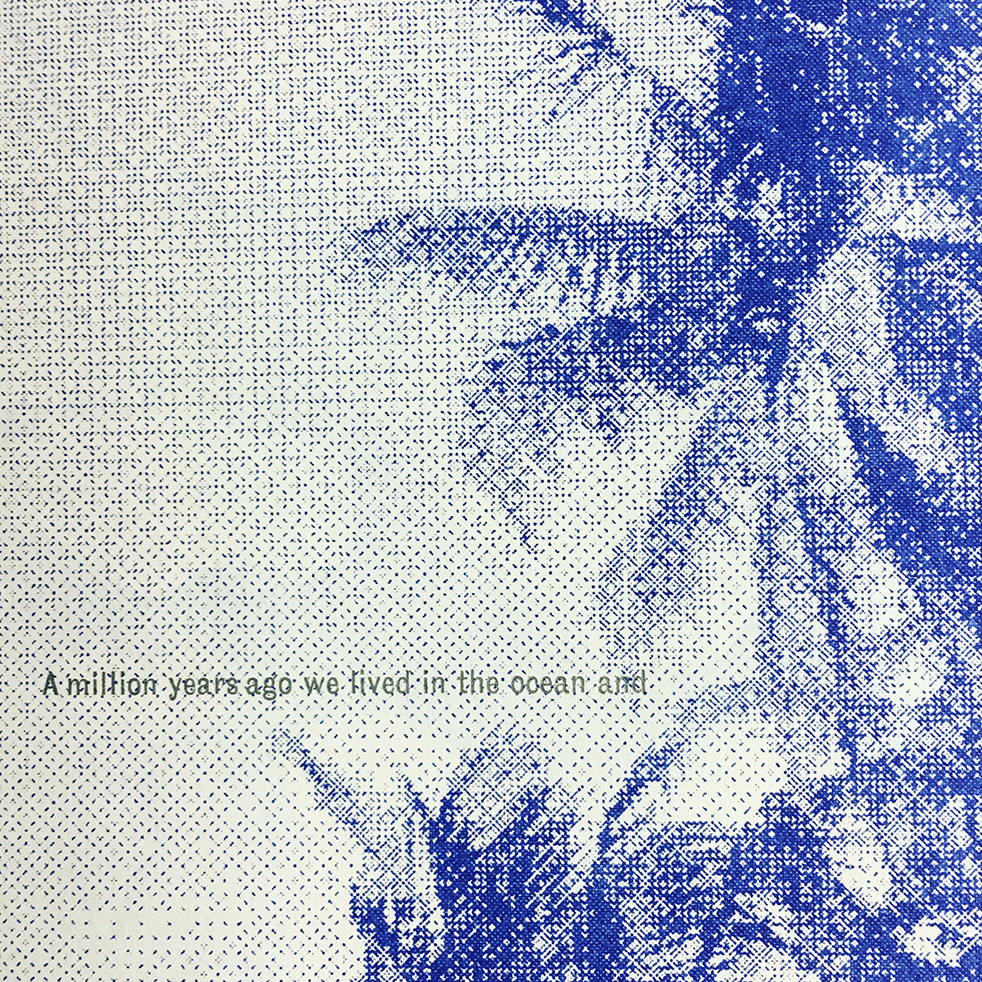
Glasshouse, though, is a more expensive, limited edition book. I made Glasshouse as a response in part to the books of botanical illustrations, usually made by European artists brought along by colonial era explorers, which are common in special collections in institutional libraries. These books are made up of plants found in the global south that are isolated on the page, painstakingly illustrated as specimens separated from their natural context, and given a latin name, different from the name they were called by the people who lived alongside them. I wanted to make a book that highlighted and made explicit that tropical plants transported to Europe to be grown in greenhouses allowed empires to expand economically. I wanted it to be beautiful, but complicated.
The expensive books for the most part are aimed at library collections, most are in special collections at universities. They are made in smaller editions, maybe 30 or 40 copies. They are more elaborate in their form and production methods. Students and researchers can see these books in the context of the library, and most of the special collections librarians I have met are really invested in bringing artist books out and teaching with them. As compared to the collections of fine art in museums, they really are relatively accessible to a public, even though they are institutional collections. They also have an audience in the future, in that these institutions will give them a home that allows them to endure and be available to people for years to come. I think that when making work about climate change, it’s important to me that some of the books I make can speak to that future audience, the one that will look back at us now and wonder what in the world we were thinking. I also often think about the kinds of books that already exist in special collections, and I like to make books that comment on or responds to those categories of books, that is in conversation with its neighbors in the library. Some ideas don’t make sense for the pamphlet series, they make sense in a different kind of book.
NDEREOMA: “What are we thinking as we bring our planet down and dismiss thousands of species for the sake of having that trendy handbag or shoes, or making it to a flashy art opening in a hideous limousine?” That is a great question that should broadcast now as widely as possibly.
You have been working with ecological issues from a personal standpoint, I would say. In your publications you refer to places that are dear and known to you. Can you talk about this?
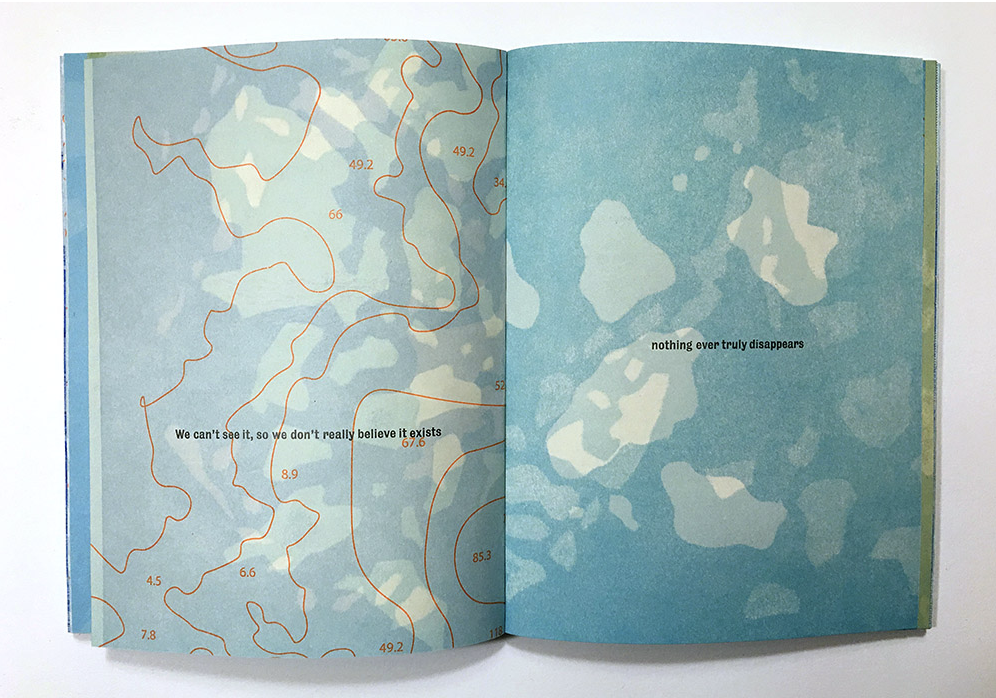
SN: I think that many people have no way of conceptualizing climate change beyond images of polar bears and melting icebergs. It’s too large a concept, and too frightening a concept, yet at the same time, for many people, too easy to distance themselves from it. I think that people think about climate change in terms of fantasies of apocalypse, or a distant distinct event, instead of a slow process, and something that is happening all around us right now. And that’s dangerous, because it makes it so much easier to pretend that it’s not happening at all. I write about places I know, and describe how they are in the midst of changing, and how they will change in my lifetime, so that it’s clearer to people what’s going on around them. Floods, fires, rising seas, rising insurance rates, all of that is happening already, and it’s only going to intensify.
I grew up near the water and some of my favorite landscapes are coastal landscapes, places that are already shifting between land and water. Those are places that in many cases are going to disappear, and I think we need to be clear about that. There’s a lot of loss that we are going to have to negotiate through, and that we are already in the midst of.
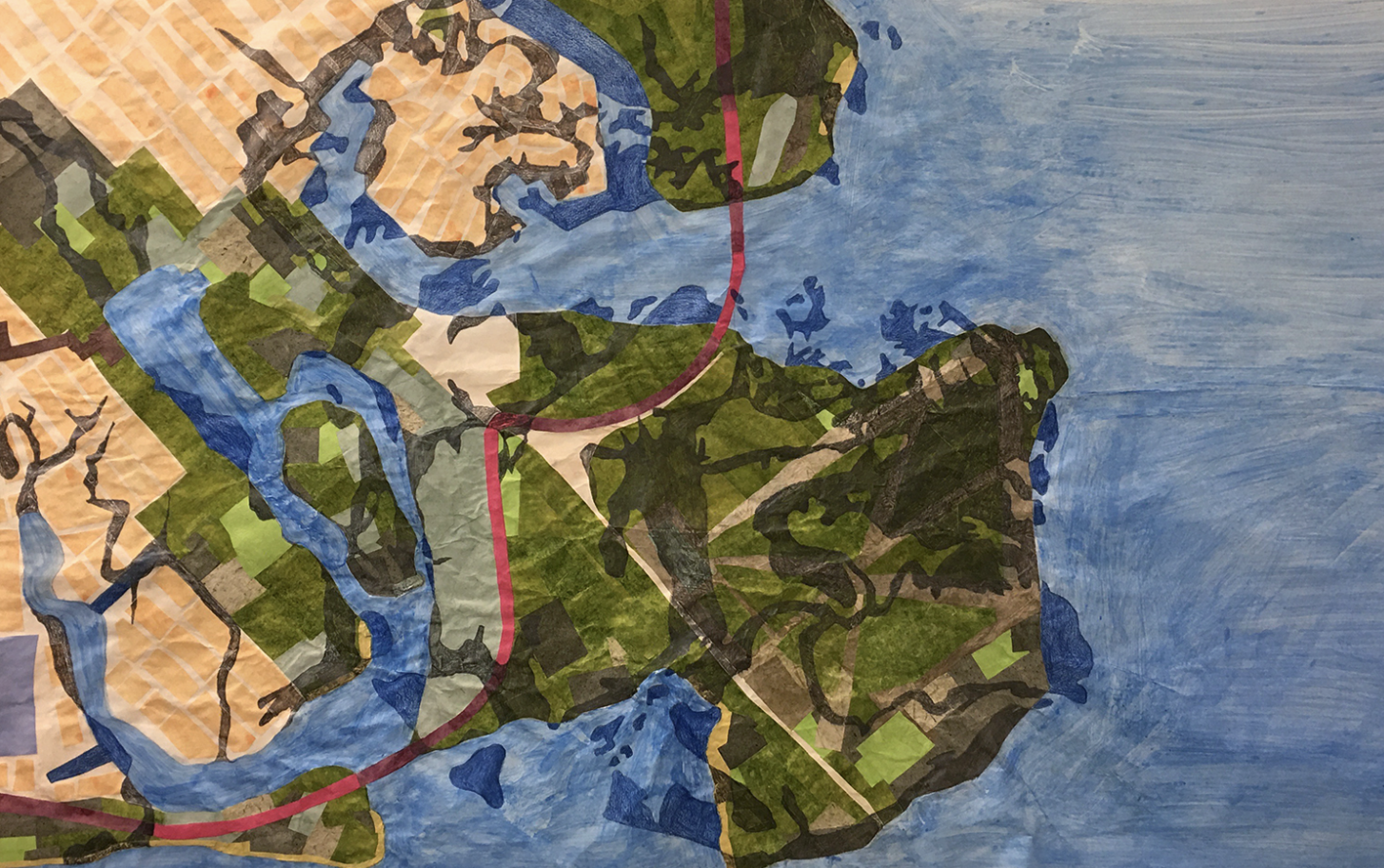
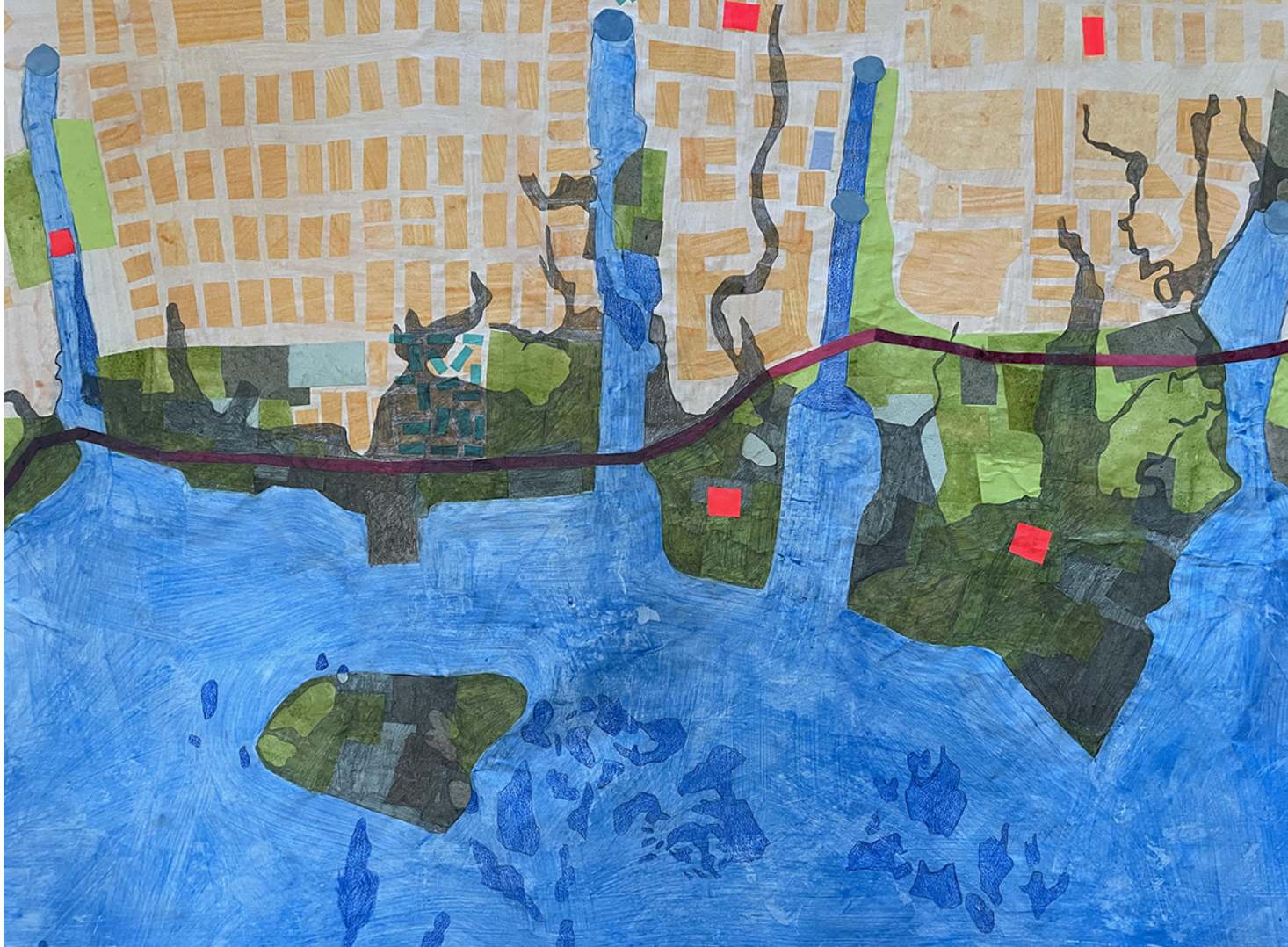
I think that writing about places that I know highlights that these changes are here now, all around us. And I think that grappling with how this will unfold and how we can adapt and react and try to advocate for mitigation, that’s an urgent need right now, but it is also going to continue into the future for many years. And so I can’t think of a more important task for books to address. Books can advocate, and can inform people about problems, and can spur people to action. But books can also document, and create a durable record for the future. In terms of landscapes that are disappearing, that’s something I am very interested in using printed books for. I have a list in my head of books I want to do, and several of them are related to places that will be gone, or drastically changed, in a hundred years. I want to create a record while I can. Books can act as a witness.
NDEREOMA: It is disturbing to think how many people in the US refer to climate urgency as a hoax, including those who are meant to be in charge of the country. Clearly, this is a political strategy to perpetuate a system that has been ravaging the world and that continues to oppress so many: capitalism.
Tell me about some of the changes that you are seeing in Brooklyn, where you lived, and how you are able to speak to them in your books? I am wondering as well if there is a public conversation component to this work in the form of in-person book discussions?
SN: I lived in Brooklyn for twenty four years, and I think that the version of the city that existed when I first arrived has disappeared. The housing is different, the businesses are different, the traffic patterns, the weather patterns are all different. More chain stores, fewer small businesses. New buildings. Way more traffic. More flooding, less snow, more people. I spend a lot of time looking at maps online, that allow you to track changes in population, in flood plains, in zoning, etc.
I think the city is supposed to change, that’s one of the things I love about it, that it’s not a museum, it’s a living thing. But the kinds of changes have a lot of people worried about their ability to hang on and stay here, with good reason. I make pamphlets about flood plains, infrastructure, ecosystems and housing, all of the things that make up the history of New York over time, in order to think about the kinds of changes that happen around us and how we can maybe aim to make better ones. I started hosting neighborhood walks in conjunction with these pamphlets a number of years ago now, in order to bring about an in-person discussion. I’ll invite readers to a walk where we wander through a place that I have written about, and talk about it. It actually is quite difficult for me in a way, because I’m much more comfortable with written words than spoken ones, but it’s great to meet the people I send these things to and hear their memories and experiences in the city. I have this mailing list that I maintain for the pamphlets and many of these people I have never met, but the walks give me an opportunity to talk to some of them in person and that is really exciting.
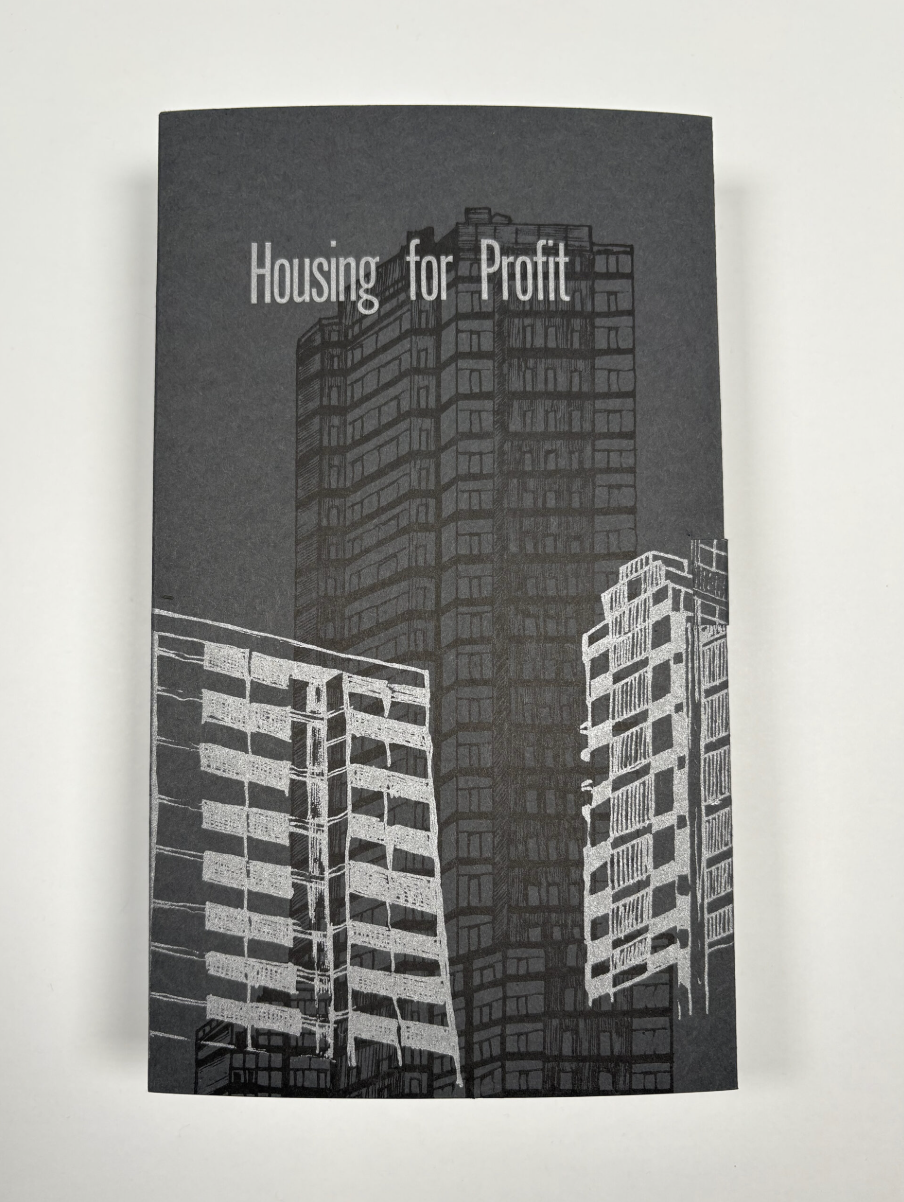
NDEREOMA: How do you balance the solitary work book arts artists do with the more socially-conscious aspect of your practice? There is for example your Housing for Profit publication, the subject of which is a topic of debate for most New Yorkers. The Salon is glad to have a copy of this in our archives!
SN: I think that the physical labor of printing something and binding it by hand is very much about solitary craftwork, but unlike other kinds of making, it’s in pursuit of publishing—which I think is always a social activity. I publish so someone can read it, multiple someones, ideally, so it’s always public speech. I use craft techniques in my publishing practice because books are meant to be held, and I want someone to feel the materials in their hands as they read. I think that that physical exchange is unique to books, and the materials I choose bring people’s attention to the work, but not just for the sake of using a certain material. All of the choices I make with the pamphlets are to get people to read the text. If I send you something in the mail that is printed on nice paper, or that unfolds in a specific kind of way, you’re more likely to spend the time to read it than if it just looks like junk mail. And the point is to get you to read, because I have something important that I’d like to tell you. There’s a kind of urgency in a lot of the pamphlets, and they are made in order to communicate with readers.
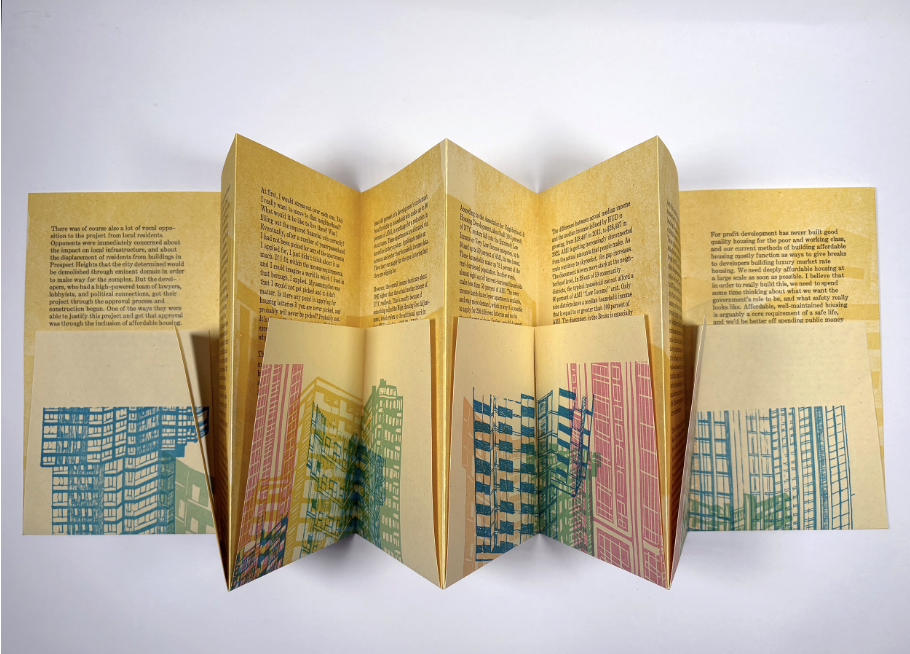
The pamphlets are usually organized around a theme for a year, so I do three of them that are all around a body of research, and the subject is usually a subject related to some aspect of living in the city, whether that be historical information about a neighborhood, or about urban nature, or in this case, about housing. Housing for Profit was the third in a series of pamphlets about affordable housing and tenant movements, and the various ways the city and tenant advocates have tried to address the need for affordable housing over the last hundred years or so. I think housing cost is front of mind for most New Yorkers these days, and also probably people across the country as well. I’m often surprised at how resonant some subjects are with people who don’t live in NYC. I think that since there’s so many renters here, we have the potential for really strong tenant unions, and really interesting experiments in affordable housing programs that don’t really happen elsewhere, and I wanted to do a deep dive into all of that history, so that we can expand our sense of possibility in what can be built, that it’s not just a choice between building nothing, or building luxury towers with a tiny sprinkle of slightly less expensive lottery apartments. And it was also a really personal subject for me; I have been applying to affordable housing lotteries for years, and I wanted to tell people what that process was like and why it is so frustrating.
NDEREOMA: When I moved to Manhattan years ago, my rent was a few hundred dollars. I tell younger people and they are quite surprised.
I would like to hear about your walks. This is an impetus which connects both of our work. I have been walking as art for decades. In your case, walk is linked to spaces on the risk of being developed, as well as to your connection with them. There is the Morse Dry Dock Dial, a book in which you talk about your family history on Bay Ridge, Brooklyn, and the changes that are taking place on the waterfront.
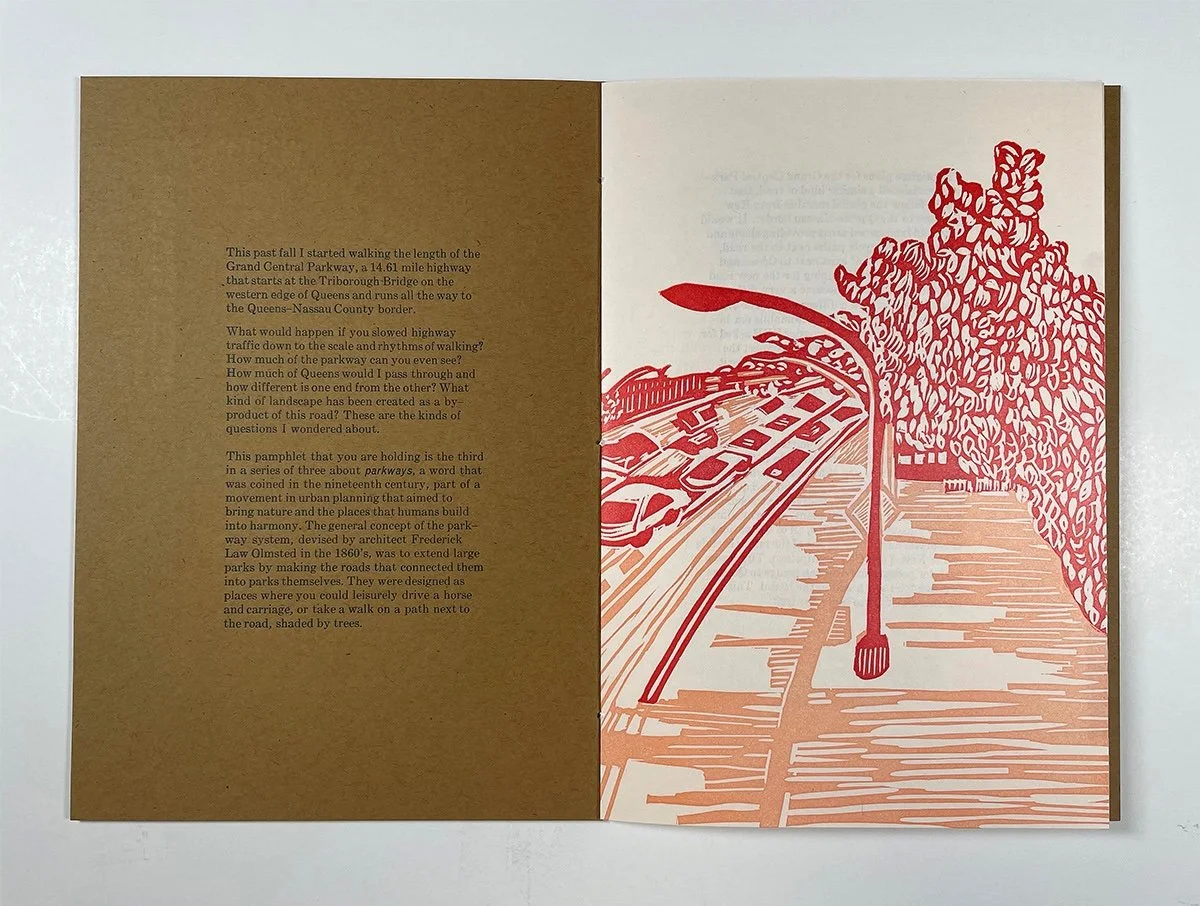
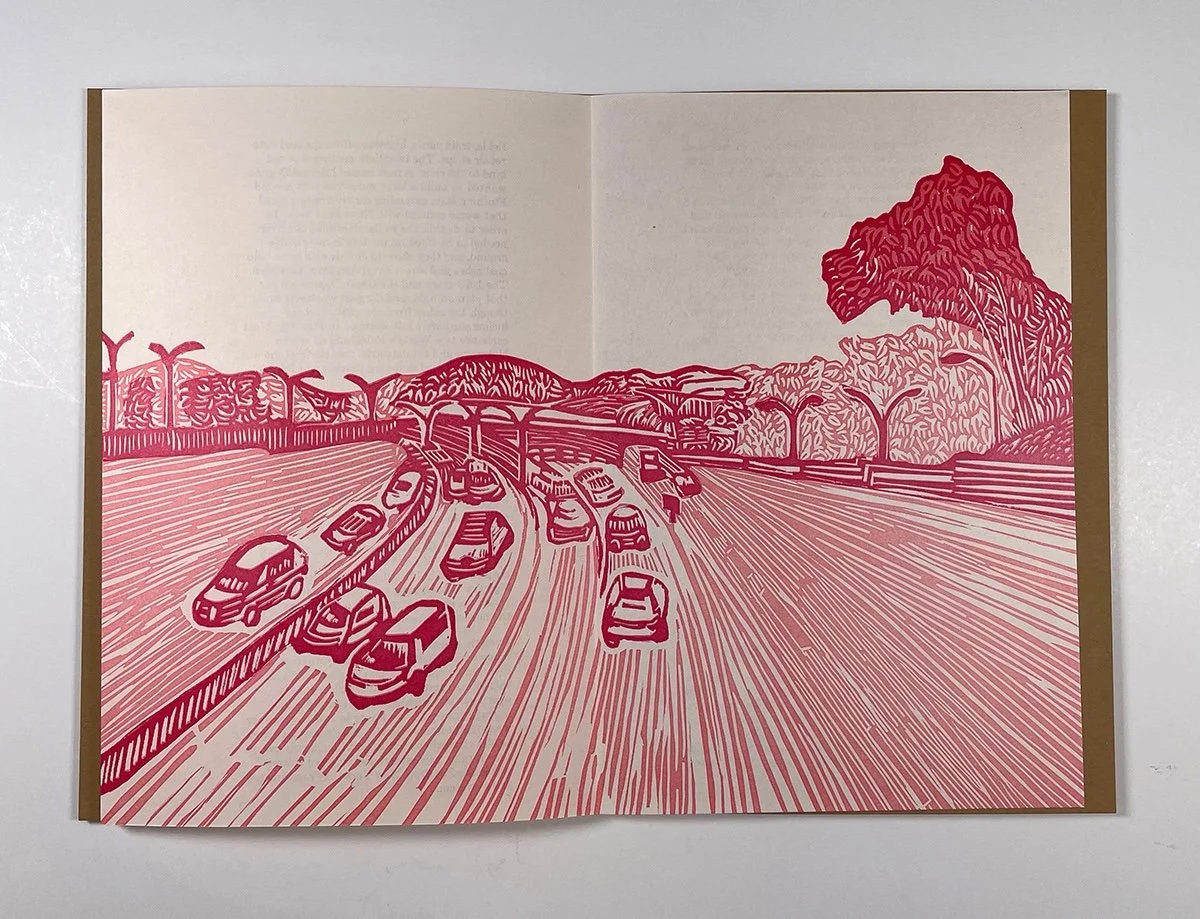
SN: I think that walking is one of the primary ways I research a place. It’s also one of the ways I start writing about a place, thinking through what I want to say is easier if I’m in motion. A few years ago I walked the length of the Grand Central Parkway, with a collaborator, just to experience what it was like to move at the pace of a human body walking along this highway, and to see what was built up around that road. The pamphlet was the documentation of that experience. And most of them start with some kind of walk like that, to see in person the landscape I want to write about. A walk can be a narrative, it can have a very particular direction to it, or it can be a meditation on a place, or it can be a way of focusing intently on a landscape, it can be many different things, depending on how you walk, if you’re walking alone or with others, if you’re walking the same route over and over again, or exploring new places. I use all of these approaches when I am out walking in the city.
So walking is part of most of the pamphlets I publish, and several years ago I thought it would make sense to invite some of the readers of these publications to come walk in the places that I wrote about, and start to try to cultivate a reading community in person. I think that walking is similar to reading in some ways. There are different routes or pathways you use to travel through a book. You can teach yourself to pay attention to details along your path, and learn to interpret them, reading a landscape like you might read a text. I’ve hosted in person walks on the Red Hook waterfront, at Floyd Bennett Field and Dead Horse Bay near Jamaica Bay, in Staten Island on the eastern shore, and a few other places. Many of these places are under threat from rising sea levels, or have experienced severe flooding in recent years, and the city is strategizing around what the future of these places will look like. The Staten Island walk was one of my favorite ones, just because the landscape was so fascinating. The neighborhoods on the eastern shore experienced deadly flooding during Hurricane Sandy, and after that the city started buying out the homeowners in three neighborhoods there, with the goal of demolishing the houses and letting that land become undeveloped. It’s created a buffer zone along the waterfront there that will protect the community further inland from future flooding. So in that area there’s all of these blocks that are being covered with phragmites, and you can see the remains of public infrastructure like fire hydrants or telephone poles, but the grass has mostly swallowed the land up. It’s really beautiful and strange and quiet and you can wander around and see no one except maybe a flock of geese. It makes you think about one direction some waterfront communities may go over the next several decades.
During the pandemic, I did a few different virtual walks, via video, including one in Sunset Park, in conjunction with The Morse Dry Dock Dial. The pamphlet is named after a periodical that was published by the Morse Dry Dock Company in the early twentieth century, which was one of the nation's largest ship repair and ship refitting facilities, operating on the waterfront in the neighborhood we now call Sunset Park. My great-grandfather worked there, and I found his name on a list of workers in one issue online. Sunset Park is interesting because there is still manufacturing and industry left on that waterfront, partly because the community there is really organized and has advocated for the future of the small businesses there, while thinking about how this place can help shape new forms of industry on the waterfront. Most of Brooklyn’s waterfront has been swallowed up by luxury high rise development, and I’ve seen how that landscape has changed within my time in the city. Small factories that provide decent jobs for working class communities have gotten pushed out. In Sunset Park that hasn’t completely happened yet, in part because of local advocacy. You can find this strange mix of things there, abandoned warehouses and collapsing docks, partially covered up train tracks that were built to move goods from the shore to nearby factories, feral cats, lots of wildflowers in empty lots. But also the brand new port that the city is building to provide support for the wind farm the city is building in the harbor, and a major recycling center, and Brooklyn Army Terminal, a huge beautiful building that has a lot of artist studios in it. I could go on and on about Sunset Park, it’s one of my favorite neighborhoods in the city. If you’re nearby, go visit the Bush Terminal Piers Park, it’s a lovely waterfront park there. Most of the time when the city builds a park like that on the waterfront, it’s in conjunction with luxury housing, as part of a deal with developers—you can see lots of examples along the Harlem River now, and the parks there sometimes end up feeling like they maybe aren’t even open as truly public space. But in Sunset Park that hasn’t quite happened yet, the housing is for the most part further away from the shore, so much of the land on the water is really quiet and isolated and so beautiful to see, and it has really opened that part of the waterfront up to the public.
NDEREOMA: This made me think about the Bronx River. So much of the land around it will not be developed for profit, thank God. And the reality is that most New Yorkers are still afraid of the Bronx, which is sadly a very good thing of us in the Bronx.
You moved recently to the Bronx. Is this correct? How is this informing what you are researching, making as an artist, and generating in regard to artist books?
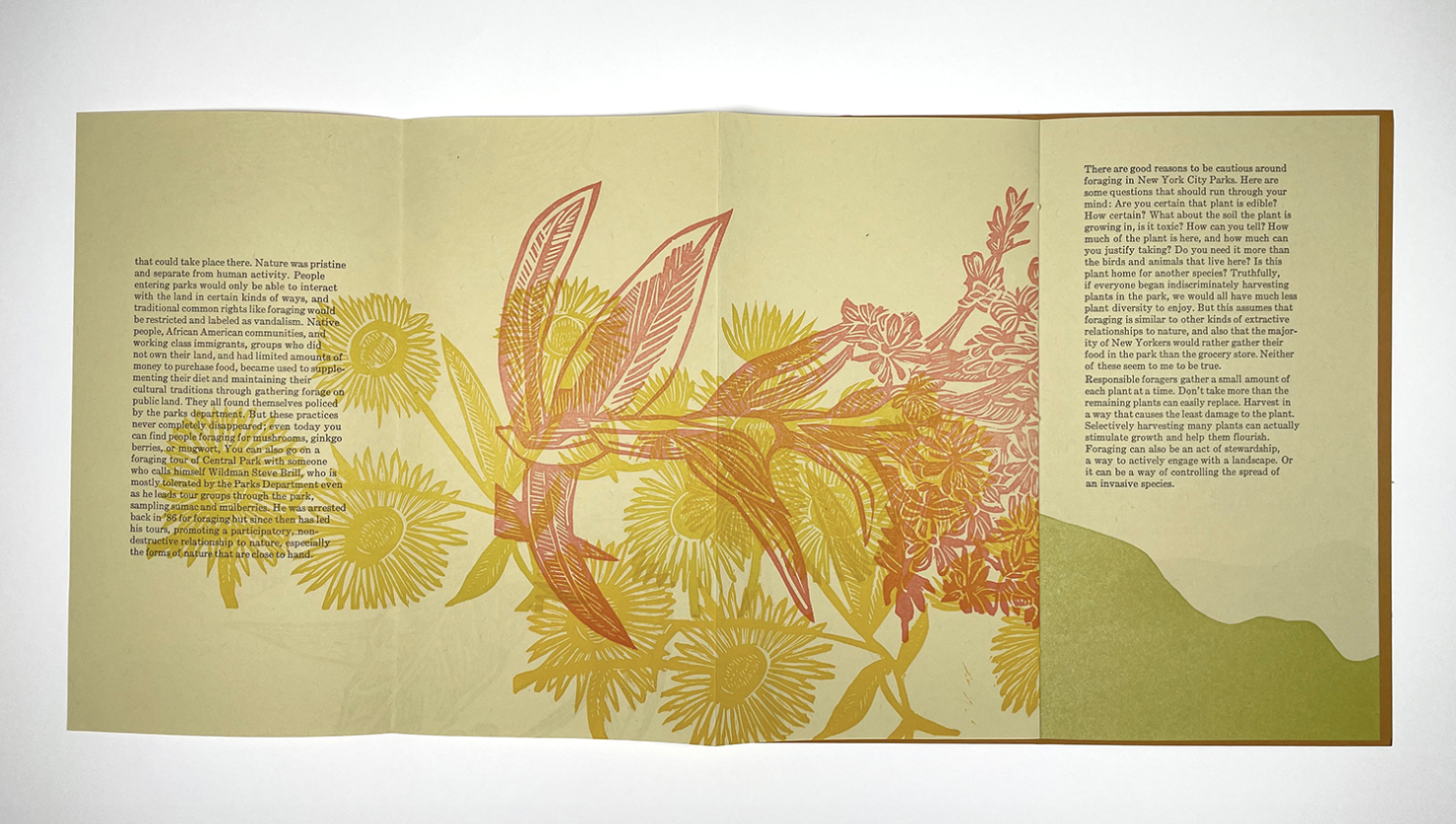
SN: I moved to the Bronx in 2022, and am thrilled to have new landscapes here to explore. The topography of the land here is so different from what I’ve been used to—the flat plain that runs down to the shore in Brooklyn, all that flat land below the terminal moraine on Long Island. The hills here are immediately different for me. I love the public staircases. I love all of the green space here. It also just feels different to be on the mainland—in the summertime I bike a lot on the Empire Trail, which runs right nearby my new home, and it’s wild to think that I could theoretically bike all of the way to Canada from here. I think that it’s good for me to have new places to explore and have a shift in my thinking. I have been doing a lot more natural dyeing here and also making paper with natural pigments, and found materials that I gather here, so I’m thinking more about the materiality of the books I make. I made a pamphlet soon after moving here called Feral that’s about urban foraging and the history of gathering wild color and food and materials in a city, and the ways that’s been prohibited or discouraged in public space by the city. Recent immigrants, indigenous people, working class and poor people are historically the people most likely to try to forage for food and fiber in the city, and the city has made it illegal to do so in public parks, in order to control access to the land. I wrote a little bit about the Bronx River Foodway at Concrete Plant Park in that pamphlet, it’s the first city-owned public space that explicitly encourages foraging and so it might be the only real public commons in the city.
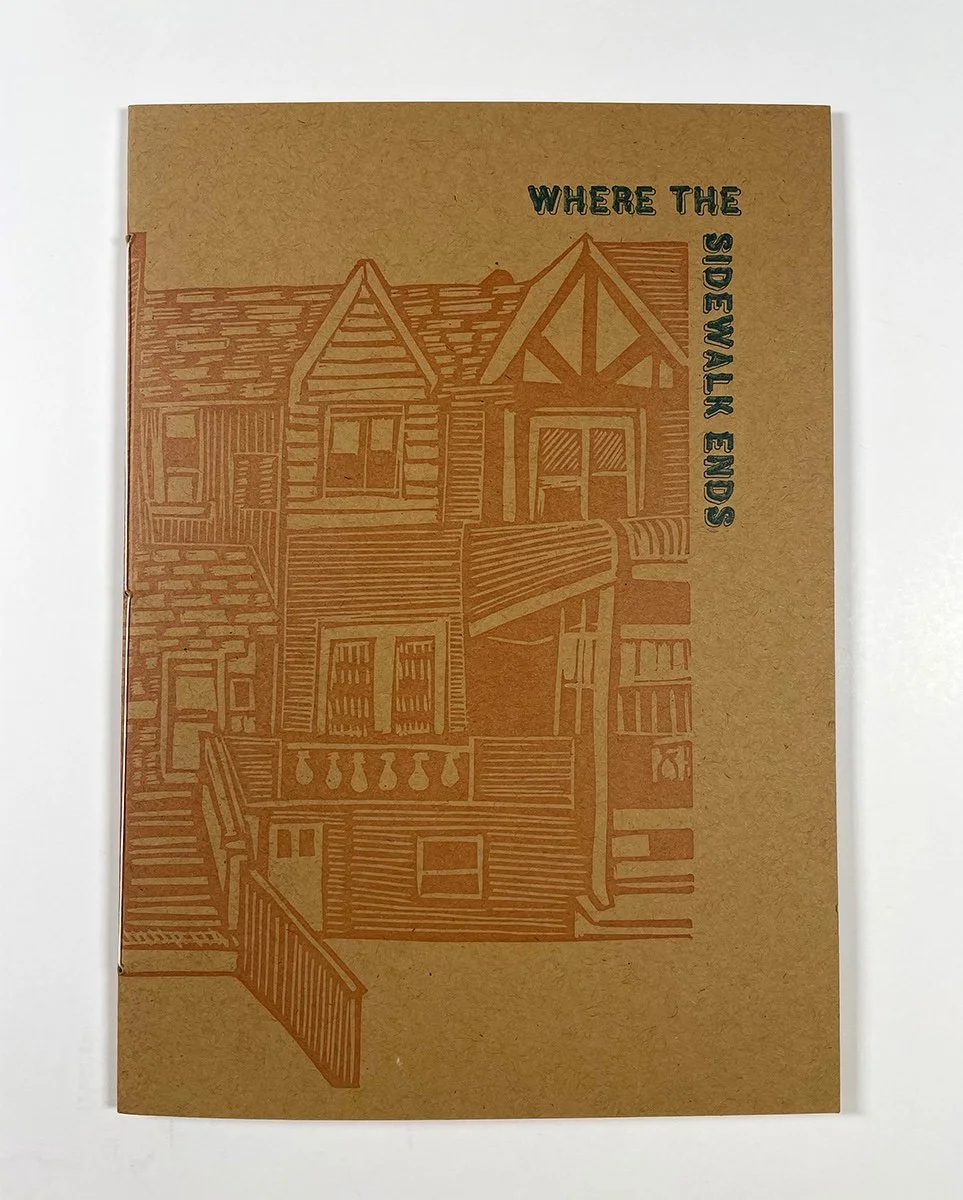
The reason I came here to the Bronx was that for years I had been living on the top floor of a townhouse in Flatbush, which I loved, but I knew that eventually I would have to leave, because the family that owned it would eventually sell and that at some point I would be stuck scrambling for housing. So I made a long term plan and signed up for all of the affordable housing lotteries and lists that I could find and was eligible for. The series of pamphlets about housing that I made came out of all the research I did in order to figure out what to do and where to go. I wanted to live alone—I am middle aged now, and I’ve had roommates my entire adult life, and it was really important to me to not have to do that anymore, I’ve had some terrible experiences with roommates. But it’s really almost impossible for a working class artist to live alone in this city. Most of the new “affordable housing” that is being constructed is not actually affordable, it’s just slightly under market, aimed at people making much more money than myself, so my options were limited, and I wanted to research why that was and what other options and models there were. There’s a fascinating history of tenant organizing and experiments in social housing here that is particular to New York. But I also think that the issues we face here in terms of scarcity of affordable housing has become a national issue. I think the readers of these pamphlets who live elsewhere can get a lot out of them as well.
NDEREOMA: Thank you for doing the work you do, and which benefits others. You are indeed in the mainland, which is a whole different experience than living in the other boroughs: Manhattan, Brooklyn, Queens and Staten Island. You are now in the continental US! The Bronx is its own creature, and I say this in a loving way. I welcome you to our beloved borough and I hope that you get to enjoy it and to be in community here.
What are you coming across with in the Bronx? This is an open question. I am curious because this is the place I call home and where I was baptized as Bronxite in 2011.
SN: I remember when you moved here you sent out calling cards that announced your move to the mainland! I thought a lot about that when I was getting ready to move, that shift from island to mainland. We don’t like to think about the fact that Brooklyn and Queens are on Long Island but they are. I do still miss bicycling to an oceanfront beach. But on the other hand there’s so many places I’m excited to explore here. Ok, so some of the places I have been learning more about here in the Bronx: Pelham Bay Park, the Bronx River and the Bronx River Greenway, the Harlem River waterfront, Parkchester, Co-Op City, Pelham Parkway, City Island and Orchard Beach. A lot of these places are green spaces, which I’m always excited to explore. I have enjoyed biking across the Bronx to Pelham Bay. But I also just like taking the bus across the Bronx (as long as as I don’t have a strict schedule to stick to) and see what is there along the way. In some areas there’s a good amount of space between buildings, there’s room to breathe and it’s less overbuilt. In others it’s just a tangle of highways. That’s one thing to get used to, in order to get into a lot of parkland you have to maneuver around and across highways and service roads, which I don’t love. I think overall I like that this is a place for regular people to live, it’s a place where there’s still a lot of small local businesses, there is a lot of history and a lot of beauty, but there’s also some of the worst crimes in terms of public policy and development. I think Bronxites are pretty fierce about their home and I respect that.
NDEREOMA: Most Bronxites are proud of our borough, and ne encounters people from the Bronx almost anywhere one goes. I would like to hear about Elm Street, and if you plan any walks in the Bronx. Similarly, can you describe what joining your walks entails for participants?
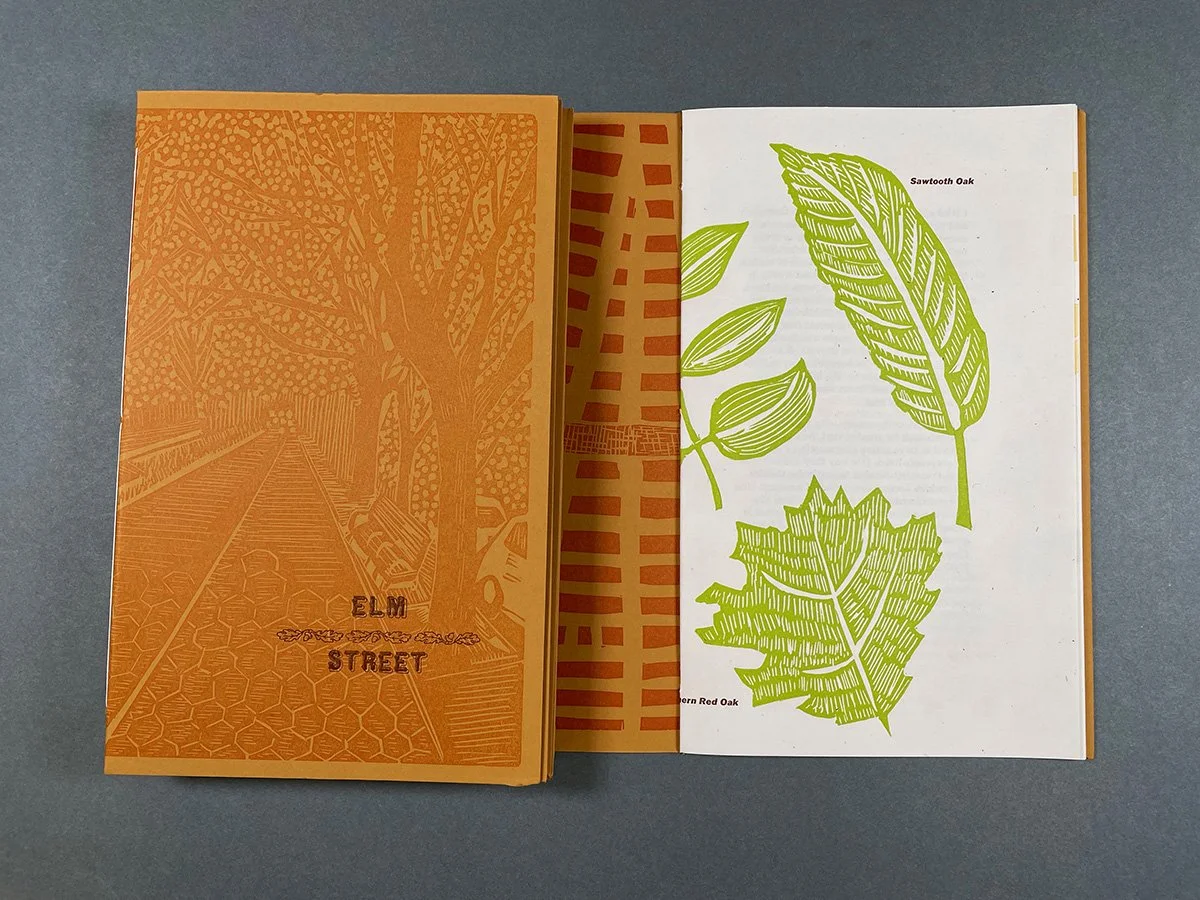
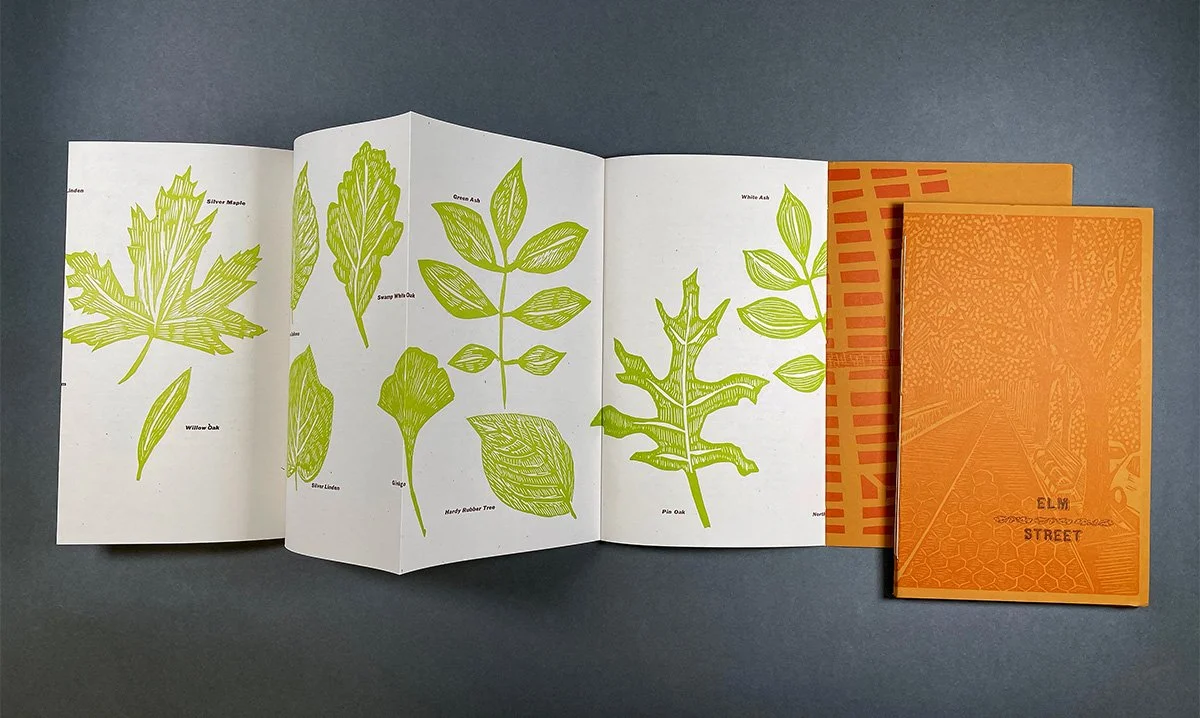
SN: Elm Street was a pamphlet I made about the development of Eastern Parkway, and part of what it was focused on was the trees that line Eastern Parkway. I was researching how trees communicate amongst themselves and share resources, and thinking about that in terms of a different model of community. There are fungal networks that grow alongside trees, that form symbiotic relationships with their roots and facilitate the exchange of resources. Trees can warn each other about threats, they can share water and nutrients, and I just found that to be the most fascinating thing.
I organized a walk down Eastern Parkway in conjunction with that pamphlet, where we talked about the neighborhoods surrounding the road, the history of the land, the experience of being a pedestrian on that road. I try to organize my walks as a way of bringing a group of people together who are interested in exploring a place together. I am less interested in leading a walk than in facilitating one, and what I mean by that is I’m less interested in lecturing people about the history of a place than in explaining some of what I know about a place but also asking people what they have experienced there, or what they know about it or notice or are interested in learning about a place. I like to show people things and then see what they take away from it. Usually it’s a small group, sometimes of friends, sometimes of strangers, or a mix of them both.
I’m planning on facilitating two public walks in the Bronx this year focused on water systems, one on the Old Croton Aqueduct trail in the spring, starting near the Jerome Park Reservoir, and one on the Harlem River Waterfront in late summer. I’m excited about it. The pamphlets this coming year will be all about the water underground, the water that comes out of our faucets, and the systems we’ve built to manage water.
NDEREOM: There is an element of nostalgia and longing in your publications, which I relate to. Just thinking about books in this digital age and this age of AI makes anything printed on paper relate to the old days. But what are your articulations of the future or of futures in your books?
SN: I am way more interested in exploring grief than nostalgia. I think that nostalgia is an expression of loss for something that never really existed. I think it gets in the way of telling the truth about our experience on this earth. I think that we are in an era of rapid change and great loss and I think that grief is a relevant emotion, but Americans are terrible at grieving, and that is part of what I want to help people to do. We tend to indulge in nostalgia as a way of avoiding grief, I think. That’s why I’m often researching history or writing about how the past connects to the present. Not to engage in nostalgia but to thing clearly about how we have gotten to a certain place. Being clear about what has happened, about what our history is, is the first step in processing your grief.
But in terms of the future of the book: I think that obsolete technology doesn’t disappear, it just changes. Obsolescence is more a phenomenon of economic forces deciding for us that we need something new to generate new profits. That’s an inevitable result of the narrative of capitalism, that story we tell ourselves of perpetual growth with no consequences. That’s a false narrative. Where do old technologies go once they are condemned as obsolete? Do they just disappear? Or do they evolve? There are new technologies that absolutely help people, reduce suffering, make people’s lives easier. But many just don’t. Does anyone (who isn’t profiting from it) really believe social media, at this point, is actually a net good? Does anyone (who isn’t profiting from it) really think AI is a positive force? These are things at this point that are more or less being forced upon us. Progress is a narrative designed to maximize profit.
So for books, I think that means they continue to exist, alongside other means of communication, but their purpose, their form, their audience, their distribution, all that changes. How we read changes, as it always has. How we communicate in written form changes, as it always has. Our distribution networks change. You can see this in progress in the explosion in interest in artist books and art book fairs. The annual Printed Matter NY Art Book Fair is an enormous event, packed full of people excited to look at work printed on paper. Young people, excited about books, excited about printed material. When I started in this field, that event didn’t exist, and now there’s an annual art book fair in almost every city, and new ones start every year, and the field is growing and flourishing.
I think that human beings are storytellers, and the ways that we use to tell stories change over time. I think the advantage of books on paper is that they are simple, they are accessible, they travel pretty easily, and because they are not digital, they can evade surveillance in ways that digital methods of storytelling cannot. The limitation of books in the past was that it was something that was hard to make on your own, it was hard to access the means to make your own book and publish your own ideas. It’s much easier to do that now, and I hope that continues to be the case because it can be a really powerful force that can be really useful as state and corporate surveillance in our culture increases. They’ve done studies that the information you read on a screen, you retain much less of it than the information you read on a printed page. The experience of reading printed words is much less distracted, and it’s easier to reach a flow state, time ceases to exist, hours pass like minutes. That’s a precious experience that I want to continue.
The materials and methods of how to make books have always changed and will continue to change, but we’ve been making books for centuries and we will continue to make them, using what is at hand, with the tools we have access to, and for the people we want to communicate with. Physical books endure in ways that digital technology just doesn’t.
NDEREOMA: You teach at different colleges/universities in New York City? What is your experience teaching bookmaking to the younger generations who might be readings books on screens? What are some of the themes that they are investigating?
SN: I tell my students about when I was young, when I was first discovering zines, I would send a dollar’s worth of postage stamps, in an envelope, to a PO Box somewhere in the midwest and they would send me back a small handmade publication. It would have some personal stories in it, written by one very specific person, made by their own hands. In the back there would often be reviews of other zines, and where you could send your stamps to get other publications, and also solicitations for other zines to be sent to them to read. It was like falling through a trap door into a secret world that no one knew about. Those kinds of networks are so very special and also potentially so powerful for young people, whose entire lives are monitored and on display. I think that’s part of why the classes I teach are popular and why young people are excited to learn how to make books. They know that reading a physical book is often a deeper experience than reading the same text on a screen. They know that being about to handle a physical object, made by an individual person, is a special experience. I show them how to break apart the expectations we have of books and make them their own, and they love that.
Student artists tend to be focused on their identity in the world, lots of work on food, their family history, their relationship to home. They also are very interested in their environment and a lot of them have made interesting work about urban nature, some of them using photography, some of them using handmade paper, bringing the natural world into the materials they use. I also teach a good number of international students, and they often will make work about their home countries that are especially interesting. I had one student from Hong Kong, back when the protests there were in full swing. She made a fantastic book that was all about the coded messages, wordplay and hidden meanings that the protesters would use to communicate with one another.
NDEREOMA: What keeps you balanced when all seems to be crumbling?
SN: Chosen Family. Craft. Handwork. Folding. Reading. Knitting. Sewing. Making. Paying attention. Walking. Running. Biking. My book arts community. Learning new skills- in the past few years I’ve been learning how to make clothing, how to make paper, how to make ceramics, I’ve just started down that path. I think that everything comes to an end, and that process of ending is often difficult, but you eventually come out the other side. All seems to be crumbling at the moment, but on the other side of that will be an opportunity to put things back together in a new way. At least that is what I tell myself. In the meantime, I have the comforts of making to keep me busy.
NDEREOMA: Is there anything that you would like to add or to ask me?
SN: I think this series of interviews is really fantastic. Do you think about this series as a publishing project/ Have you thought about making a physical book out of this work? I love things that go deep and your interviews are really a gift in that respect. Thank you for the opportunity to participate.
NDEREOMA: Thank you for asking. I love books and I am completely surrounded by them in my home in the South Bronx. It is my intention to publish all interviews in this section in a physical book. How would it happen? I am not sure, and something that is certain to me is that, most of what I think in terms of creative endeavors—sooner of later—happens. I know it will happen and that the right publisher will see the value of all of the wisdom in people like you and want many others out there to gain access to it through a book. Thank you again for all you bring to the world.
All images courtesy of Sarah Nicholls
Sarah Nicholls’ related links: Website / Brain Washing from Phone Towers / Instagram / Contact
Sarah Nicholls is an artist, printmaker, educator, and writer whose work combines language, image, visual narrative, and time. She publishes an ongoing series of letterpress pamphlets on urban environments, climate change, and urban history, and organizes a range of participatory walks and programs around the series. Her limited edition artist books are in the collections of the Victoria & Albert Museum, the Brooklyn Museum, Columbia University, and Stanford, among others. Her work has received support from the Lower Manhattan Cultural Council, the Brooklyn Arts Council, and the Puffin Foundation, and she has participated in residencies at BRIC in Downtown Brooklyn, the Chicago Center for Book and Paper Arts, and Guttenberg Arts in NJ. She teaches letterpress and book arts at Pratt Institute, Parsons School of Design, as well as the Center for Book Arts.