Practicing How to Hide in Plain View
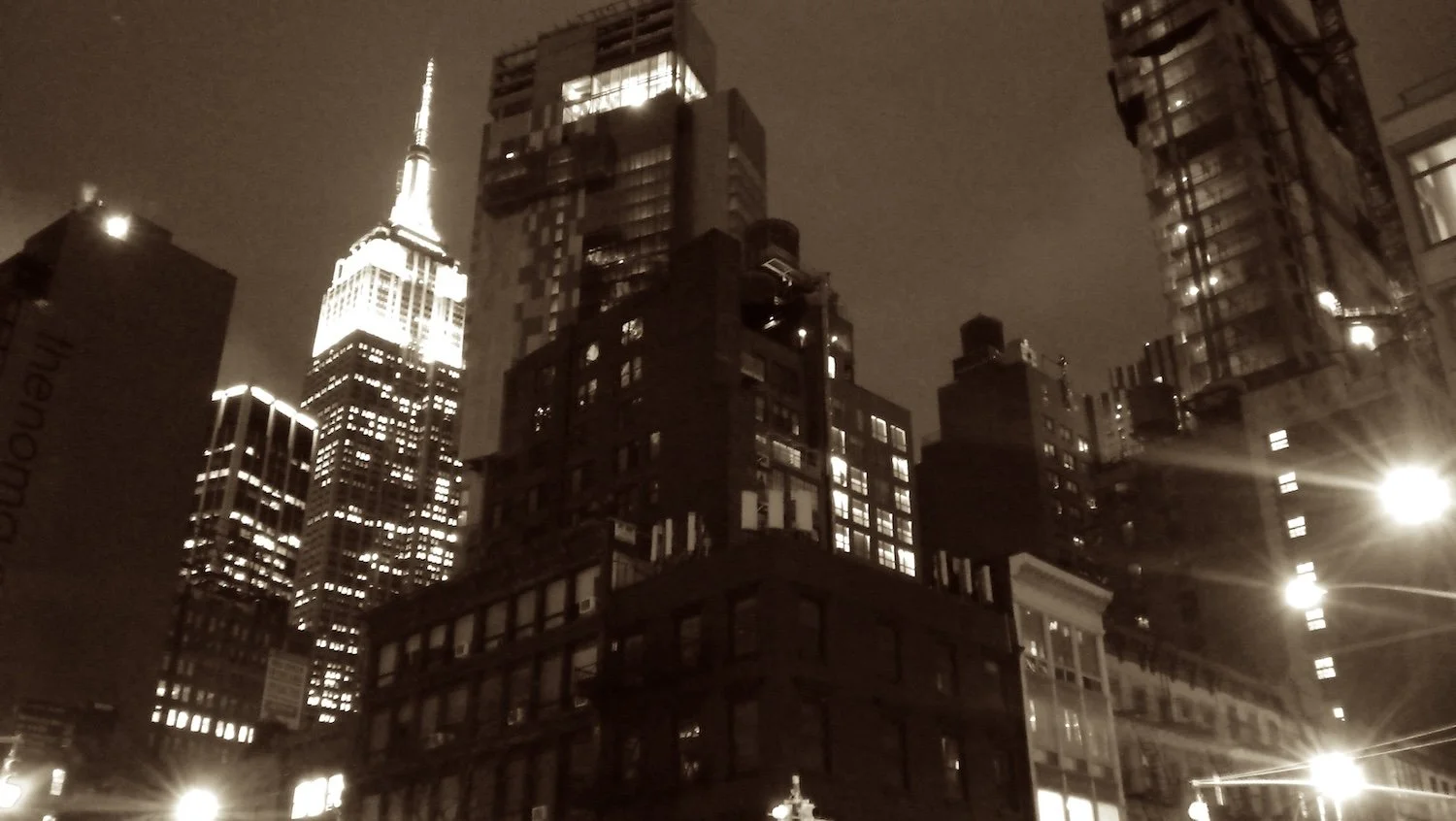
Photo: Nicolás Dumit Estévez Raful
Nicolás Dumit Estévez Raful Espejo Ovalles Morel Atrib
This was actually intended to be a scroll to go into a bottle. And, however challenging finding a real cork might have proved to be these days, I was not going to have to search for one. A piece of a rag or an annoying page from the New York Times featuring a wannabe progressive article would have done for a plug, if in fact I needed this. But I would have gone for a peanut butter jar, of which I have plenty at home, and close it with its metal top.
I am writing into my own future and that of the gathering I am calling a group to join on September 25, 2026, 15 minutes before the clocks strike midnight. I had planned to eventually place this writing in a public recycling bin, hence giving anyone less of a possibility to find it, that is, unless a curious employee somewhere along the chain of events had seen the paper in the glass container and had an inclination to pull it out. Even then, the chances of engaging in some reading might have remained minimal. Who has time for that when sorting things out in a recycling facility? Anyways, I changed my mind regarding the jar and this text, and here we are.
Invited by Art in Odd Places to present an action during Utopias, curated by Arantxa Araujo and Pancho López, I respond by calling a small group of brave souls in New York City to join me outside a train station on 14th Street in Manhattan, as the night ends and the morning approaches. The plan is for me to meet those who have expressed interest in attending at a location that will be disclosed at the last minute. From there I/we will walk together to a concealed spot in the area where I will be performing Art in All Places / A Blessing, which is sought to bring about and extend auspiciousness to the Festival and everyone involved in it. No photographs, no filming, as well as no other form of documentation is to be generated from this experience. As the days approach and I busy myself with the vestment and elements that such an endeavor demands, I ponder a Rosary of questions, which I do not necessarily propose to answer now, yet that are informing the unseen field that is shaping with each movement I enact to bring this to fruition.
What does it take in 2026 to organize a clandestine performance in the streets of New York City? Who can safely participate, given the surveillance machinery and its pervasive tentacles spreading around the metropolis, from somewhat inoffensive video cameras to the perversity of the ICE army? What are the incentives of performing under cover of night, away from the buzz and fuss of the Industrial Art Complex (aka the art world)? What are the vestiges of the action once completed? How do I avoid resorting to words that keep calling to surface in this writing, but that I seek to protect by not uttering them? These are the terms that circulate across posting after posting on IG, grant proposals and artistic statements. I will not say them to let them retain their inherent meaning, their power.
Are there any crevices left to hide in Manhattan? Is there any unlit corner on the Island? I have tested this through the years by trying to find a place to relieve my bladder without getting a police ticket. I have done it, but it is getting harder and harder, especially downtown. What of 14th Street is still recognizable to my heart? How deep has the spectacle managed to permeate into the ground and expand from River to River, East to West, block after block? My aunt answered this years ago, by saying she no longer walks on 14th. Too many memories. The immigration lawyers who did her paperwork, dead. Macondo and Lectorum, the Spanish bookstores, closed. Cee Cee, replaced. The shops selling Jesus prints side by side with suitcases and chamber pots, ghosts of the past. I once got to experience being called the Pope while traveling between Sixth and Seven Avenues on 14th. Long woolen coat, down to my lower legs, a newsboy cap (wool too), and thick-rimmed black framed glasses from the 1960s. No imitation. I was new to the city and moving through it like the world belonged to me. A Latino shopkeeper caught that, thinking I had made an escape from Vatican City perhaps to say Mass at the Shrine of Our Lady of Guadalupe at Saint Bernard, close to Eight Avenue. Three decades later, this omen came to a realization. I was back on the block to perform a blessing.
“There is no danger of her
Living forever (she will die
Of natural causes one night
& be reborn the next morning)”[1]
In America, Jean Baudrillard tries to get to the core of the most complex metropolis in the USA, yet fails to partake of the spiritual free-falling that such a quest tends to require. With some sort of answers arising from the not knowing where one is landing or the surrendering to an ongoing plunge. He asks himself naively “Why do people live in New York? There is no relationship between them. Except for an inner electricity which results from the simple fact of their being crowded together. A magical sensation of contiguity and attraction for an artificial centrality.”[2] To suggest that there is an epicenter to this far from perfect experiment in relationships and cultures is to do injustice to the randomness and pace with which our city discourages such hegemony, at least energetically. I am talking figuratively about the symphonies of dialogues, debates, conversations, arguments and agreements taking place at all times in all living and about to die languages. Every person is moving into the nucleus as this dissolves and forms again over and over. Art in All Places / A Blessing acts then as an example to this slippery centrality that is New York City, a gesture allowed to reverberate rather than to become a sedentary monument.
The broom from the Togolese store on Southern Boulevard in the South Bronx. The vestment that was part fetched at the Materials for the Arts warehouse, and part seamstress-made on a farm in rural Michigan. The black toga shipped in a box across states. Delivered to the wrong stoop in the Boogie Down. Found an hour later. A cohort of familiar and strange people moving through darkness. Most shops on 14th probably closed.
“Cutting across the map of Manhattan, Fourteenth Street sets the boundary for downtown, exploding into a frontierlike bazaar, a frantic place of trade and exchange, a truly inner-city port where among cascades of plastic flowers, pelicans made with shells rubber shoes, Rita Hayworth towels, two-dollar digital watches, and pink electric guitars with miniature microphones, an array of shrine furnishings is offered.”[3] This is the 14th street my aunt and I allude to. Today, a phantasm of one of the myriad reincarnations of our city. I keep in a suitcase the $10 corduroy pants as a proof of this. The $10 fake leather boots, gone. The orange trousers for $3 dollars that I never bought, still in my mind. La Tacita de Oro restaurant, right around the corner, demolished. Pure rubble waiting for something else to rise up. The Caribbean rice and beans joint close to Sixth Avenue, replaced by an eatery deploying different ingredients. I wonder if the older waiter at the chino-latino Cuban dinner is still in this physical plane. No trace of where this business used to be.
The gentrifying crowds traversing the Meat Packing District are hopefully in bed at night. I can only imagine David Wojnarowicz turning over in his grave if he could see what has become of 14th Street. “Losing the Form in Darkness” is what I aim for in Art in All Places / A Blessing.[4] The ghost of Wojnarowicz offering guidance as to how to find home in the shadows created by the streetlights and by the secretive nature of my action. I start to understand all of this as a replenishing dance countering the consumption all around it. Welcoming the discarded—as in vacated spaces—the empty hour of the morning, the inattention afforded by passersby unaware of what is happening in the happening along their path. Disrupting linearity initiated by my arms with circular motions, enlarged by a broom, followed by the rest of my body and perceived however possible by those present. A bath of darkness. “Outside the windows the river light turned from blues to grays to flashes of rain. A serious dark veil ran the length of the horizon; there’s a texture to it, a seediness like dream darkness you can breathe in or be consumed by.”[5] In my attempt to honor the night, I must refuse to explain myself. Things happen and I am not responsible for assigning them a reason. I move, as in dance and dancing with no rehearsed steps in mind. No score aside from entering a city where the mystery that has not been exorcised by developers arrives late, at the beginning of the day.
“And I survived to document
the experience late at night
with a beginning & no ending
memorizing a silent sunflower.”[6]
I will have two options for how to trek back to the South Bronx, yet I must figure out how to shift from one dance to another, as I leave the sacralized boundaries of the blessing and let it reverberate in its surroundings—as I leave the island of Manhattan for the continental USA in full regalia. An odd priestly figure praying for the trains to run on time, and choreographing in my mind the movements that will help me conceal my presence within the nighttime crowd.
[1] Pedro Pietri, “Her Simplicity is Her Mystery,” in Pedro Pietri Selected Poems, eds. Juan Flores and Pedro López (San Francisco: City Lights Books, 2015), 169.
[2]. Jean Baudrillard, America (London-New York: Verso, 1998), 15.
[3]. Celeste Olaquiaga, “Holy Kitschen: Collecting Religious Junk from the Streets,” in Megalopolis: Contemporary Cultural Sensibilities (Minneapolis-London: University of Minneapolis Press, 1992), 36.
[4]. David Wojnarowicz, “Losing Form in Darkness,” in Close to the Knives: A Memoir of Disintegration (New York: Vintage Books, 1992), 10.
[5] . Ibid., 9.
[6] . Pedro Pietri, “Her Simplicity is Her Mystery,” in Pedro Pietri Selected Poems, eds. Juan Flores and Pedro López (San Francisco: City Lights Books, 2015), 169.
Practicing How to Hide in Plain View ©2026 Nicolás Dumit Estévez Raful Espejo Ovalles Morel Atrib
Works Cited:
Baudrillard, Jean. America. London-New York: Verso, 1998.
Flores, Juan, and Pedro López Adorno, eds. Pedro Pietri Selected Poems. San Francisco: City Lights Books, 2015.
Olaquiaga, Celeste. Megalopolis: Contemporary Cultural Sensibilities. Minneapolis-London: University of Minneapolis Press, 1992.
Wojnarowicz, David. Close to the Knives: A Memoir of Disintegration. New York: Vintage Books, 1992.
To return to Incantations main menu, click HERE