Mónica Ferreras De la Maza

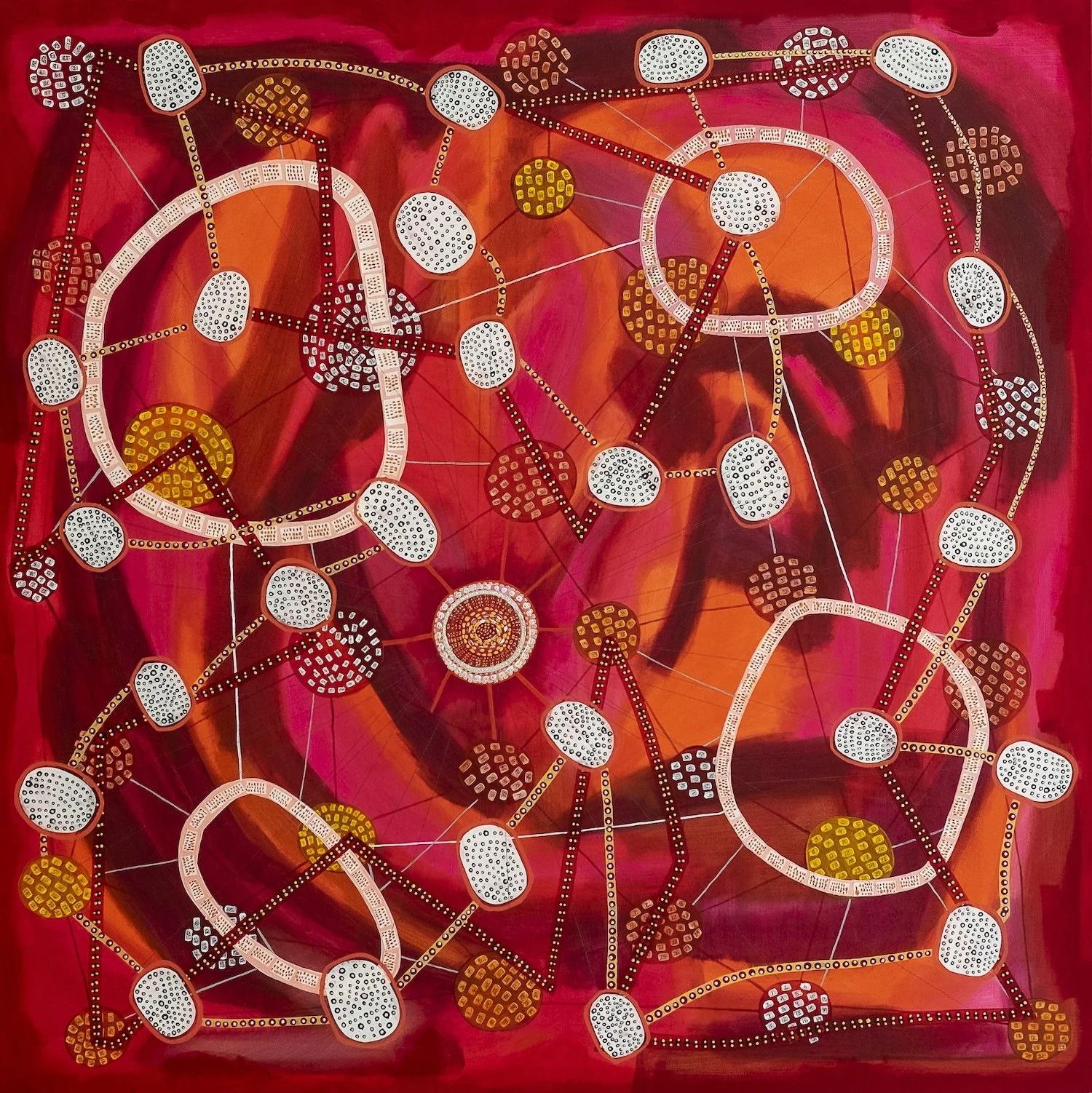

Nicolás Dumit Estévez Raful Espejo Ovalles Morel: We met through Alanna Lockward, a force of nature. I have yet to see another person like this woman emerge in the cultural field in the Dominican Republic. I miss her tremendously. How did you meet Alanna?
Mónica Ferreras De la Maza: Indeed Nicolás, Alanna was truly a force of nature. Back in 1995, when I had my 2nd solo show at Art Nouveau gallery, Santo Domingo, she attended the opening. I believe Tony Capellán introduced us at some point, and we just clicked right from the start. She showed a genuine interest in my work, and at that time I was only 30 and still hadn’t done much as an artist. Soon after my show, she invited me to a group exhibition she was curating at the Museum of Modern Art in Santo Domingo called Fábulas Abiertas.
I miss her a lot, and there are still days when I think I can’t quite believe she’s no longer on this plane.
NDEREOM: You and I have similar yet quite different trajectories, I think. I have lived most of my life in New York City. You have been living in Europe for a while. How has this been for you at a personal as well as at a creative level?
MFDlM: I’ve been living in Basel since the end 2016, and I also lived in the U.S. from 1996 until the early 2000s. I have to say that this time has been totally different from the first. Here in Basel, I am very happy because I love the city, the people, the cultural offerings, the general quiet pace of the city.
I believe that life, in its wisdom, knows how to do things: I’m at another stage in my life, one that is quieter, more grounded, and introspective. In that sense, Basel has been a perfect match for me.
Like with all changes, I needed to step out of my comfort zone. I could probably still push myself a bit more, but one thing I have learned from my previous experiences is not to be afraid of changes or stepping out of my comfort zone.
On a creative level, my life here has enriched my artistic practice, opened up my vision, and given me the stability and resources I had long been looking for.
From the formal aspect of my practice, I recognized the need to elevate my work to a more challenging level, and also to integrate other techniques, mediums, and opening up more opportunities for exploration than I had in the Dominican Republic.
NDEREOM: In my Dominicanyork mind I cannot picture myself being outside of the Caribbean archipelago, which goes to include places like New York City. We are indeed and extension of the Caribbean. But, the thing is that the Caribbean keeps expanding and have reached Madrid and Barcelona. Can you talk about how you keep in touch with your roots from a place like Basel? Are you able to get guanábanas and limoncillos there?
MFDlM: Without doubt, from here it’s more difficult to have physical contact with my roots and the Caribbean, because specifically in Basel, the Dominican community is not very large. However, I can say that I have an emotional closeness that remains in my memory. I carry the color, the rhythm, the music imprinted within me, and through this I have found a personal way of carrying the Caribbean and my roots with me.
I must admit that when I have lived abroad, I have never had a strong need to create a very Dominican environment around me. A few things are enough to meet that need, such as talking on the phone with my friends and family in the D.R.
When my mother was alive (1932-2019) I would travel to D.R. at least twice a year, and although I don’t go as often now, I try not to let too much time pass before I travel to the island.
Nicolás, I haven't seen any guanábanas here—although I never liked them—or limoncillos, but I do find the víveres (lo víviere) I love most: yuca, ñame, yautía. On the other hand, I’m quite good at typical Dominican cooking, and if I crave something, I make myself some ropa vieja, a mangú, or some fried cassava with white cheese. It may not be Dominican white cheese, but halloumi (the Turkish white cheese) or paneer (the Indian white cheese) do a pretty good job. I’m sorry to say I haven’t had much luck with the Dominican restaurants or food trucks I’ve tried here in Basel.
Talking about fruits, tropical ones are my favorite, and I really miss the culture of drinking fresh juices that we have, which you can get almost anywhere, very cheap, and made from a wide variety of fruits. I miss our typical sweets, especially the ones made with fruit, like cajuíl, naranja en almíbar, coconut with sweet potato, and guava, etc. Even so, not everything is bad in that regard. I can buy bananas—I love them—and luckily, I can get organic Dominican ones, which to me are the best. Also, here I can buy Dominican avocados, which without a doubt are the best for me as well—mango, pineapple—and they almost always turn out great.
NDEREOM: I see myself as a cultural exile from the Dominican Republic. I left because I saw myself hitting a wall. I knew that the time for me to leave had come and I am grateful for the decision I made, however deeply connected I feel to the island. What has been your experience in exile, or as an immigrant?
MFDlM: On this occasion, I emigrated because I fell in love. Between the 2 of us in the relationship I was the one for whom It was easier to move and to settle elsewhere. So, having said that, I think being an immigrant has a highly positive side, because, no matter what, the often-discussed insularity of countries like ours still carries certain limitations in many aspects. Of course, nowadays with the internet and globalization, they have been reduced compared to maybe 20 or 30 years ago, but even so, everything remains much more limited. So, in that sense, for me, living here means liberation in many ways. And at the same time, I think, at least in my case, I carry a little spark of nostalgia in my heart, always, because what one recognizes as what accompanied them—especially in the formative years of life—I think it becomes deeply ingrained throughout one’s entire being: in memory, but also in the sensory body, and in responses to life in many aspects. So, it’s something inevitable. But one also learns to live with that. I have learned to live with that to a point where it is not something that overwhelms me or makes me feel sad or anything like that. Without a doubt, my life here has been enriched, and I always try to see the positive aspects of life.
As an immigrant, my experience has been very positive. Beyond my career, stepping out of my comfort zone has helped me grow more open and socially adaptable, and I have managed to build truly meaningful relations. Intellectually, my circles challenge me, enriching my perspective. For sure there can be rare moments of prejudice from people who don’t know you, but personally I haven’t felt much discrimination, and overall, I try to focus on the positive things this journey has given me.
NDEREOM: What are the concepts and subject matters that continue to inform your work? I would like to hear about your work as a whole in detail.
MFDlM: Various sources have converged in my career to nourish my practice. There is a psychological and spiritual dimension, focused on the processes that have guided my self-awakening, my individuation, and my spiritual evolution. I want to emphasize that, although my work initially reflected these processes from a personal perspective, over time I have taken them to a more universal level. In other words, I trust that many people, anywhere, could identify fully or partially with these processes.
Other sources that nourish me are music and literature. Many of my works have been inspired by songs, poems, books and, to a lesser extent, cinema. Quotes from books, song titles, movie scripts that resonate with my vision of life or with the ideas I am working on. For example, in 2014 I did a solo show called Let iI Be. I chose this title because the story Paul McCartney tells about the origin of this song touched me deeply and related to me a lot because of the personal moment I was going through. For this show, I made a piece called Let It Be and another one called Here Comes the Sun.
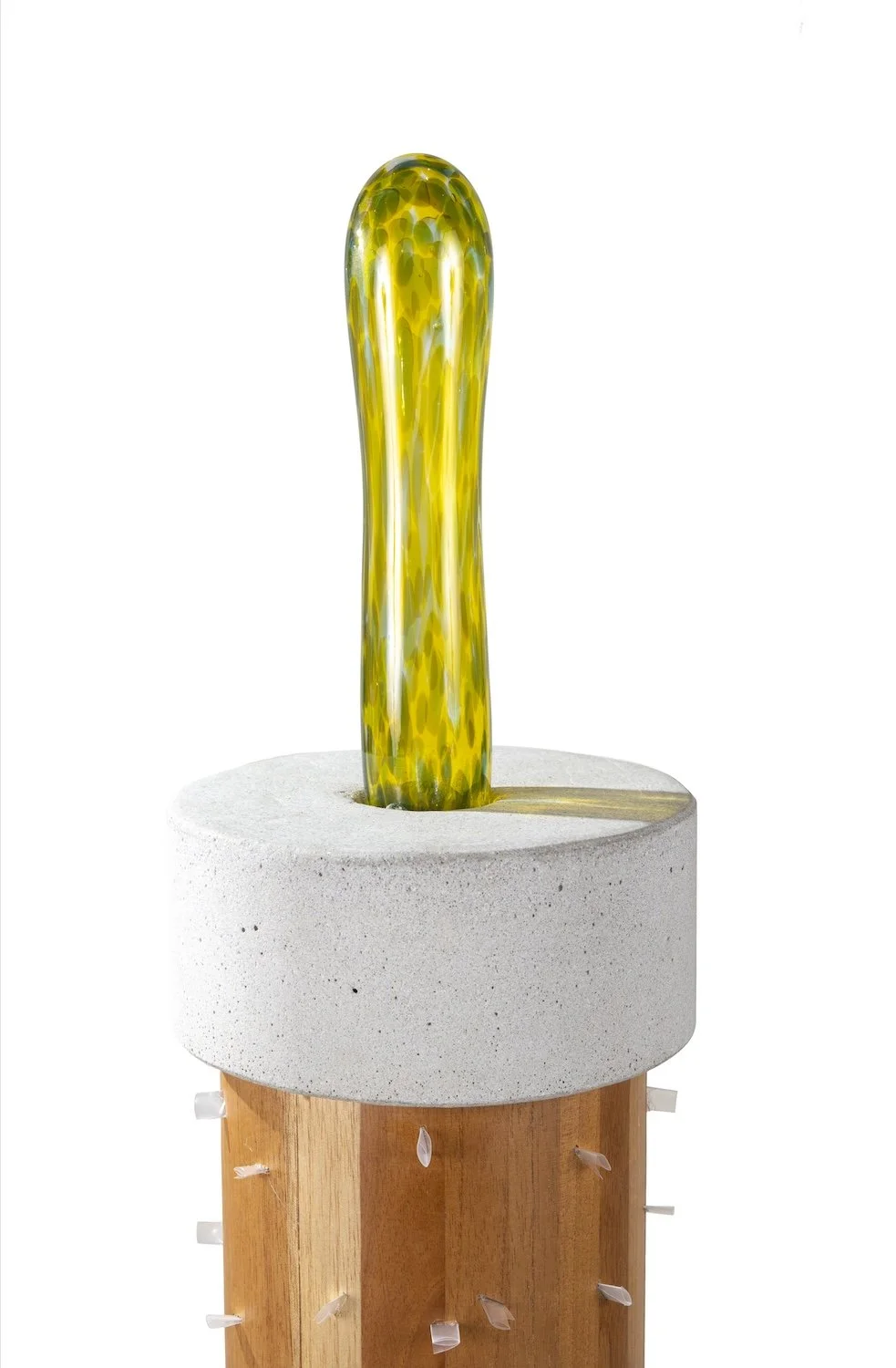
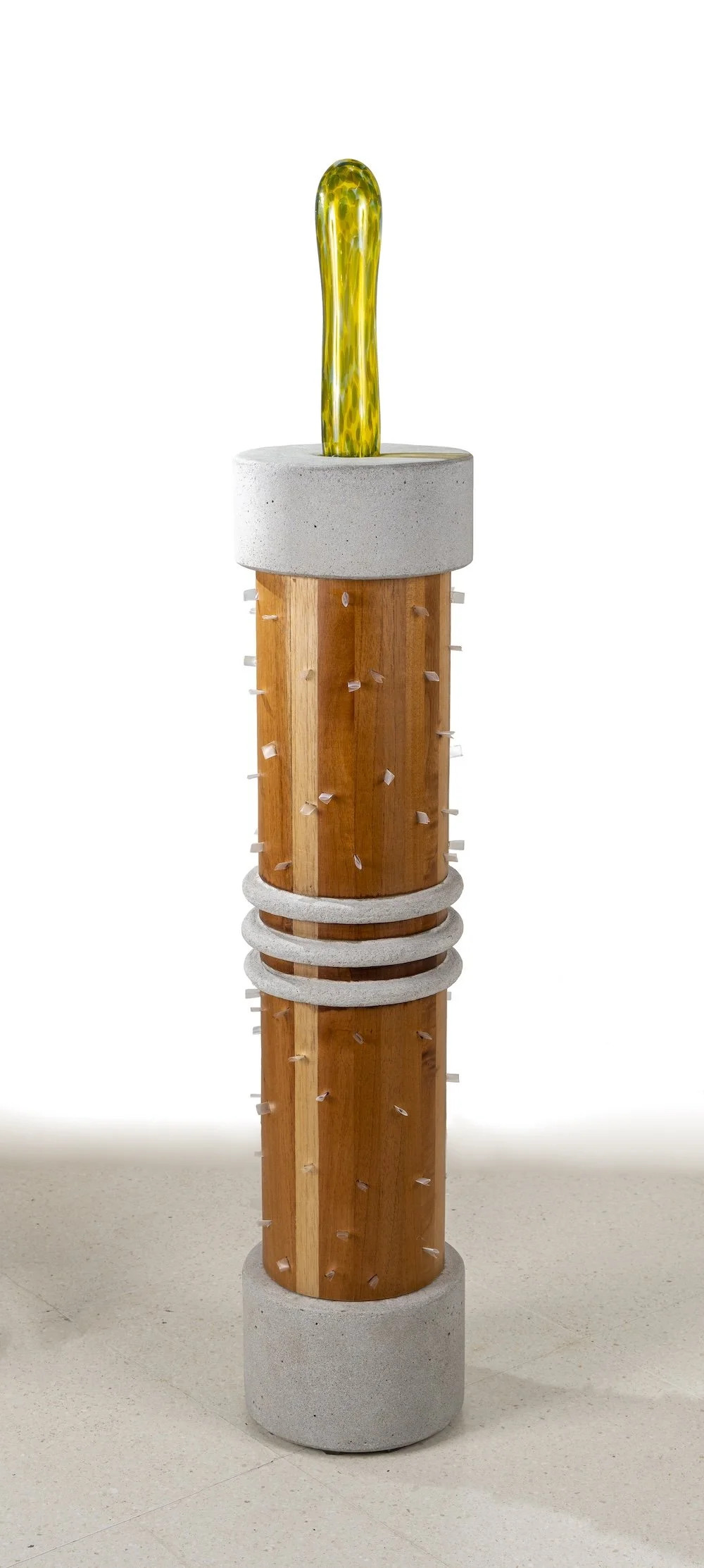
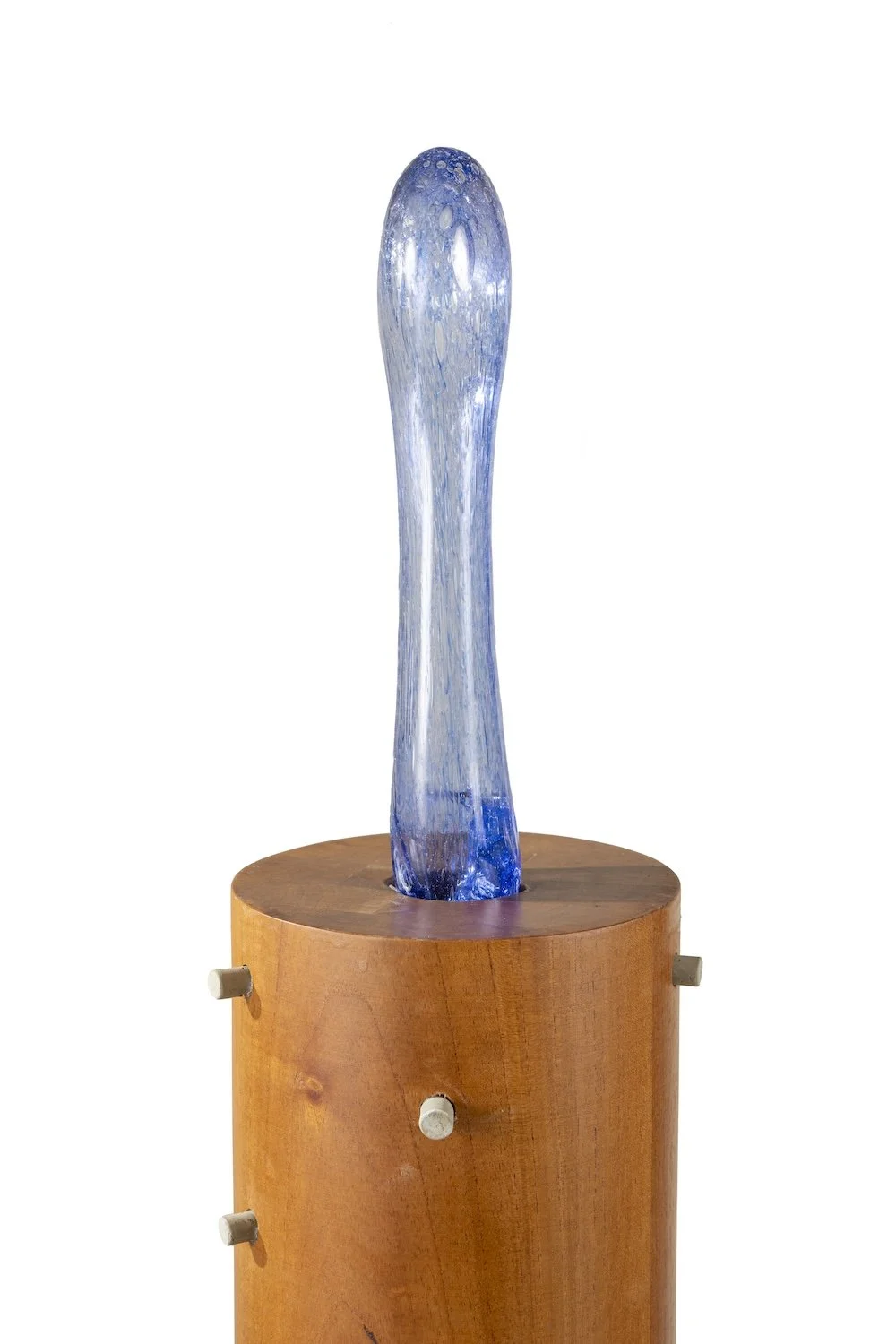
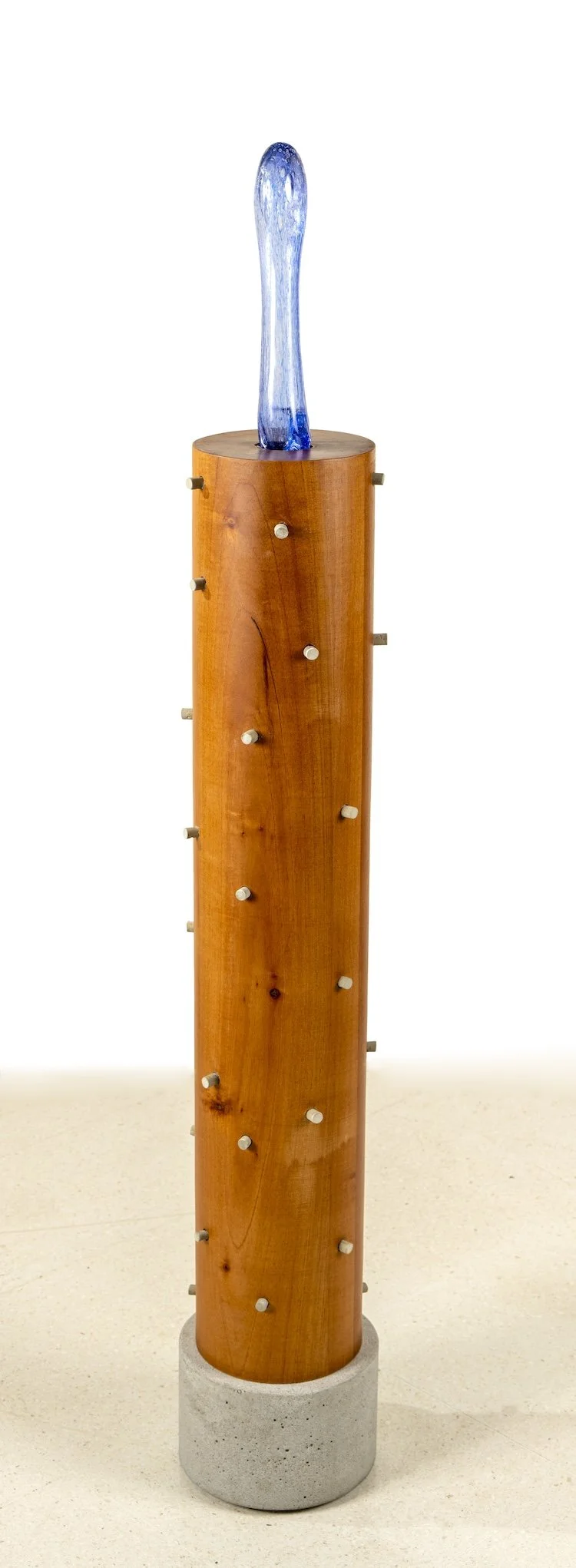
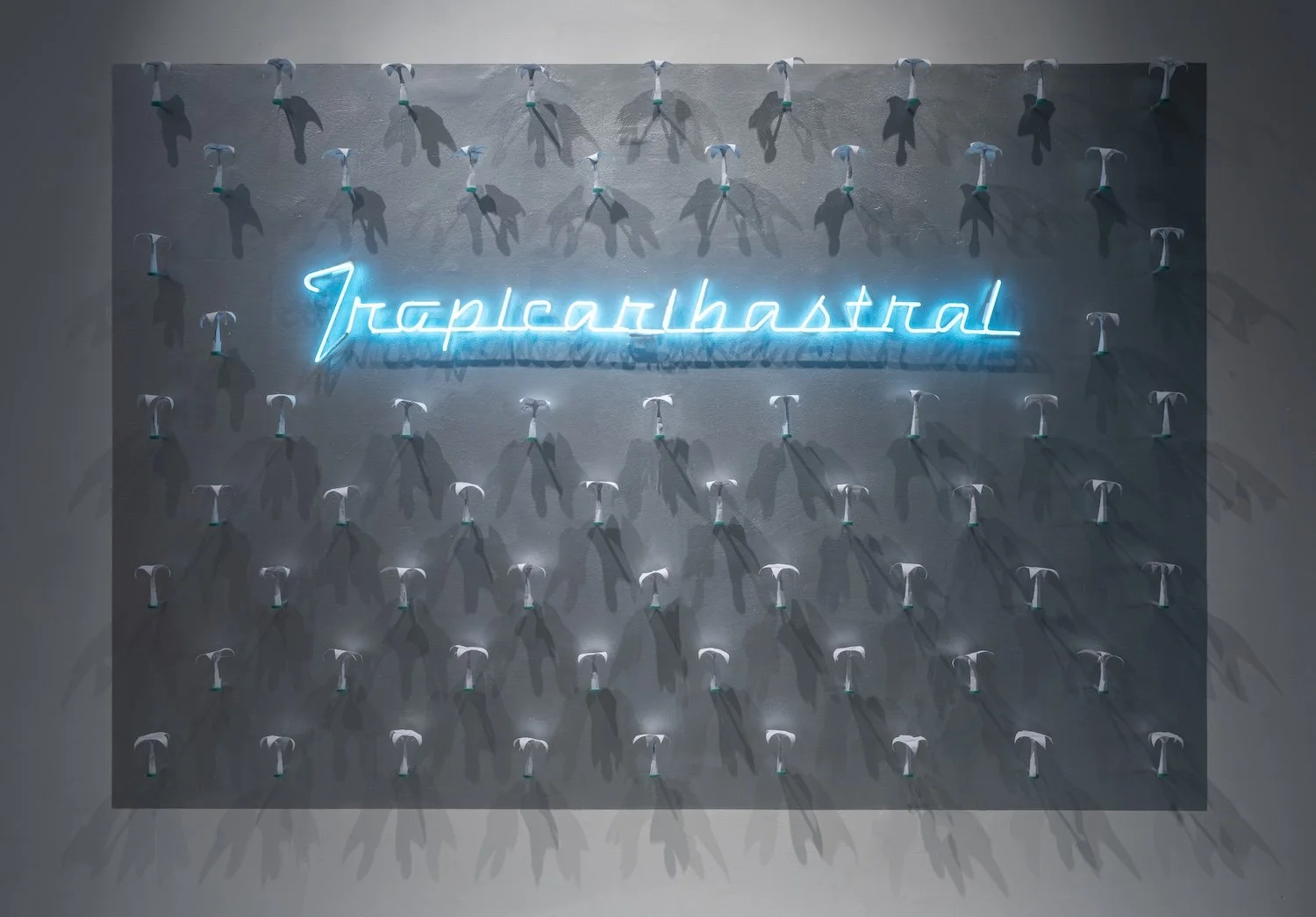
Another example is the series Paved Paradise (2025), a series of sculptures where I address how the tourism industry causes brutal devastation to the natural resources where it is established. This series, composed of seven sculptures made of cement, plastic, wood, and glass, was presented in my latest exhibition, Tropicaribastral, and is based on Joni Mitchell's song Big Yellow Taxi, which was covered by the band Counting Crows in 2002.
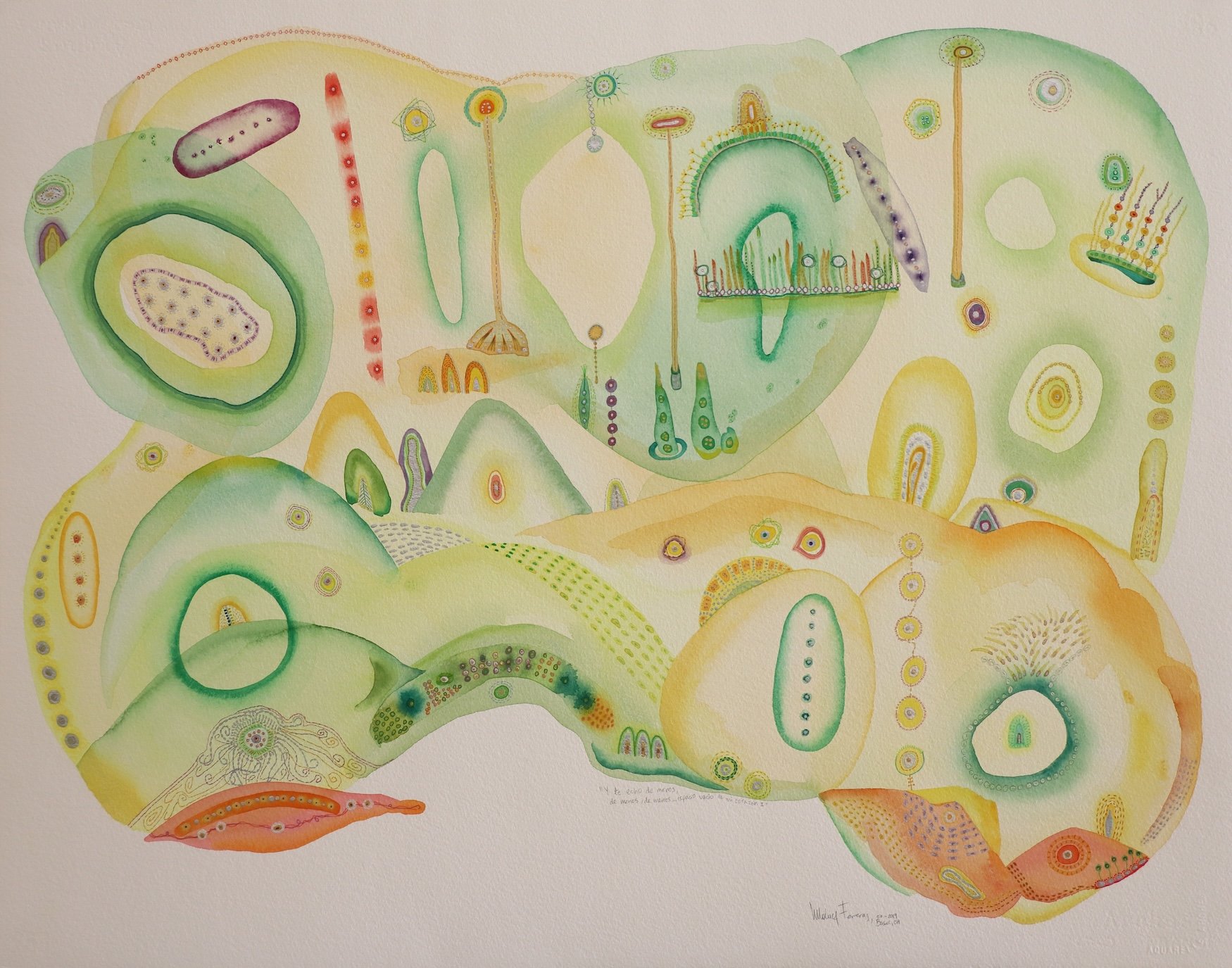
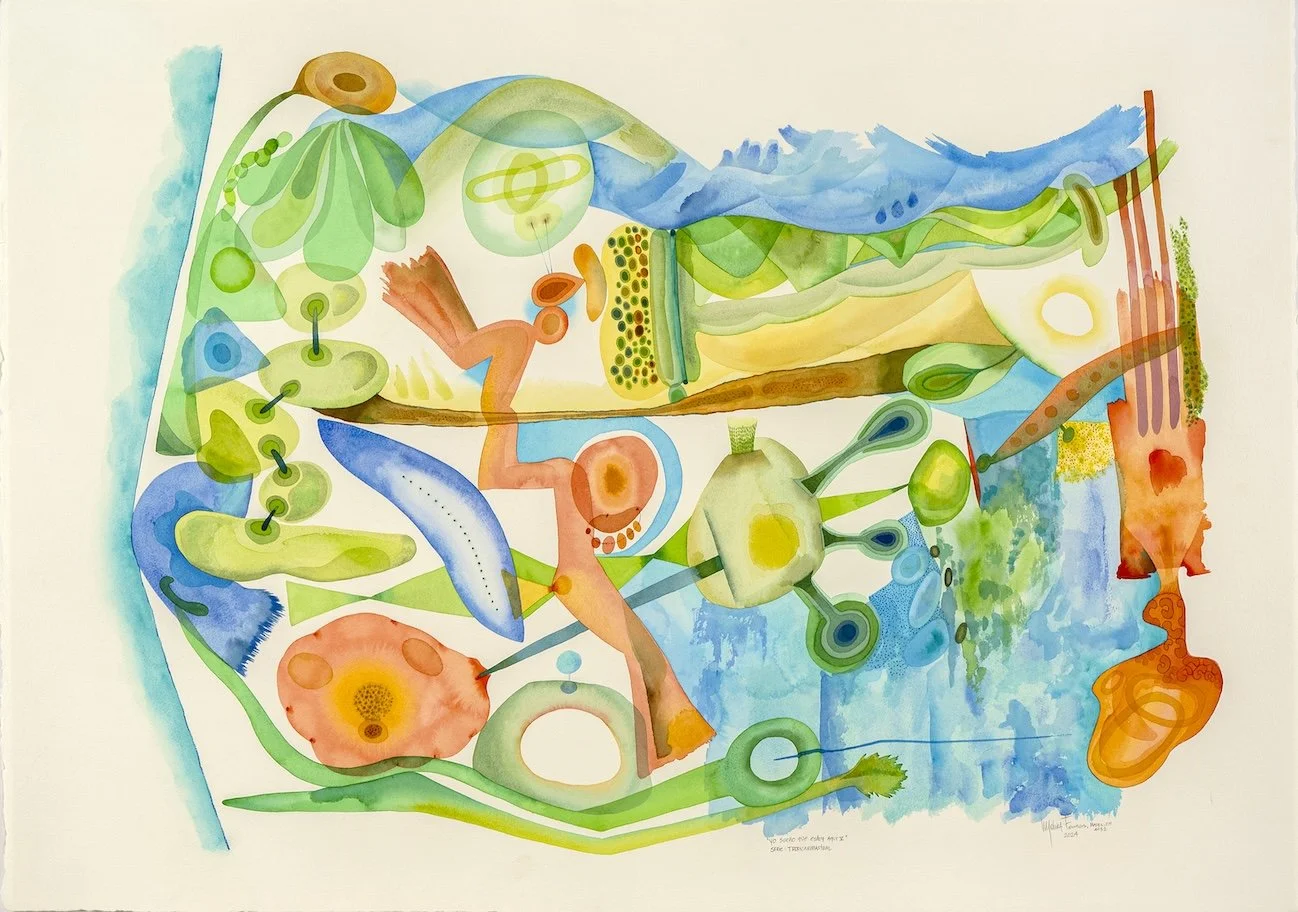
One last meaningful example I would like to tell is this of the drawing te echo de menos, de menos, de menos…espacio vacio de mi corazón I, which takes its title—drawn from the refrain— from the song De menos by the wonderful Pedro Guerra and marked the beginning of a new phase in my trajectory. I arrived at it after a profoundly difficult moment: following the death of my mother, I felt desolate and went through a period of deep sadness. A few months later, I began a drawing very different from what I had been doing—closer to the figurative and with a certain landscape-like atmosphere. I did not fully understand what was happening, but I continued working with perseverance. After several days, I managed to decipher what was emerging in the work: I came to understand that, in some way, my mother was conveying to me that I should not grieve, that she was in a luminous astral plane, accompanied by beings of light. This revelation was impactful for me and marked a decisive shift in consciousness. From there, I was able to create the first work of a series that would extend over several years.
Other sources that feed my work are color, light, and gestural freedom, which are part of my Caribbean roots and have always been present, especially in my paintings and drawings.
Political and social themes have also permeated my work at different times. Although they are not always the most talked-about focus of my career, they have left a solid mark on my entire body of work and continue to be part of my current discourse with the same force. Here are some examples: the audio piece Perdón (2018), which I created inspired by Regina José Galindo's work 279 Golpes; the sculptural series Paved Paradise; and the video art pieces Con su permiso deseo soñar I y II (With your permission, I wish to dream I and II). There is also the 2011 video art trilogy: Este cuento se jodió; El del Pikete; Ay que sueño tengo. I wrote the lyrics and produced the soundtrack for this video art trilogy, with musical arrangements by Ricky Molina and performed by the rap group Capotillo Nasty Clan. All of these video art pieces can be viewed HERE.
NDEREOM: You recently returned to the Caribbean to have a retrospective at the Museo de Arte Moderno. How did the new work in it come to be? What are the conversations that your presence there elicited in terms of the diasporic route that you have taken?
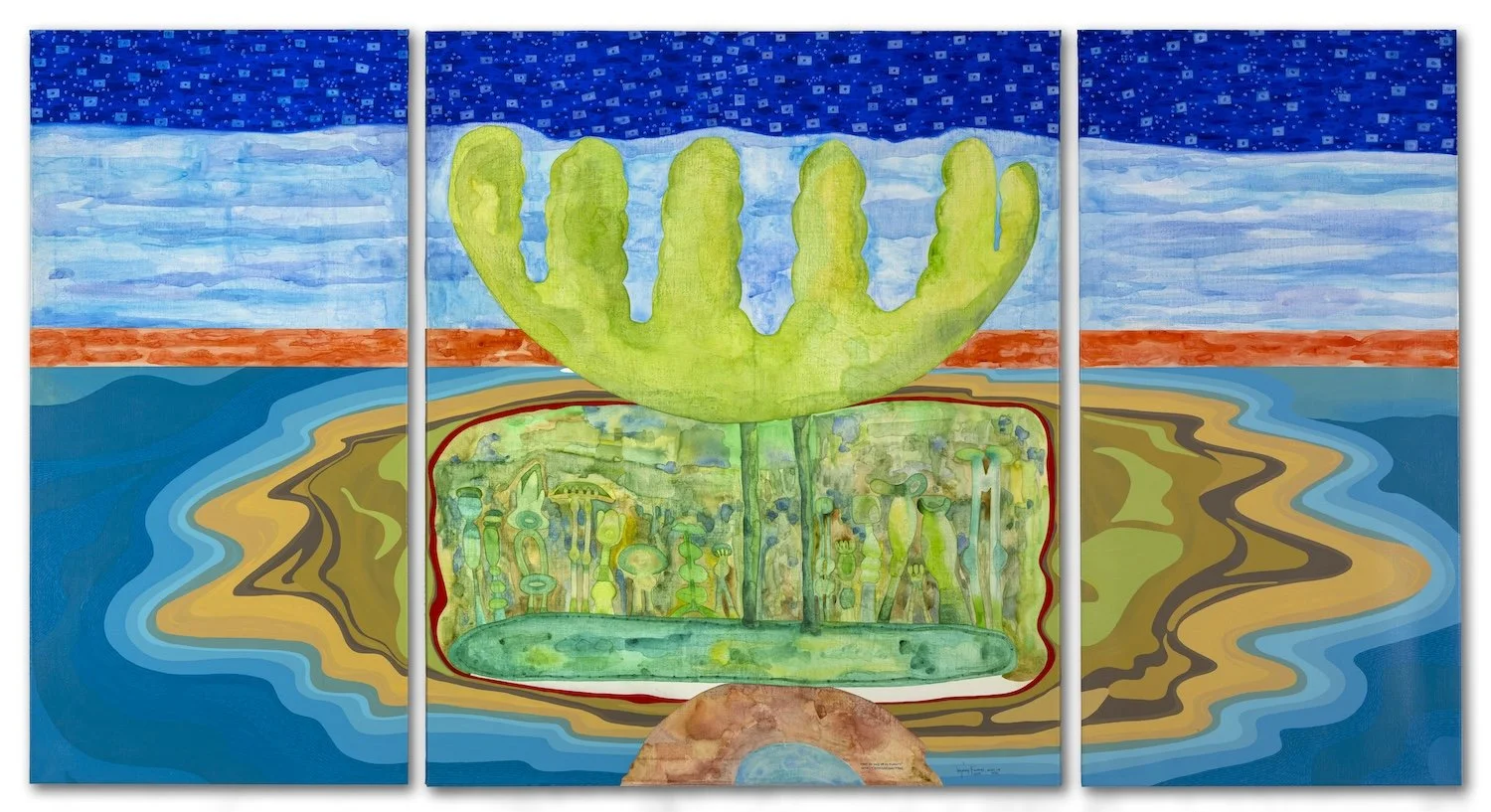
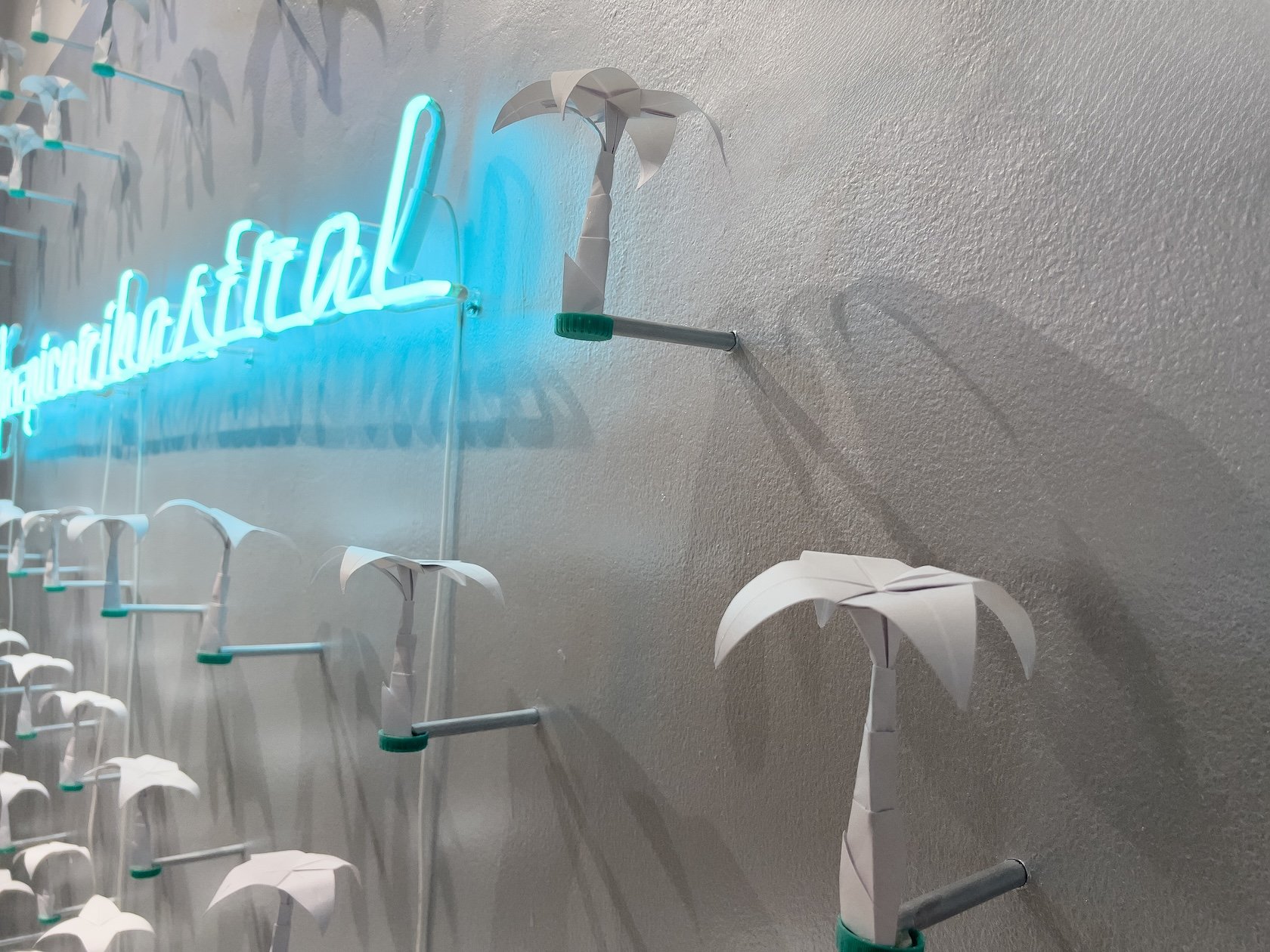
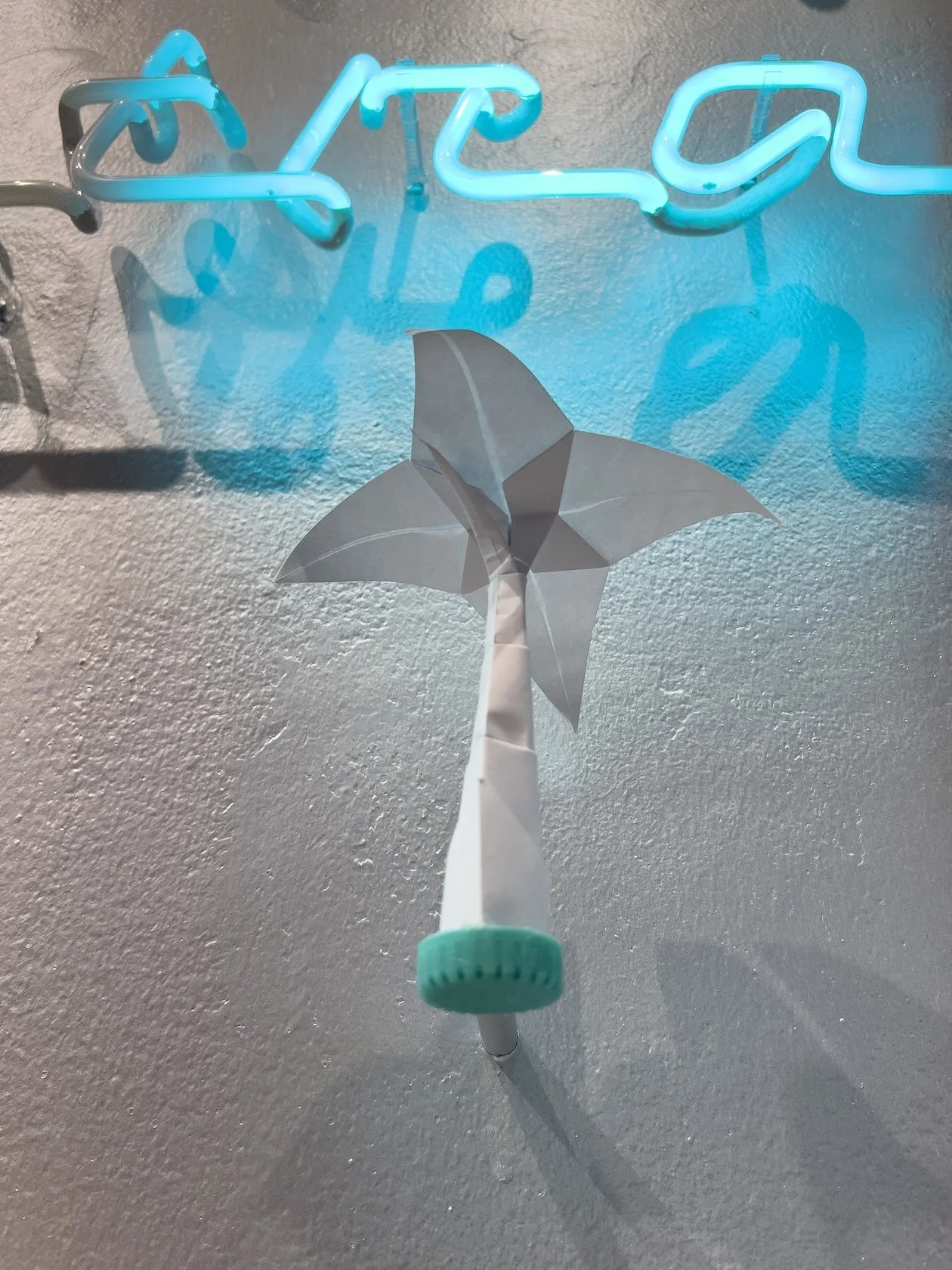
MFDlM: That's right, after five years without exhibiting in solo in the Dominican Republic, I was able to hold this major exhibition at the MAM, which ran from late April to late June. The exhibition was called Tropicaribastral, and it wasn't actually a retrospective but rather the result of two and a half years (more or less) of work to create a set of completely new and previously unseen works, conceived exclusively for this exhibition.
I think it is important to note, by way of preamble, that this concept of Tropicaribastral would not have emerged in me if I were not an immigrant here in Switzerland. It was the emotional separation and physical distance from my roots and my context, combined with the relational experiences I have had here as an artist, that shaped the idea of approaching things from different perspectives and, at the same time, questioning the construction of the tropical and the Caribbean in order to focus on a more personal and intimate experiential idea, taking into account first our true essence as human beings and then from there moving on to the conditioned part, such as the Caribbean and the tropical.
Here I add a brief statement to better understand what Tropicaribastral is about:
The tropical...the Caribbean...these are themes that have been addressed by artists for years, and now more than ever, although almost always from two extremes: the colonial or the decolonial. With Tropicaribastral, I propose an abstract, subtle, and intimate perspective, charged with emotion, which at the same time reveals the sociopolitical background of the exoticism imposed on our natural resources in order to justify the exploitation and systematic plundering of our beaches in particular.
Tropicaribastral encompasses a kind of Caribbean-tropical DNA tinged with nostalgia because for those of us who migrate, this is inescapable. However, nostalgia does not overshadow the vast and magnificent contribution that migration has given me and that persists and manifests itself subtly in each work.
With this body of work, I seek to give shape to essential elements of my identity. May these works be a point of convergence from which I can affirm:
I AM SPIRIT; I AM SOUL; I AM LOVE; I AM BODY; I AM CARIBBEAN; I COME FROM THE TROPICS AND I AM AN IMMIGRANT.
Finally, to answer the second part of your question, I can tell you that the exhibition was very well received and I had many positive comments and reflections on the works, but I didn't receive many specifically on the topic you want to know about. It was wonderful to see how many beautiful comments and posts people shared on social media.
I would like to conclude by saying that, in general, I think that people on the island who have not been immigrants do not really understand this condition and its effects. There is not enough thought given on what happens to our artists and our communities from the diaspora, or about the psychological and social impact of being an immigrant and so many other things that could be analyzed about and around this social reality.
NDEREOM: You seem to keep close connections with the creative community in the Dominican Republic. I can’t say the same since, it has been in New York City where I have done the bulk of my growing up as a person and as a creative. What is the dialogue that you continue to have between the Island and the place where you live now?
MFDlM: I have many artist friends in the Dominican Republic, and distance has not been a problem in maintaining our friendships. Of course, distance always takes its toll on relationships in the end, but so far, this has not been the case for me.
In reality, it's not that when we talk we necessarily talk about art or art-related topics in general, except in specific cases of a situation that is currently on the table in the Dominican Republic. In general, I think that in the end we talk more about the political situation than about art... there is no human being who likes to talk about politics more than a Dominican, ja ja ja and I include myself in that.
NDEREOM: We have such strong Dominican painters on the Island and also in the diaspora. Who are those who influenced your path as you developed as a creative? What is the route that you see Dominican painting taking at the moment and in terms of the younger generations? I am curious. When I visit museums there, I see a great deal of work that is referential of what has been already done in New York, Cuba and Brazil. Is there any new voice that inspires you?
MFDlM: I truly believe that we have very good painters in the Dominican Republic, from different generations. Those who influenced me the most may not necessarily be recognized as the best painters, but for me, they were important because of their approach to painting. I could mention Silvano Lora, Geo Ripley, José García Cordero, Ada Balcácer, Soucy de Pellerano, Vicente Pimentel, and José Rincón Mora.
Regarding the other part of your question, I see a strong tendency toward figurative style in the younger generations. In many cases, this figurative style is present both in its narrative and in its form, ranging from a figurative art of “almost frenzied mannerist” forms (a term I just coined) to a figuration that borders on semi-realism. This tendency emphasizes the fantastic and the grotesque, or both at the same time, to tell specific stories about the local or urban scenes, or with urban-surreal narratives or narratives from a decolonial perspective. In my opinion, there is a saturation of this, and in this sense, I agree with you that there is also a very marked reference between what is being done in the Dominican Republic and what has already been done in New York, Cuba, and Brazil.
In summary, I would say that what I find lacking in the local scene is painting that invites a more suggestive and subtle experience or even bordering on the abstract. I am referring to paintings that do not tell me everything immediately, that when I look at them, they subtly suggest states, emotions, or ideas that unfold in various layers of reflection; in other words, the paintings suggest more than they show, appealing to different nuances of sensitivity in my perception. Works that are not so forceful and explicit that they limit the process of interacting with the work.
A very young artist who I think is doing very good and different work is Yessica Montero.
NDEREOM: I am wondering if you have any anecdotes about your work with Alanna Lockward that you can related.
MFDlM: Alanna and I clicked pretty quickly, and at the beginning of our friendship we shared a lot, not just about art, but also about more everyday things. One afternoon she came over to my studio. She saw my guitar (back then I was still playing). Without saying anything, she just picked it up, put one leg up on a chair, rested the guitar on it, and started singing Fina estampa. About 2 years earlier, Caetano Veloso had released an album with the same name and had made a beautiful version of the song. Alanna began to sing it. She played and sang it really well, something I could have never imagined. And on top of that, the incredible presence she took on while performing… I was just left speechless. It was such an unforgettable, magical moment that has stayed with me ever since. I don’t even remember if I ever told her about it.
NDEREOM: Are there any questions for me?
MFDlM: Yes. I see that it is becoming increasingly common, or perhaps even a trend, for very young artists, some of whom are recent graduates, to be the ones that curators and galleries mainly consider for exhibitions, participation in biennials, or similar events. Since you and I are more or less the same age, I would like to know your opinion on whether you think age influences the opportunities an artist has to obtain funding for their work or specific projects. Is age a factor that curators or gallery owners consider when selecting artists to represent in their galleries or curate exhibitions? Is age a determining factor in the potential visibility or attention that an artist can generate? If you feel like it, I would like you to elaborate on this and touch on all the aspects that strike you in this regard.
NDEREOM: Thank you for asking. I would be happy to engage these questions, which I think are crucial at this moment. In general, and these are of course my own views, there is an invisibility that comes with aging—unless one is a celebrity. I kept hearing people talk about this and it did not hit me until I started to experience it myself. There is great freedom to this. For example, to go about the city and not been seen at this moment can be a privilege when we are living in authoritarian times. I understand as well that this invisibility might not apply to Black bodies, big bodies, trans bodies or any other bodies seen as not conforming to the “norms.” I am a mixed-race white/European presenting person in the US, that is, until I speak and my accent reveals that “I am not from here.” Even then, I get asked if I am Spanish, French, Italian, Russian…
Now, regarding the arts, it has become clear to me that sagging underarms, crow’s feet and grey hair are not really that appealing in, let’s say, openings and galas, unless one is a cool donor or an art star. There is more ageism in the arts than the system would like to shed light on because we are meant to be progressive and cool and cutting edge when it comes to social justice and equality issues. The arts exist and thrive within a system called capitalism or late-stage capitalism. In fact, they can be intrinsically connected to this. This system values and celebrates innovation, the new, the shiny, the exciting, and with that comes an erasure of aging. I am not against innovation, and it is wonderful to strike a balance between creatives from all generations when it comes to exhibitions, awards, recognitions and opportunities. But what happens is that most grants in the arts might not be there to help those who have been doing the work for 3-5 decades, and who are the ones dealing with an increase in health-related issues, aging parents, deaths in the family, and shrinking finances, except for those with savings, hefty retirement pensions or trust funds. So, the art industry is a reflection of the system that fuels it and which values youth.
It is not rare for me to encounter 30-something year old curators who know nothing about some of the older figures who have been key to the arts, unless these figures have been validated institutionally—with some exceptions of trailblazers the industry cannot push aside and ignore. I do wonder about the histories that some of these younger curators will write, as well as about the lack of substance of some of them. The shelf-life of many of the up-and-coming artists is rather short. It is fast and short because it is meant to be sensational. There are also older curators who perpetrate this erasure because they need to put food on their tables and keep the store open with new inventories. For some of these older players, artists who cannot be molded easily to what they need at the moment is a problem. The same goes to artists who can write and who are not waiting for others to write about their work. This is a skill that I encourage the younger generation to develop, to write about their own creative work.
Also, awards give birth to awards. You would think that awards in the arts seek to help those who are doing great work and who really need the funds. No, it is mostly about one award being in the company of another award, so the same artists who have a gallery, who sell work, are the ones who get all the awards, because it looks good for funders and institutions to be part of the group that is in. The winner is meant to take it all, the rest are meant to do with the crumbs that are brushed off of the banquet table. All of this used to depress me. Not anymore. I have been in the arts going on 4 decades and I have seen too much. I look at this and laugh and I counteract this by offering as much support as I can to the elders who have sent me forward in the arts and by opening up transgenerational conversations. None of this is necessarily the fault of the young but the workings of a system that is here to make a buck. If any curator or institution is reading this, we can still be a force of change and it all starts with one person wanting to effect changes.
All images courtesy of Mónica Ferreras De la Maza
Mónica Ferreras De la Maza ’s related links: Website / Instagram / Facebook / Reviews / Contact
Mónica Ferreras De la Maza is a Swiss-Dominican artist based in Basel, Switzerland with a continuous career over 30 years. She held 20 solo exhibitions in the Dominican Republic, Switzerland and the United States, including Galerie Eulenspiegel, Basel (CH); MultipleSpacing, Bern (CH); Centro Cultural de España, Santo Domingo (DR); Macky Gallery, University of Colorado at Boulder, CO (US); Leonora Vega Gallery, NYC, NY (US). In addition, her work has been exhibited in multiple group shows in several countries such Martinique, Fondation Clement; Italy, Milan at CE contemporary and Andora, Palazzo Tagliaferro; China (Shanghai), ARK Gallery; US (Providence) at The RISD Museum; Australia (Melbourne), ResArtis Gallery Space; First Asunción’s Biennial, Paraguay (Asuncion); Guatemala (Guatemala City) Ixchel Museum; Puerto Rico (Caguas), Museo de Caguas; Spain (Madrid) ARCO and (Sevilla) La Nave Espacial Art Center; Turkey (Istanbul), Contemporary Istanbul, ACAF Gallery. Mónica has received several important recognitions such as the "Specialized Publication / Book 2018" award for her book YOU NEVER KNOW. This award was given by the Dominican Association of Art Critics, Inc. (ADCA). In 2017 she was nominated (2017-2018) by the Cisneros Fontanals Foundation within the "Grants and Commissions" program in the category "mid-career artist". In 2016 Ferreras was the recipient of a 2-month fellowship/residency in Shanghai awarded by The Australia China Art Foundation (ACAF). In 2013 she was awarded the first 3-month residency given by the Davidoff Art Initiative (DAI) at the International Studio & Curatorial Program (ISCP), Brooklyn, NY. In 2010 she was the winner of one of the three equal prizes of the prestigious Dominican Visual Art Contest “XXIII Concurso de Arte E. León Jimenes” celebrated every second year in the city of Santiago, Dominican Republic.