Jatun Risba

Nicolás Dumit Estévez Raful Espejo Ovalles Morel Atrib: Jatun! Jessica Fairfax Hirst and Eliu Almonte introduced us through email. You and I then met in person in New York City and you came to visit me in the Bronx, where I live. I usually invite people to meet me at home, since many of those who travel to our city do not always make it to the mainland. What brought you to the Big Apple?
JR: Hi Nicolás, I came to New York City through a scholarship awarded by the Ministry of Culture in Slovenia, which supported my artist residency in Williamsburg, Brooklyn, during May 2026.
This was my third consecutive application for the residency grant, so I am especially grateful to have received it. After many years, I am extremely happy to be back in New York and the United States, presenting my work and reconnecting with the artistic community here.
NDEREOMA: I am glad that you received the award. I am interested in creatives who are focused on performance art as a way of understanding life, that is, those who are not in this field for just a bit and then move on to other disciplines. Sometimes I wonder if performance art has not become too “performative.” Tell me about your relationship with this field and your discoveries about life and yourself through it.
JR: Thank you for this question, as it touches on the foundation of my relationship with performance art. I have always approached performance not primarily as a medium of representation, but as a method of inquiry and transformation—a way of investigating lived experience, consciousness, and the conditions of being human.
My understanding of performance resonates with what Jerzy Grotowski described as “art as vehicle,” a practice through which artistic processes become instruments for inner investigation, perception, and social transformation. I am also deeply aligned with Michel Foucault’s notions of technologies of the self and parrhesia—practices through which individuals cultivate ethical relationships with themselves and others through acts of reflection, self-experimentation, and courageous truth-telling.
For me, performance art is not simply the production of an event, a physical score or an image; it is time-based research creation process that usually involves taking risks, which aligns with Foucault’s description of the parrhesiast, the truth-seeking person engaged in the Arts of Life. I have never maintained a conventional studio practice focused on the production of autonomous objects. Instead, my work emerges from embodied encounters, ecological and political urgencies, and questions that demand attention. Performance becomes a site where knowledge is generated through the body, through duration, vulnerability, and direct engagement with experience and situated knowledge.
My entry into art was profoundly shaped by my diagnosis of multiple sclerosis in my twenties. This experience brought me into artistic practice not simply as a professional pursuit, but as a visceral necessity—a way of engaging with uncertainty, vulnerability, transformation, and the complexities of embodiment. Since then, my creative process has consistently begun with an embodied impulse: a physical, emotional, or conceptual response to a situation that calls for deeper investigation and interdisciplinary research.
My process usually begins with a specific challenge or emerging question, followed by a period of immersion—of dwelling with the subject, researching, and allowing the work to reveal its deeper potential. I bring a work into existence only when I sense that it carries the possibility of generative change beyond myself: when it can become a meaningful encounter, a shared process of inquiry, or a contribution to a wider, multifaceted understanding of phenomena.
In this sense, performance is not something I temporarily enter and later leave behind. It is an ongoing mode of perception and engagement with life itself. It has become a way of life through which I continuously investigate embodiment, consciousness, relationships, and the possibility of transformation.
NDEREOMA: When we first connected, you were working on a performance art piece dealing with urine. It is my intention to remain as open as possible with all of this, and yet my first instinct was to Google the potential harms involved in getting in contact with another person’s urine. I must share that growing up I remember getting a urine bath—with my own—to help lower a fever I was dealing with as a result of having caught German measles. In your case, your proposal in New York City was rejected by several places. Would you say this was prompted by health risks? What is the research you have done regarding this bodily fluid and how do you make sure to avoid any contagious illnesses when performing with it, as well as to protect your audiences?
JR: Thank you, Nicolás, for bringing up this topic, and for generously sharing your personal experience. Stories like yours remind us that our relationships with bodily fluids are culturally learned rather than fixed, and that practices surrounding them have varied enormously across time and place.
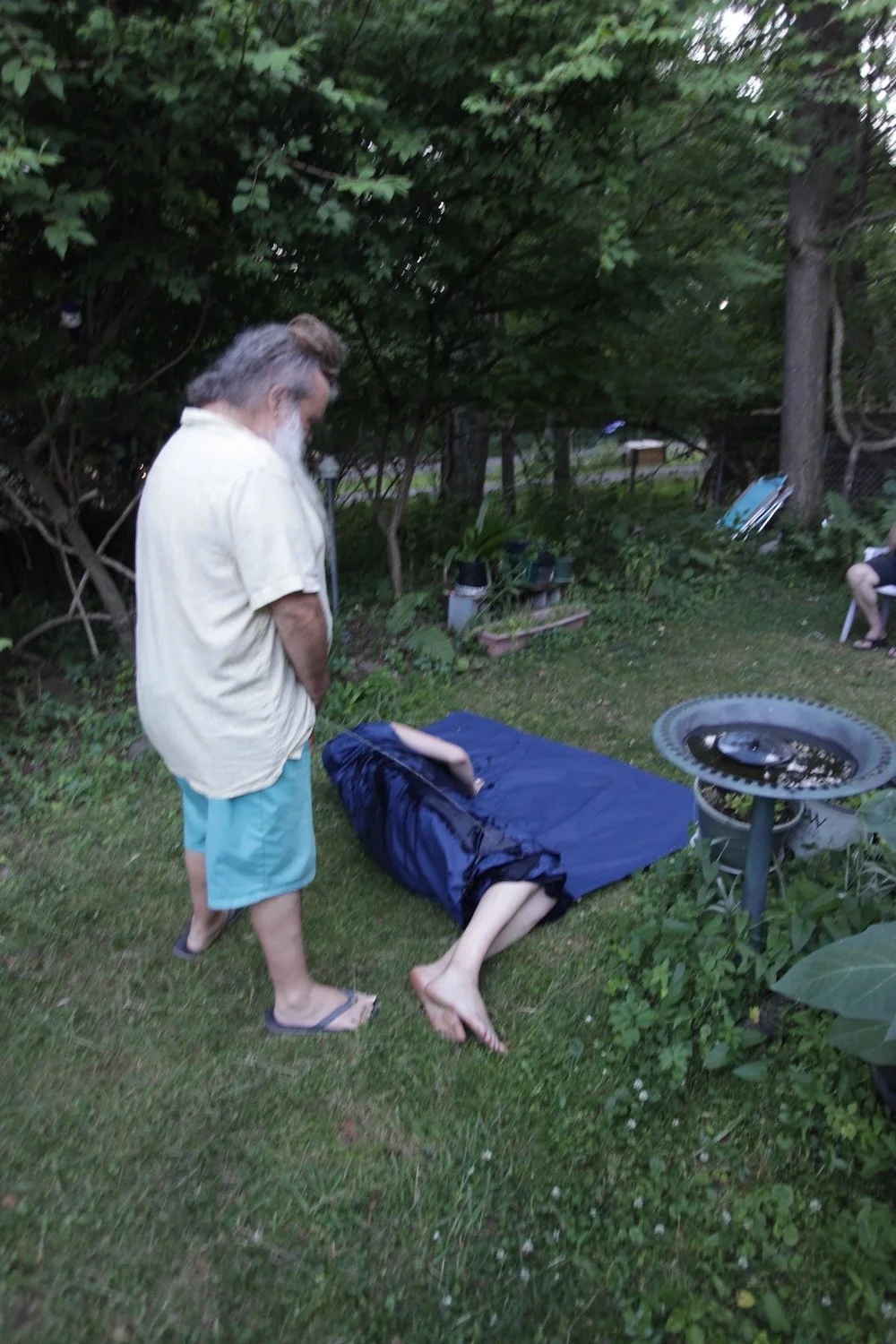
My performance Imaginatio (2026) examines the stigma surrounding urine and its cultural devaluation as something to be immediately discarded rather than understood as an underutilized biological resource. Contemporary research increasingly explores urine as a source of nutrient recovery for agriculture, potable water production, renewable energy generation, pharmaceutical monitoring, and auto-urine therapeutic applications, challenging conventional assumptions about waste. Beyond these practical uses, it also carries rich symbolic, biological, and social meanings that have shifted across cultures and historical periods.
My interest in urine emerged through my research-performance UroeliXir (2025), during which I consumed my own midstream first-morning urine for 48 consecutive days, documenting the process through photographs, video, and the systematic collection of urine samples. The project followed Ayurvedic protocols associated with auto-urine therapy and investigated the practice from artistic, somatic, and research perspectives. The experience generated a series of unexpected observations and raised new questions about the materiality, cultural perception, and underexplored potential of urine, prompting me to investigate it more deeply as both an artistic medium and a subject of interdisciplinary research.
In June, I undertook a biolab residency in Montreal under the mentorship of artist-scientist François-Joseph Lapointe, during which I extracted DNA from my microbiome samples—urinary, vaginal, oral, and gut—collected before, during, and after the auto-urine practice that I undertook during my residency in New York City in May. We are currently awaiting the results, which we hope will inform both future scientific inquiry and a new collaborative art project exploring the intersections of microbiome research, embodiment, and artistic research.
The work Imaginatio had a long and unexpected journey in New York. Three confirmed presentations were canceled at the last minute, each for different reasons, revealing how differently artists, audiences, and institutions negotiate questions of the body, intimacy, risk, moist media and public responsibility.
In one instance, the performance was perceived as potentially evoking histories of violence, exploitation, or the erotic commodification of women's bodies. While I understand those concerns, they differed fundamentally from the intentions of the work, which is grounded in a consensual, contemplative, and spiritual framework. Throughout the performance, the release of urine is approached as an act of blessing accompanying the continuous recitation of Guru Rinpoche's Seven-Line Prayer. The title Imaginatio refers to the medieval Christian contemplative practice of imagining oneself in the presence of the divine, a notion I found deeply resonant with Vajrayana Buddhism's cultivation of pure perception, in which all beings are approached as possessing inherent dignity and Budddha-nature.
The work also acquired an unexpected political dimension in the United States because of widely circulated cultural associations between urination and recent political controversies involving the current U.S. president. Rather than avoiding these interpretations, I became interested in how they transformed the reception of the work. As a Slovenian artist, I was particularly fascinated by how these political associations, together with my nationality—which inevitably invited comparisons with the current U.S. First Lady—generated readings that could not have emerged elsewhere. In that sense, the cancellations themselves became part of the research, revealing how meaning is continually negotiated through social imagination and cultural context.
Questions concerning biosafety and the responsible handling of biological materials were also raised repeatedly. These concerns prompted me to undertake a review of the scientific literature and relevant protocols regarding urine. Through my current artist residency with BEAK, I am preparing a Risk–Benefit Analysis and Expert Opinion on the Use of Urine in (Performance) Art, bringing together perspectives from bioart, occupational health, artistic research, and performance practice. Under OSHA's Bloodborne Pathogens Standard, urine is not classified as Other Potentially Infectious Material (OPIM) unless visibly contaminated with blood. Nevertheless, it’s important to approach the us use of any bodily fluid with rigorous care, implementing appropriate hygiene protocols, informed consent procedures, site-specific risk assessments, and audience safeguards appropriate to each performance context.
I am especially grateful for the opportunity to work with Adam Zaretsky (BEAK), whose expertise in bioart has been invaluable in developing this research. Through this collaboration, I was ultimately able to present Imaginatio outdoors at the Woodstock Shivastan Poetry Ashram—a remarkable place that functions simultaneously as a bookstore, gallery, and gathering space for literary and artistic events. The response was extraordinarily generous and positive. Audiences approached the work with curiosity, openness, and thoughtful engagement, and many described it as prompting them to reconsider their assumptions about bodily fluids, care, spirituality, and the culturally conditioned notions of purity and waste. I look forward to continuing this research through the next presentation of Imaginatio at the Festival of Naked Forms in Prague this September.
NDEREOMA: Can you talk about CONTEMPORARY MYTH MEETING: Evolution of the Species? I see this work melding storytelling, mythology and humor.
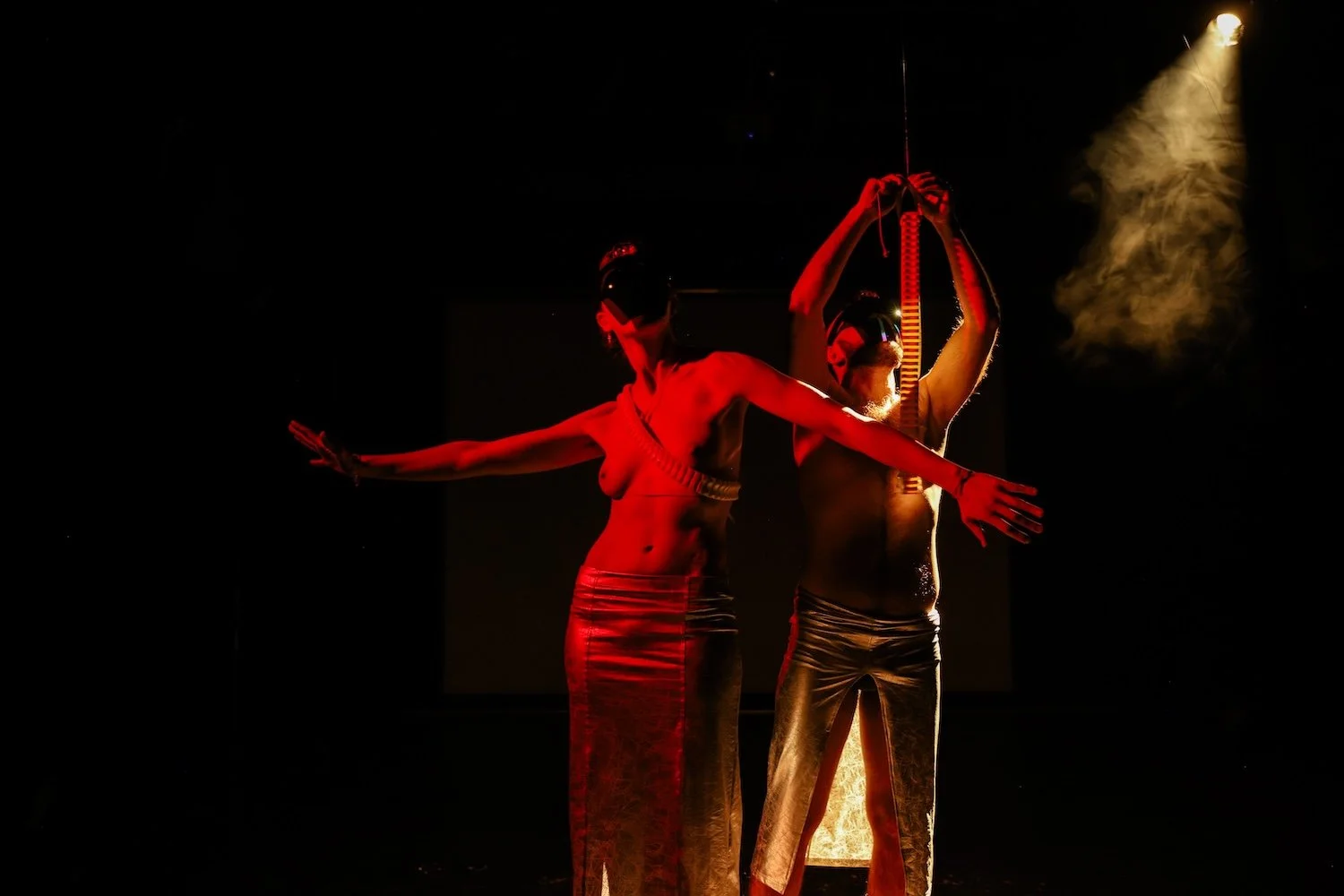
JR: Your feeling is correct. CONTEMPORARY MYTH MEETING: Evolution of the Species (2025) is a performance developed in collaboration with my longest-term artistic collaborator, the Slovak artist Adam Engler, with whom I met in 2015 and immediately began developing an ongoing artistic project, Personal Observer (2015-).
Our artistic connection and friendship have always been shaped by queer sensibility, theatricality, extravaganza, and an affinity for uncanny humor, all of which naturally find their way into the work we create together. Our creative process is often marked by laughter, vulnerability, and intimate exchange. We care deeply for each other, and this trust creates a space of artistic freedom in which we can explore our most exuberant, unexpected, and unconventional visions without restraint.
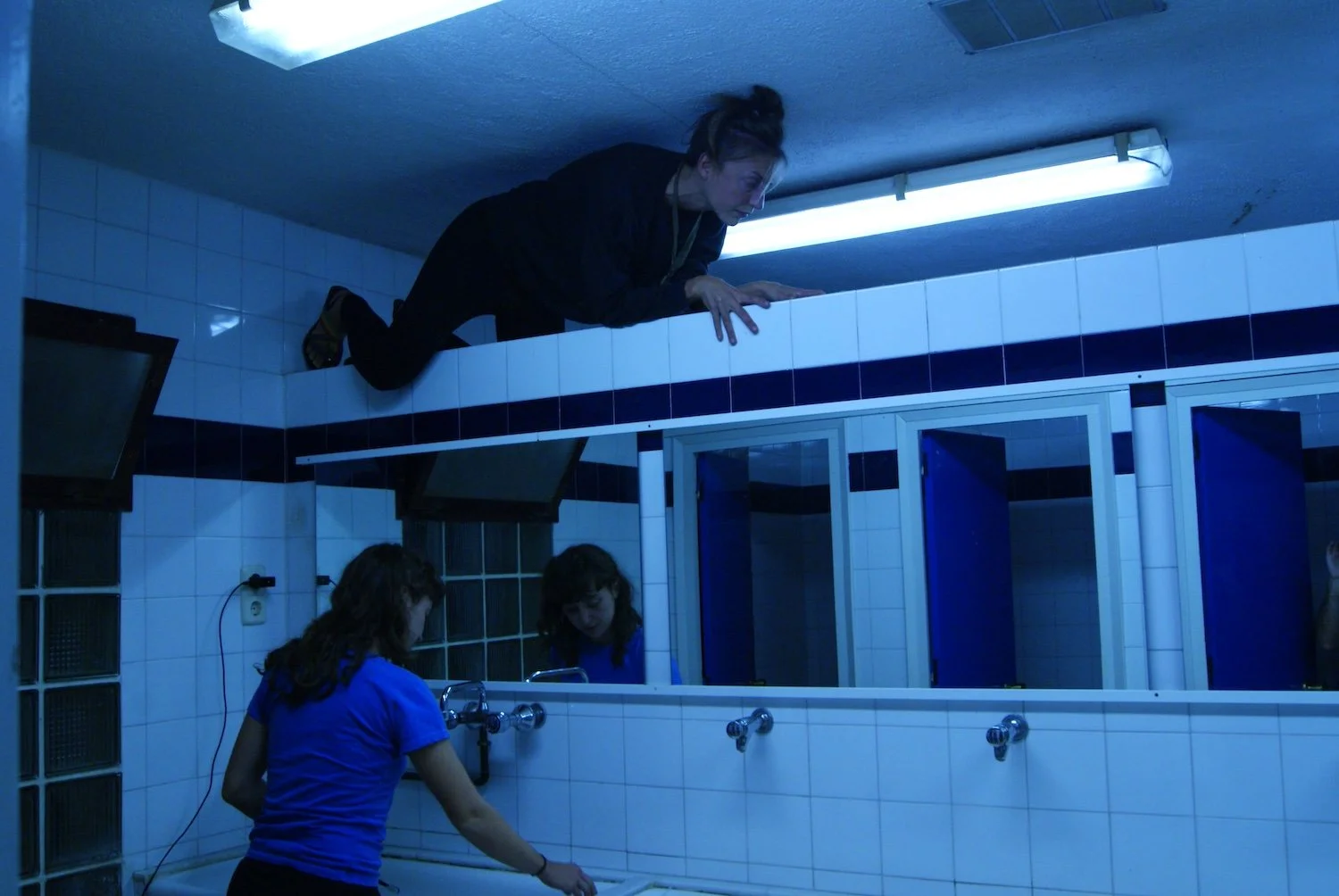
In CONTEMPORARY MYTH MEETING: Evolution of the Species, we explored the performative and narrative potential of Cosmodisk, a cult medical device that was widely popular in Slovakia and Slovenia during the 1990s for alleviating postural problems and back pain. Through this object, we investigated how everyday objects and devices can become carriers of collective memory, personal mythology, and cultural transformation.
The performance has so far been presented once, at the Zahrada Cultural Center in Banská Bystrica in the spring 2025, as both of us have had demanding professional schedules, travels, and independent artistic commitments that have limited opportunities for further enactments. I deeply hope that we will have the opportunity to present the work again in other locations and countries, as the audience response to the first presentation was exceptionally positive.
The performance unfolds within a video landscape composed of Cosmodisk television commercials produced in the 1980s and 1990s, whose exaggerated aesthetics, optimism, and chunky pixelated graphics become part of the work’s critical and humorous language. To further expand the multiplicity of narratives and reinforce the work’s ironic and speculative framework, we intentionally incorporated glitch aesthetics, kitsch qualities, distorted sound effects, and stroboscopic lighting. These elements create a layered environment where personal memory, post-socialist cultural nostalgia, consumer mythology, the cultural mythologies of youth, health, and bodily perfection, and speculative storytelling intersect.
NDEREOMA: Nowadays, most art is so extremely serious and it must directly address a political issue, otherwise is seen as banal and dismissed by funders and curators. How do you manage to deal with such urgent topics like ecology, the state of collective unbalance the world is in, sexuality and the body, and yet elicit some laugher?
JR: Humor is a life-saving skill and, for me, a gateway to wisdom. I believe humor has the capacity to hold complexity: it allows us to approach painful, difficult, and even traumatic realities without becoming completely consumed by them. Perhaps my most profound exploration of this approach can be found in what I consider my magnum opus, The Intimacy of Otherness—a performance lecture developed over the period of three years (2023-25) based on my lived experience of radical self-healing from multiple sclerosis, self-aggression, sexual trauma, and a long journey toward holistic wellbeing.
It is common for audiences witnessing this work to cry, leave the space due to its sensorial intensity, or laugh. The possibility of revealing the darkness, difficulties, and drama of a real-life story while simultaneously engaging with irony, paradox, and the Buddhist understanding of emptiness and interdependence is deeply rewarding. Human existence, shaped by what Buddhist philosophy describes as an untrained “monkey mind”—the restless and undisciplined movement of thoughts, emotions, and perceptions—is a roller coaster of aspirations, fears, hopes, projections, and disappointments. Until we cultivate awareness and learn to relate differently to our inner experiences, we can easily become as fleeting and unstable as a flag scattered by the wind.
Although I have a naturally humorous disposition—I laugh often and carry a lightness of spirit—my work is usually born from profound life challenges. The subjects I address are often intense, urgent, and deeply personal; however, I cannot deny my natural playfulness and allow naughtiness to flow into my artistic process. For me, humor is not a departure from seriousness—it is another way of approaching truth, cultivating resilience, and opening spaces for transformation.
I think this is particularly important today, when artistic practices are often expected to directly address contemporary political and social realities. While my work certainly engages with pressing questions around ecology, embodiment, sexuality, illness, and systemic imbalance, I believe that transformation does not happen only through confrontation or gravity. Humor, tenderness, and absurdity can also reveal hidden dimensions of reality and create alternative pathways for understanding.
During a somatic and contemplative workshop that I co-facilitated with my colleague John Halpern in upstate New York, he once joked: “When Jatun stops laughing, we need to start worrying.” I think this captures something essential about my practice. Laughter is not an escape from reality, nor a way of minimizing suffering; rather, it is one of the ways that helps me remain present with reality in all its complexity—“staying with the trouble.” Humor allows me to stay open, curious, and compassionate while engaging with some of the most challenging aspects of human experience.
NDEREOMA: When did you start becoming involved with Earth, as in Gaia, and why? There is a great deal of ecological performance art and socially-engaged art that is done these days simply because this is one of the subjects that gets funding. I have a friend who points out to me the work dealing with this subject that is really for real and the one that is just for the Instagram likes. My friend is quite committed to our planet and creatures, and she has mentioned how, maybe unknowingly, some artists might be generating more ecological damage with their work than good. Where do you come from when relating to trees and similar beings?
JR: My eco-art practice and work ethics are profoundly shaped and informed by my rural upbringing in Western Slovenia, where I grew up in close contact with the landscape, its nonhuman and more-than-human beings, and the seasonal rhythms of nature. The most important elder presence in my upbringing was my paternal grandmother, Marta, a humble, generous, sharp-minded, humorous, and warm person who was a natural storyteller and what I affectionately call a “gardening witch.” I owe much of my personality, values, and ecological sensibility to her.
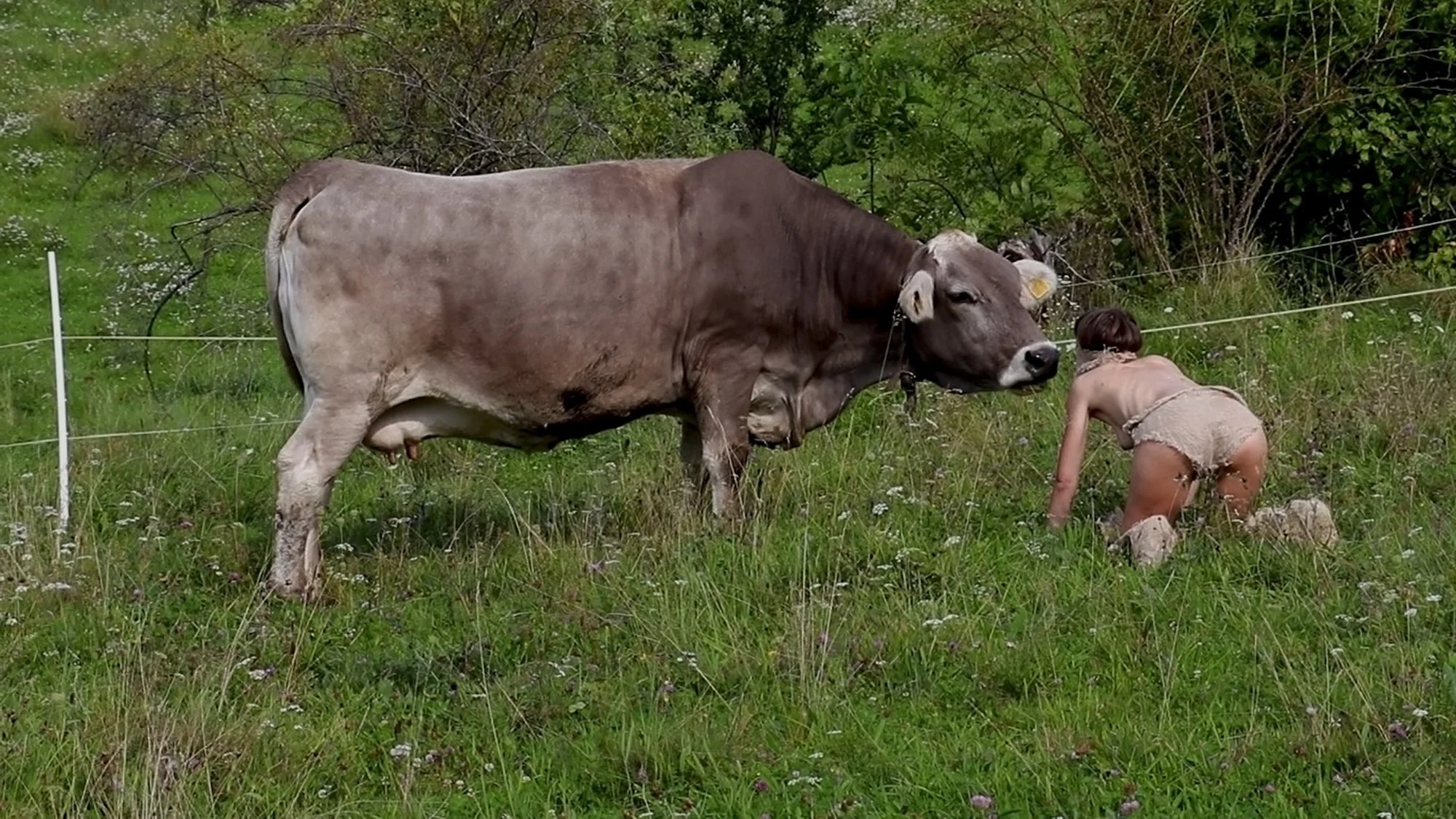
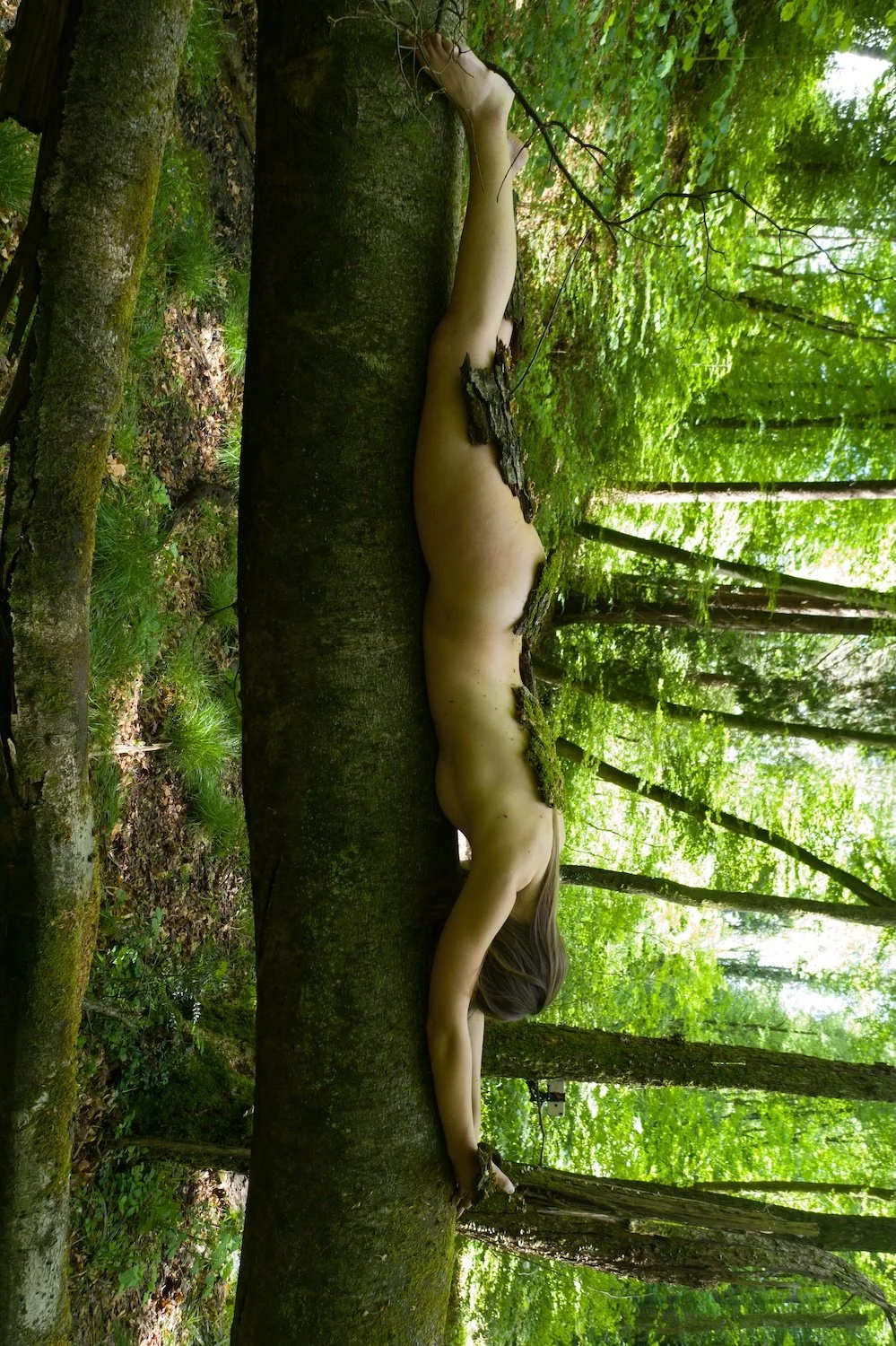
My most famous project to date, Be-coming Tree, was born as a homage to her life and legacy and emerged through my personal process of mourning after her death. Through this work, I sought to carry forward and disseminate the seeds of her situated knowledge, embodied wisdom, and relational understanding of the living world—knowledge that she quietly cultivated and transmitted through everyday practices of care. The project became a way to share experiences of love, multispecies care, and ecological awareness in a world marked by increasing social and emotional isolation, extractive relationships, and systemic crises—conditions made particularly visible during the COVID-19 pandemic.
I first encountered theoretical frameworks of kinship, becoming-other, and Gaia thinking during my BA studies with Francesco Monico and Antonio Caronia at NABA, Nuova Accademia di Belle Arti, in Milan. These ideas were further expanded and critically developed during my MA studies in Art and Science in London, where I encountered the work of Robin Wall Kimmerer and Karen Barad, among other thinkers working across ecology, Indigenous knowledge systems, science studies, and relational ontologies.
It was during this period, in late 2019, that I began conceptualizing and developing my ongoing Be-coming Other series of performances, through which I initiated a deeper artistic and ethical engagement with earthly materials, bodily substances, and processes of transformation that I conceptualize as “life matters.”
NDEREOMA: I am interested in hearing about Europa, your collaborative piece about the mythology of how this continent came to be. Also, how do you see this myth unfolding into the present time—and maybe—into the future?
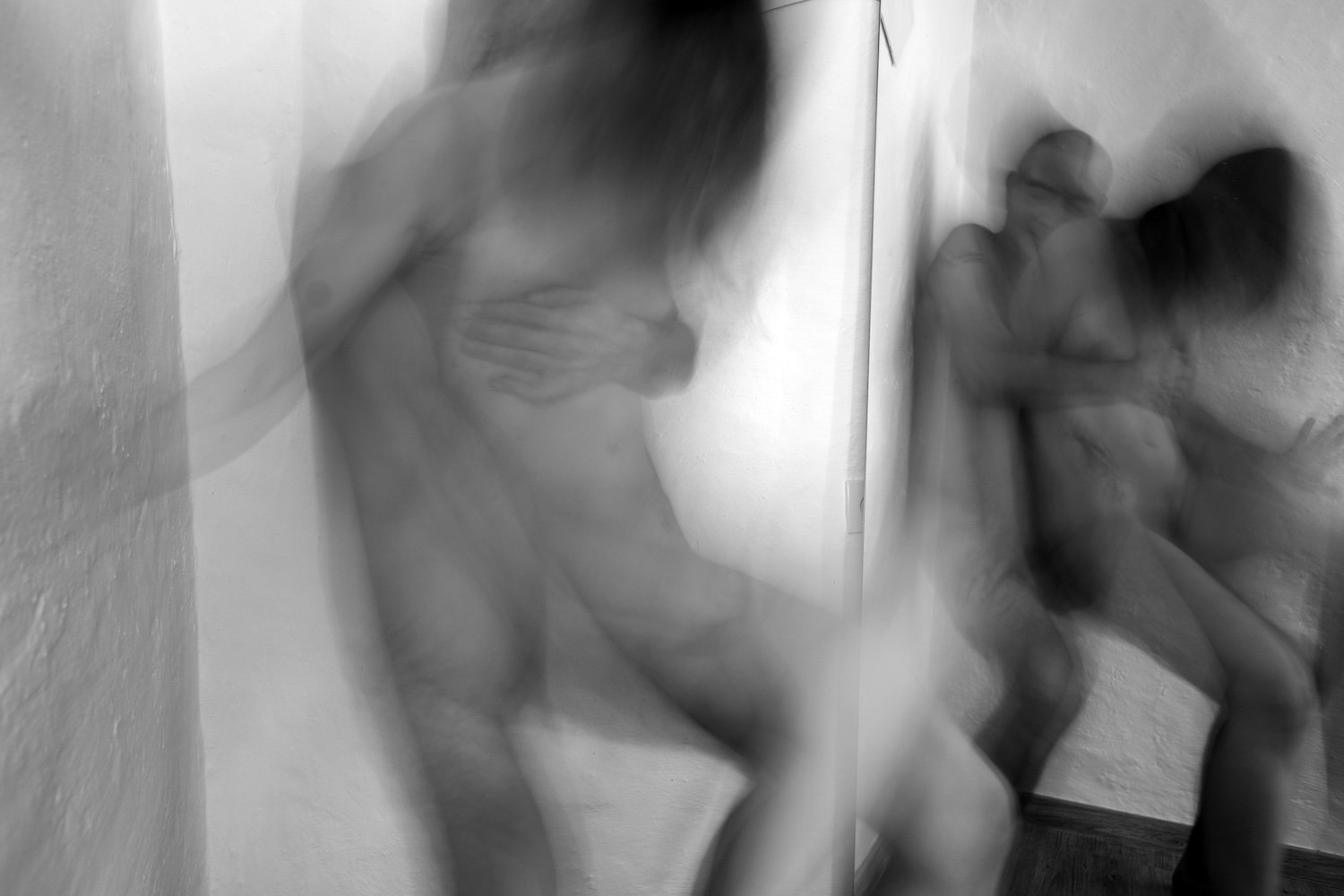
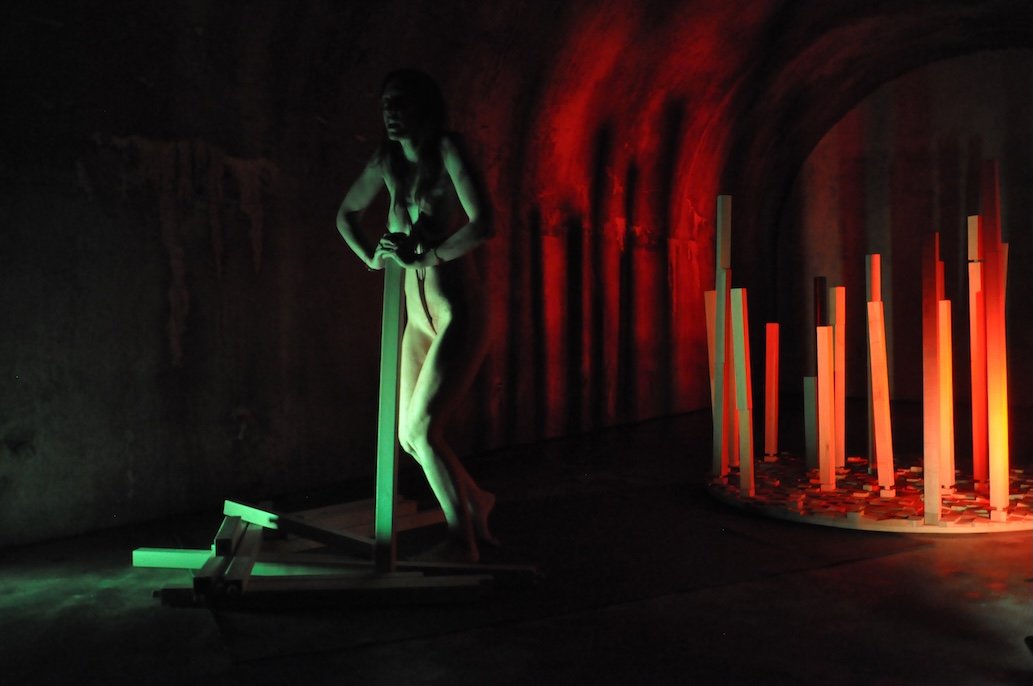
JR: What was particularly interesting to explore and question through the work Europa (2025), produced in collaboration with my long-term artistic collaborator, the Italian artist Franco G. Livera, was the connection between the founding myth of Europe—rooted in patriarchal power, sexual violence, and processes of possession and exploitation—and the psychological patterns and social behaviors that have shaped the continent’s cultural imagination for millennia.
I connected this broader mythological narrative with my own experiences of sexual abuse, which are transmitted through the soundscape of the work, creating a dialogue between personal trauma and collective memory. The methodology used in the making of the work was inspired by the phototherapy approaches developed by British artist Jo Spence and others, which explore photography as a means of accessing memory, working through personal histories, and reclaiming agency over one’s own narrative. I became familiar with these practices during my years living and studying in London.
Through Europa, we seek to question and critically re-examine the inherited narratives that continue to shape our understanding of identity, power, and belonging. The work aims to create a space for re-engaging with shared myths and stories—an opportunity to reflect on who we are, how we relate to one another, and how we might imagine different, more caring, respectful and accountable ways of being in the world.
NDEREOMA: In Casting Sun and Oxygen for a Collective Rebirth you use menstrual blood and chlorophyll to discuss a personal health condition, as well as to bring attention to these substances. In the case of menstruation, this has been feared—I would say—within male-dominated/manipulated religions. For example, some religions still see menstruating women as impure.
JR: Yes, you have touched upon a crucial aspect of my work with moist media and bioart: a critical engagement with cultural prejudices, taboos, and controlling narratives surrounding the earthly materials that constitute and sustain life on Earth. Contemporary research, as well as the work of my dear colleague, the Canadian artist-researcher WhiteFeather Hunter, has demonstrated the biological richness of menstrual blood and its potential significance as a site of scientific, cultural, and artistic inquiry. Menstrual blood is a naturally occurring substance generated through the cyclical processes of menstruating bodies, containing a range of biologically active components, including menstrual blood-derived stem/progenitor cells, which have become the subject of cutting-edge biomedical research exploring their potential applications in regenerative medicine and other fields.
The historical stigmatization of menstruation and the marginalization of menstruating bodies reveal broader systems of patriarchal control over embodied knowledge, sexuality, and reproductive processes. Through my work, I seek to challenge these inherited narratives of shame and impurity and to invite a renewed relationship with bodily materials that have been culturally rejected, hidden, or misunderstood.
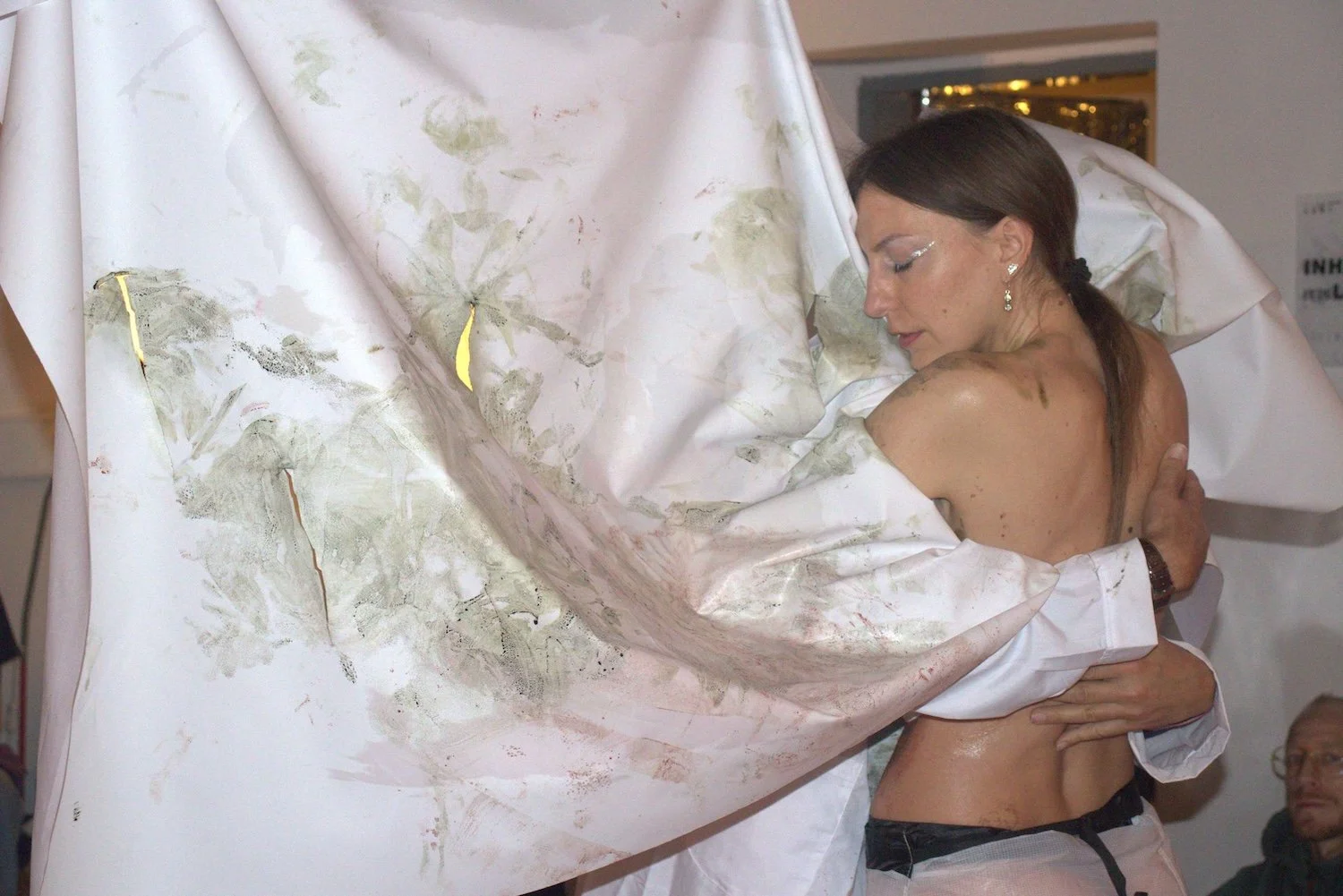
My use of liquid chlorophyll originated from my ongoing investigation into what I call “life matters” (described above), which began in 2019 and further developed through my commissioned artistic research for Schmiede Festival in Hallein, Austria. This research was later published as a chapter in the multi-authored book Blood (2023). I was interested in exploring the deep connections and reciprocity between all forms of life on Earth, inspired by the observation that hemoglobin and chlorophyll share a remarkable structural similarity. While hemoglobin carries iron at its center and chlorophyll carries magnesium, this molecular relationship became a starting point for my artistic investigation into the interconnectedness of animal, plant, and more-than-human life.
Through this research-creation process, I explored the relationships between human and more-than-human bodies, between animal and plant worlds, and between vulnerability, transformation, and regeneration. On a deeply personal level, the work also became an act of reclaiming visibility, embodiment, and agency. It was a quiet yet very empowering process of reclaiming my ability to be seen and to inhabit my naked body after the experience of rape.
NDEREOMA: You have been traveling and performing in the USA for several months. What have you experienced regarding performance art and the creative impetus here? I know that this might be too general of a question, and yet I would like to hear your perspective. As for me, I was born and raised in the Americas and, while I travel frequently to perform, this is the center of my world to a great extent.
JR: My stay, exchanges, encounters, and creative processes in the USA have been profoundly prolific, inspiring, and enriching. The experience has been transformative enough to lead me to consider beginning a PhD in New York City in the coming year. After leaving London around the time of Brexit and the beginning of the pandemic, I entered a period of existential transition and displacement, living as a nomadic artist and developing my practice across different geographical and cultural contexts. While this way of working has brought many valuable encounters and expanded my artistic perspective, it has also made me reflect on the importance of finding a more sustainable rhythm—one that allows for deeper personal relationships, long-term institutional collaborations, and a sense of community.
During my time in the USA, I became increasingly aware of how important spiritual community and collective practice are for my own balance, development, and creative sustainability. In New York, I found a particularly vibrant ecosystem of Buddhist practitioners, communities, and temples offering regular gatherings and retreats. This dimension of communal practice has become an important factor in imagining a more integrated and sustainable way of living and creating.
I have also been deeply touched by the openness, curiosity, and support I have encountered toward my artistic practice in the USA. I wonder if part of this resonance comes from a greater familiarity, among some communities here, with Buddhist philosophy, Eastern esoteric wisdom traditions, somatic approaches, and contemplative ways of engaging with experience. Since my work is rooted in embodied awareness, interdependence, ecological thinking, and the transformation of personal and collective narratives, these shared references can sometimes create an immediate bridge between the work and the audience.
Regarding performance art, what I find particularly compelling in the USA is the vitality of independent, self-organized, and experimental spaces where some of the most risk-taking and innovative work emerges. Many of the projects that have had the strongest impact on me are developed outside of mainstream institutions, within artist-run initiatives, alternative venues, and smaller communities dedicated to experimentation.
One significant difference I perceive between the artistic landscapes of the USA and many European contexts lies in their different economic and organizational infrastructures. In the USA, contemporary art is often supported through a combination of private philanthropy, foundations, individual donors, and institutional resources, whereas in many European countries public funding and state-supported cultural systems play a more central role. Each model creates different possibilities and challenges for artists.
Currently, I am particularly aware of the challenges confronting experimental, socially engaged, and politically engaged artistic practices in many parts of the world, including Slovenia, amid the rise of far-right and fascist movements, increasing polarization, cultural conservatism, and uncertainty around arts funding. Within this context, I find the long history of independent, DIY, and underground cultural production in the USA particularly inspiring. These networks create spaces of resistance, experimentation, and cultural innovation, offering artists possibilities to develop practices that may not easily find a place within more parochial institutional frameworks.
NDEREOMA: I am more and more interested in working outside the art institution because I believe that this can somewhat curtail creative ideas, to the point where artists end up making what funders want to see and what makes these funders look good in the public eye. I honestly do not encounter many distinctive voices arising in the arts. I am therefore always in the lookout for creatives who are true to themselves and their call. How do you balance things out when presenting at museums and galleries and also traveling through the wilderness, metaphorically speaking?
JR: I carry great respect for the work of art museums, galleries, and institutions as important sites of cultural memory, dialogue, and art-historical discourse. At the same time, I have developed my practice largely through an independent trajectory beyond conventional systems of institutional support—without gallery representation or regular institutional backing. In many ways, I continue to work in the wilderness, quite literally, as a space of experimentation, discovery, and expanded artistic research.
It is not uncommon for me to create artworks and projects that remain in a state of latency—awaiting the appropriate conditions, contexts, and collaborators for their realization and presentation—because they often emerge outside established frameworks of production, funding, or exhibition. This position has been challenging, but it has also enabled me to cultivate a distinctive, experimental, and research-driven body of work that explores territories where contemporary art, embodiment, ecology, consciousness, and science intersect.
When speaking about free spirit, I think it is important to remember that freedom is inseparable from responsibility. For me, artistic freedom does not mean operating without structure or accountability; rather, it means remaining committed to one’s values, questions, and ethical responsibilities, even when external validation is uncertain. It means having the courage to pursue artistic inquiries whose significance may only become fully visible over time.
My approach is therefore one of perseverance: continuing to work with sincerity, curiosity, and trust in the process. I try to remain realistically optimistic and actively hopeful—believing that as contexts evolve, the right institutional dialogues, curatorial frameworks, and communities will emerge to allow these bodies of work to enter broader conversations.
I have learned that artistic independence requires patience, resilience, and faith in processes whose value may not always be immediately visible. Many pioneering, paradigm-shifting practices have emerged from such periods of incubation, and I see this sustained commitment as part of the responsibility of developing work that can contribute meaningfully to future artistic and cultural histories.
NDEREOMA: Where do you find strength to keep going?
JR: I have to admit that without my Buddhist principles—the understanding of impermanence, emptiness, and the interdependence of all phenomena; the altruistic orientation of Bodhicitta, the aspiration to benefit all beings—and my embodied somatic and contemplative practices, I would find it much more difficult to navigate the many challenges, uncertainties, and precarious conditions that accompany my artistic life. Paradoxically, it was through Be-coming Tree (2020–21)—my year-long durational performance accompanied by Tummo, the Vajrayana practice of inner heat, in preparation for its winter enactment—that I found my way to Buddhist refuge. While cultivating a planetary canopy of ecological interconnection through the practice of being and becoming-tree, I encountered the Refuge Tree of the Buddhist tradition, which opened a path that continues to inform and orient both my life and artistic practice.
In addition, daily walks, along with regular yoga and dance practices, help me cultivate the physical and mental balance necessary to sustain my wellbeing, resilience, and capacity to engage with my work.
NDEREOMA: When do you know that it is time to pause and go inside?
JR: I have become much gentler, attentive, and compassionate toward myself since experiencing burnout in 2023. Following that period, I engaged in a significant process of psychological reflection, healing, and a reorientation of my spiritual practice, which allowed me to live with greater harmony, awareness, and commitment to self-care. Most importantly, I developed a much deeper sensitivity to my body's capacity to say "no" before reaching the point of collapse. In many ways, this became one of the most important lessons in conscious embodiment that I have learned—not only personally, but also within my artistic and research practice.
I maintain a daily morning routine combining physical practices and Buddhist meditation, which supports my overall sanity and alignment between body and mind. I also try to minimize my screen time, as I find excessive digital engagement disruptive to my attention, presence, and overall wellbeing.
NDEREOMA: This should bring us to the end of this conversation, unless you would like to ask me something that you might be curious about. Thank you!
JR: I have many questions I would love to ask you. Let’s save those for an in-person conversation once I return to my favorite city, New York, where I plan to be again before next summer.
Meeting you has been such a joy and inspiration. I deeply appreciate your sensitivity, generosity, and the care you bring into your encounters with others. I am grateful that our paths crossed through mutual friends, and I look forward to continuing our dialogue and artistic alliance in the future. Thank you!
All images courtesy of Jatun Risba / None of these images should be used without written consent from the artist
Jatun Risba’s related links: website / Instagram
Jatun Risba (they/them) is a migrant artist-researcher whose transdisciplinary practice investigates consciousness, embodiment, and transformation at the intersection of contemporary art, contemplative traditions, and neuroscience. Working across performance, conceptual, relational, and research-based art, they develop artistic methodologies that position creative practice as a mode of embodied inquiry and knowledge production.
Grounded in Vajrayana Buddhist philosophy and informed by ecofeminist and posthumanist thought, their work examines perception, interspecies reciprocity, and the entanglements of bodies, technologies, and ecological systems. Through performance, artistic intervention, détournement, and material experimentation, they investigate how aesthetic practice can generate embodied knowledge, expanded sensory awareness, ecological imagination, and regenerative practices of care.
Their current research investigates bodily fluids—including menstrual blood, urine, and cerebrospinal fluid (CSF)—as physiological, material, and epistemic media through which artistic practice can generate new forms of knowledge. By integrating somatic practice with contemporary neuroscience and contemplative traditions, they develop experimental frameworks that intertwine embodiment, perception, creativity, and consciousness.
Alongside their artistic practice, Risba designs and facilitates somatic, eco-conscious, and contemplative learning experiences for diverse audiences. Their scholarly work has appeared in peer-reviewed journals, edited volumes, and conference proceedings, including Body, Space & Technology, Antennae: The Journal of Nature in Visual Culture, and the Taboo: Transgressions and Transcendence in Art & Science—contributing to interdisciplinary discourse on artistic research, ecology, embodiment, and art–science practices.
Their work has been exhibited and performed internationally at Glasshouse (New York); VIRA art.sound (Seoul); Galerija O.K. (Rijeka); The Compound and Crow's Nest (Baltimore); Schmiede Hallein Festival (2023, 2024); Gigi Rigliaco Gallery (Italy); Studio Alta (Prague); Opens Platform (Singapore); Prague Biennale Re-connect Festival (2023–2025); Meta.morf Trondheim Biennale (2022); Fabbrica del Vapore (Milan); and Kino Šiška, Y Gallery, Kersnikova Institute, and Cirkulacija2 (Ljubljana).
Risba holds a BA (Hons) from NABA – Nuova Accademia di Belle Arti, Milan (2009), and a Postgraduate Certificate in Art & Science from Central Saint Martins, University of the Arts London (2020).