Dominique Rey
Nicolás Dumit Estévez Raful Espejo Ovalles Morel Atrib: Dominique, our point of connection was Transart Institute for Creative Research in Berlin, in 2009. It will be two decades soon. One of your pieces that caught my attention was your film with a group of nuns, Les Filles de La Croix. Can you offer details as to this and its meaning to you as a creative interested in slowing down the pace at which you move through the world?
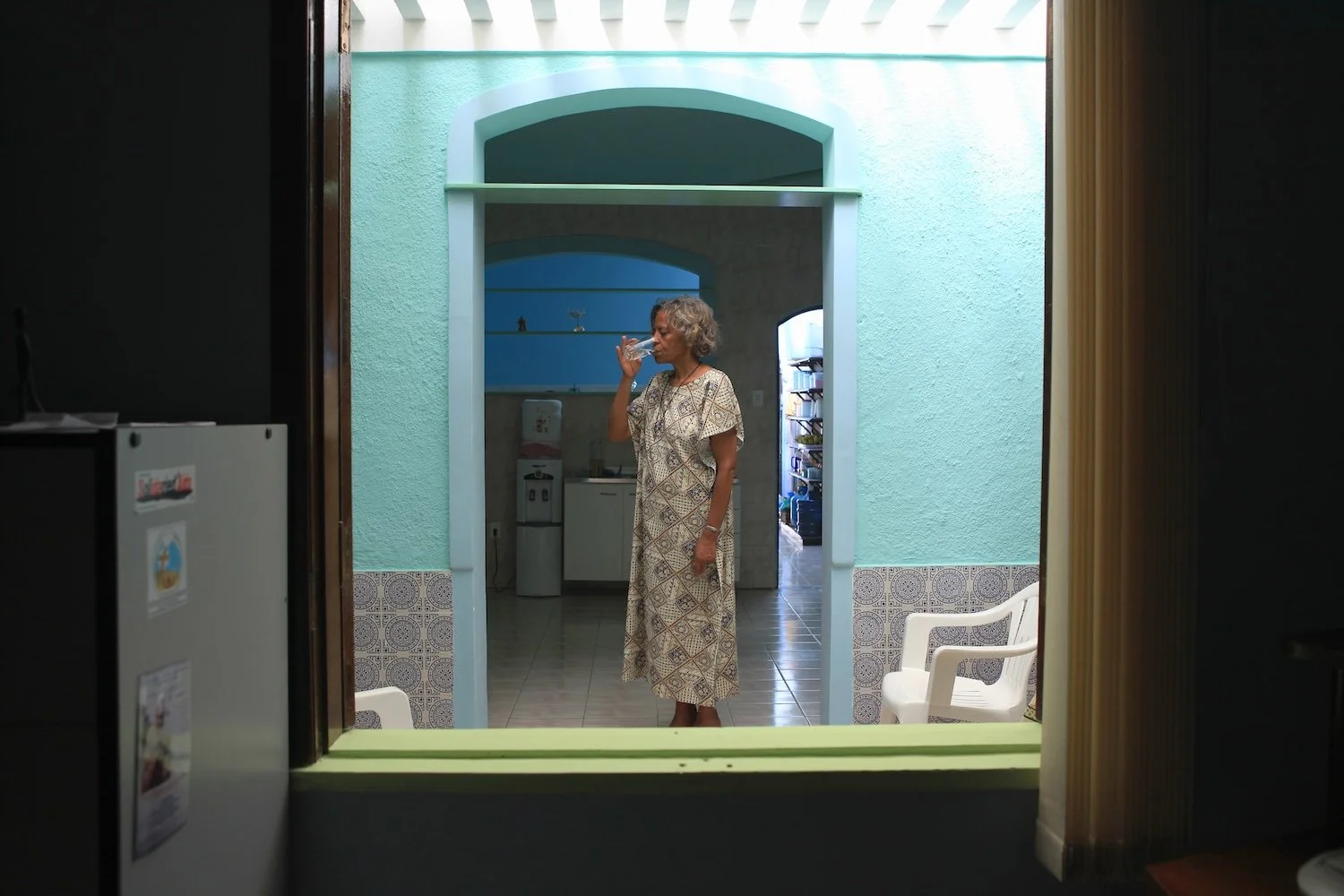
Dominique Rey: Transart Institute for Creative Research was an important point of connection for me, and it’s remarkable to think that it has been nearly two decades. One of the works from that period, Les Filles de la Croix, proposed to unveil the hidden and profound lives of a disappearing order of nuns in Canada, Brazil, Argentina, and France. Over the course of eight years creating this project, I spent extended periods of time within their convents, creating relational artworks with the nuns, conducting one-on-one interviews, and photographing and filming the physical spaces in which they had spent their lives.
Among the many gifts of this experience was the quality of attention I received in their company—the way time unfolded differently within their homes, shaped by devotion, ritual, and care. Their daily rhythms offered a profound contrast to the accelerated pace of contemporary life, and deeply influenced the way I began to think about presence, listening, and artistic process. Through photography, film, and sculpture, I wanted to create works that could evoke an atmosphere where stillness and temporality became tangible: a meditation on the texture of slowness, the act of listening, and the relationship between attention and time.
NDEREOMA: It has been interesting to the see the boom that anything healing and spiritual has been having in the Art Industry. I clearly remember when those of us working with such themes had to whisper to others what we were doing for fear of being rejected by the Art system. Praying, meditating, filming nuns, and the like were not cool things to explore in the Arts back then. My hesitation with the over enthusiasm for healing in the Arts today is that, most of it feels like a fad to me. How have you continued to bring Spirit into what you do and remain true to it?
DR: I’ve always followed my inner voice when it comes to my art and starting new projects, often recognizing that the concepts might not be well received because they were outside what was considered current or relevant at the time. Many of my works have focused on the lives of women living at the margins, burdened by stereotype, invisibility, or social expectation, but that never deterred me from pursuing what I felt deeply called to create and explore.
Through my years as a student, and now as someone teaching art, I have come to recognize how deeply embedded the inner critic can become, often invoking paralysis, doubt, and insecurity. In order to make meaningful work, work that surprises both the maker and the viewer, the critical must be balanced by intuition, if not entirely overridden by it. Whereas the critical is bound to ego, comparison, and the desire for external validation, intuition arrives prior to language or logic. It is not something that can be fully pinned down, and it is precisely that unknowability that allows us to move toward places we have not yet been, opening the possibility for transformation within ourselves and within the work.
In these difficult times, I regularly question what the role of art is. I don’t think my response is ever fully sufficient, but I know that I have been called to express my humanity through art, alongside my roles as a mother and teacher. For me, spirituality is less about illustrating belief than about cultivating attention, presence, building authentic relations and working in good ways, qualities that continue to guide both my life and artistic practice.
NDEREOM: It is compelling to observe how religion has been coopted by politics, although this is not new if we think about Christianity and the Roman Empire. While there is a connection in me that remains tied to my Catholic upbringing, which was not that strict, I am finding resonance with Earth-based spiritualities and with movements like ecosexuality.
DR: I grew up French Catholic and have spent much of my life untangling the knots of guilt and shame that can become deeply conditioned through religion. At the same time, like you, there are aspects of that upbringing that continue to hold value for me, particularly its universal teachings around compassion, collectivity, ritual, and belonging. While spirituality is not something I speak about overtly within my art practice, it profoundly informs the way I move through the world and understand my relationship to others.
I feel deeply that all of creation carries spirit, and that we are interconnected with one another across both the human and more-than-human world. I believe we are born of this great Mother Earth and the cosmos, and that remembering this interconnectedness is increasingly important in a time marked by fragmentation and disconnection.
Alongside this journey, I have the privilege of living on original lands of the Anishinaabeg, Ininiwak, Anisininewuk, Dakota Oyate, Dene and Inuit, and on the National Homeland of the Red River Métis. In the past few years I have had the honour of learning from Elders and Knowledge Keepers whose teachings have deepened my understanding of reciprocal relationships with the land, and of the responsibilities and care that come with that kinship.
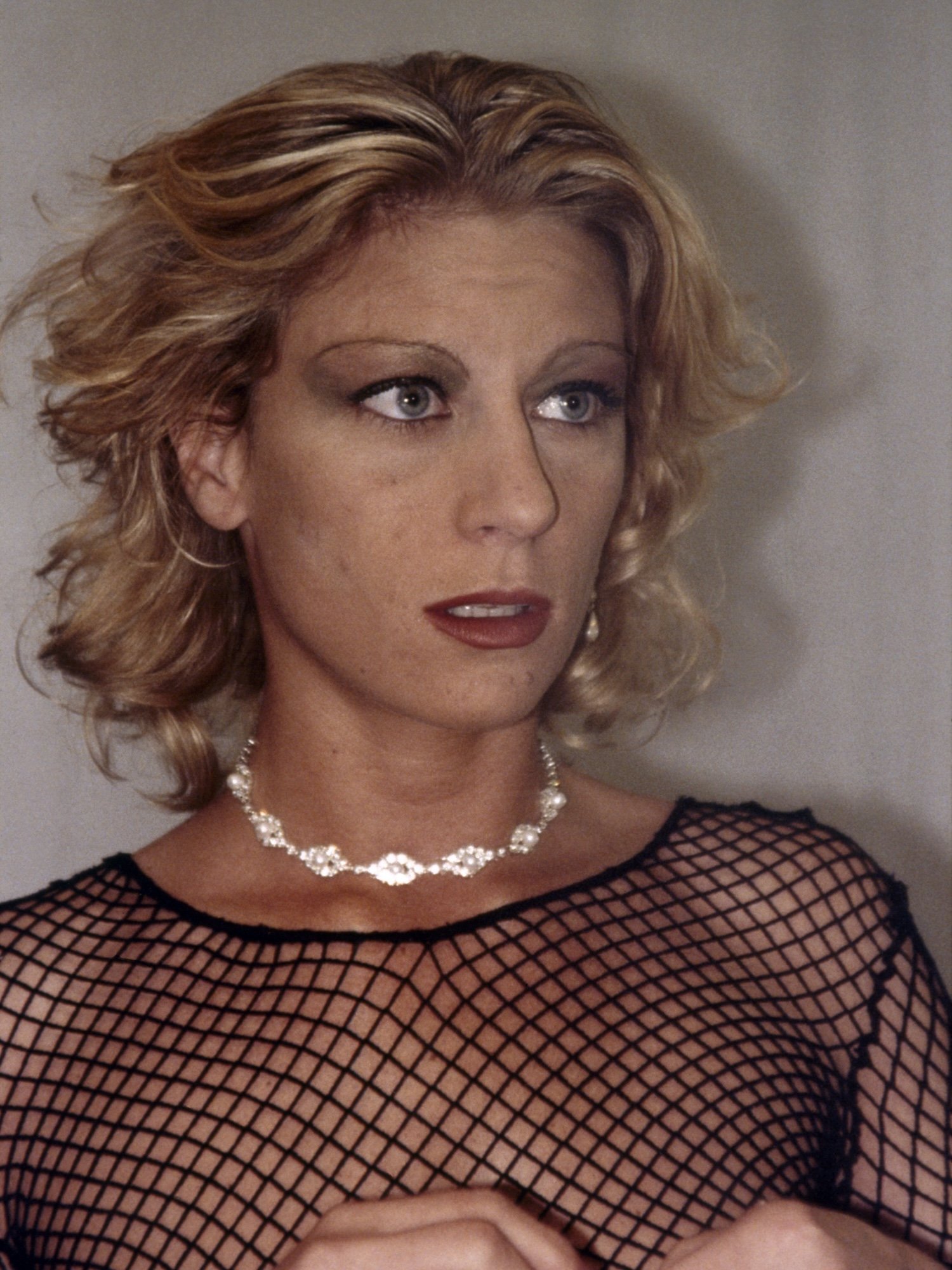
NDEREOMA: Talking about religion and sexuality, which to me are intrinsically connected, as in the case of mysticism and the erotic, can you discuss, Selling Venus? Same as with healing and spirituality in the arts, there has been a growing number of artists identifying as sex workers. It is good that people are shedding off the shame and stigma placed upon both of these. Although, I have not been a sex worker, one of my mentors has been, and there is a huge amount of responsibility for self and the collective that must be taken into consideration when doing this kind of work, as with any other kind of work, of course. Art tends to cannibalize anyone and anything for profit-making, and it is always looking for the next cool or surprising trend. How was it for you to spend time with those involved in Selling Venus?
DR: Throughout my artistic practice, I have gathered the lived experiences and stories of women, as manifested through my own life and through collaborations with different communities of women. Coming from a feminist perspective, I’ve been interested in creating spaces for female subjectivities that exist beyond the narrow constraints of social convention, and in countering the stereotypes through which gender, race, and class continue to shape how women are seen and understood.
Certainly, in Selling Venus, the subjects occupied roles burdened by ideological bias, and that tension was central to what I wanted to examine and unsettle. For this project, I collaborated with women working in striptease clubs in Osaka and Myrtle Beach through photography, video, and audio recording. Rather than focusing on the spectacle of performance itself, I directed my attention behind the stage, toward the intimate rituals of preparation and self-construction that unfolded in dressing rooms and mirrored spaces.
I became interested in the makeup mirror as a psychologically charged frame, where the gaze turns both inward and outward simultaneously. Within that space, two selves seem to coexist: the private individual and the public persona being carefully constructed. Selling Venus / Vénus au miroir explored how subjectivity is continually formed, fragmented, and negotiated through gesture, ritual, performance, and acts of self-transformation.
My intention was never to define or explain these women, but rather to foreground their voices, gestures, and presence, while acknowledging the complexity and ambiguity that remain. I think it is important to accept the impossibility of fully knowing the other. The work resists closure in that sense; the women remain, ultimately, unknowable and mysterious.
NDEREOMA: How do you see yourself as an artist/creative flowing between worlds that are not your own: a convent, as well as striptease clubs? One critique I have about some social-practice is that it tends to place the artist and the other on opposite sides. There is a distance in so much of the work I have seen. In my case, I think I have been able to overcome a great deal of this due to my training as a performance artist; as someone who can embody situations rather than to look at them from afar. Tell me…
DR: In the instances where I have worked with communities of women, the projects have always emerged from a place of personal connection and reciprocity. In Selling Venus, one of my closest friends at the time was working at the club Lys Chante in Osaka, and I briefly worked alongside her there. That experience was invaluable in shaping my understanding of my own positionality within the work and in approaching collaboration through what painter and psychoanalyst Bracha Ettinger describes as “wit(h)nessing” and “besideness” — being with rather than looking at from afar.
Similarly, the origins of Les Filles de la Croix are deeply personal. Two of my paternal aunts were nuns within the order, and I was especially close to my aunt Madeleine, who nurtured my passion for art from an early age. This community of nuns knew me and cared for me as part of their extended family. When I returned years later as an artist, I was welcomed back into their community and given permission to reside within the convent as a visiting artist, meeting with them weekly over a two-year period.
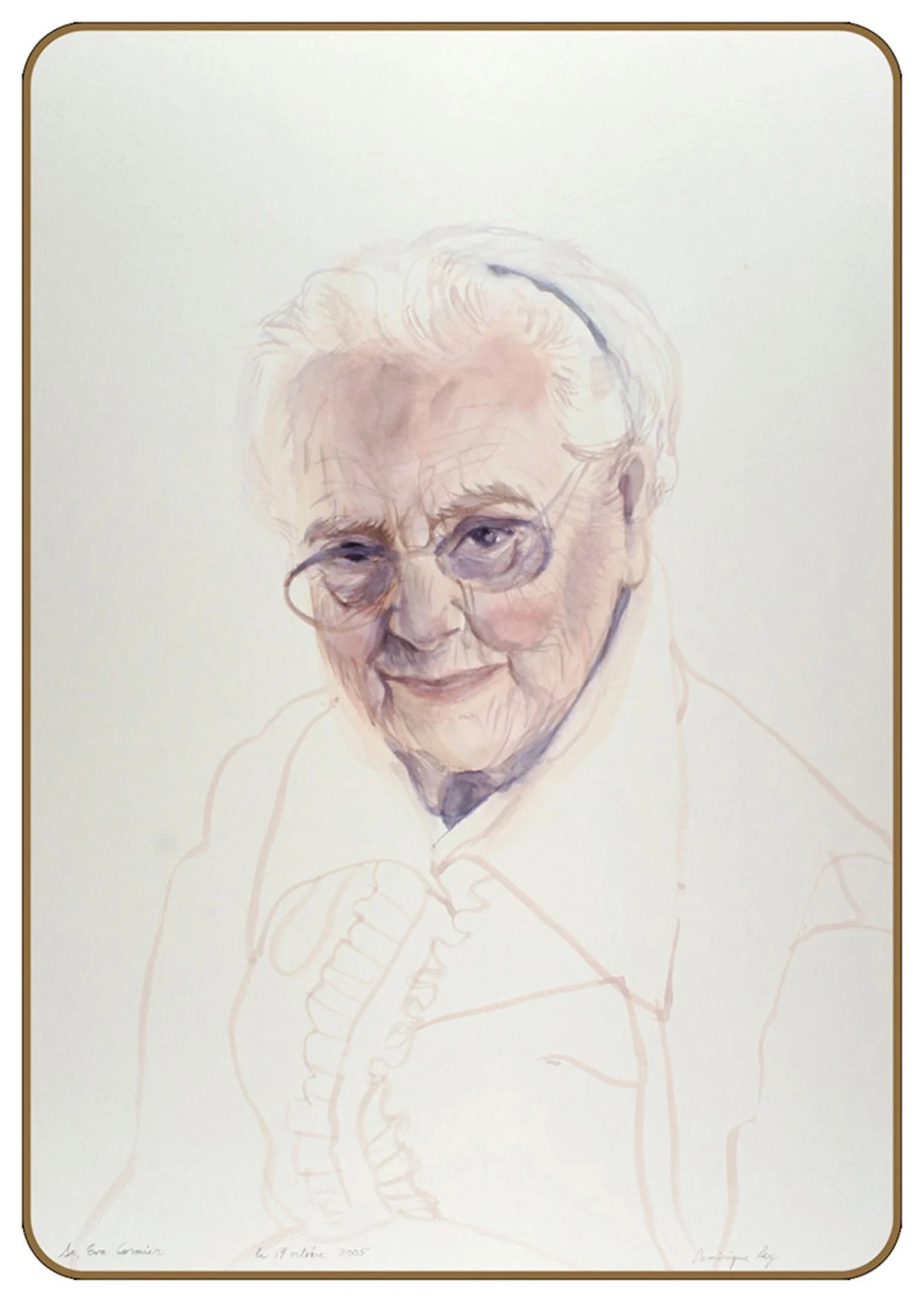
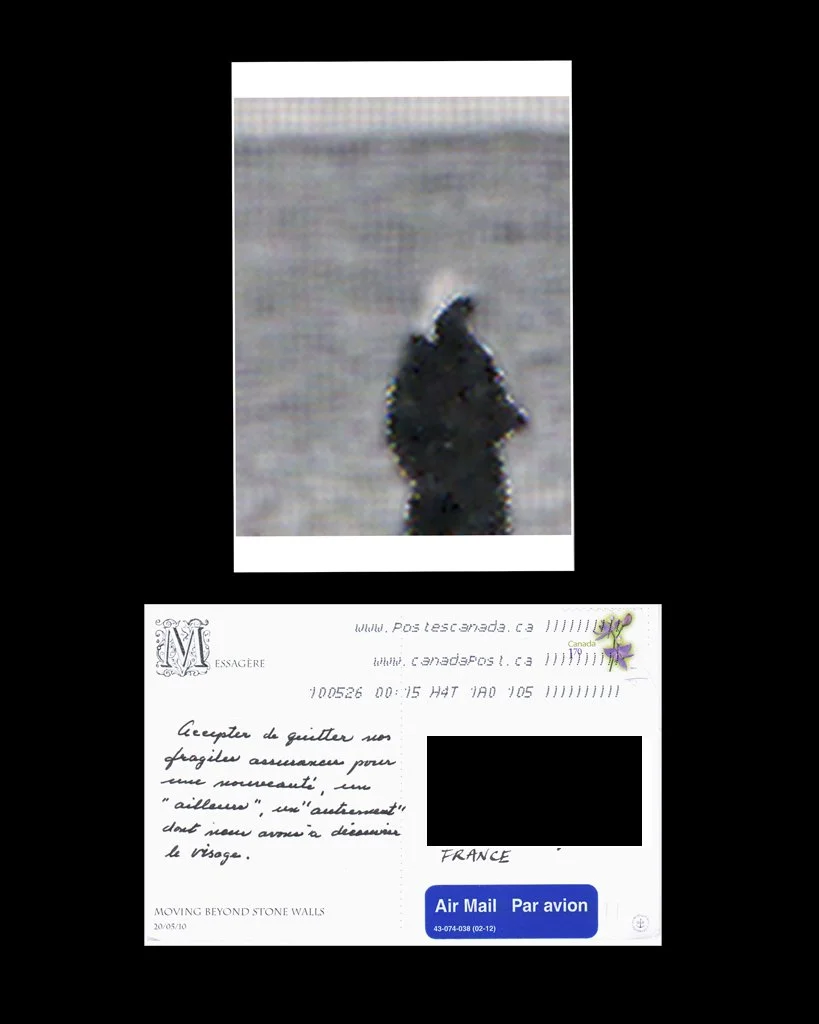
Because of their devotional way of life, I felt it was essential to enter their world slowly and intentionally, and to meet them on their own terms as a way of approaching, as much as possible, the spiritual, social, and psychological dimensions of their lived experience. I had already been the recipient of their mindful attention both as a child and later as an artist, and I wanted the work to function as a form of reciprocity. For example, I created watercolour portraits of the sisters from life that I later transformed into devotional objects, where the repeated and ghostly layers of medium became traces of our shared encounter. Later, while visiting convents in South America and France, we continued the dialogue through handmade postcards that the sisters activated with their own words and poetry.
Building relationships of trust and care was fundamental to the project. As part of that collaboration, we agreed that the sisters would have veto power over all of the work produced, which also meant relinquishing a certain sense of authorship and ownership. For me, that exchange was essential to the ethics of the work itself.
NDEREOMA: That is remarkable. I would like to know as much as you are willing to share about MOTHERGROUND I was able to watch the film and greatly enjoyed this piece. As you might know, I have a deepening interest in dance and movement and, at some point, I would like to curate Motherground in a dance exhibition or program. We can discuss mimicry, the Earth, ecocide, ecosexuality, ecocompassion, and all of that. I will let you shape your responses in any direction that you may choose to.
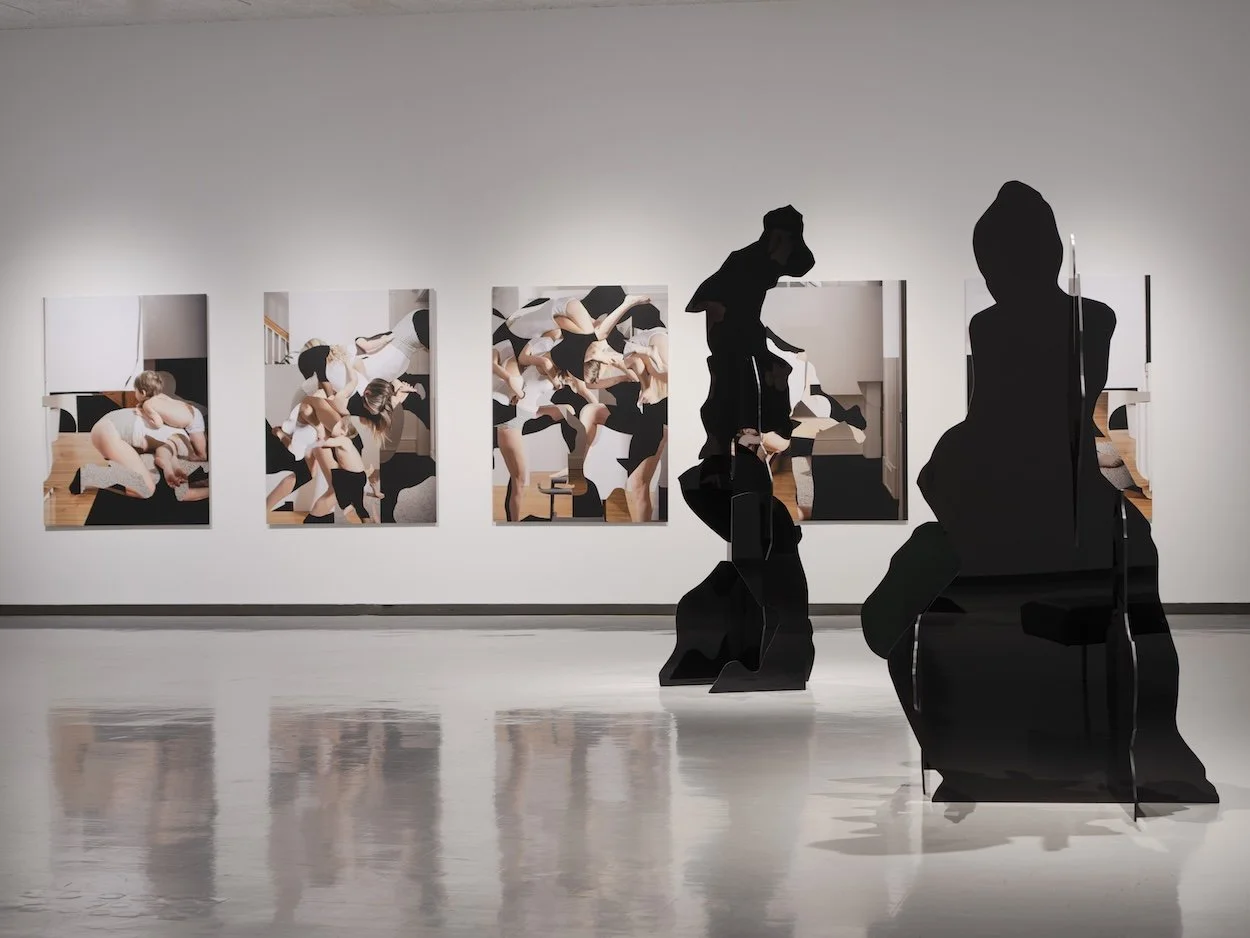
DR: Thank you. Dance and movement have become increasingly central to my work over the last several years, and I’ve had the opportunity to collaborate with exceptional choreographers and dancers, alongside novices and non-dancers, as is the case in MOTHERGROUND. In this project, the performers are my children, close friends, and myself — none of whom have formal training in dance. That was an intentional choice, because I was interested in the unscripted gestures and forms of embodied knowledge that emerge through intimacy, care, play, and relational exchange.
At the core of MOTHERGROUND is an attempt to unravel the myriad transformations that accompany early motherhood: the constant negotiation between balance and imbalance, autonomy and interdependence, exhaustion and ecstasy. The work explores the parallels between artistic practice, fertility, and maternity as forms of creative labour, while also considering how seemingly ordinary gestures between a mother and child can hold profound emotional, political, and even ecological resonance.
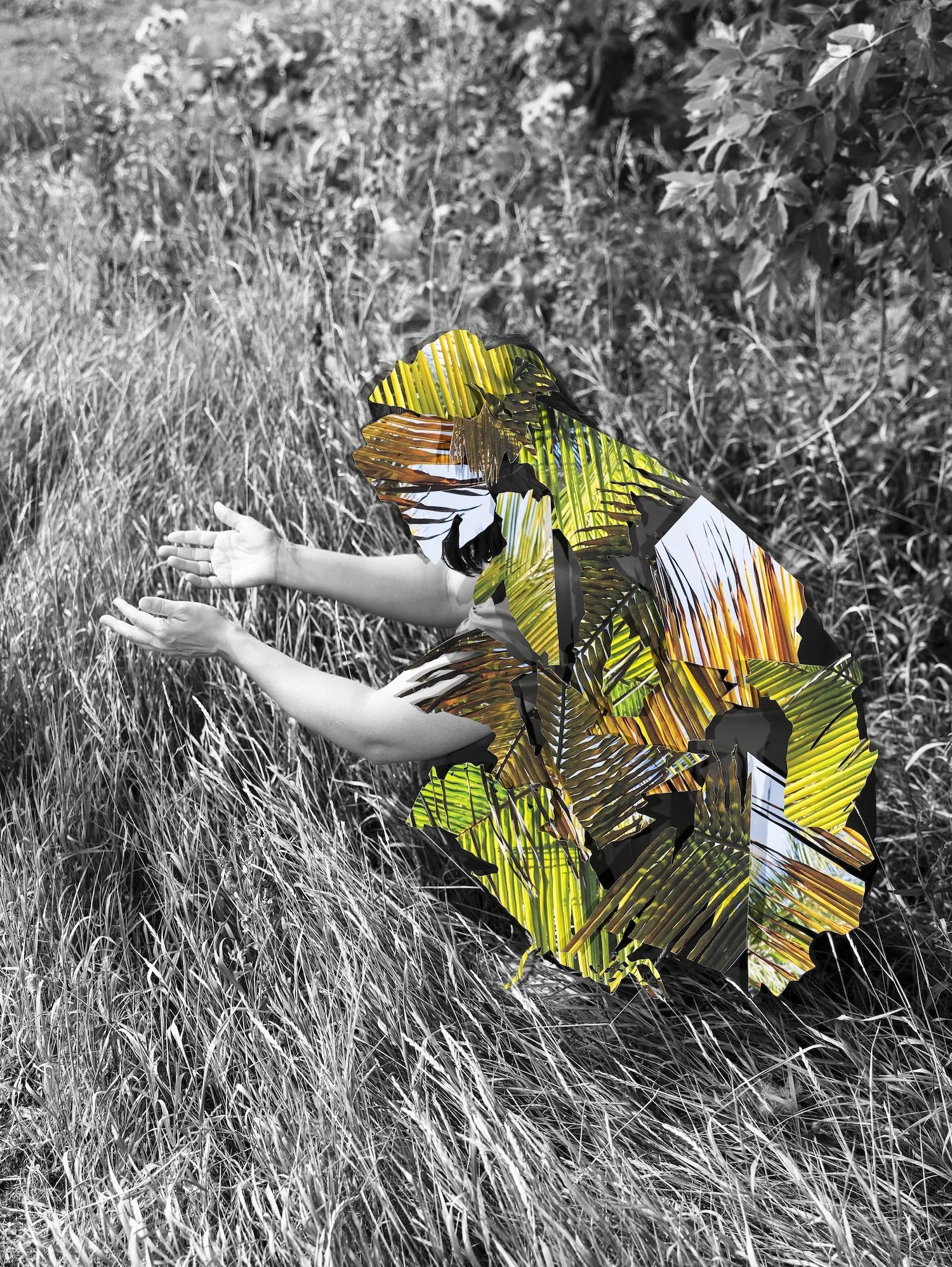
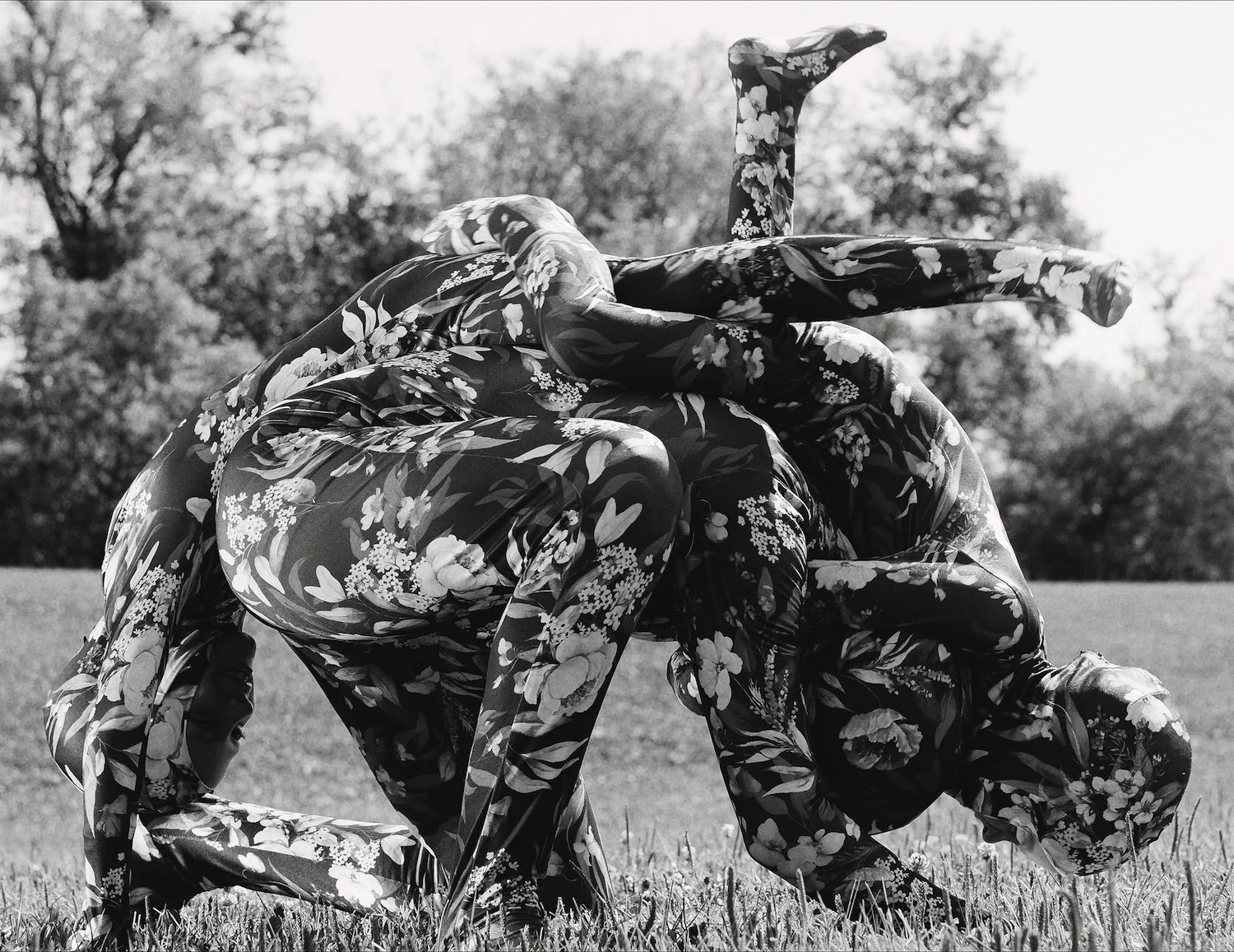
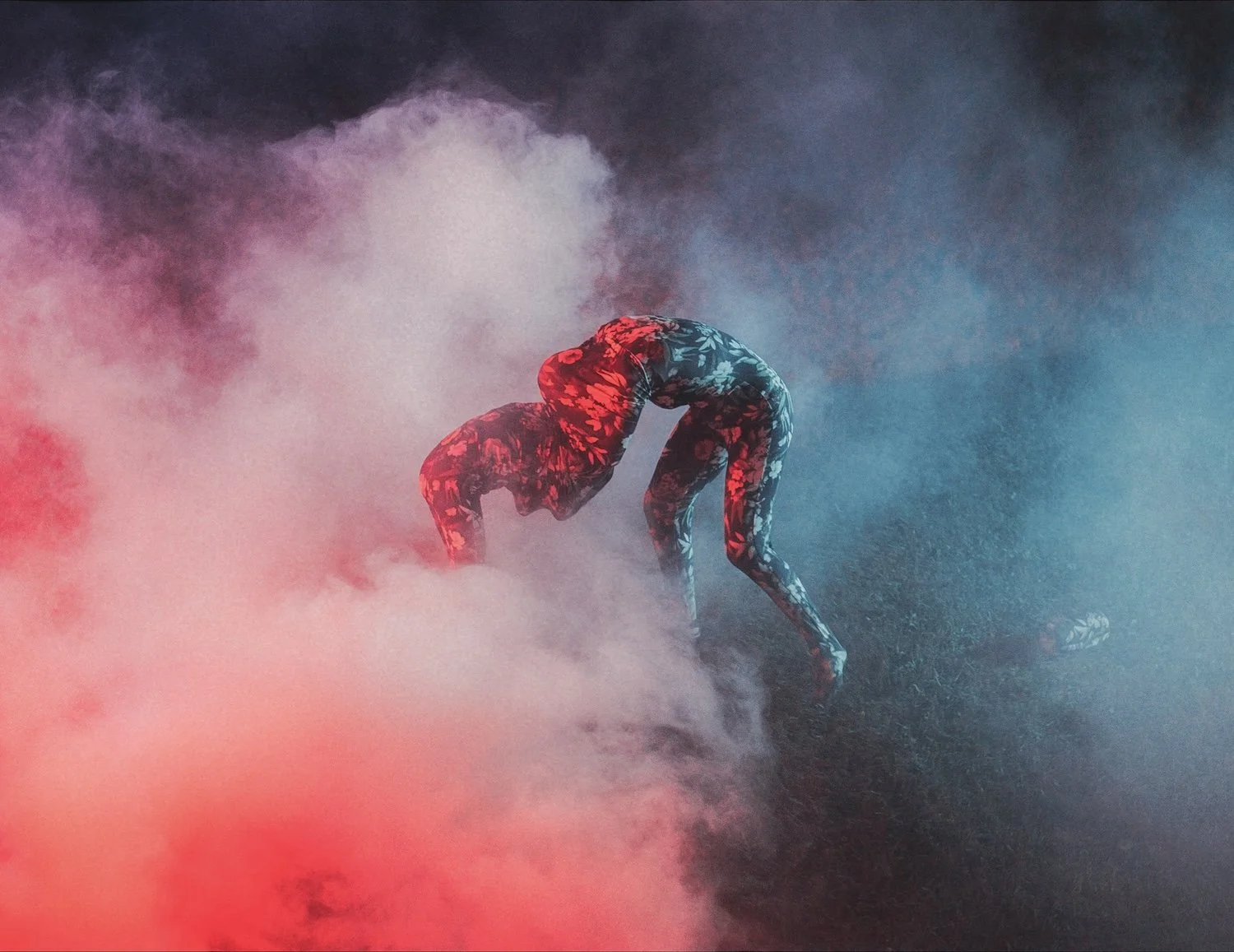
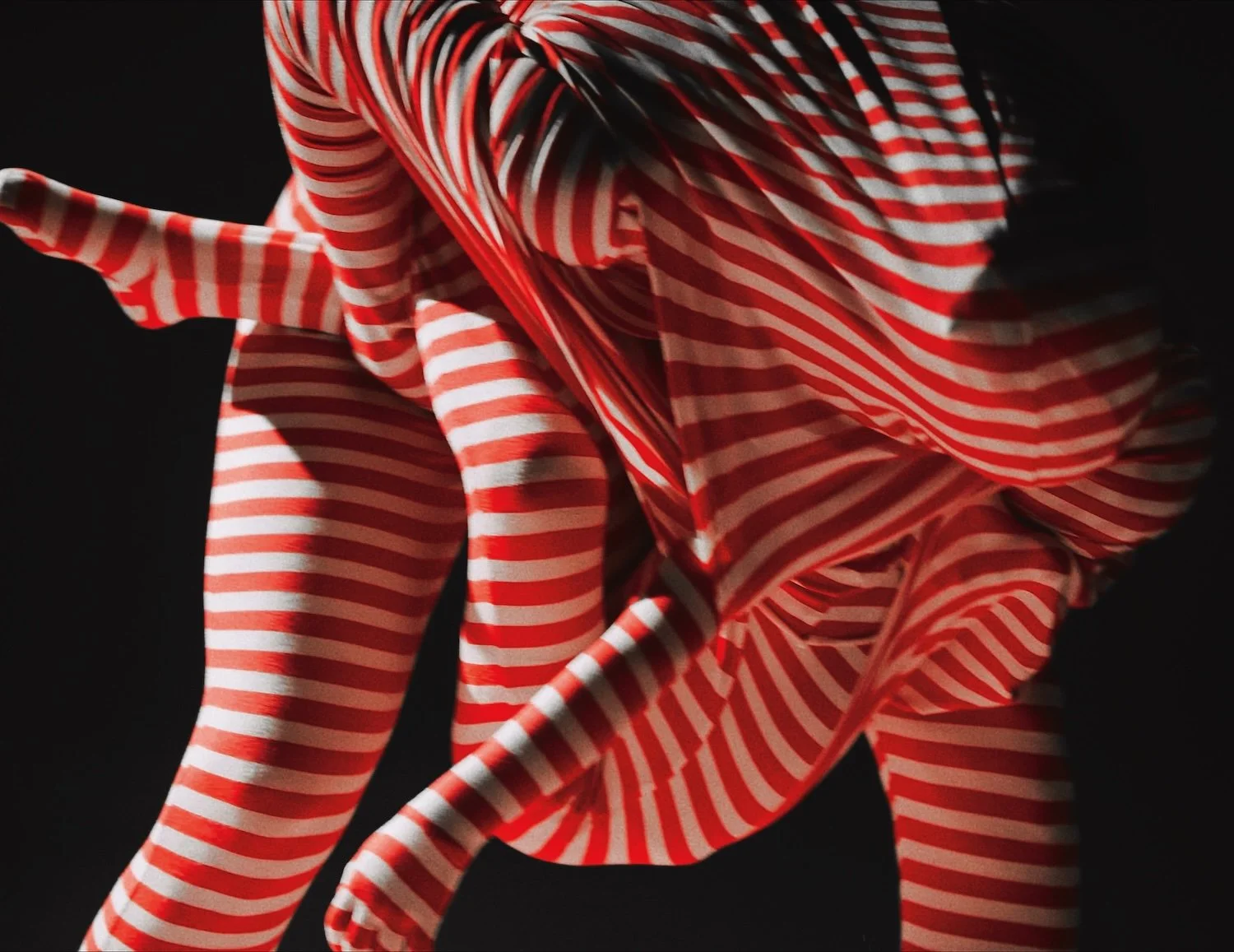
Throughout the performances, the bodies continuously merge and separate, morphing into altered and unstable forms. The mother’s body becomes a kind of ground, soil, or armature through which the child comes into being. I became increasingly interested in those liminal spaces where boundaries between self and other begin to blur — where bodies appear human, animal-like, cellular, geological, or cosmic all at once. In that sense, the work also gestures toward ideas of interconnectedness with the more-than-human world, and toward forms of kinship that exceed individuality.
As co-collaborators, my children shaped the tone and cadence of the performances, and the work was always contingent on their participation and agency. I wanted to preserve that openness throughout the creative process, often using collage, improvisation, and chance as methodologies that could mirror the unpredictability and fluidity of lived experience itself.
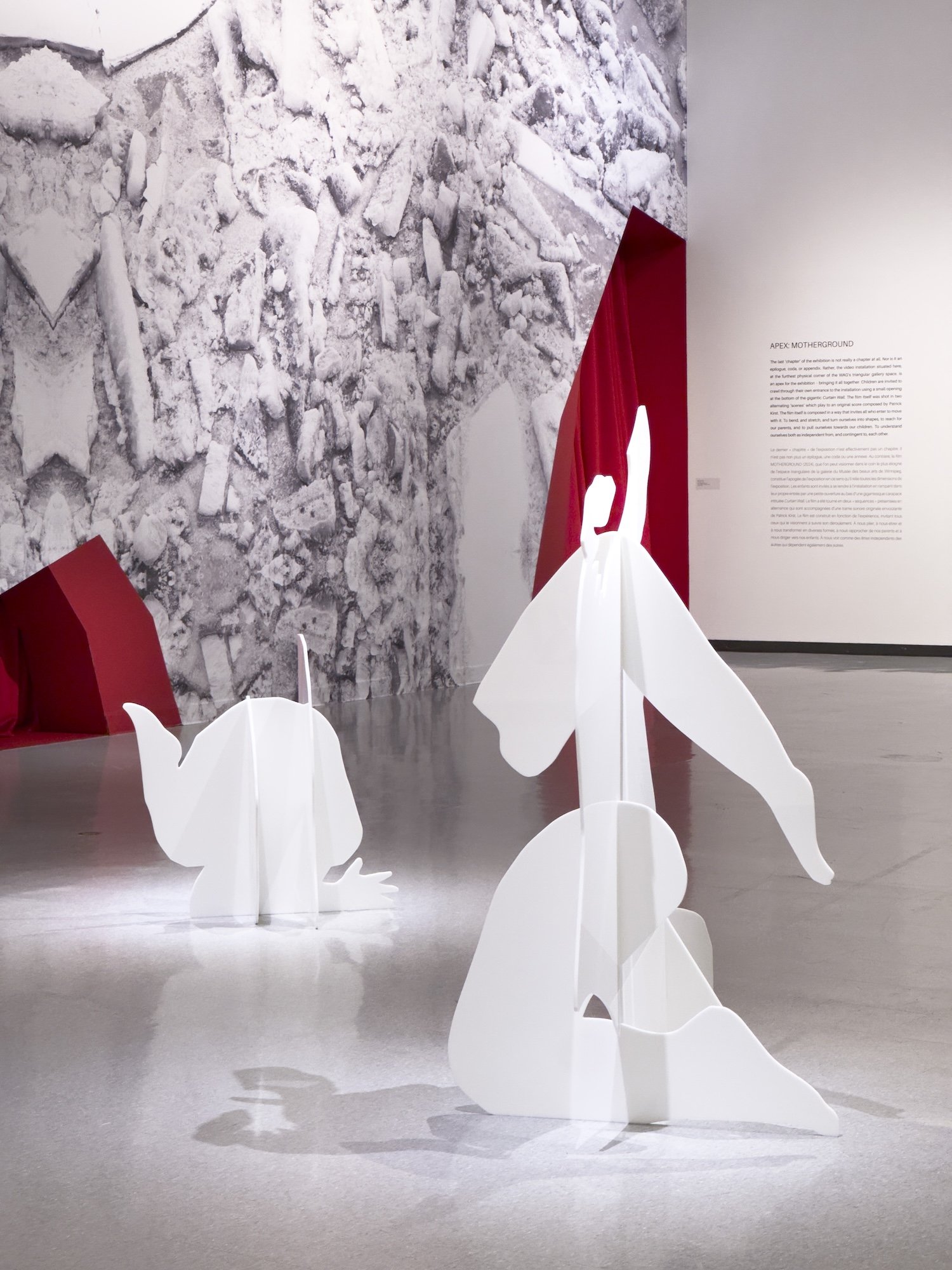
The culmination of the project is the immersive video installation MOTHERGROUND. As viewers walk through a vast wall covered by glacial forms, they enter a pulsating red interior space in which the film unfolds as a kind of dreamlike metanarrative of play, movement, and transformation. The choreography emerges through improvisation and relational exchange rather than formal dance vocabulary. At moments the bodies remain legible, while at others they dissolve into abstracted shapes, flickering between micro and macro scales — like cells multiplying, landscapes shifting, or ecosystems mutating. Through the collaging of our bodies, strobing light, patterned costumes, and disorienting perspectives, the work attempts to destabilize fixed distinctions between figure and ground, self and other, human and environment. Ultimately, MOTHERGROUND is an exploration of our deeply entangled existence with one another and the Earth itself.
NDEREOMA: Unless you have questions for me or would like to insert any other work or subject here, this conversation feels complete. What do you think?
DR: I am so glad to have had this conversation with you today, Nicolás. Your practice and the way you move through the world continue to be a profound source of inspiration to me. Any opportunity to exchange with you is a gift.
NDEREOMA: I hope to see you soon in Canada or in the US.
DR: I look forward to it very much!
All images courtesy of Dominique Rey/ None of these images should be used without written consent from the artist
Dominique Rey’’s related links: website / Instagram
Dominique Rey is a French-Canadian visual artist working in photography, film, and sculpture. Performance and the body are central to her practice, and she utilizes modes of fragmentation to explore the self within contemporary experiences of disorientation and dislocation.
Her work has been exhibited throughout Europe, the United States, and Canada, including at the Tabacka Art Center, Galleri Box, ArtCenter/South Florida, National Gallery of Canada, Museum of Contemporary Art Toronto, Remai Modern, Plug In ICA, VU, MacLaren Art Centre, Gallery TPW, Galerie de l’UQAM, Southern Alberta Art Gallery, Centre Clark, Winnipeg Art Gallery, and Museum London. Rey is the recipient of numerous awards and grants, including support from the Canada Council for the Arts, Manitoba Arts Council, Winnipeg Arts Council, Elizabeth Greenshields Foundation, and La Fondation Baxter & Alma Ricard. In 2011, she was longlisted for the Sobey Art Award, and in 2016 she received the Canada Council for the Arts International Artist Residency at La Cité internationale des arts in Paris. Her work is held in the collections of the National Gallery of Canada, Remai Modern, Winnipeg Art Gallery, Scotiabank, and the Province of Manitoba.
She holds an MFA from the Milton Avery Graduate School of the Arts at Bard College in Annandale-on-Hudson, New York, and an MFA in New Media from the Transart Institute in Berlin, Germany. Dominique Rey is a professor at the School of Art, University of Manitoba, located on Treaty 1 Territory and the Homeland of the Red River Métis.