Ciro Beltrán

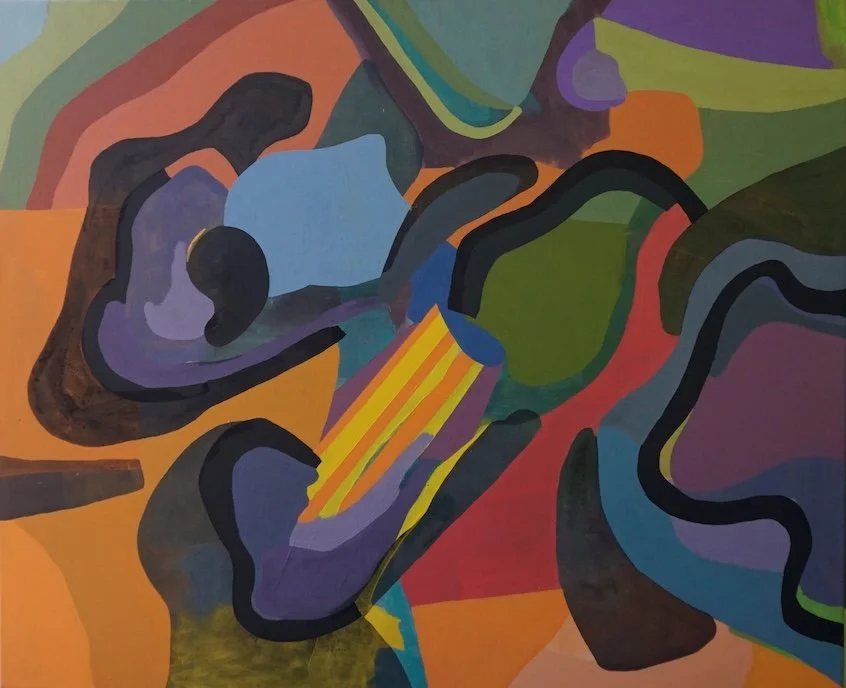
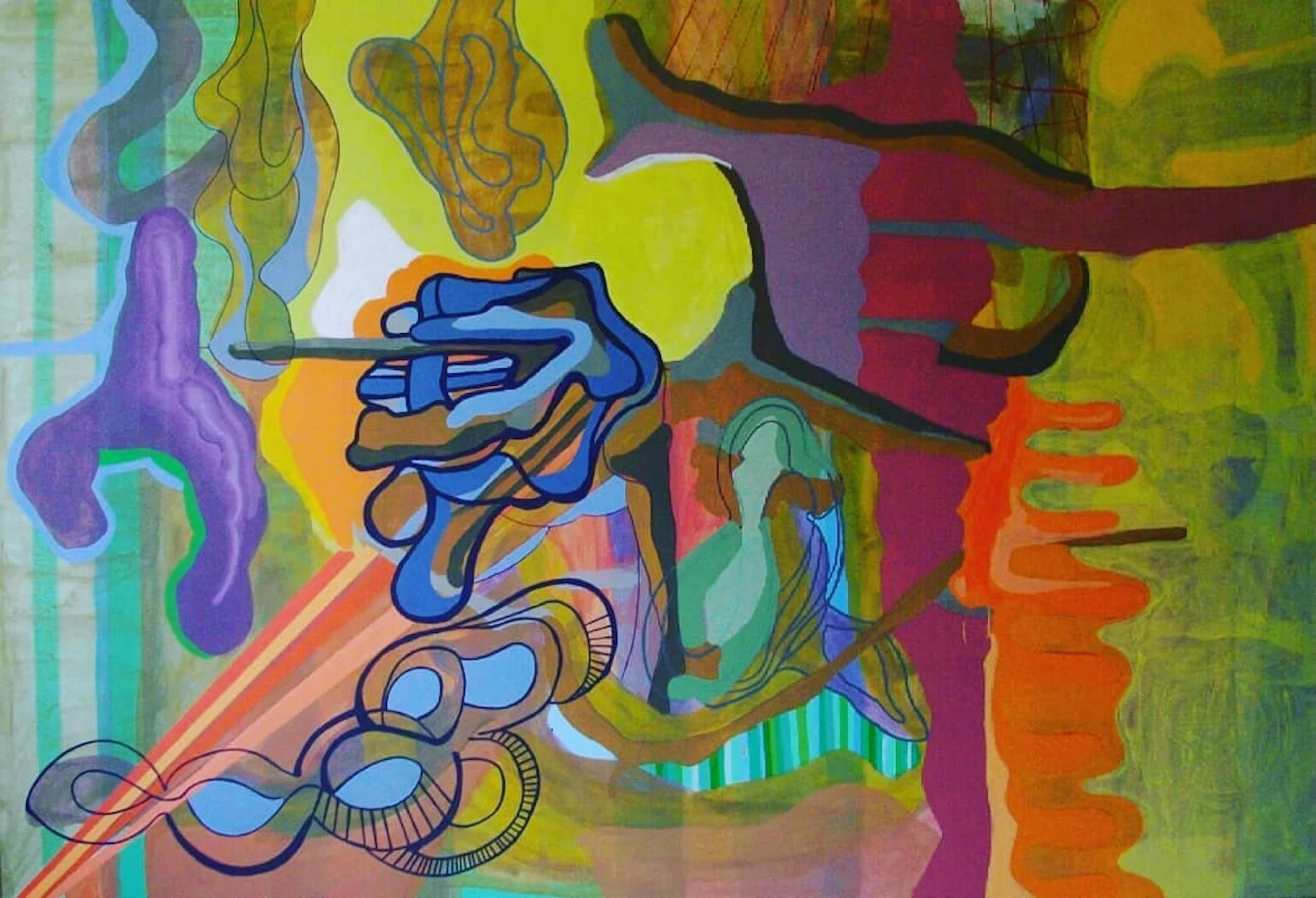
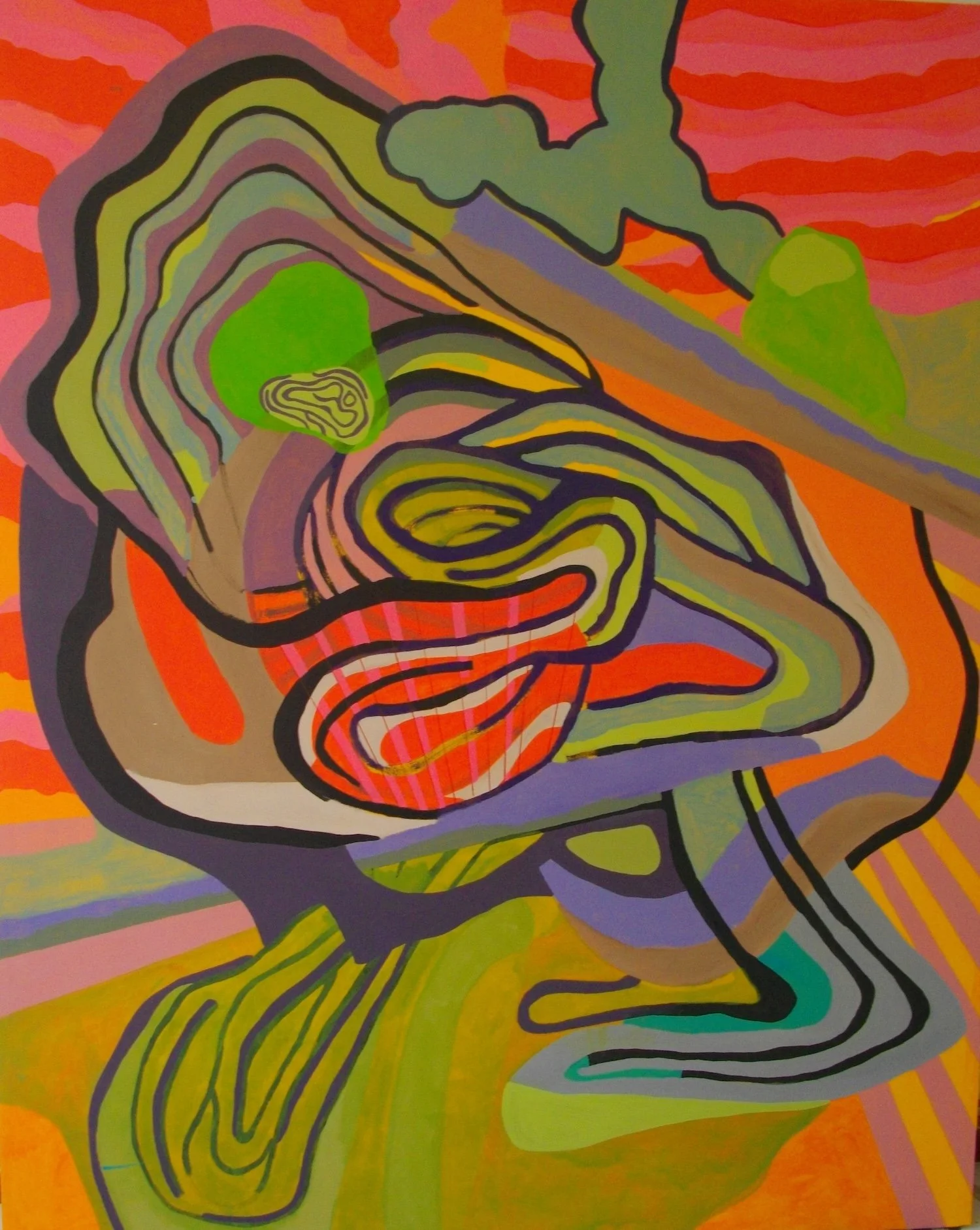
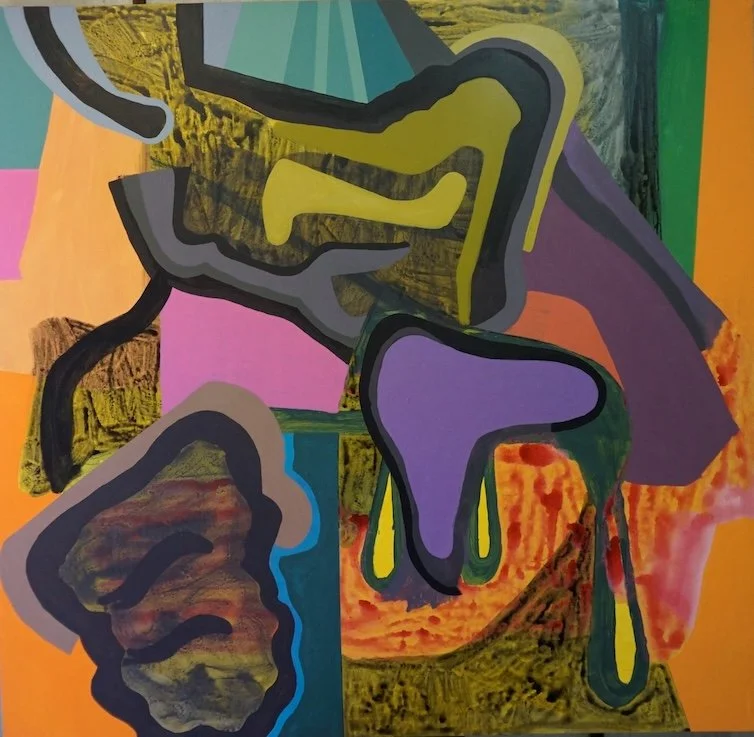
Nicolás Dumit Estévez Raful Espejo Ovalles Morel: Ciro, we met through Dermis León when we coincided at Madrid in 2004. I was presenting The Passerby Museum with María Alós at Madrid Abierto and you were exhibiting some paintings with ARCO Is this correct? Can you please refresh my memory as to what you were doing then, creatively speaking, in Spain? We later met again in Berlin, around 2010. You were living there and I was teaching in that city with Transart Institute. What are your personal and creative links with Germany?
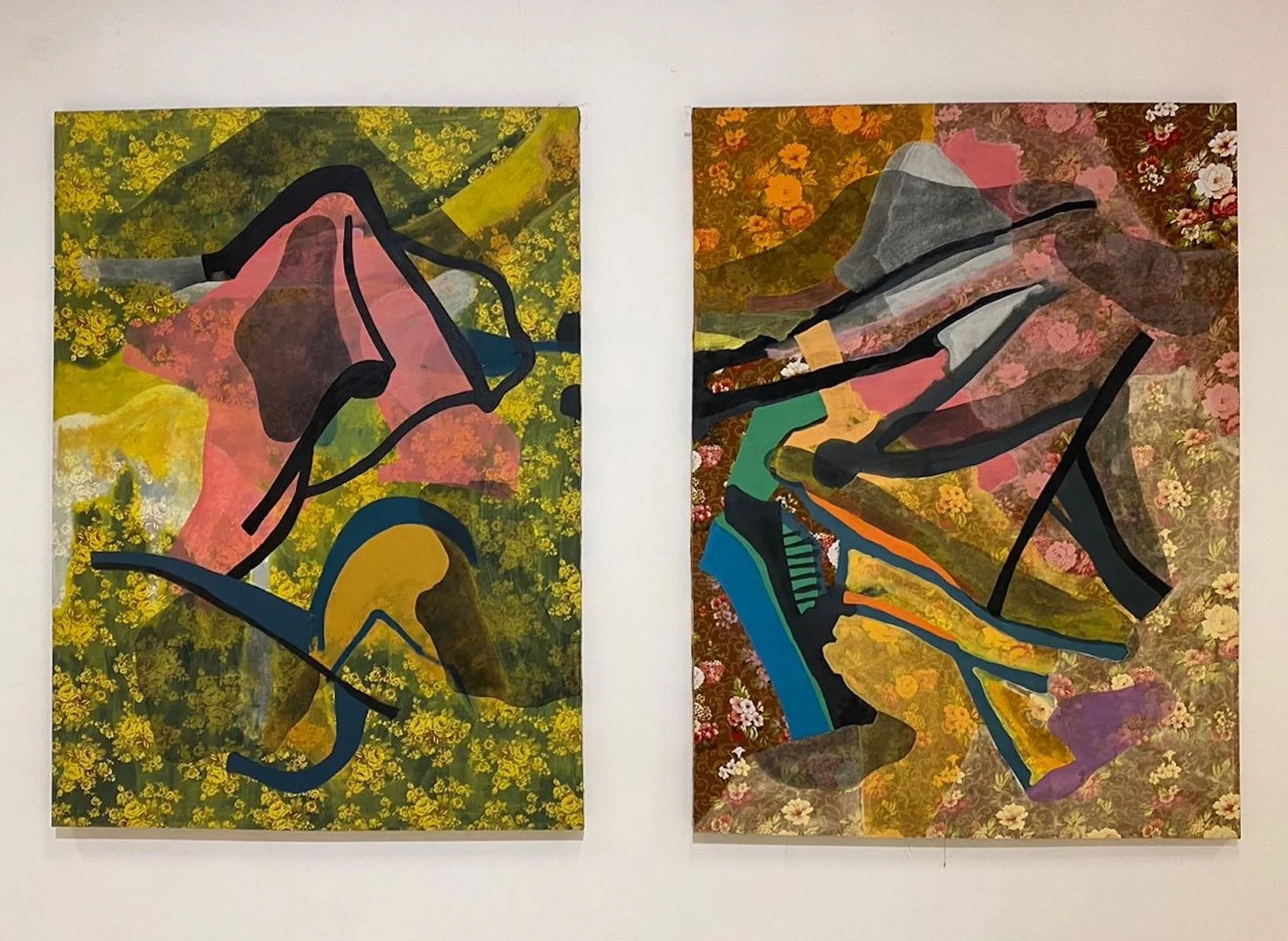
Ciro Beltrán: It is true that we first met thanks to curator Dermis León in Madrid. It was in February 2005, when I was invited by the curator Antonio Zaya to present part of my carpet-painting work in a section of the ARCO Fair, called Arco Latino. I participated with Galería Artespacio from Chile. We met in Berlin, between 2012 and 2013, and were able to talk more calmly. Finally, we have been able to interact much more thanks to my recent trips to New York in 2022 and 2023.
Regarding my personal and creative ties to Germany, the answer is a long one. I first arrived in newly unified Berlin in 1993, a city that still bore all the marks of war and division—something that deeply impressed me at a personal level. Later on, I continued my art studies at the Kunstakademie Düsseldorf. between 1995 and 2001. In total, I lived nearly 25 years in Germany, a country that greatly inspires me for its significant cultural contributions to literature, the visual arts, and philosophy.
NDEREOM: Talking about cultural contributions, I have had the fortune to be in touch with people involved in the arts who have connections to Chile: Francisca Benitez, Rocío Olivares, Lissette Olivares, María José Contreras, Rocío Aranda-Alvarado, and Marcial Godoy-Anativia, to name just a few. And your response about Germany made me think about Chile in relationship to literature as well as to poetry within the day-to-day. Can you talk about this as it pertains to your work, life and to your homeland?
CB: In Chile, there has always been a strong influence of poetry in the visual arts. This has been happening since early on, with visual poems by Vicente Huidobro (1913) and to Juan Luis Martínez’s La Nueva Novela (1977). The list is long, and we could also mention Alfredo Jaar, Gonzalo Díaz, or Guillermo Deisler, whose works combine fundamentally the use of words and text.
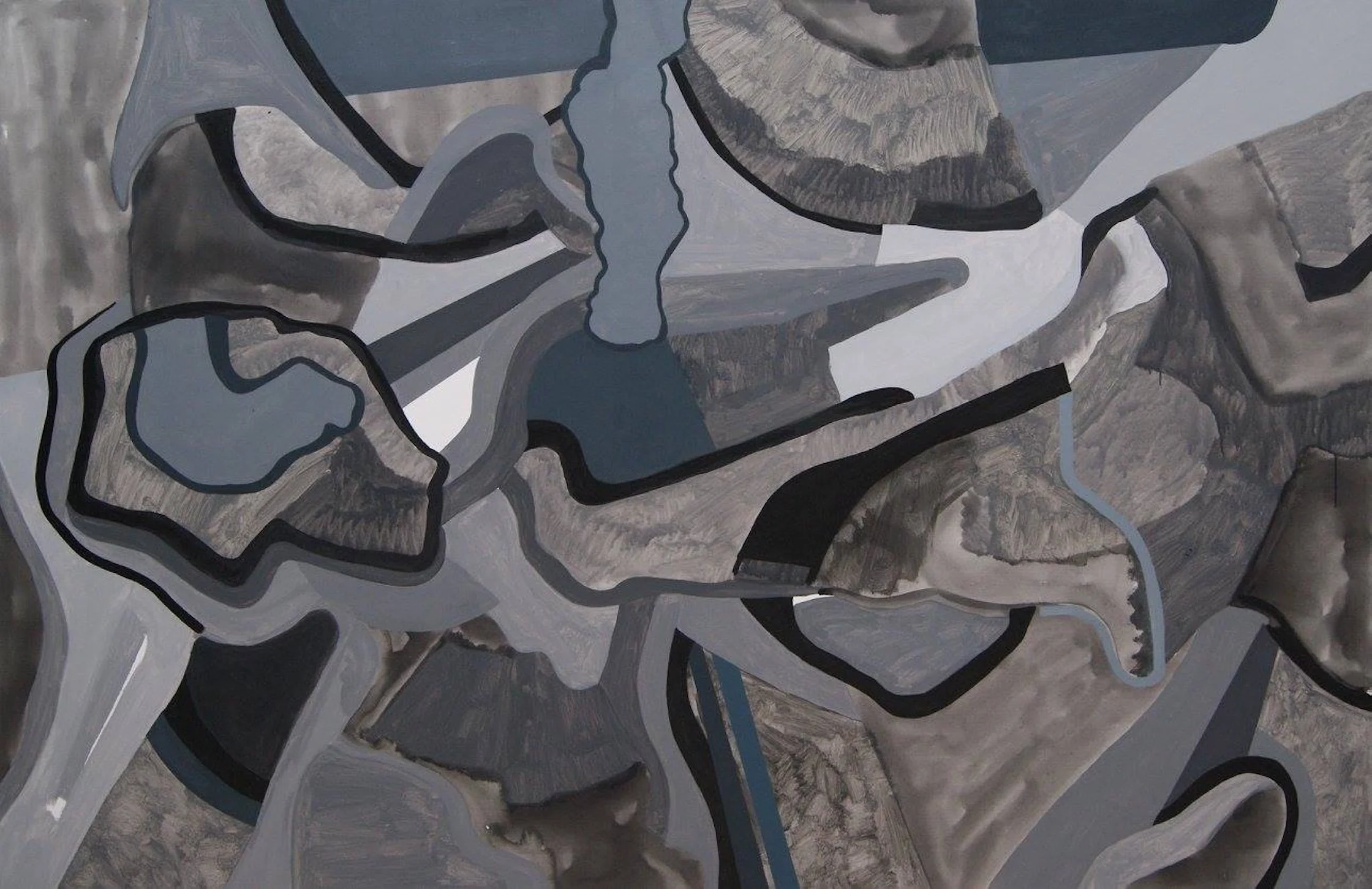
In my particular case, from a very early stage, the poetic and the visual emerged as a combined pursuit. I studied visual arts in Santiago and later in Düsseldorf, Germany. One could say that I develop my artistic practice from a visual standpoint, yet I never abandon the poetic dimension, which constantly resurfaces in my work in different ways. An example of this is my publication during the civil-military dictatorship: The Yellow Yuyo, 1987. This is a book that combines poems and drawings on every page. I later produced Cartas de Navegación and Referencia, 1989, where I emphasized the poetic within the book format. Additionally, over the years, words and texts have appeared in my paintings, eventually leading to the series Dibujos poéticos and Dibujos teóricos, 2010–.
NDEREOM: Performance art is big in Chile and Latin America, and it has been a crucial political tool in the region. Can you discuss performance art within your own creative praxis but also within Chile in general? Who are some of the figures whose legacies may have informed what you do now?
CB: For me, the interventions in the public space that I began in 1985 as well as my performances have emerged as a natural need within the development of my work, which originates in painting. Since I lived for more than 20 years in Germany, my references in performance are not exclusively Chilean. The influence of Joseph Beuys—an influence that became even stronger during my years in Düsseldorf—has been of great importance. Early in 2007 I carried out a performance in Valparaíso titled How to Explain to a Suit Made of Carpet that It Is a Work of Art. This action was a clear homage to the influence of Beuys on my practice.
NDEREOM: In my opinion, performance art in the United States, at least in New York City, has been commodified, coopted, made consumer-friendly. When I think of performance art, the image that comes to my mind is that of an energy or entity that remains slippery. What is going on with performance art in Chile today? Has it fallen prey, like here, to postings on Instagram and to that one attractive image that looks good on social media but that beyond the surafce has no layers? Tell me.
CB: In Chile, I see performance art as still quite incipient and marginal. It has never gained the level of importance it holds here in the United States. Although there were foundational groups such as Las Yeguas del Apocalipsis and the independent work of Francisco Copello during the 1980s and 1990s, their recognition has come only relatively recently. In fact, Copello still has not been given the place he deserves. Nonetheless, performance art has grown in recent years. During the Social Uprising of October 2019, for example, numerous performance groups and action-focused collectives emerged, many of which have gradually disappeared over time. This reveals that there is still no solid support to sustain these practices. Although there are currently artists, collectives and events dedicated specifically to performance—such as the Deformes Triennial, or the efforts of the Perforlink network to connect the local scene with the international one—the situation remains precarious.
NDEREOM: It is great to hear about some of these artists who I did not know, like Copello. Your practice as a creative moves between painting, poetry, urban interventions and more. I would like to hear you talk about your urban interventions, as well as what you do with carpets, which I understand as being connected to the history of painting but also performance art. This work with rugs reminds me of Joseph Beuys’s sensibilities.
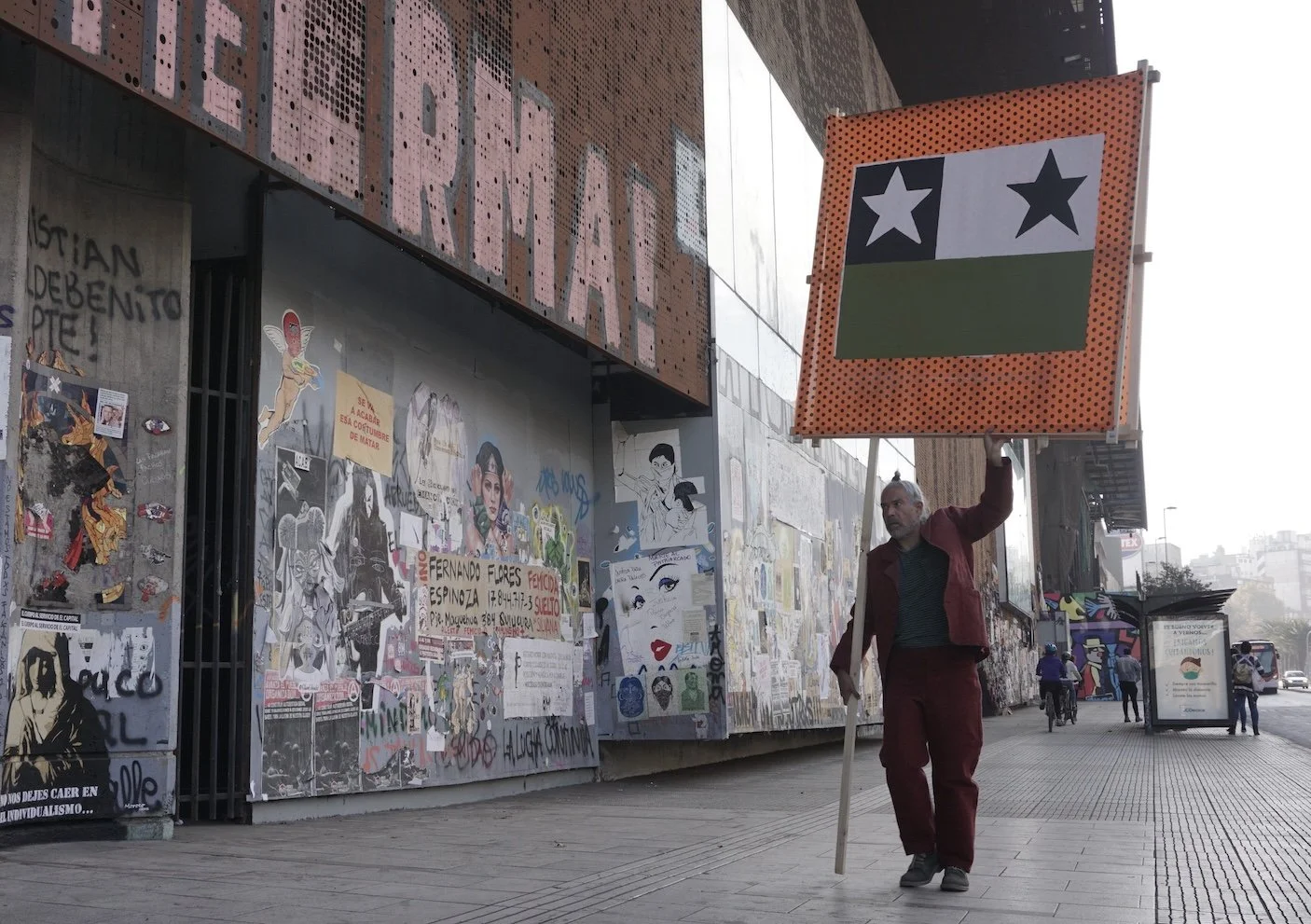
CB: Urban interventions have been a constant theme in my work. Using public space to confront the ideas and images I am developing allows me to see the artwork in a context different from that of the museum or gallery. At the same time, the fragility and ephemerality of a piece installed in the street give it a special kind of intensity. For example, during my last years living in Berlin, I had all the electrical boxes within a block of my apartment intervened—some with paintings, others with photocopied drawings that I pasted onto them. Intervening the spaces around where I live allowed me to follow, day-by-day, what was happening to them, since everything in the street changes very quickly and anyone can intervene over what you’ve done.
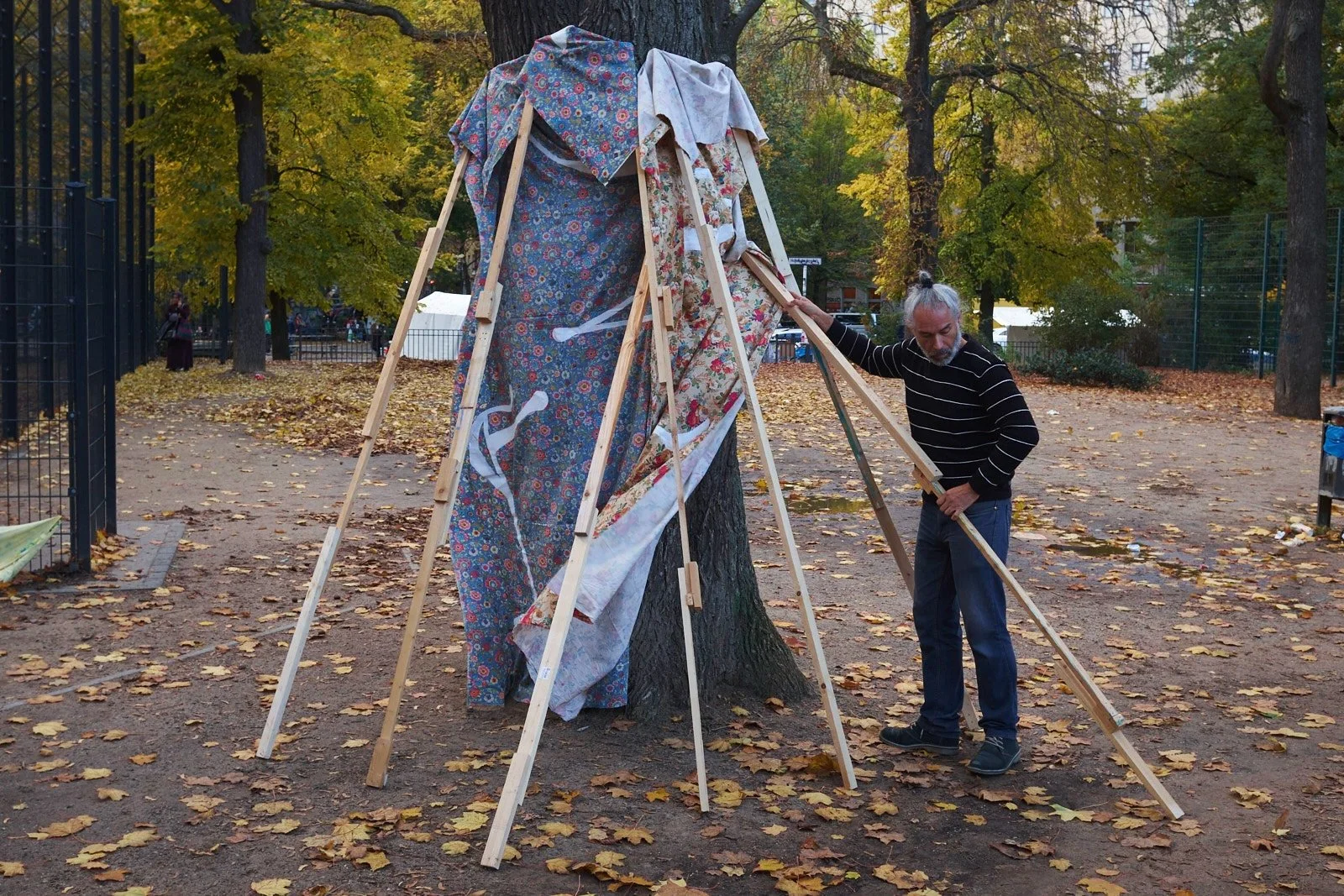
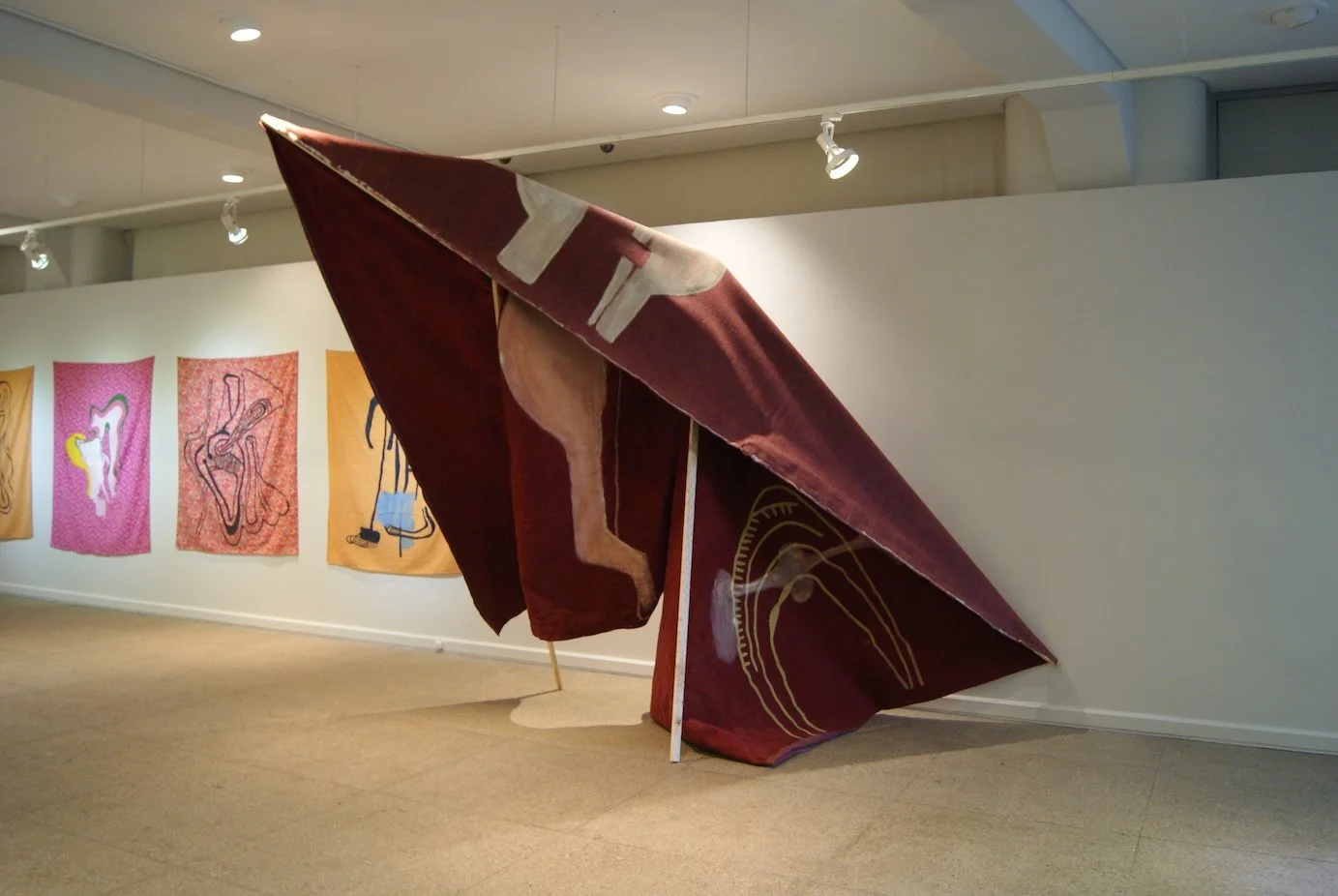
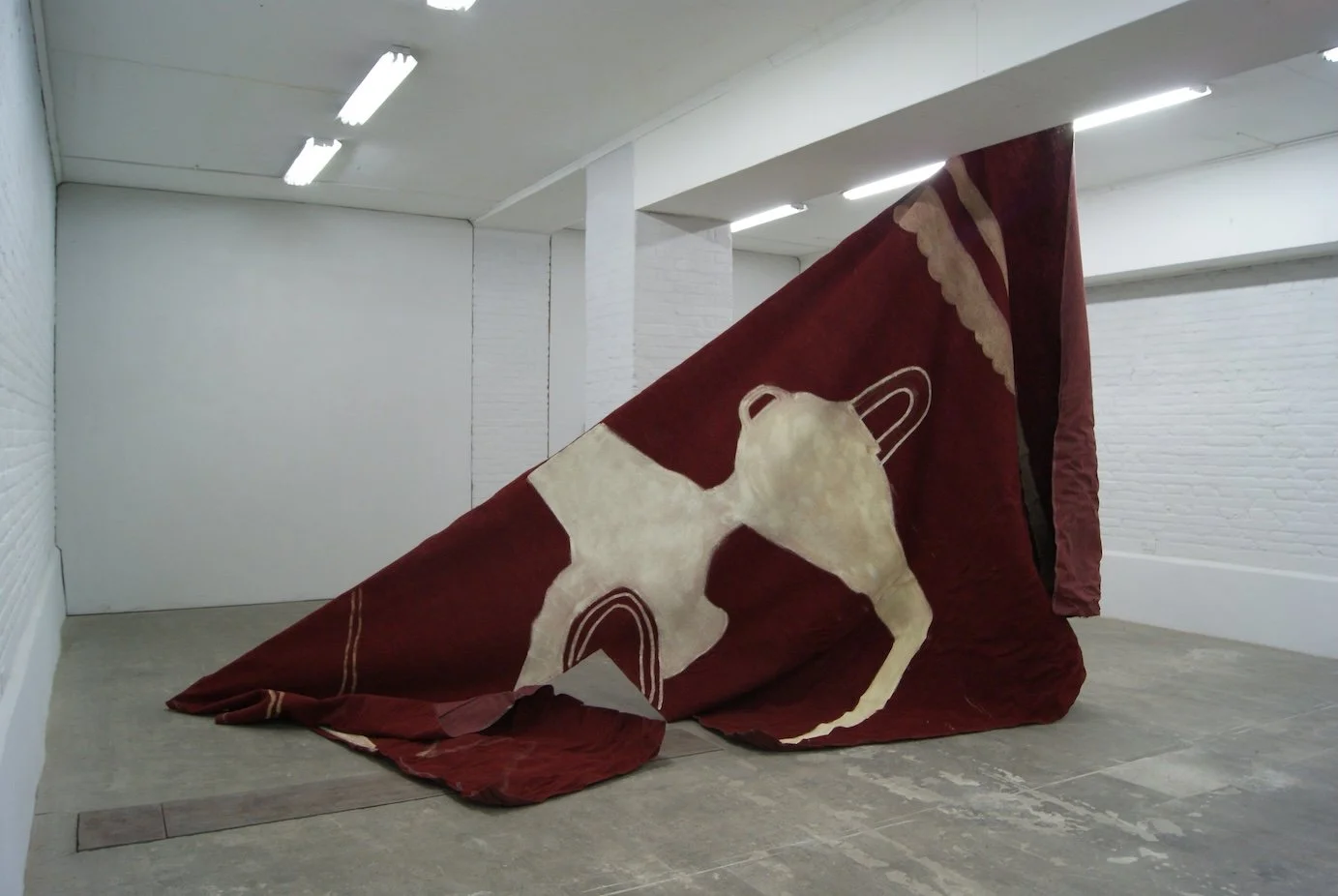
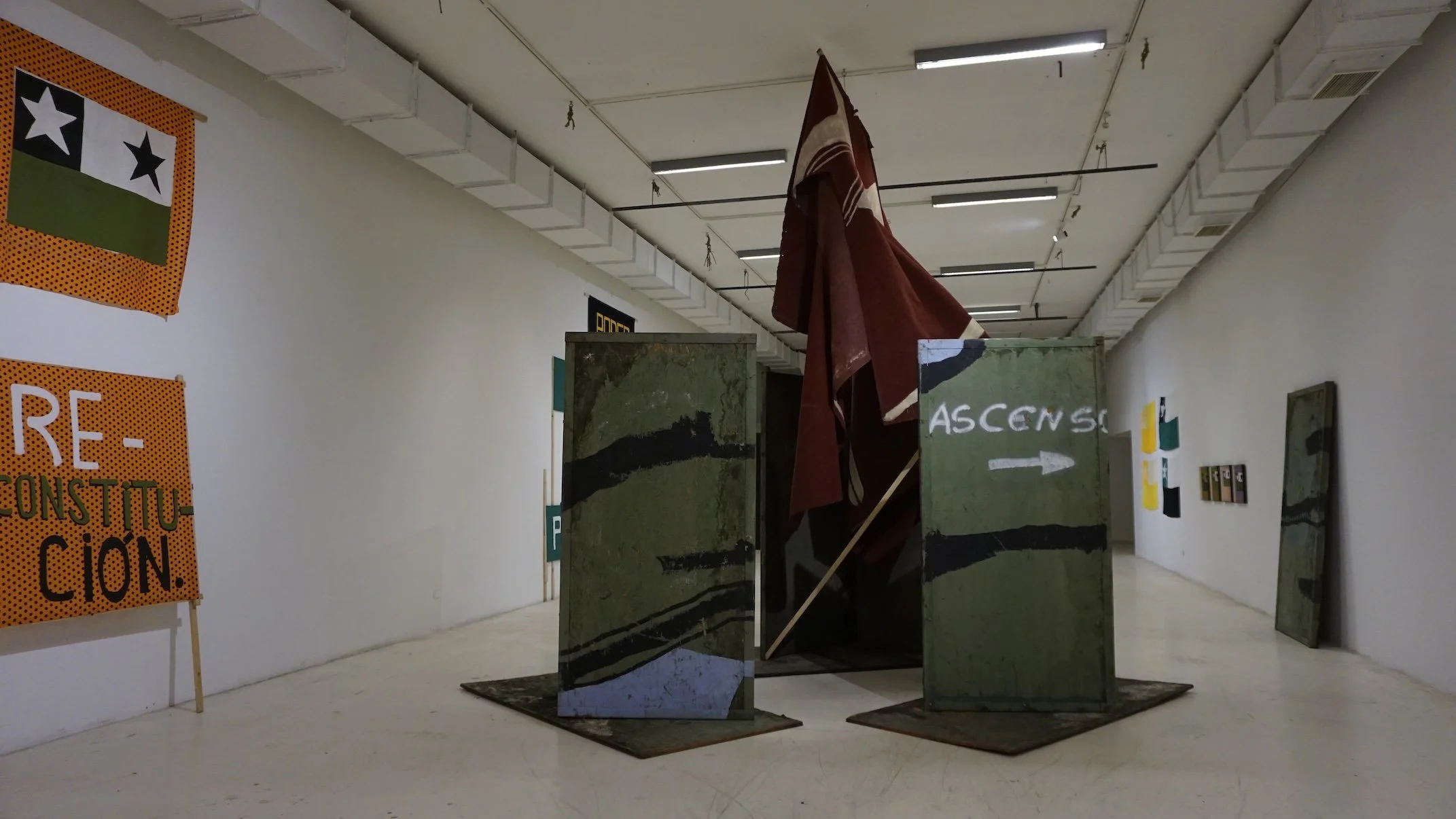
Additionally, the series Carpet Paintings emerged in Düsseldorf in 1998, when I was studying at the art academy there. I would see these carpets—technically floor coverings—left out on the street waiting for the garbage collection. Because they were used, they carried the marks of a previous life. That was precisely what interested me: combining my painterly exploration with the carpets and their traces of use, creating a form of recycled art. Later on, working with these carpets naturally led me to develop installations and video performances that incorporated them. Unconsciously, it was probably another influence of Beuys, although my motivations were certainly different. My approach to the materiality of a carpet previously used by someone unknown was to treat it as a “pictorial” material. Later, in my interventions over the past ten years, I began to incorporate the carpet with meanings that are far more performative, and indeed with a sense of covering or protecting the body—much in the same way that Beuys once used felt, which is like a carpet.
NDEREOM: I would like to jump now into religion and spirituality. It has not been until recently when working with healing, meditation and the like have been given green light by the Art Industry. Before that, for an artist to profess any connection to God, Goddess or a higher power was taboo. But you, from what I understand, have been studying Rudolf Steiner’s Anthroposophy, of which I know a little bit since I am familiar with Theosophy. I would like to hear from you about all of this.
CB: For me, the search for spirituality has always been a priority in my life. At some point in the 1980s I studied Taoism and Zen Buddhism. I understand that Zen also influenced some Abstract Expressionist artists. I discovered Anthroposophy in Chile in the early 1990s, and it has been a constant presence in my reading ever since. Anthroposophy cannot be considered a religion; rather, it is a philosophical study applied to concrete aspects of everyday life, such as Waldorf education, biodynamic agriculture, and medicine. All of this is possible thanks to its scientific foundation.
NDEREOM: Are creatives/artists in Chile as fascinated by healing as we are in the USA? I see this in part as an honest response to the COVID-19 pandemic, but also as people wanting to come out of the closet, spiritually. Now it is okay to do invocations and rituals in the arts. Who would know this ten years ago when those of us praying and meditating within the arts had to use so much caution!
CB: Exactly. For this very reason, in 1993 I wrote the following:
“I have always believed that art and painting are a door or a bridge to a spiritual realm. I have always focused on this, although I am also aware that it is something that cannot be openly expressed; speaking about spiritual matters in art is seen as archaic, or as a serious failure to grasp the core concepts of art. Connecting artistic work with a spiritual practice is also regarded as a naïve argument that lacks legitimacy. This is not a problem of Conceptual Art, but rather of rational and materialistic thought which, relying on its initial conceptual framework, has become a hegemonic trend in the art discourse.”
Today, 32 years later, this context has shifted somewhat.
NDEREOM: I agree. The Art Industry will feed its machinery anything to keep this going, to make a buck, whether it is self-care, rest… you name it. Now the trend is grief, and this is not to discount the work of those who are really invested in this.
Thank you for your time. Capitalism’s understanding and articulation of time is money. Time = money. I say, f*ck that, time = life, so thank you for sharing some of your life with me.
CB: Thank you, Nicolás, for initiating this conversation and for sharing it. A warm embrace
All images courtesy of Cito Beltrán
Ciro Beltrán’s related links: Website / Instagram / Feacebook / Contact
About Ciro Beltrán:
Ciro Beltrán was born in Santiago of Chile. He graduated in Bachelor of Fine Arts from the University of Chile in 1990 and later in 2000, he finished postgraduate studies at the Kunstakademie in Düsseldorf, Germany. Beltran’s practice ranges from painting to installation, poetry, and performance in an interdisciplinary way. He builds a body of work in constant transformation that comes from image, movement, and word to merge and give rise to performances and videos, painting, and installation. He has done more than 90 individual exhibitions in museums, institutions, and art galleries from different countries in South America, U.S.A., Europe, China, Middle East and Japan. In 2004 he returned to Chile to participate in the formation of the Art School of the Austral University of Chile where he served as director between 2005 and 2007. In 2008 he settled again in Europe, residing between Spain and Germany. In 2019 a group of artists, curators and intellectuals granted him the national art prize in Chile. Currently, he lives and works alternately between Santiago of Chile and New York.