Anna Recasens
October 2025-June 2026 Creative In the Wilderness




“...at that moment, all spaces change, all heights, distances; the city is transfigured, becoming crystalline, transparent as a dragonfly.” Italo Calvino, Invisible Cities
Since 2005 I have been investigating the use of public space for intimate purposes, differentiating various uses for love and sexual practices. With this, I refer to appropriations in which urban space is used or temporarily modified to announce, accommodate, shelter or hide intimate interactions and experiences regarding life and death.
Desde 2005 investigo el uso del espacio público con fines íntimos diferenciando diversos usos relacionados con el amor y las prácticas sexuales. Me refiero a apropiaciones del espacio urbano en las que éste es utilizado o modificado temporalmente para anunciar, alojar, cobijar u ocultar interacciones y experiencias íntimas relacionadas con la vida y la muerte.
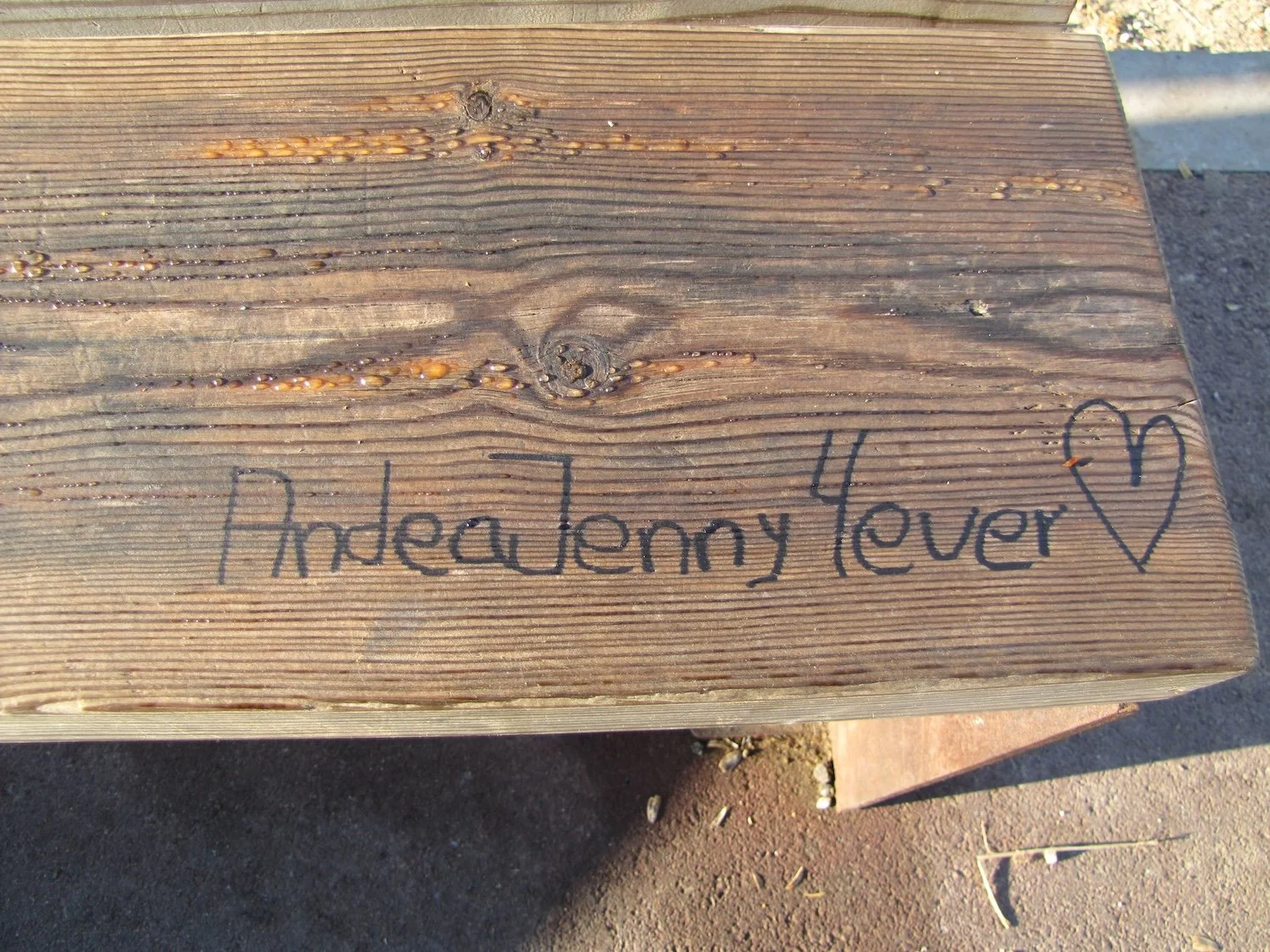
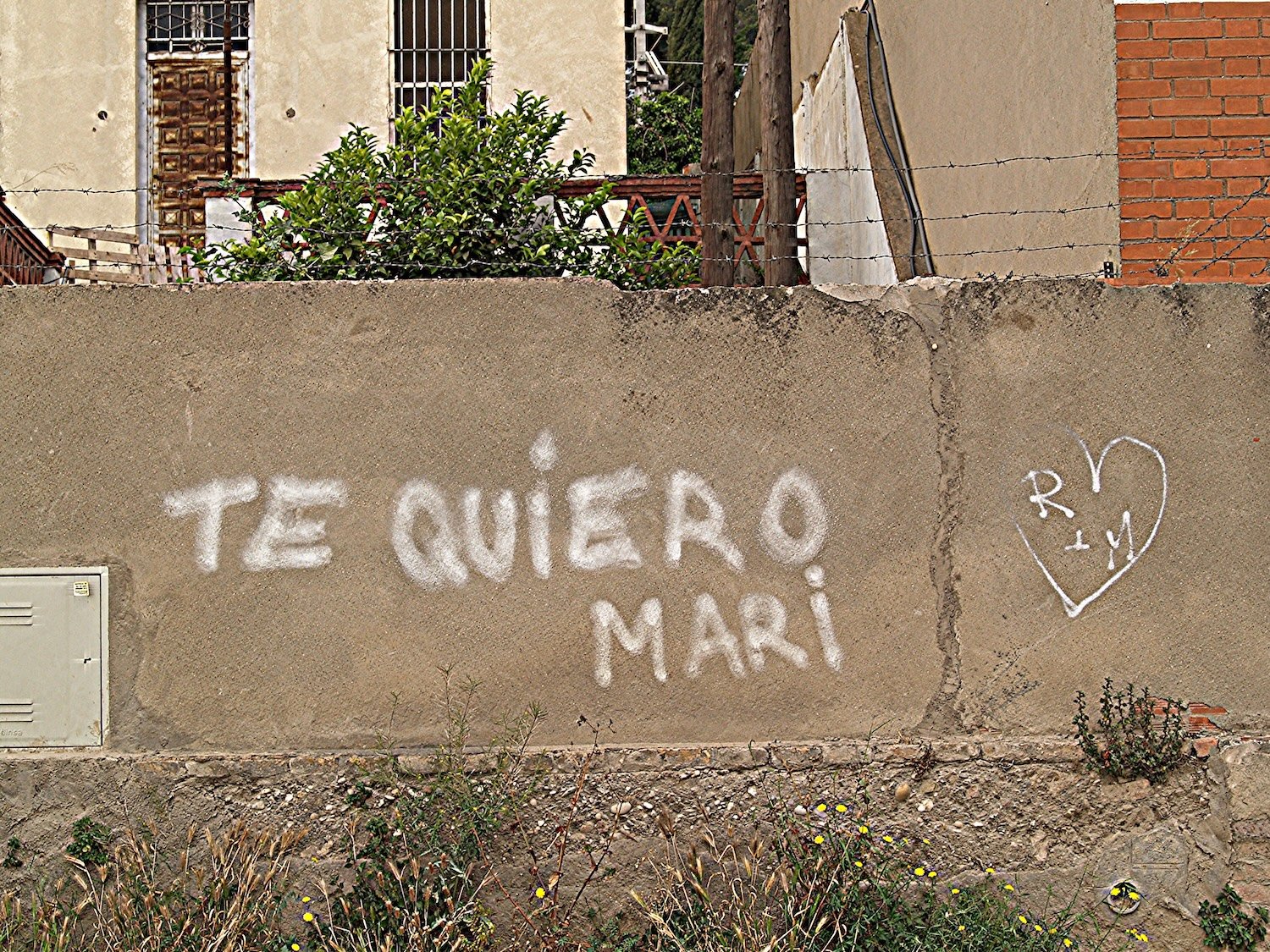
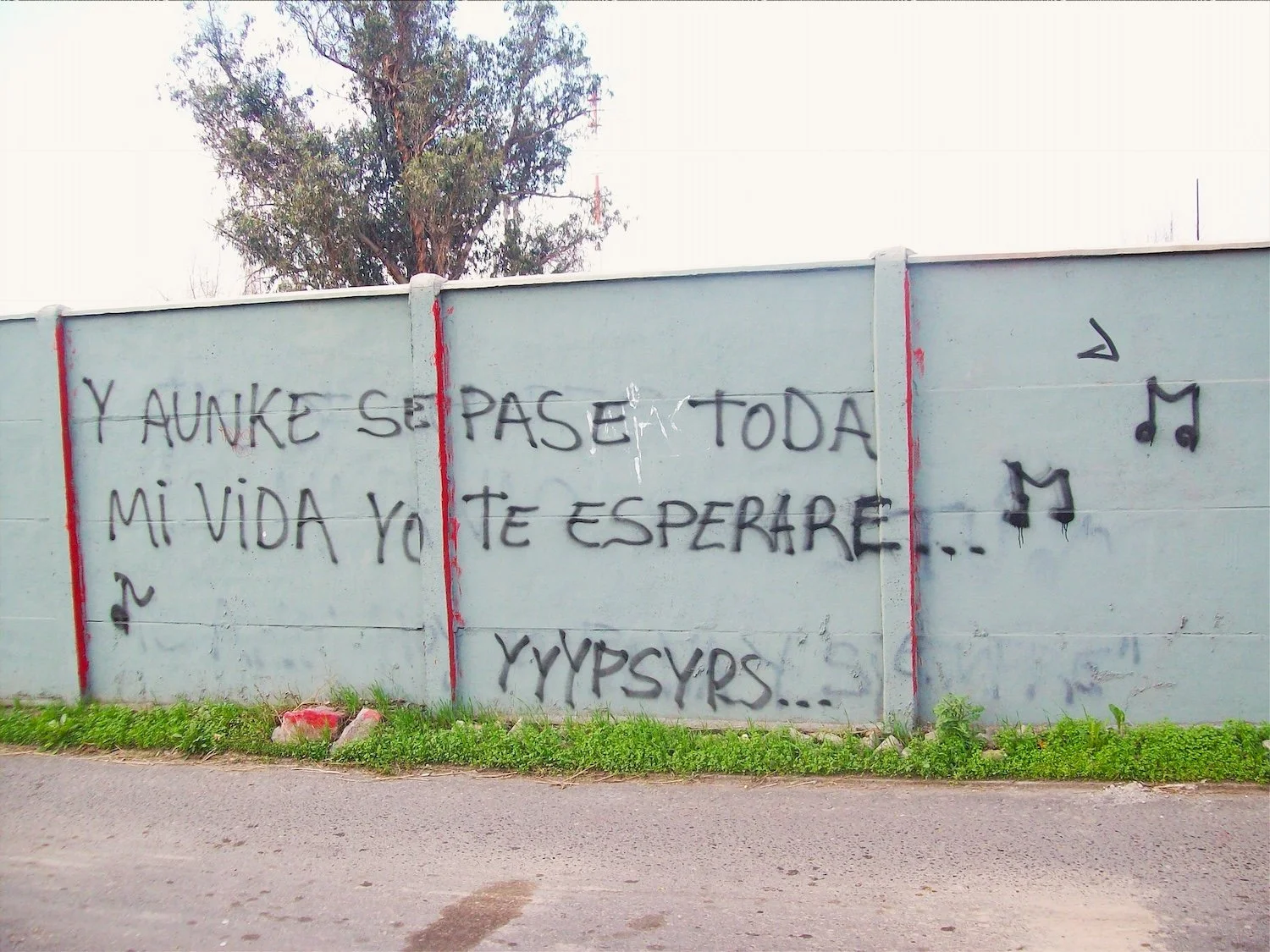
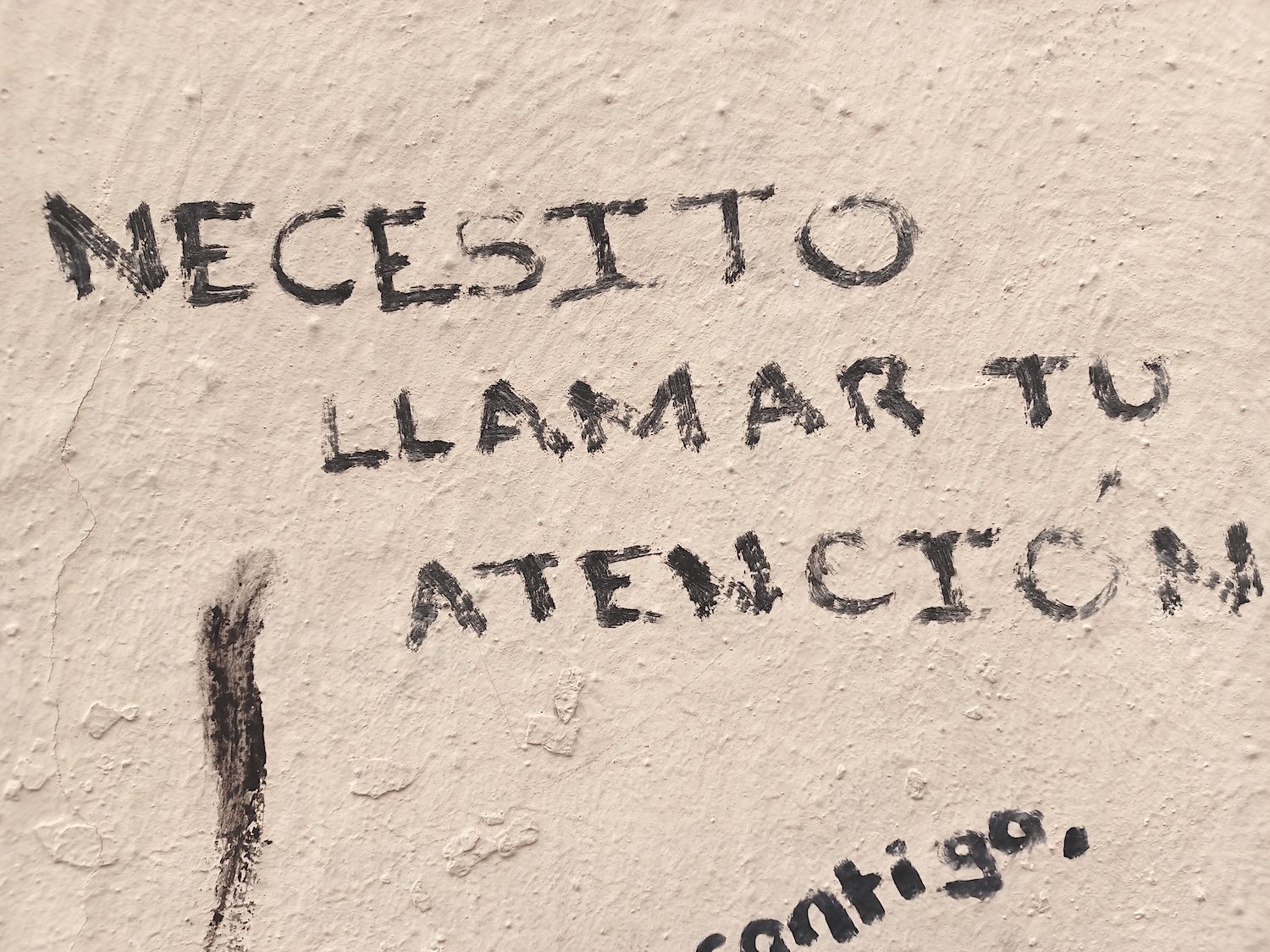
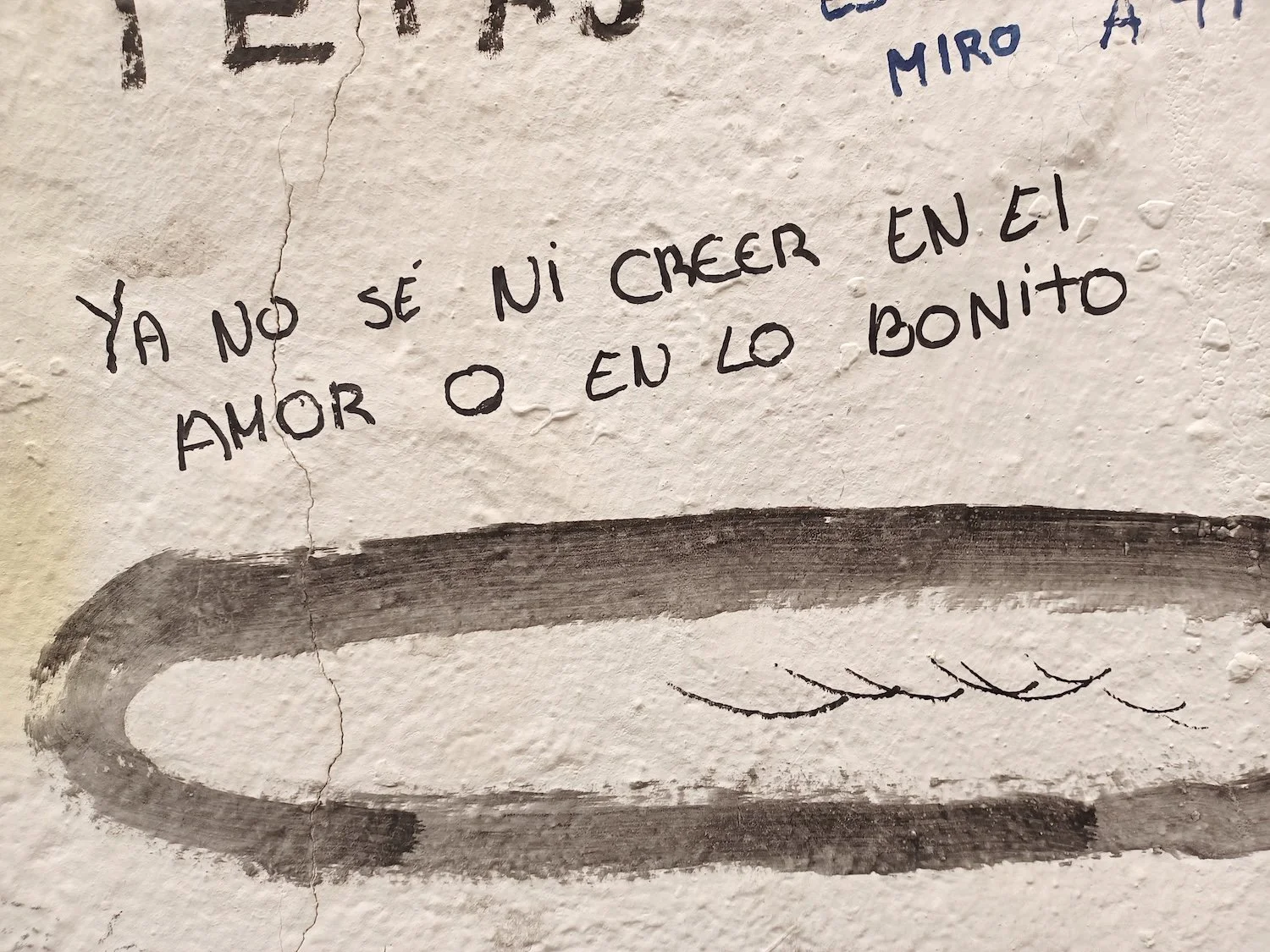
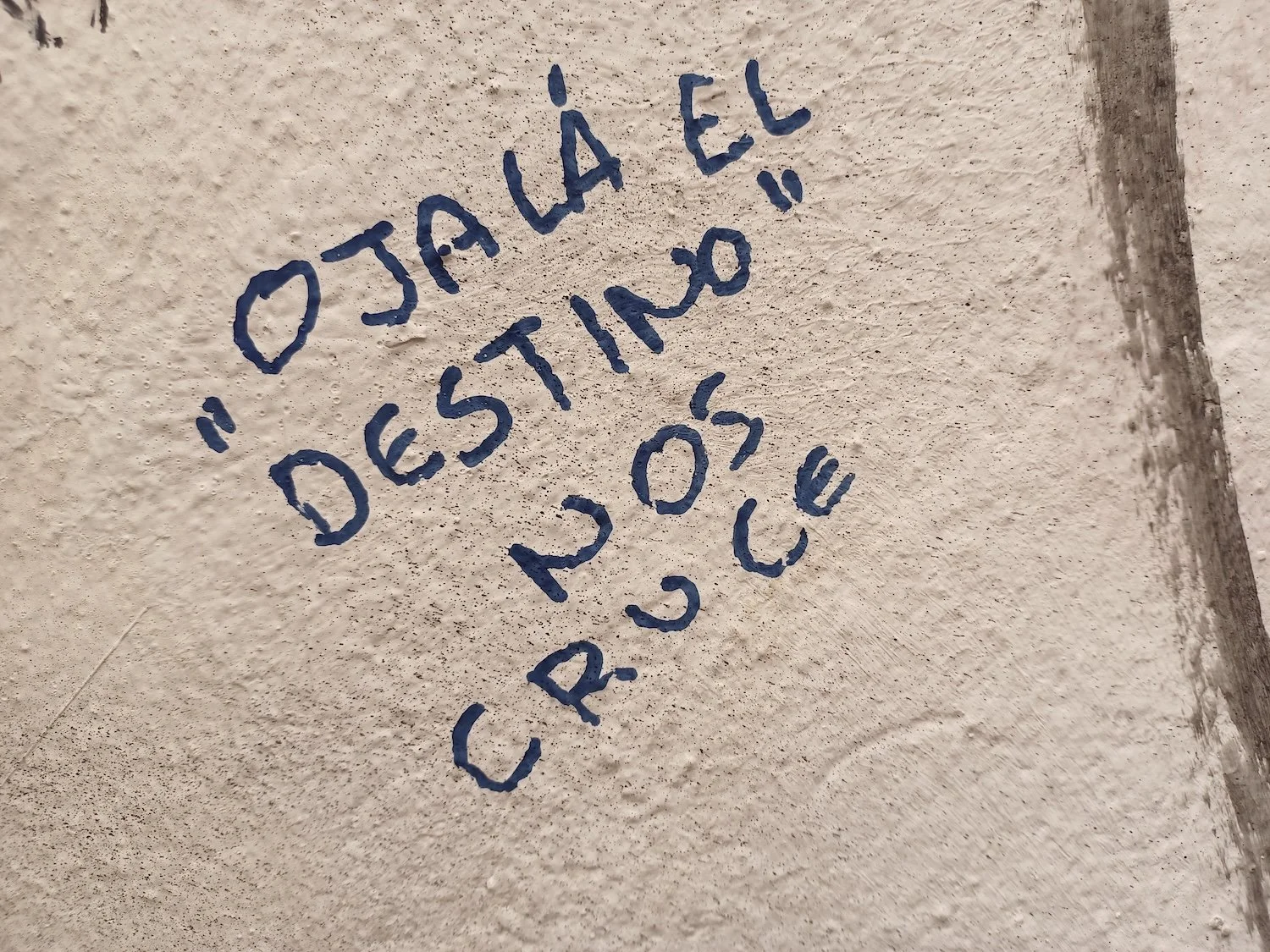
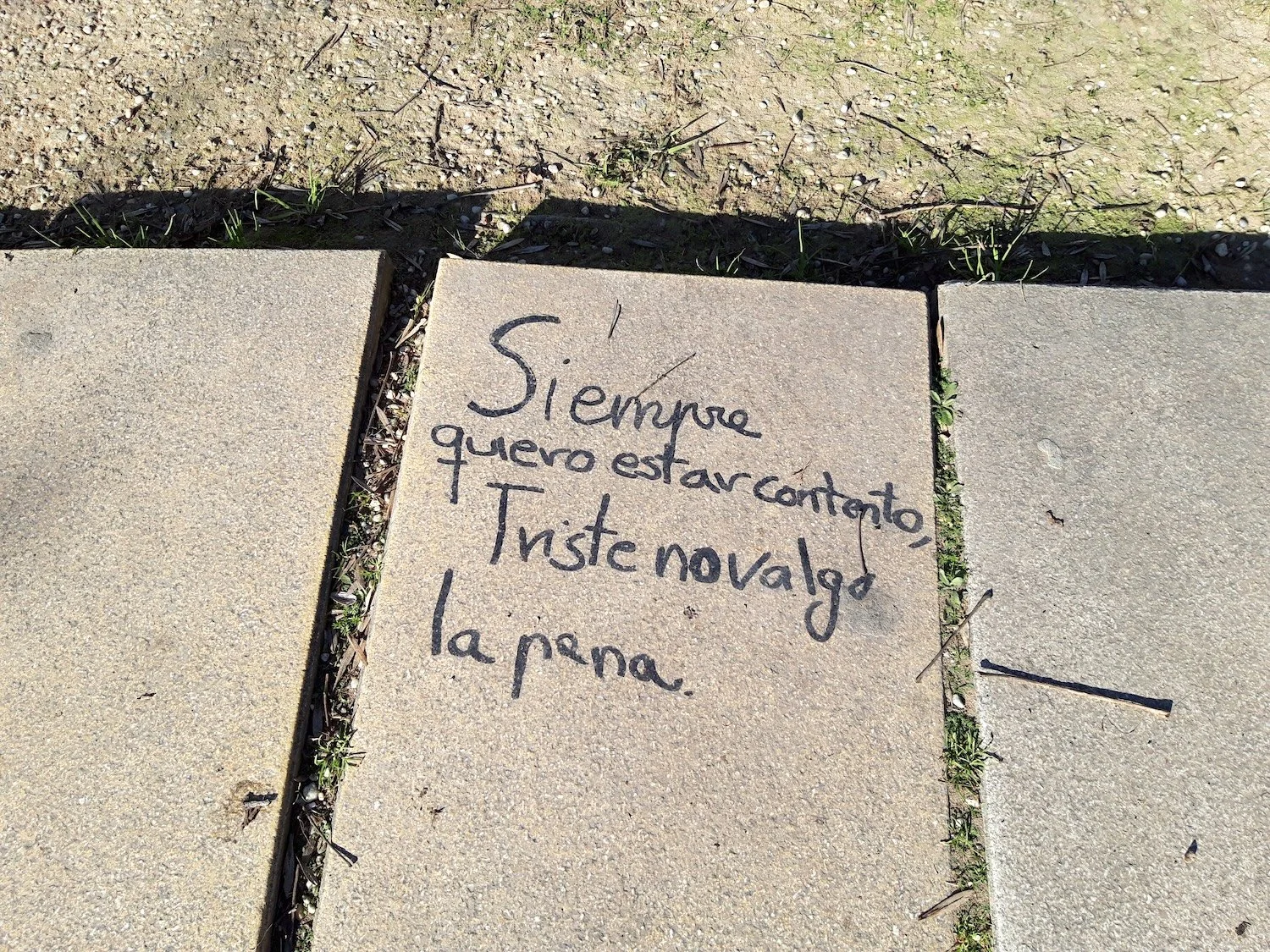
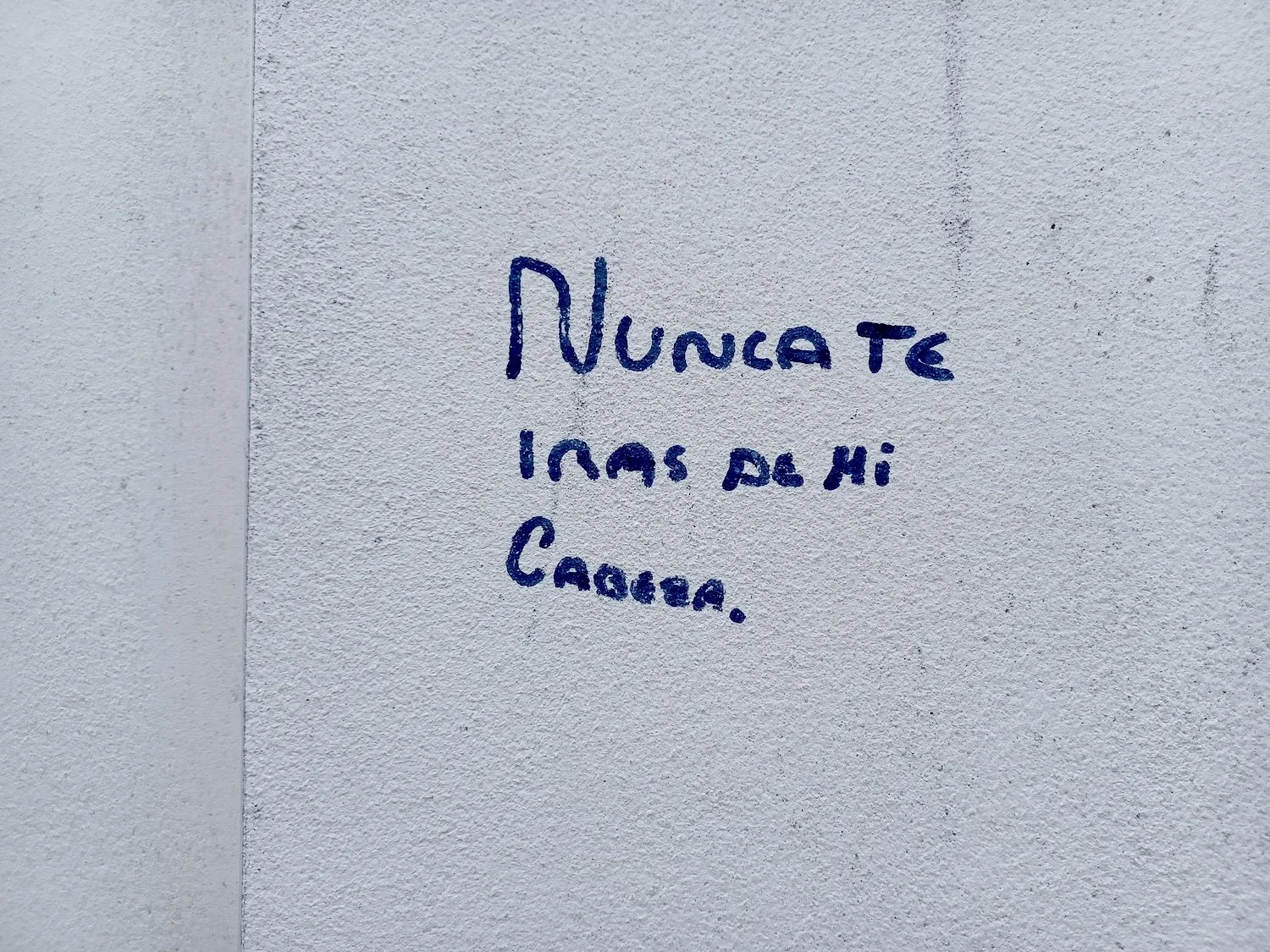
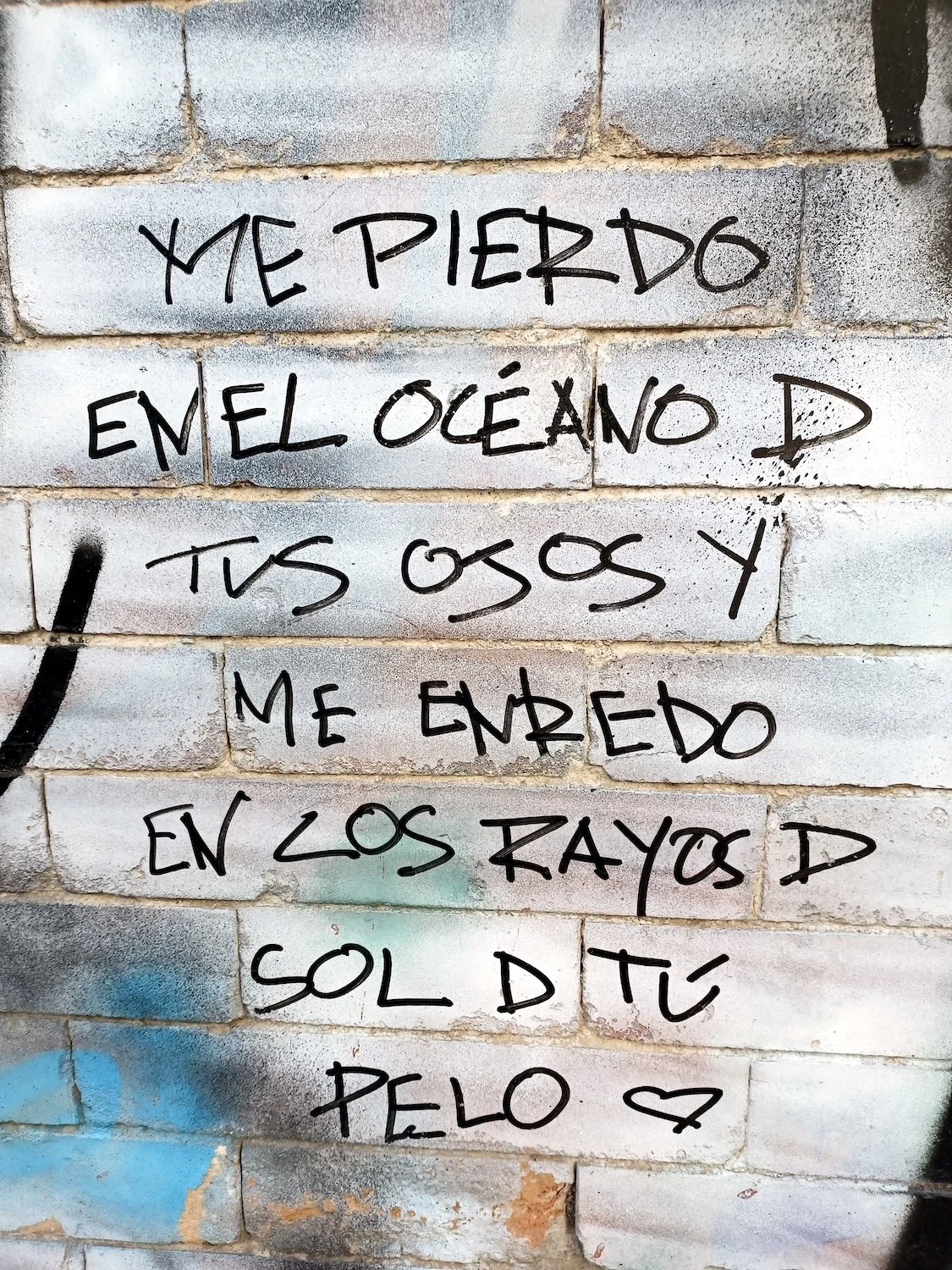
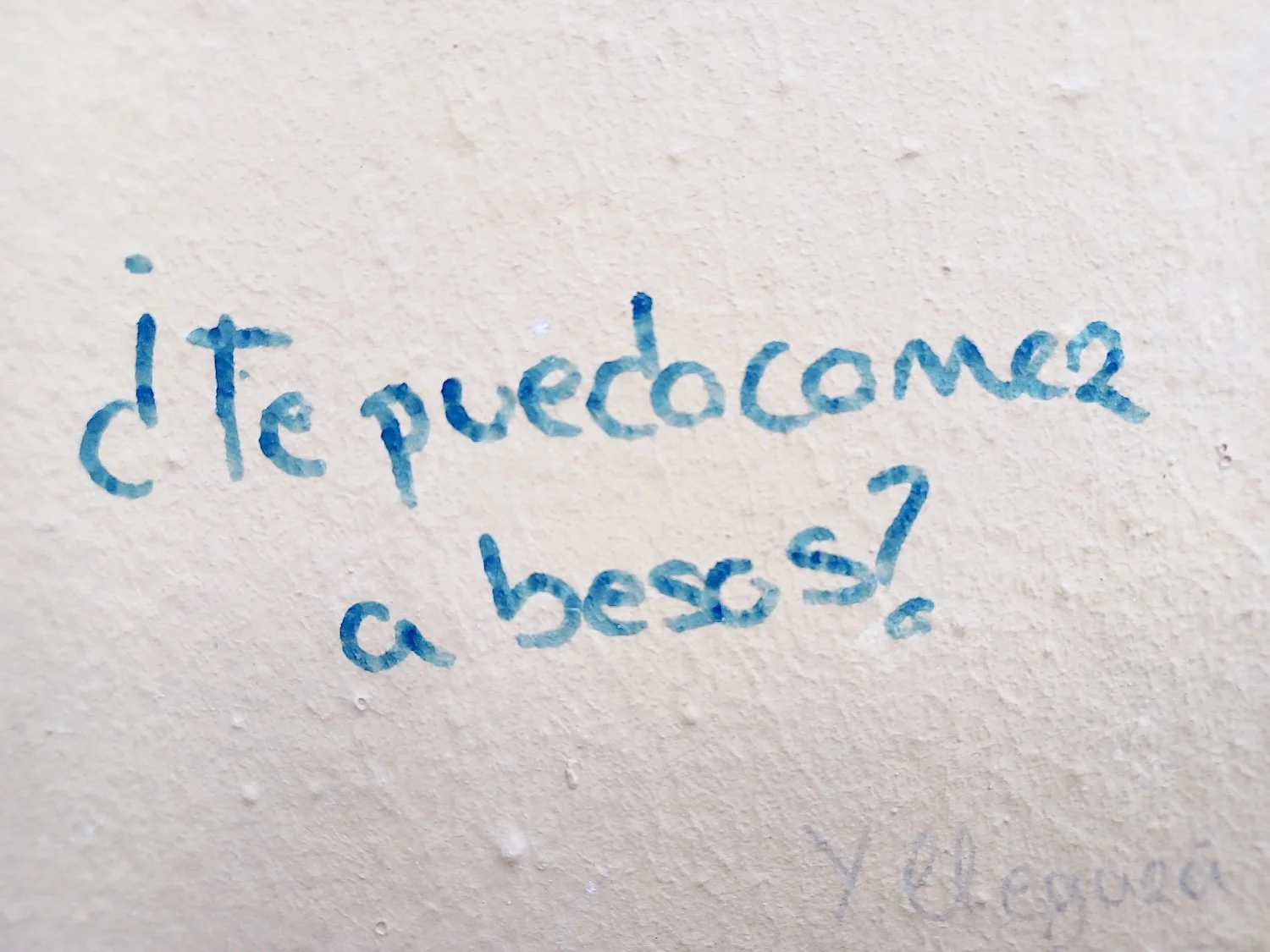
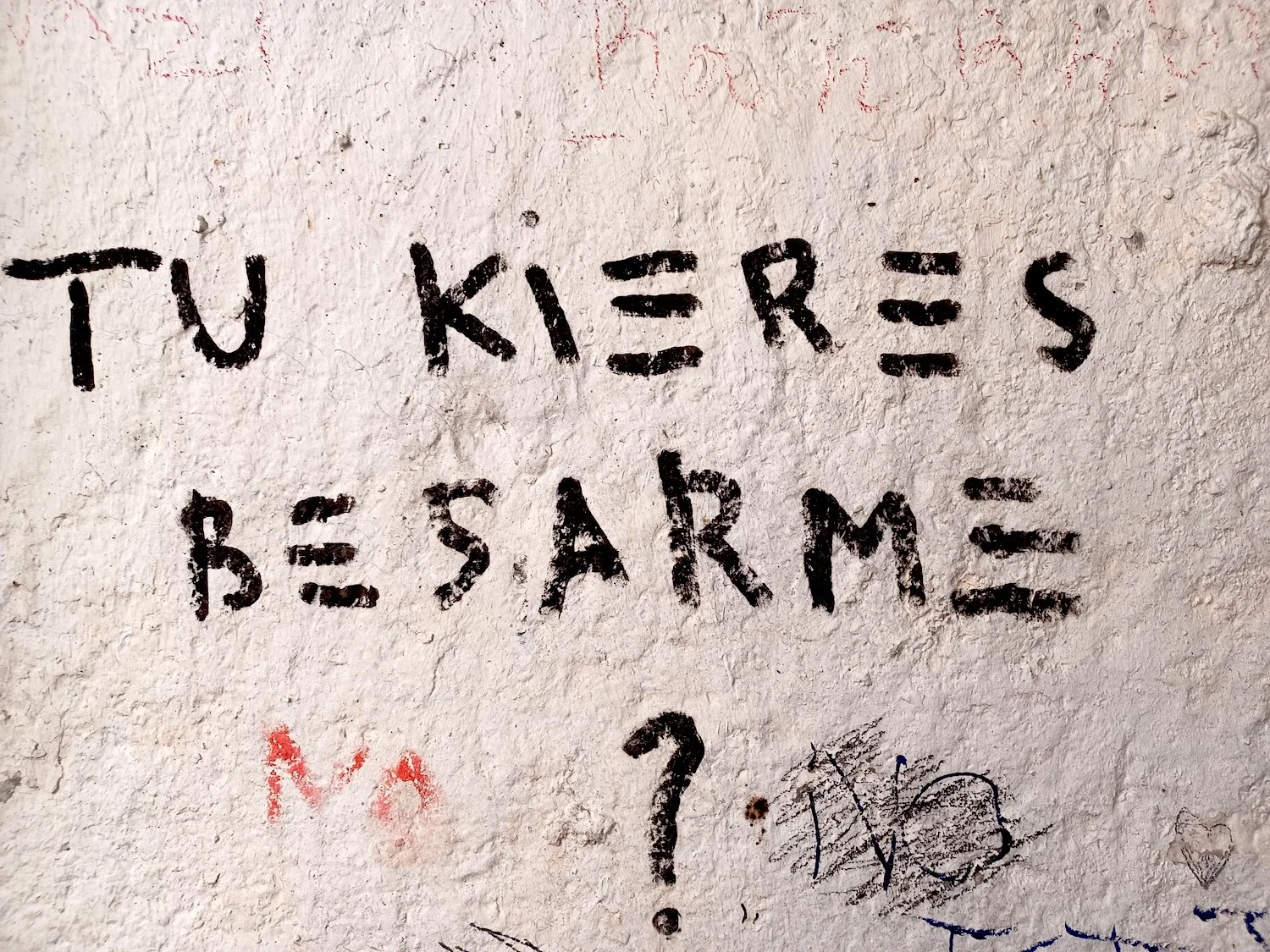
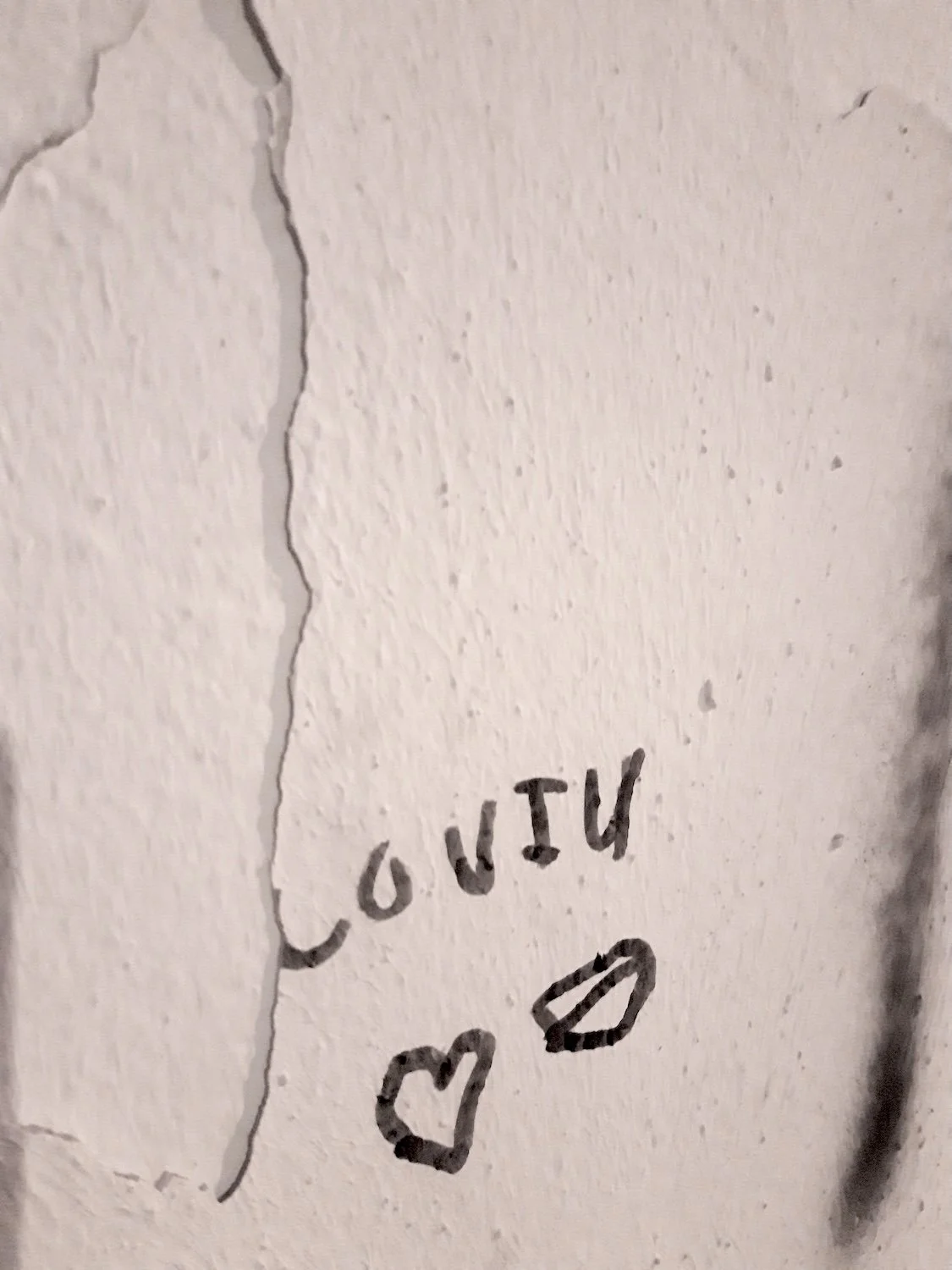
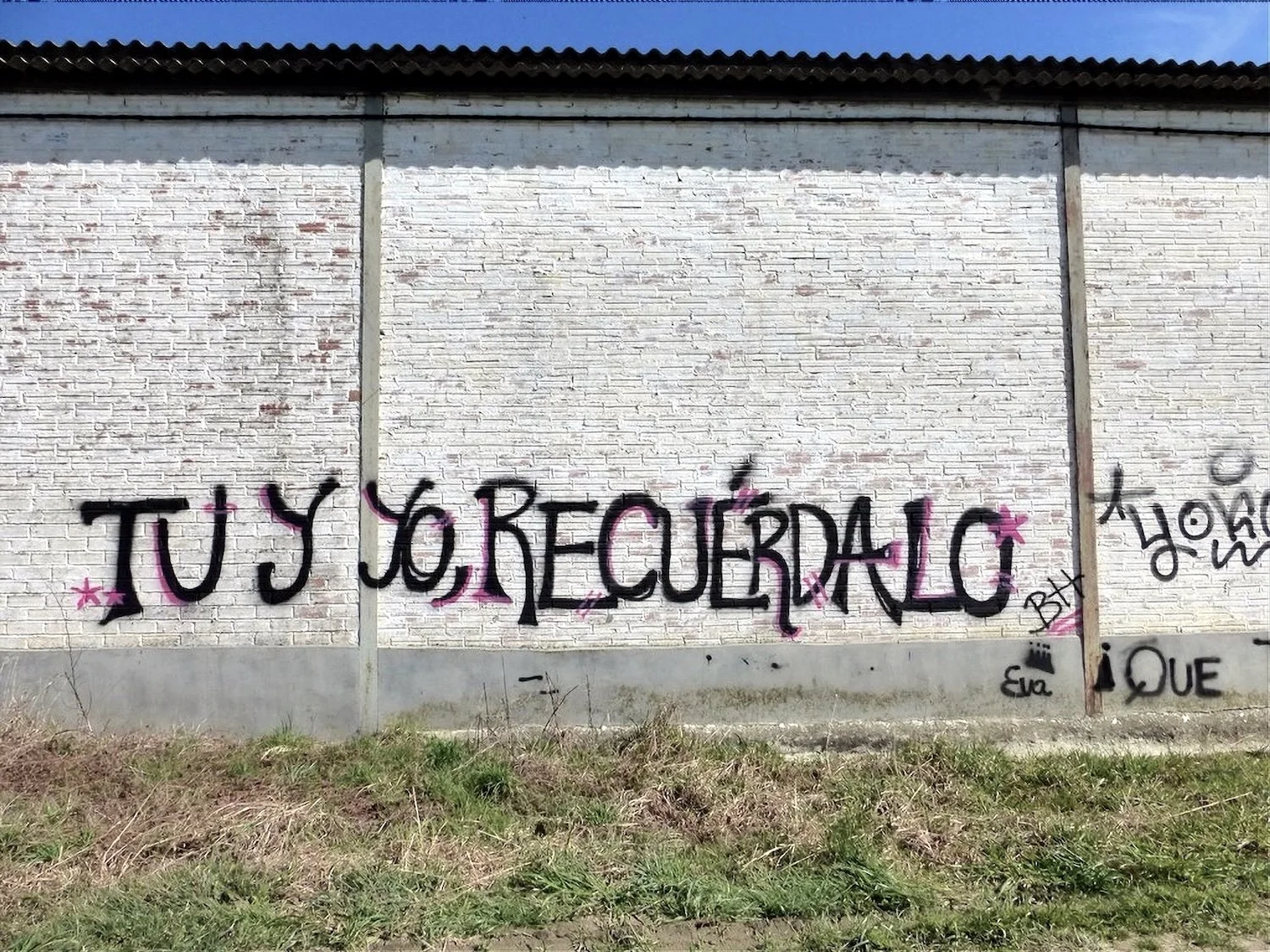
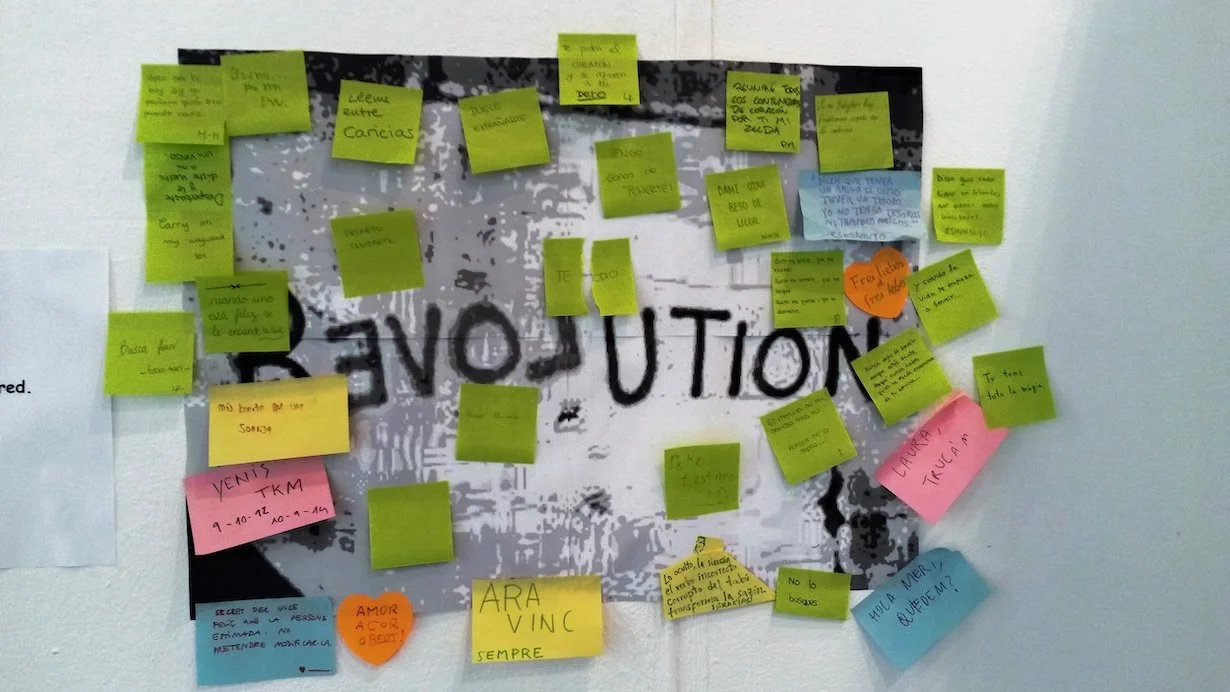
ARQUITECTURA SENSIBLE/LOVE WALLS is an ongoing investigation which invites viewers to recognise the process of communication which begins with love messages found on the streets, establishing a relationship with passing readers. These messages act as an element involved in the construction of the social space looking to bring about a more humane city. I have collected hundreds of love messages found in the streets, as well as other affective expressions of love, disappointment, thanks, mourning, among others. These are elements shaping subtle landscapes of love and death which are understood by a community, or universally creating a layer of urban loveability that surfaces no matter what, and which persists in time.
ARQUITECTURA SENSIBLE/LOVE WALLS es una investigación en curso que invita a los espectadores a reconocer el proceso de comunicación que se inicia con mensajes de amor encontrados en la calle, estableciendo una relación con los lectores que pasan por allí. Estos mensajes actúan como un elemento que participa en la construcción del espacio social para una ciudad más humana. He recopilado cientos de mensajes de amor encontrados en las calles, así como otras expresiones afectivas de amor, decepción, agradecimiento, duelo, entre otros. Estos elementos conforman paisajes de amor y muerte que son entendidos por una comunidad, o universalmente, creando una capa de amorabilidad urbana que aflora sin importar nada y que persiste en el tiempo.
All images in gallery above courtesy of Anna Recasens
Anna Recasens / Related links: Website / Instagram / Instagram Mira por Donde / On Art and Friendship
Anna Recasens is a visual artist, researcher and cultural manager who combines her personal and collective artistic proposals with research and cultural revitalization intiatives. Her projects center around art, nature, urban issues, and social space. She also teaches workshops, publishes articles, and participates in forums related to these subjects. Recasens’ individual and collaborative work has been presented internationally in residencies and exhibitions. Between 2012 and 2017, she founded and directed the Laboratori Social Metropolità, based in the NauEstruch, Sabadell, Catalonia. Recasens is part of and collaborates with art programs and platforms such as Idensitat and Plataforma Vértices. www.annarecasens.org
OCTOBER: Considering the existing urban fabric and its current fast changing development, there is a need to reclaim meeting points in order to provoke responses, to leave a trace of a human presence—and to return more personal traces to the cityscape.
Old meeting points related to the geography or history of cities have been replaced by more commercial landmarks. There have always been places within the metropolis that provide adequate space for interactions and intimacy, such as parks and lovers lanes, now lost within a generic urban design that rejects such concepts of privacy. This pushes users of such spaces to reinvent sites for this purpose; appropriating certain city spots to provide temporary accommodation, shelter, and/or comfort for these meetings.
The definition of city-space, is set for some approved public uses: zones for commerce and work, for leisure and consumerist activities, etc. In the “dissident city,” public space is turned inside out, and the urban landscape itself is redefined, reprogrammed, "hacked" by users, in order to reclaim contact in microclimates, where certain "zones" where private activity is accepted exist side by side with trade zones, playgrounds, resting areas, or become extensions of the private space so as to expand socialization in everyday life.
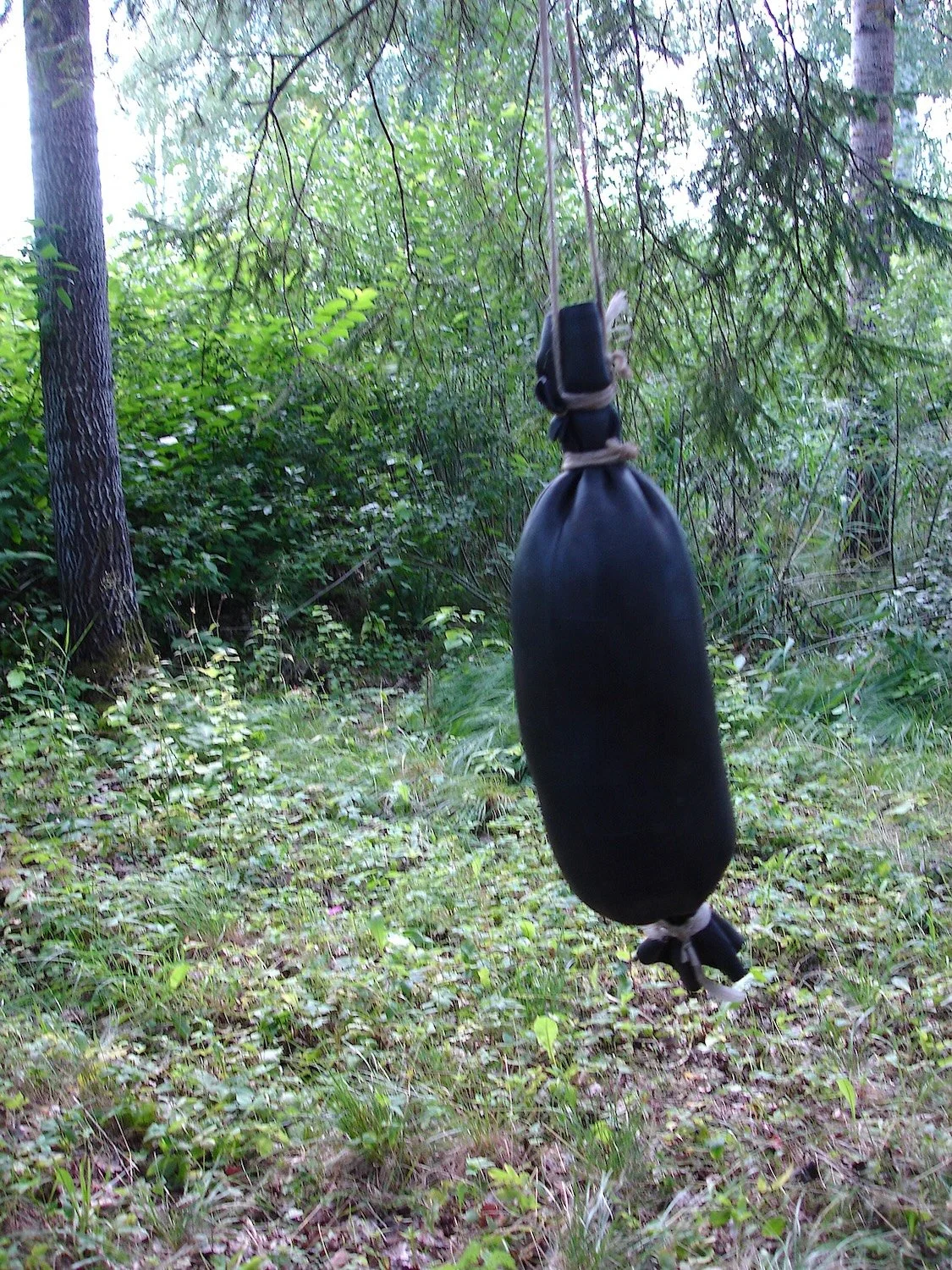
Image courtesy of Anna Recasens
Around 1998, while living in Glasgow, I took an interest in finding traces of aspects of private life in the streets: desire paths, meeting points, or even car boot sales, hence discovering a whole world of activity in the back lanes. This activity hid from what happened in the main streets. Later on in my life, motherhood pointed me in a completely new transient urban path that of playgrounds, child friendly zones and shelters—to be safe from possible weather changes. At that point, I was wandering around, registering my transientness and leaving short messages (Nomad’s Dictionary), which I printed in various sizes. These messages were light and portable, and I placed them in specific places during my walks.
In 2004, back in my hometown of Sabadell, Catalonia, I continued documenting my transientness, noting differences due to the local weather conditions and the configuration of this city. But what seduced me were the similarities between Glasgow and Sabadell, as the need to appropriate urban space was a commonality these two cities shared. This also showed the similar degree of resilience in these two cities. At that point, while I started to work on an investigation regarding private attitudes in public space, specially focused on sex-related activities (Urban Intimacy, 2005-2008), I also started to process my previous documentations of everyday private situations in public space; the occupations of such locations, and the ephemeral structures built in them. I continued adding new materials to this research and staging public interventions using words, drawings, and even shared ephemeral actions. For example, Zoographies project, 2006, developed during a residency in Mooste, Estonia, allowed me to do these exploratory investigations within a small community.
During 2007-08, by means of walks and interviews, I mapped places where people shared their first kisses in Sabadell, Catalonia. In 2008, after ending my Urban Intimacy project, which was part of the exhibition Post-It City (Barcelona, 2008), and after finishing my map of first kisses, I gathered various collections of images, stories, and testimonies, which I named Arquitectura Sensible. This was an umbrella project covering situations closely related to ephemeral appropriations of urban spaces by citizens, both for private, even very intimate purposes, and for community activities. However, the highlight of these situations was the use of the walls and urban furniture as canvases for communication, bearing messages about politics, complaints, general issues, but specially about love. So, I have continued my research with the Love Walls collection, hence looking at the communication of affection in public sites, as well as to how this humanizes urban spots in spite of their fierce current commercialization.
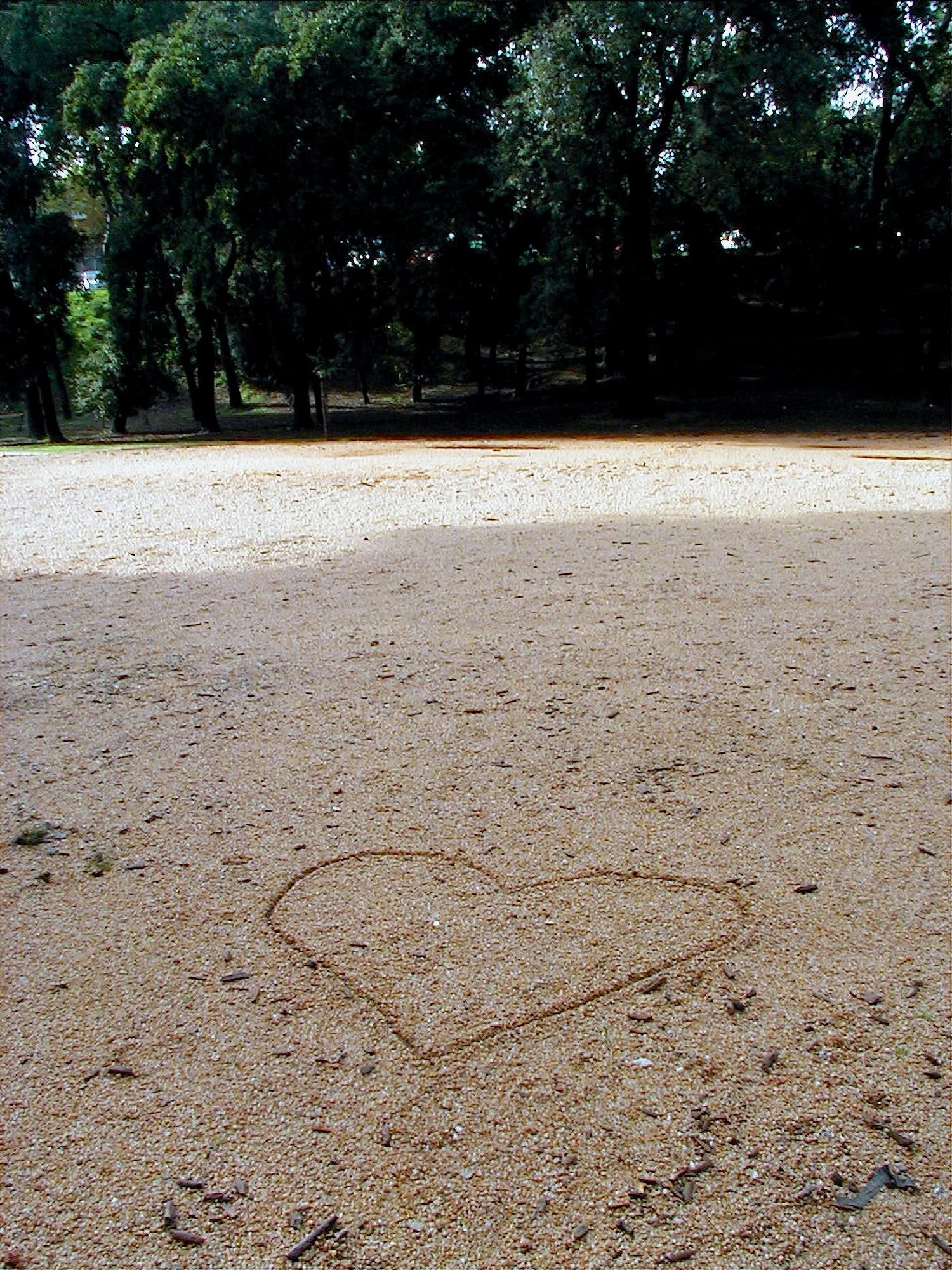
Image courtesy of Anna Recasens
NOVEMBER: “They become liberated spaces that can be occupied. A rich indetermination gives them, by means of a semantic rarefaction, the function of articulating a second, poetic geography on top of the geography of the literal, forbidden or permitted meaning. They insinuate other routes into the functionalist and historical order of movement. Walking follows them: I fill this great empty space with a beautiful name.” Michel de Certeau, The Practice of Everyday Life
SENSING THE CITY: I go out to explore the city, any city. Alone or accompanied. I draw maps of experiences referring to personal milestones, those of others. This includes emotional contours of the community and its immediate environment. I look for traces, patterns, signs of behavior, identities. I observe changes, layers, evolutions. Wandering in space and time.





WANDERING/WANDERLUST I walk slowly, following the rhythm set by my searches and encounters. I think. I wonder. Is there a river nearby? It seems so. If I take the longer path, I lose myself in the green damp memory of the urban forest, or in the old stone on which I can run my fingers across rediscovering myself in the memory of touch. Getting to know the place by touching the city’s skin means also reading the calligraphies of desire which hide in its wrinkles. Which will be the next message, the next story? I collect images, textures, and texts, so as not to forget.
LOVE STORIES: Love messages shape an imaginary space where the details of everyday life can be valuable to store, to map, to keep, as a reminder and as a way of recovering experiences and time lost. As we exist in continuous transformation, urban space becomes a significant structure which we build in common, thus to mark memory. Walls in streets, stations, parks, etc., are in an ongoing state of flux, changed by their users and their users’ needs. Narratives pertaining the individual as well as the collective are inscribed and layered by the constant use. The urban context then evolves and undergoes redefinition, along with the community and its activities. Although these spaces may appear fragmented and discontinuous, new messages of love or political demands, and also those related to mourning or hope are written again and again, far from official narrative. These messages create routes to be understood within the community where they are written to be experienced across generations.
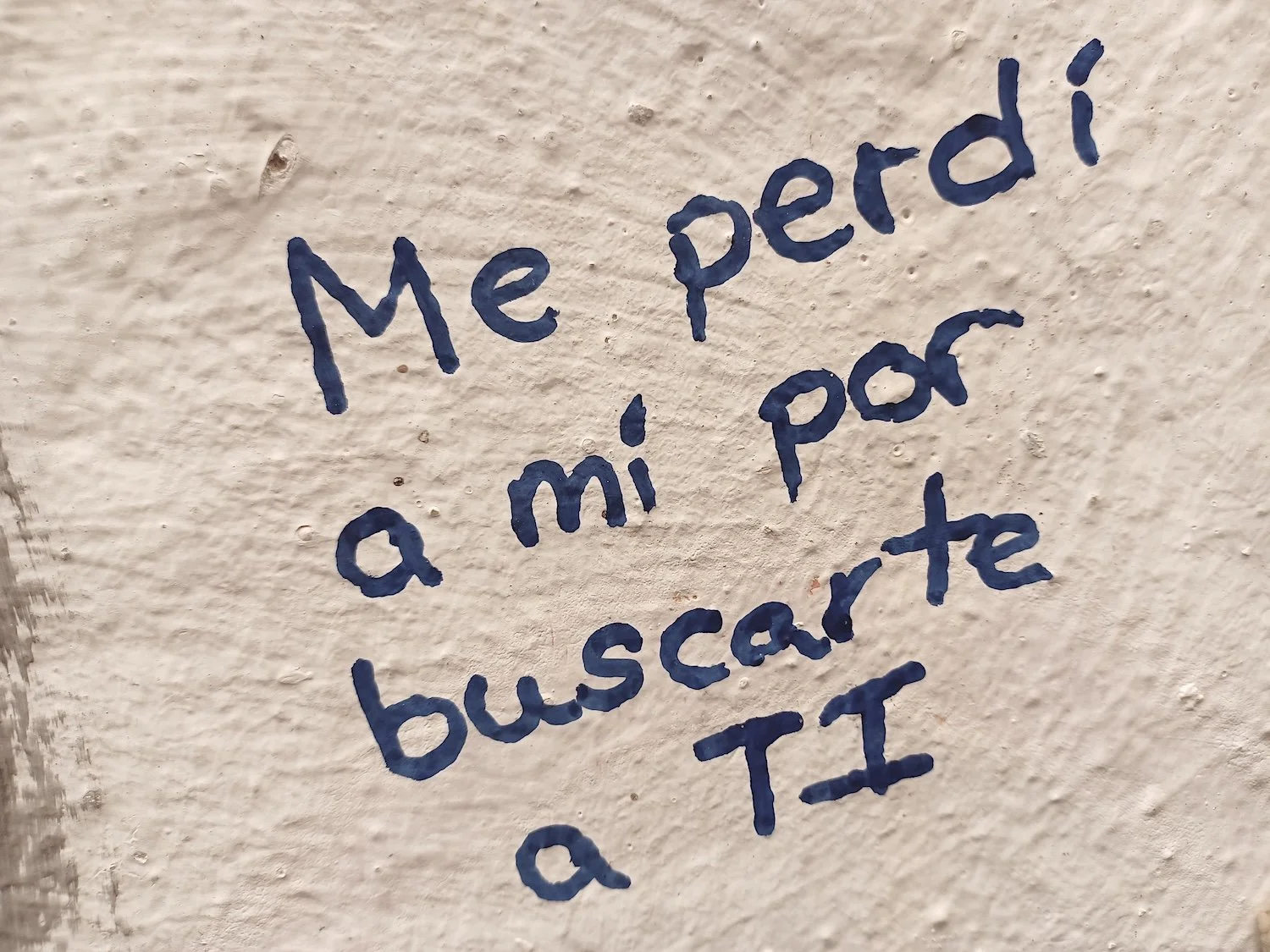
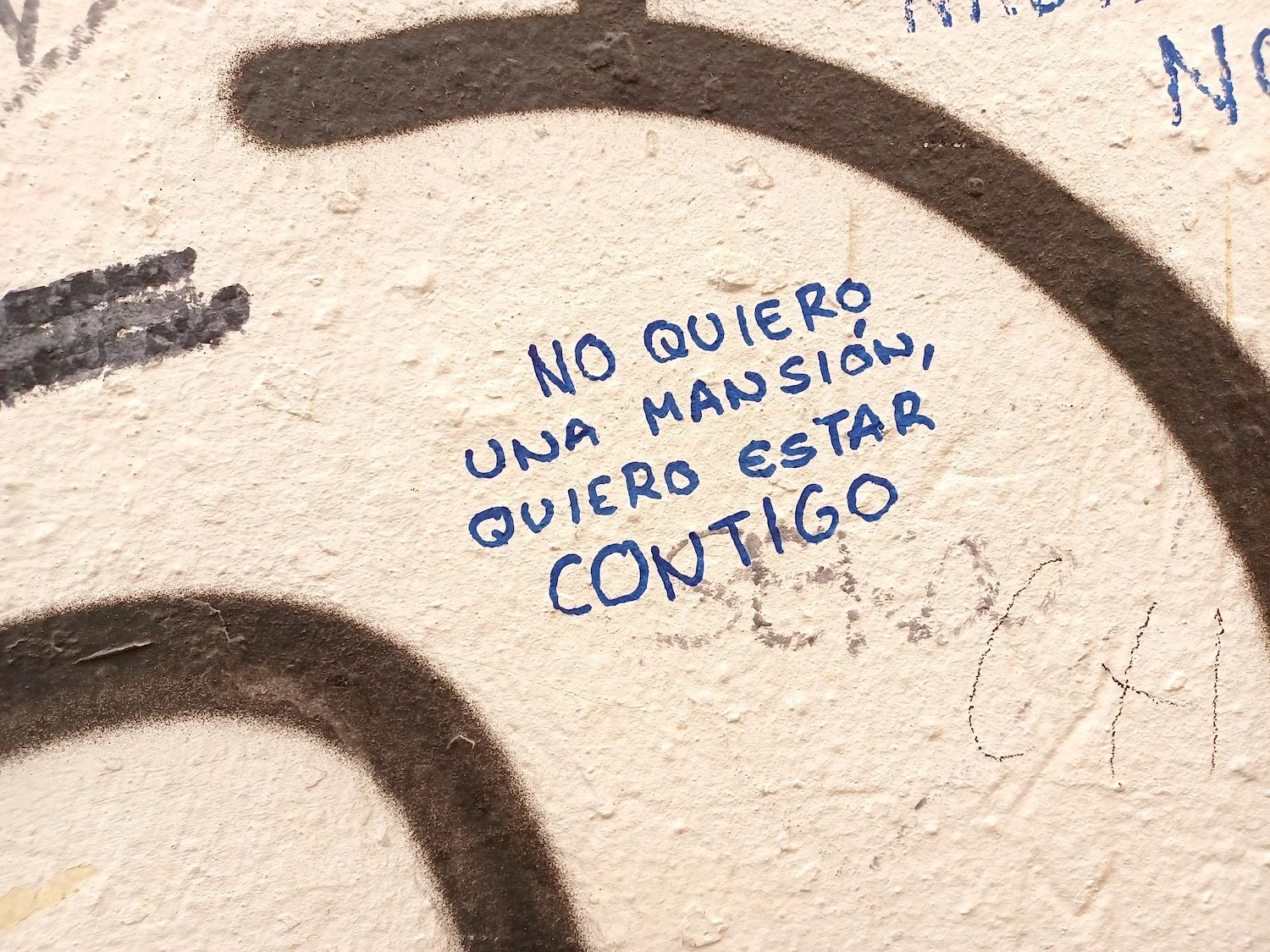
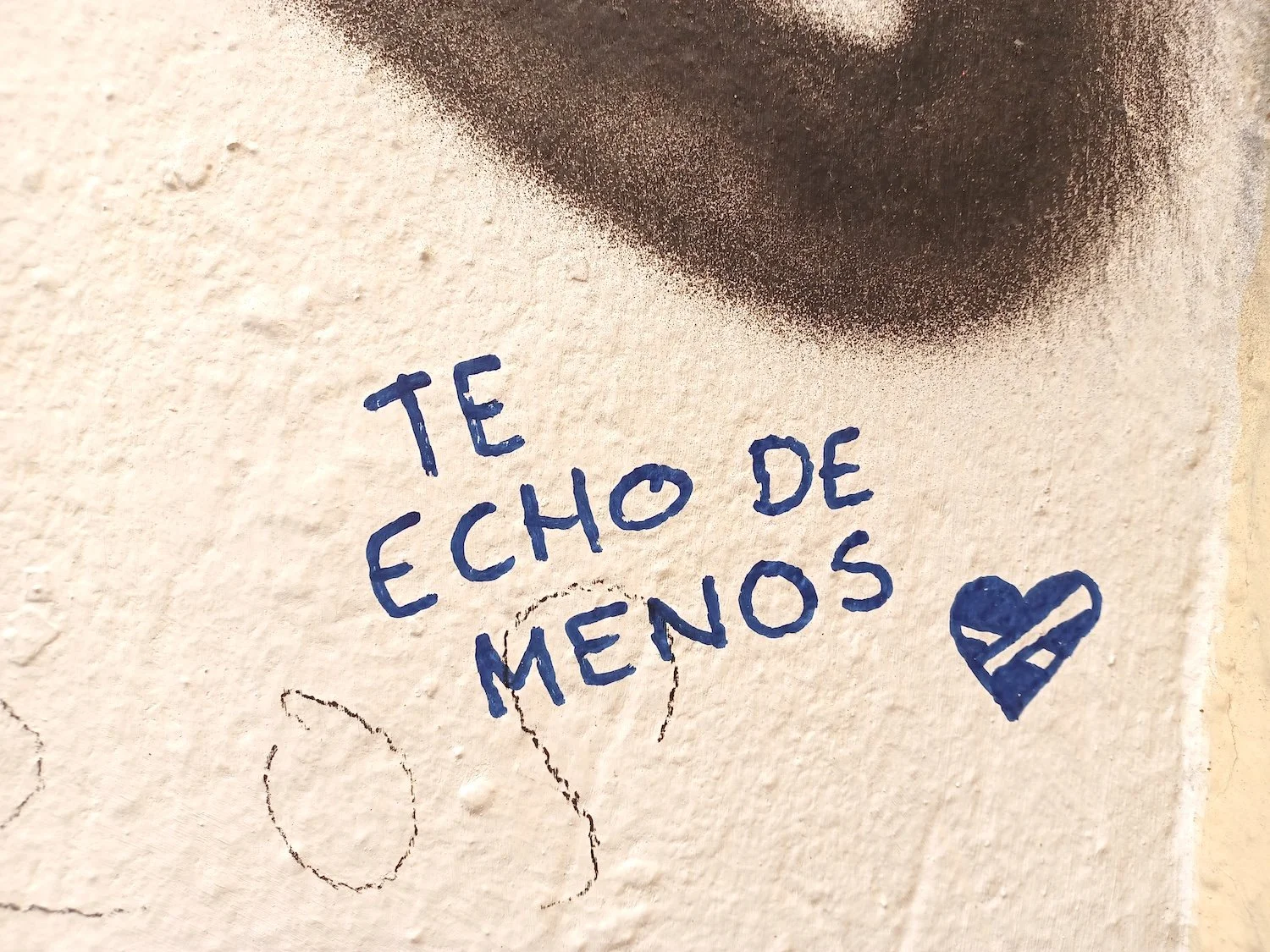
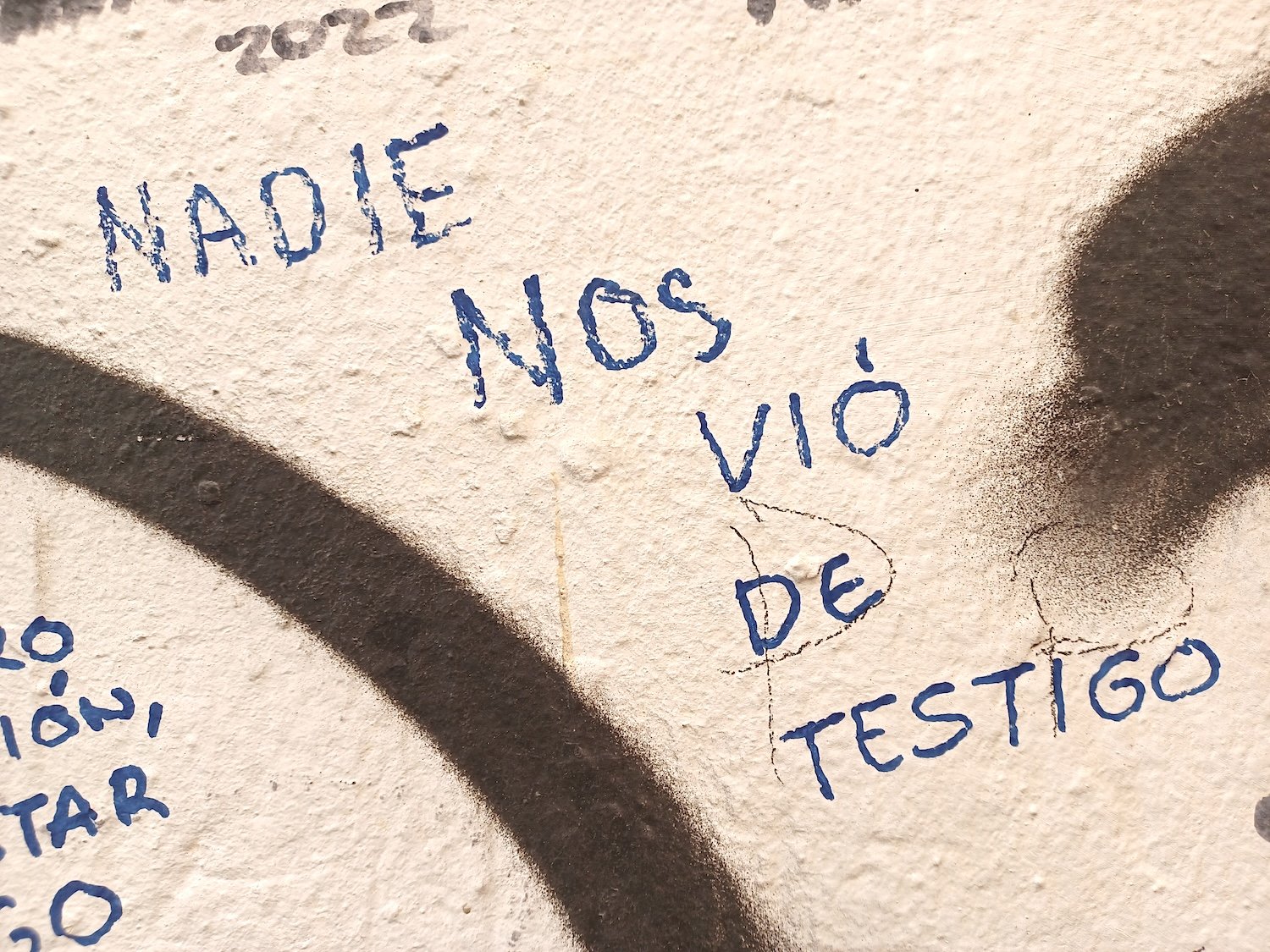
DECEMBER: COMMUNICATION
In a broad sense, love is a symbolic space, a social construct. In this space, humans learn to navigate the various contexts in which they become carriers or receivers of love. The idea of love is never the same. In many ways it has to do with the ideas of caring for, or caring with, and also with the idea of being connected. Therefore, we project various kinds of love in the form of friendship, motherhood, kindness, or even charity. While it is possible to argue whether love is a social construct—or whether it may be rooted in our biology or psyche—or whether it may even be a uniquely human feature that helps us to connect with other beings through love(s)—it remains a basic fact that love is actually a process of communication. Or to be precise, a succession of communicative actions…but also a way of engaging with others. These processes of communication depend upon cultures or societies.
Some of the messages found in the streets, include those shaping a story which unfolds through time, those which describe wishes, those which attempt to attract the attention of the object of love, those which express the loss of love, and those which express joy. These messages are in fact communications which we, the viewers, are never certain have reached the objective. Are these messages of personal fulfilment? Do they express a need to communicate in public? Are they a way to interact? We are living in “liquid times” (Baumann), and surely love is experiencing big changes, becoming in the best of cases a deep commitment, life-time companionship, passion, or even a sense of community; and in the worst of cases, a utopia defined by years of romantic storytelling which ends justifying a profound selfishness and lack of real connection.
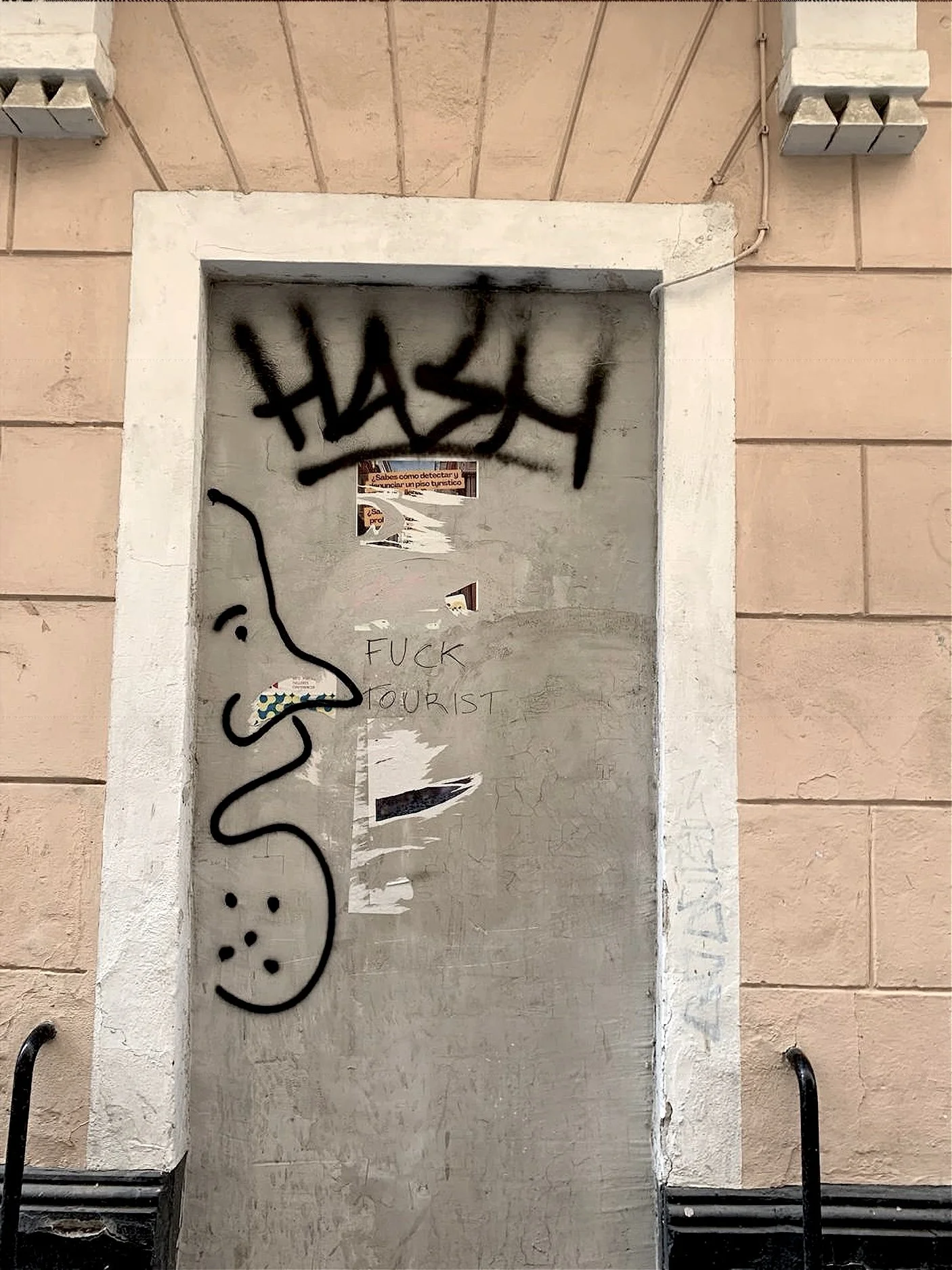
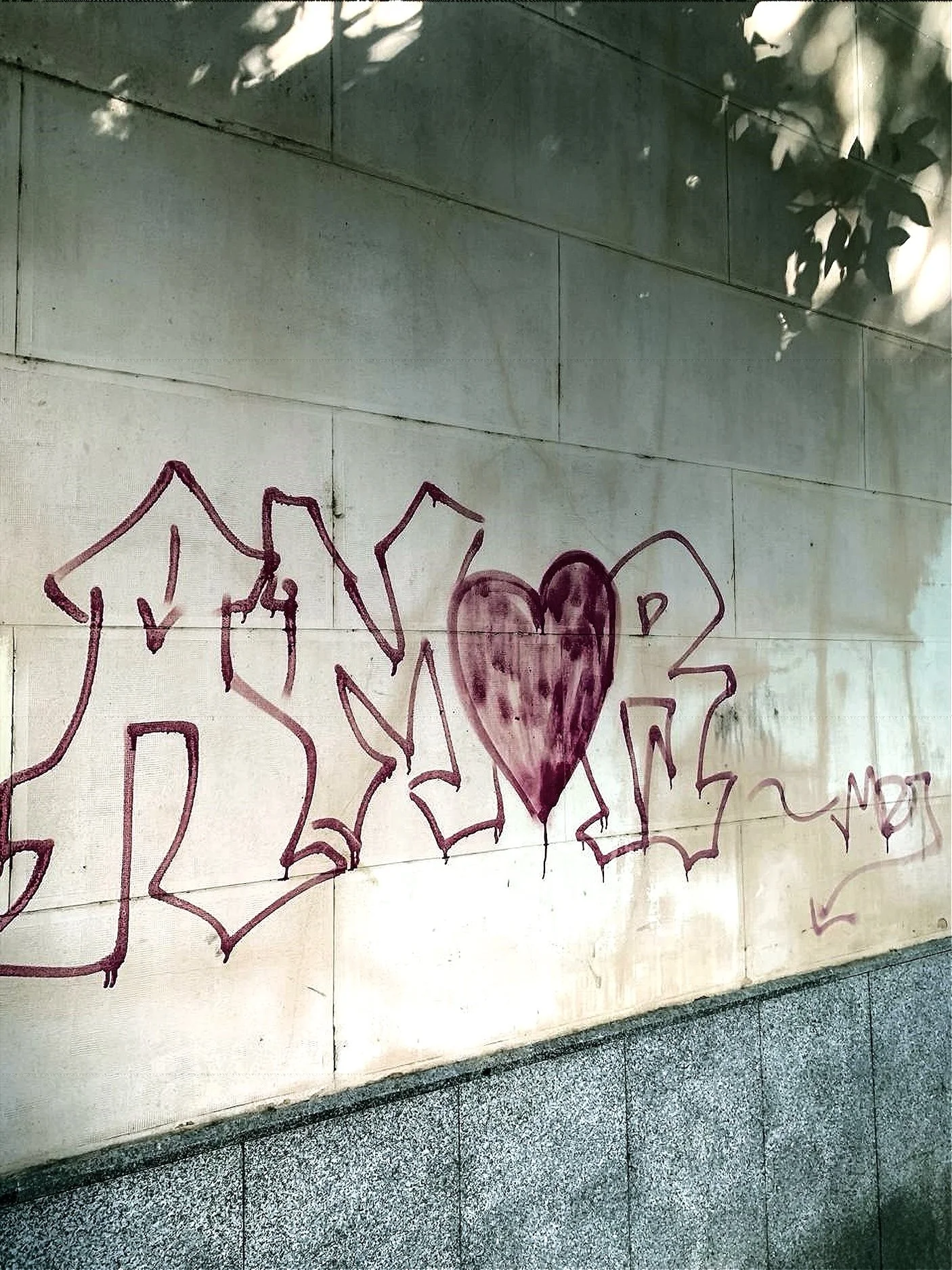
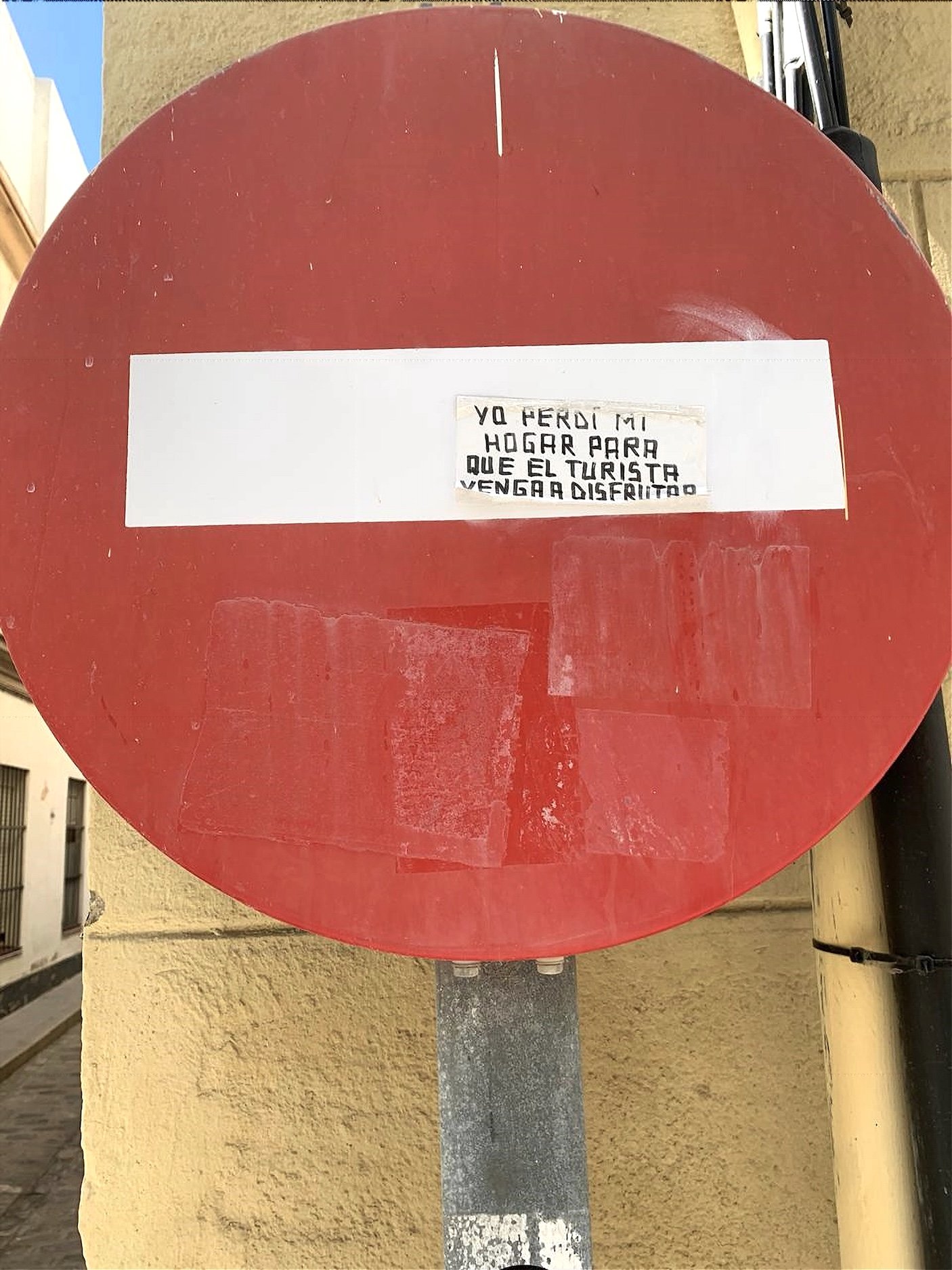
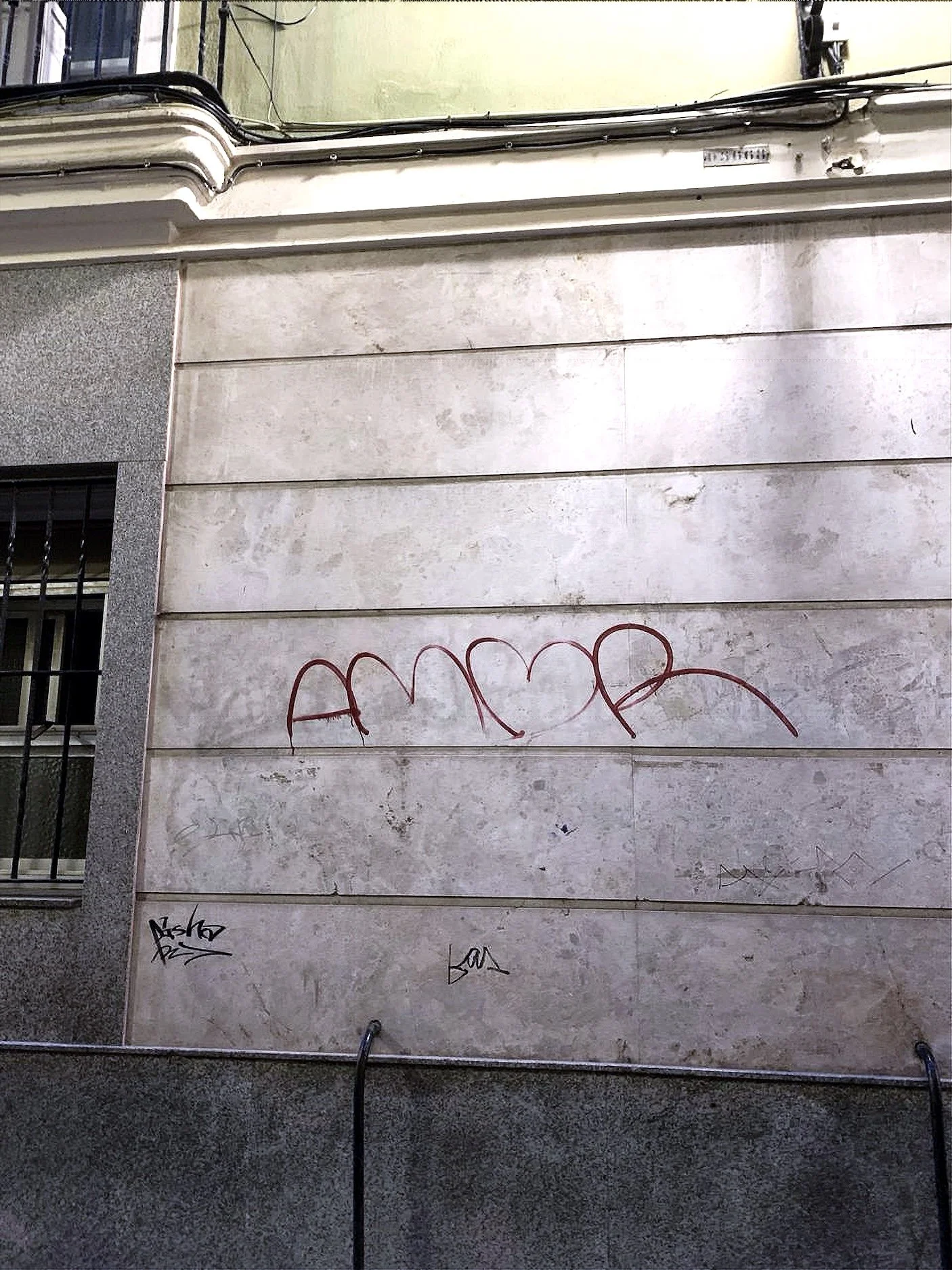
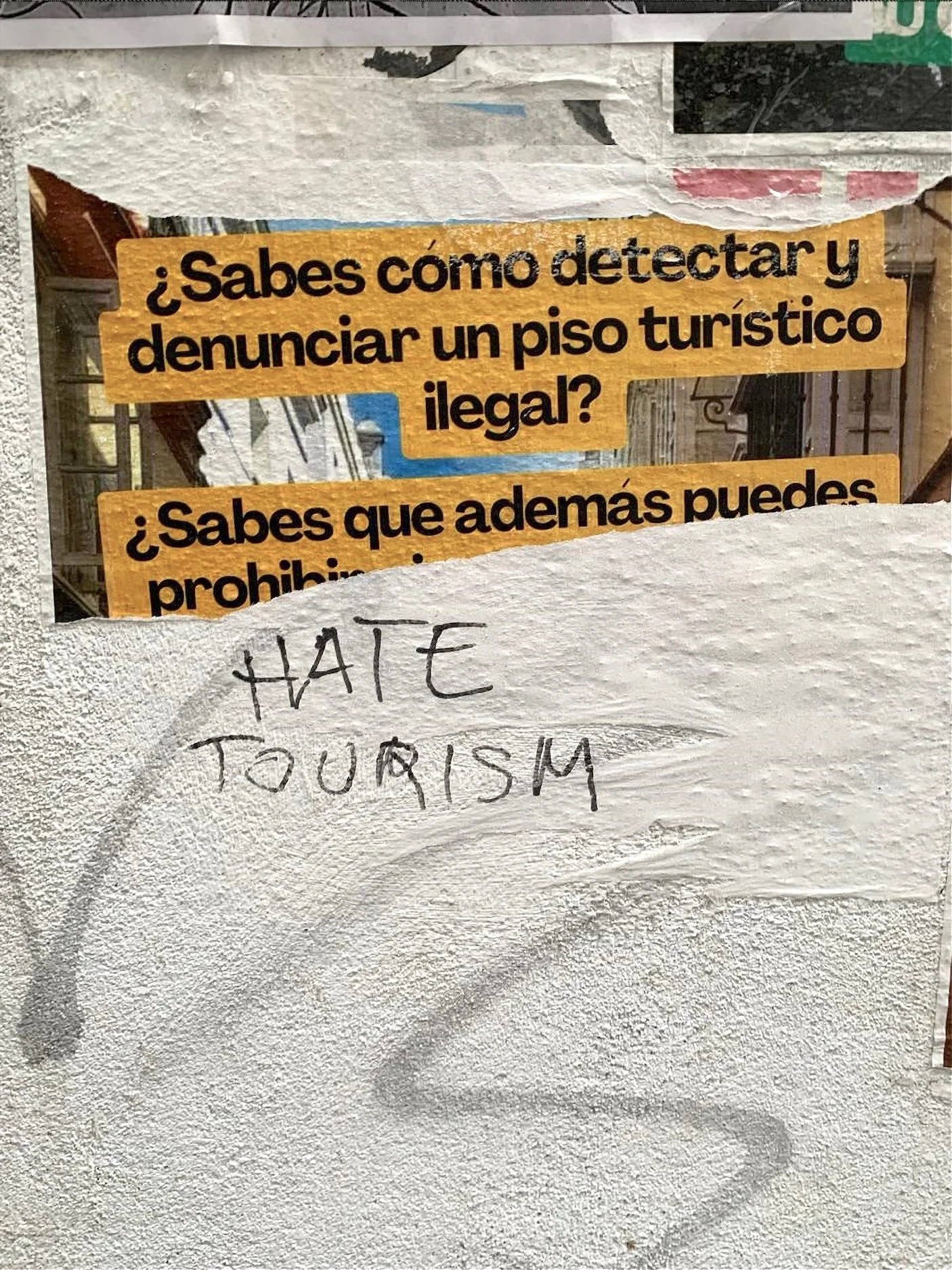
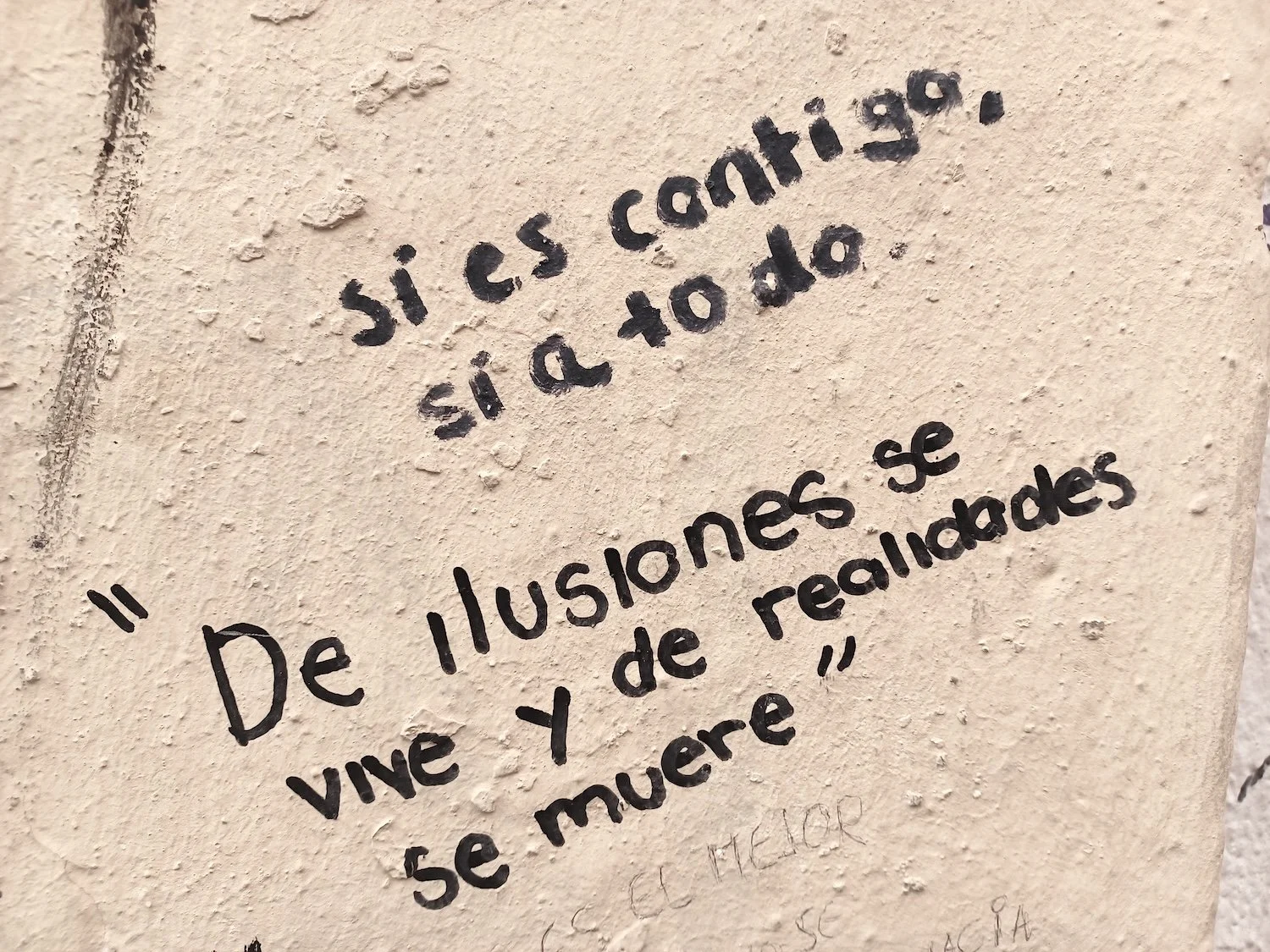
JANUARY: Before the end 2025, I walked in Cádiz with Bianca Obregon, a visiting researcher in linguistics. Ours was a slow walk. Together we looked at every message on every wall in this city.
Bianca Obregon: As a researcher in discourse analysis, I am interested in messages that are part of our everyday lives, that is, sayings that somehow touch me, move me, or even unsettle me. The writings I encounter on walls have meaning for me. Every day I walked to my university, I came across a graffiti that said, look (ohlar). From then on, I became interested in texts, projects, and artists who work with marginalized discourses, especially those involving graffiti. The art of ‘looking’ made me think deeply about my relationship to the city, Chapecó, Brazil, and motivated me to observe the details of the place where I currently live, paying attention more and carefully to the present moment.
When I arrived in Cádiz for the time as a visiting student, I noticed that there were many writings on the walls of the old section of the town where the university is located. Institutional discourses about the history of the place, as well as commemorative plaques and tributes to people considered famous, compete for space with marginalized writings from which a discourse of the present—albeit ephemeral—seems to emerge. Among the statements that caught my eye, and which I documented, are the feelings of love and hate that I observed are common in Cádiz.
Hatred always seems to be linked to situations involving excessive tourism, an issue prevalent in various places in Europe and around the world, including in the old town of Cádiz. At first, I interpreted the hatred as being aimed at tourists, with phrases such as, “fucking tourists, putos turistas,” and “fuck tourists.” However, as I delved deeper into my analysis, I came up with a definition of hatred as a feeling of discomfort that local residents feel about the excessive tourism that displaces/disrupts the lives of residents. Phrases such as, “I lost my home so that tourists could come and enjoy themselves, perdí mi hogar para que el turista venga a disfrutar,” lead me to this interpretation. The discomfort caused by the loss of their homes/places is so intense that it materialises in writing/protests on the city streets.
Words of love appear as a breath of fresh air amid this feeling of discomfort. Look, love still exists, let us remember it. Love writings with their variety of drawings, garnishes, dedications, and exaggerations, emerge in Cádiz, with a meaning similar to those in Chapecó. I interpret this as a sign, a public declaration, that love still exists regardless of anything else.
Bianca Obregon Fazioni is Brazilian researcher in discourse analysis. She teaches linguistic studies at the Universidade Federal da Fronteira Sul, Brazil, and is currently part of a fellowship at the Universidad de Cádiz, Spain. Her interests include: feminism, decolonialism, and marginal discourses, among others. Instargram
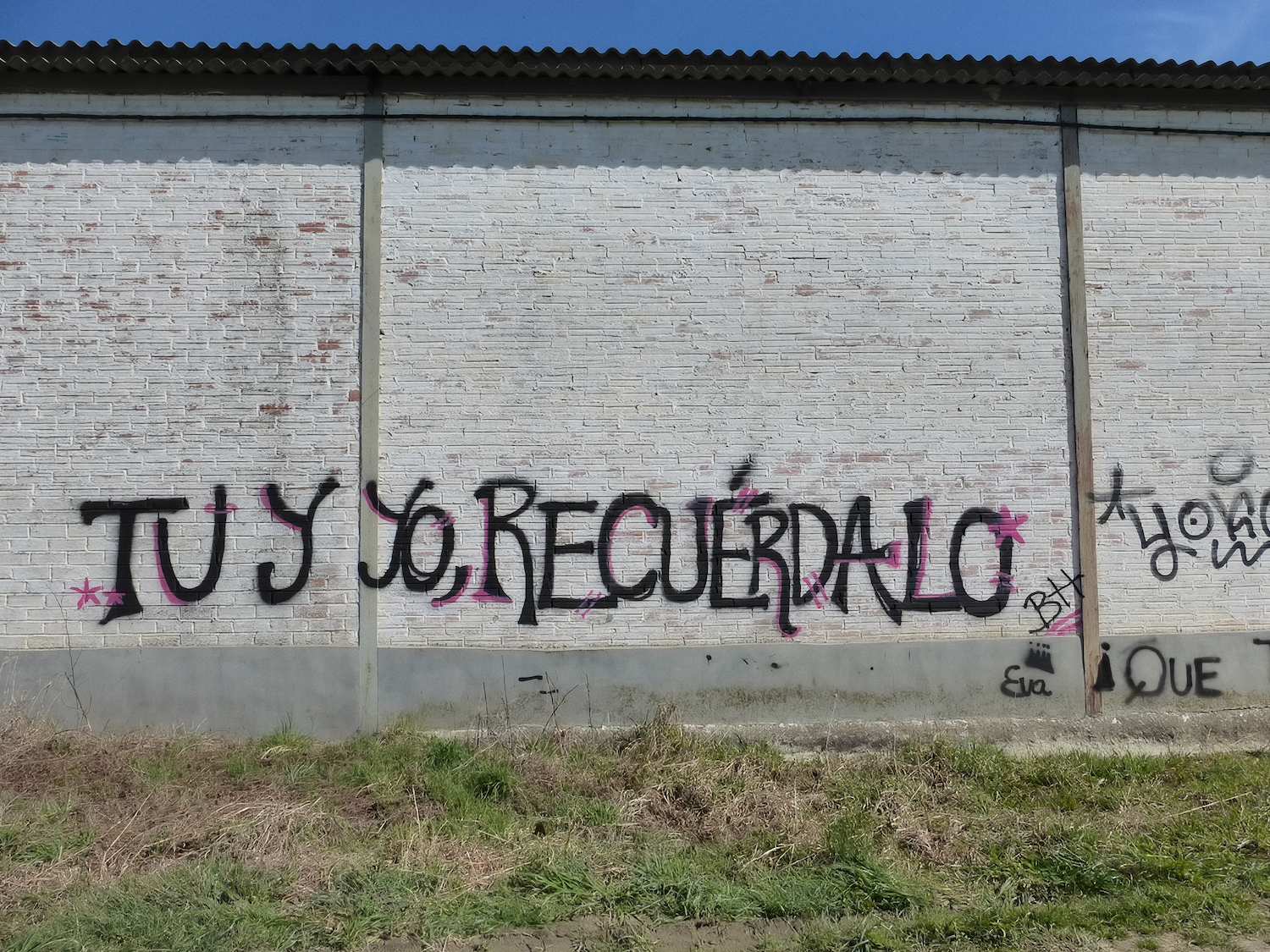
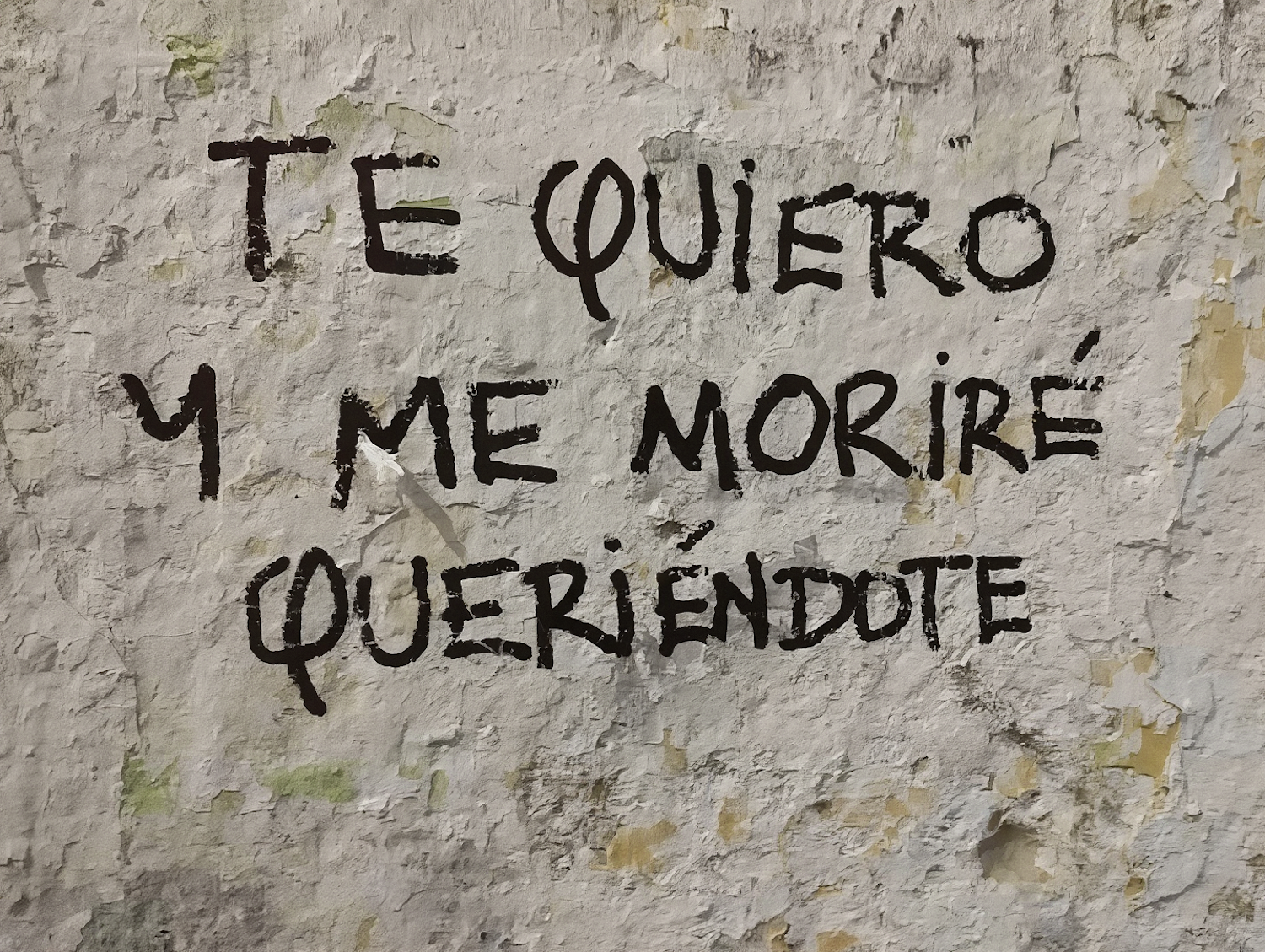
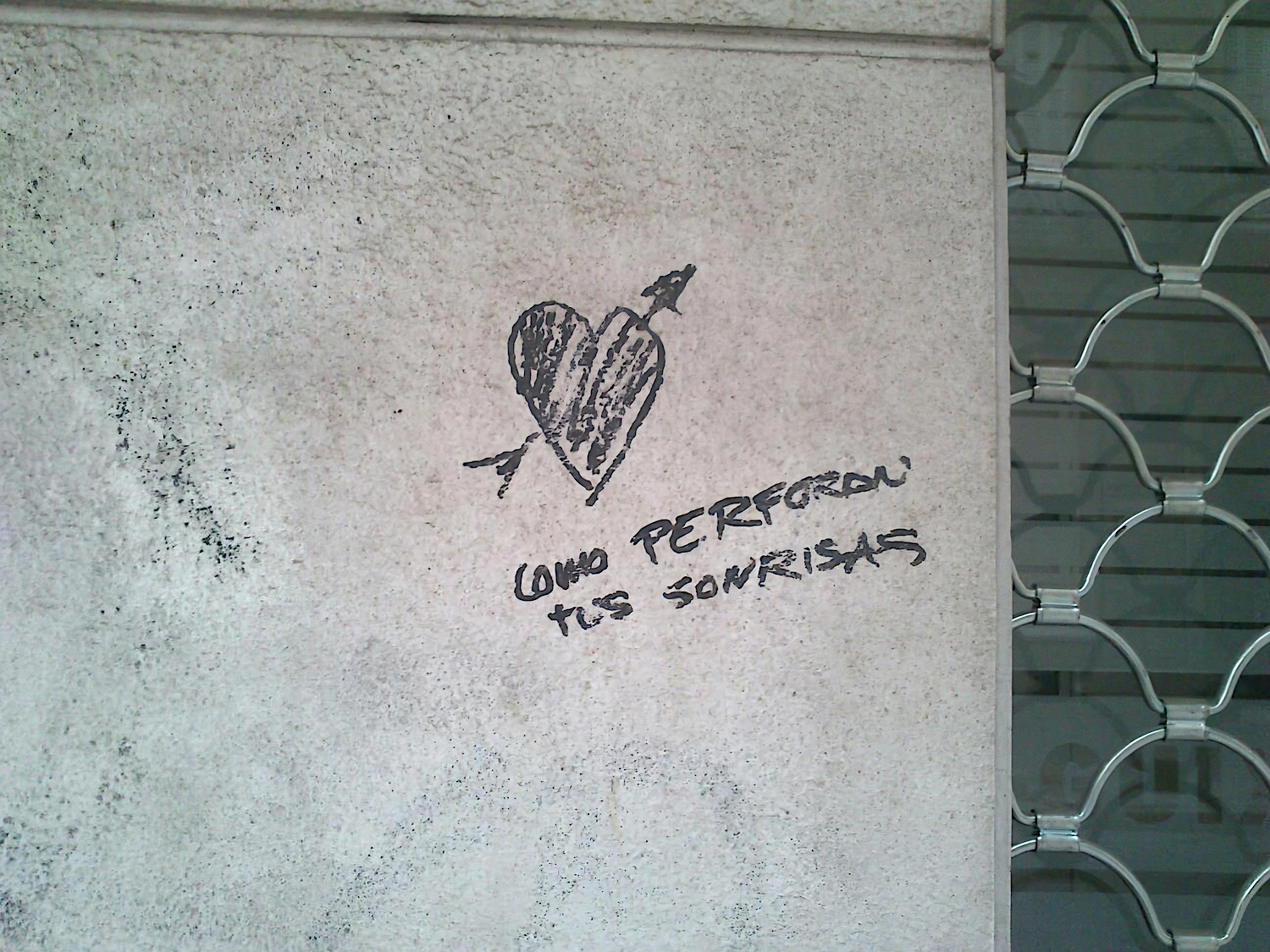
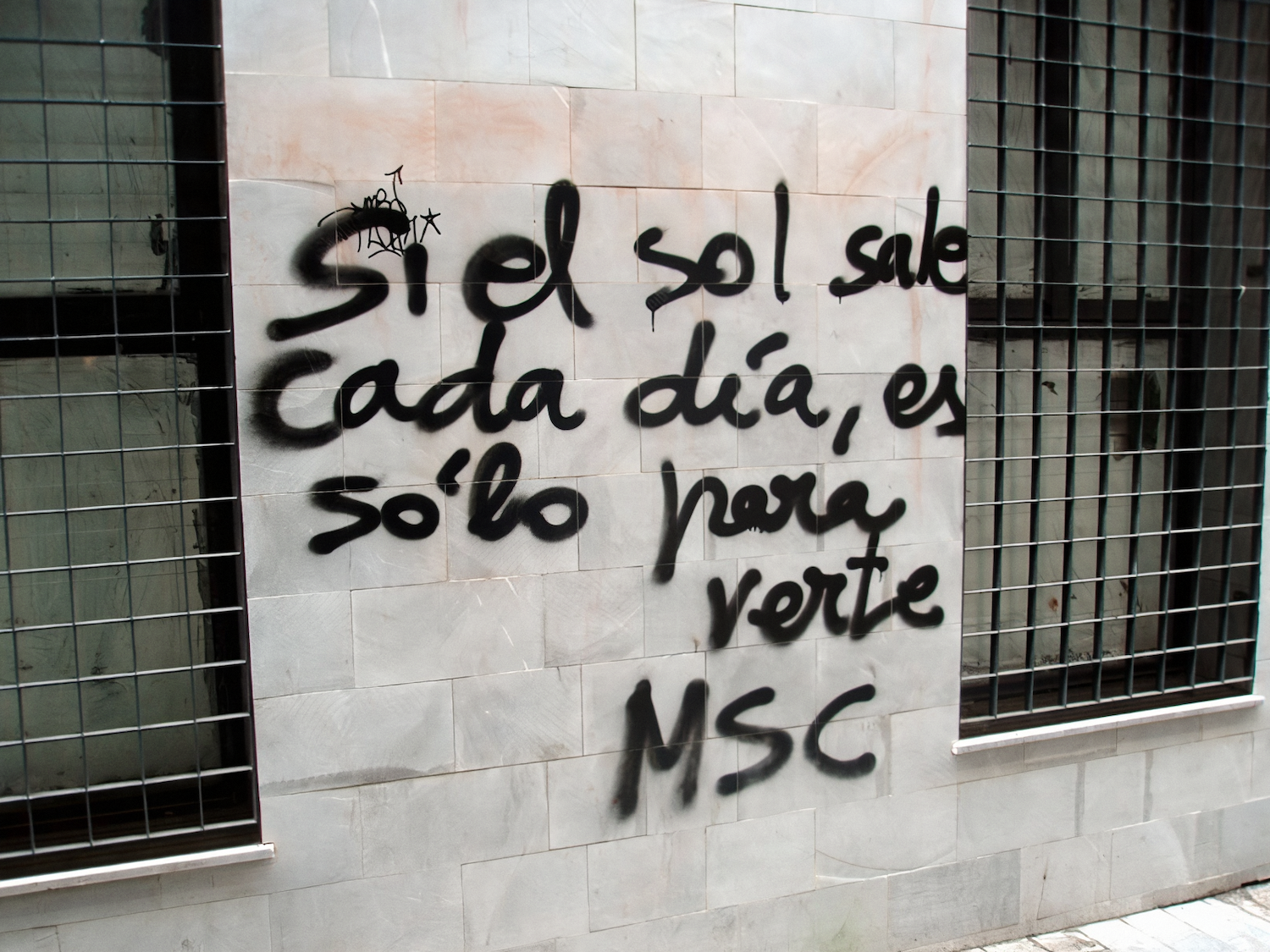
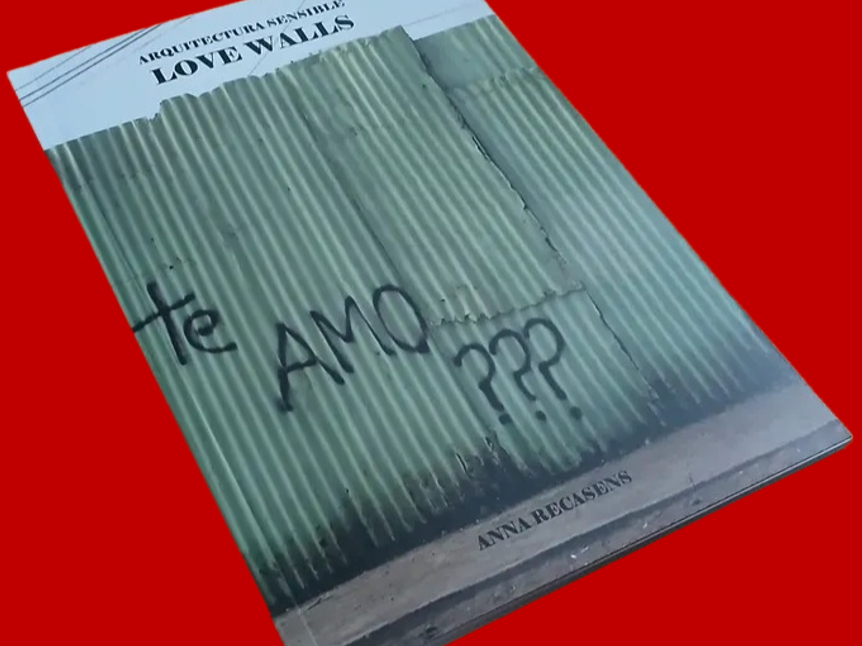
FEBRUARY: On February 11, MIRAPORDONDE collective met to discuss the theme of love. We used the publication related to my Love Walls project as the basis for this conversation, which includes several examples of messages found on the streets over time.
During our open conversation, several topics arose which are worth discussing and which add to the ongoing research. First, we questioned how these texts (the messages on walls in the streets) came to be written in public when there are so many means of private communication which bring us closer to people. Without a clear answer, we went back to the origin, to the inscriptiones parietariae (mural inscriptions) already found in ancient Rome, and which refer to everyday life. In this sense, the love messages found in public spaces are are in many cases territorial. They tend to be near schools, places of leisure and homes. In others instances, they are in highly transited places, such as stations, roads, and bridges. However, they are also found in remote places, responding to the need to shout out a secret to the world.
During our conversation, a series of emotions was listed, referring to love in its varied forms or to states of falling in love, which are more fleeting, although intense. Among these emotions were Companionship, Admiration, Affection, Harmony, Kindness, Care, Desire, Enthusiasm, Happiness, and Excitement, which are considered positive; and others such as Acceptance, Absence, Bitterness, Confusion, Disappointment, Desolation, Frustration, Indifference, Sadness, and Grief, which are perceived as negative. Without trying to agree or reach any conclusions, what was agreed upon by our group, consisting of the MIRAPORDONDE collective, is that many of the street messages denote a certain desperation, and that the street seems to be a place that amplifies these cries from the heart, even if they take the form of a faint and hidden inscription on a wall.
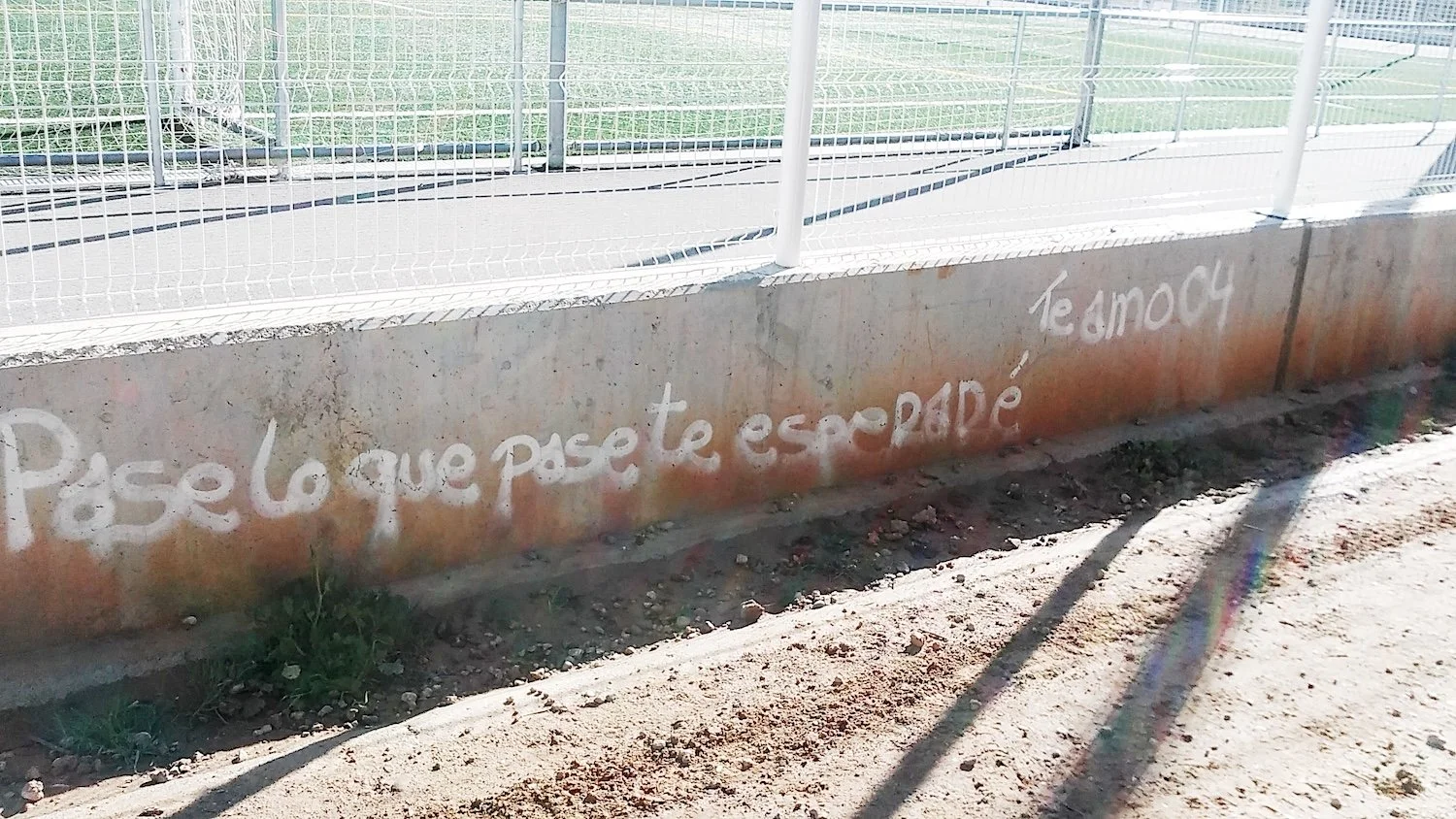
MARCH: HUMAN LANDSCAPES
March continued with conversations about the meaning and importance of—and the need to—express love in the public space. It was agreed, through discussions with people from different backgrounds with whom I share work or leisure, that the use of the streets and urban furniture as a canvas for communicating intimate feelings—love in a broader sense—perhaps mixed with despair, desire, hope, rejection, among other personal emotions, creates exchanges with passersby. These two main positions were drawn from the conversations about it:
The Poetic View / This represents a positive approach to finding love messages out in the open.
In an exercise which investigated ways of describing a human landscape, a list of words emerged, words such as: grass path sky butterfly river mountain sea flower bird tree mushroom mud apple waterfall star rain frog lake hope rainbow curiosity sun berries music sand friendship drizzle sea wind memory fire language space stone love blue; words which in one way or another everyone may apply to their own world. In this sense, love messages may appeal to the reader in reference to their own feelings and history. This poetic view also understands the messages as a way of conferring a layer of humanity to the urban environment.
The Disenchantment View / This view entails a critical approach towards love messages, making an externalised reading and problematising this reading. Here, the human landscape is described through what-ifs, and what-nots, highlighting the unwelcome, the threatening, the unrequited love, and the loneliness of an unmet love. Contrary to the poetic view, this approach starts by dehumanising these messages, regarding them as symptomatic of an imbalance, and certainly as a problem.
I’m sure that neither view is to be taken as the only option for interpreting these messages; nor are these messages the only means of expressing feelings in public space, and/or of reclaiming the city scape as common space. Unfortunately, the number of messages found which show some kind of unrequited, powerless, obsessional love is high, and it is hard to resist the idea that, in our world of communication highways and social networks, the need for mutual care, listening, and social spaces for sharing, is more necessary than ever.
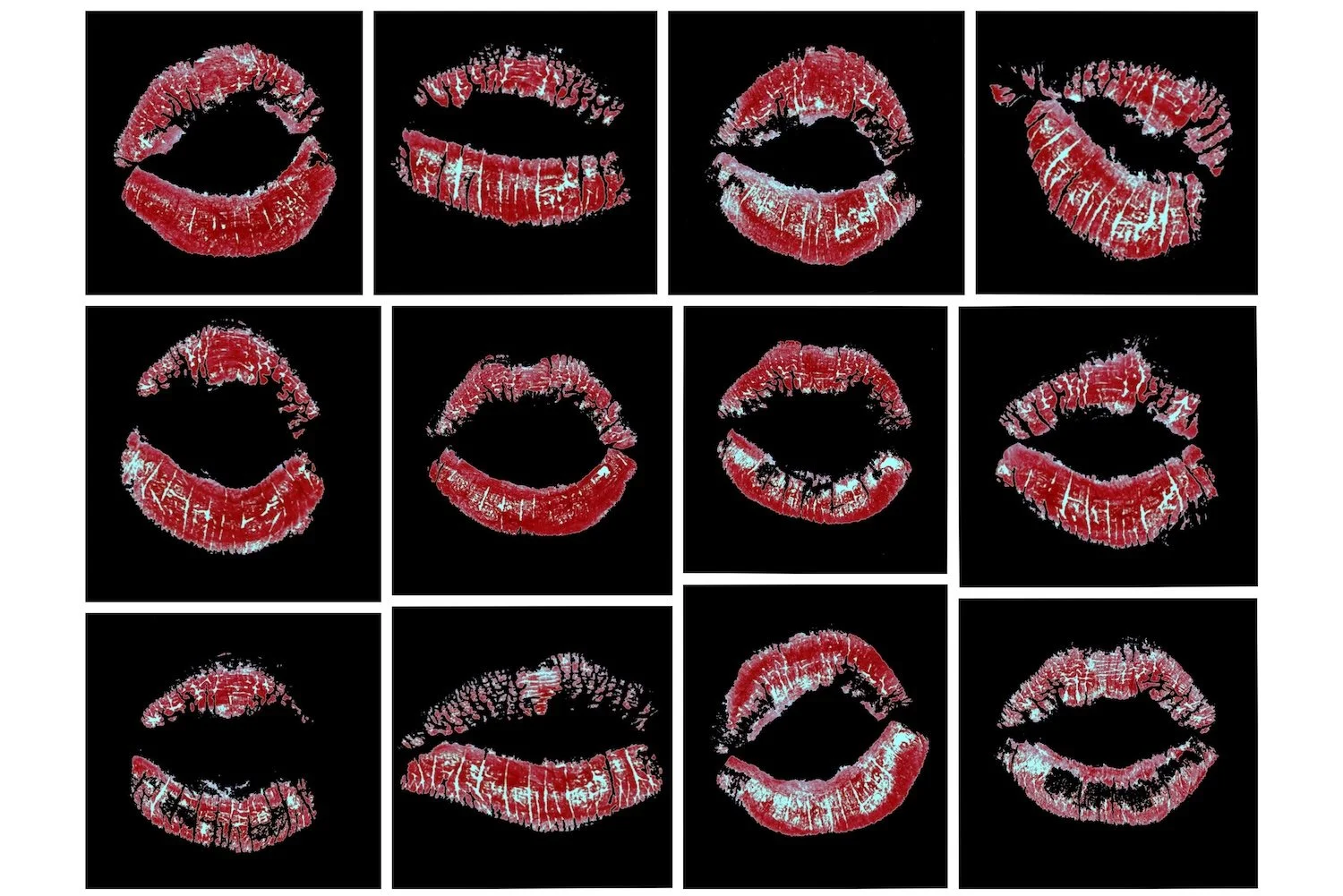

APRIL: KISSES
At some point during this journey of documenting messages of love and heartbreak, I have felt the need to bring places to life by leaving my own messages—to open up conversations about the private and the intimate. Also, to observe how public spaces become stages for the personal—to create situations for capturing not only messages, but also gestures and interactions.
Sometimes, I collect kisses
Friendly, spontaneous, fleeting, smiling kisses. Their sounds. Their traces. From this emerges a catalogue which, little by little, fills up. It also fills with stories: the first kiss or the last, the stolen kiss, the longed-for kiss, the kiss which stirs your soul, the kiss you never forget, the kiss lost in time, and so many others which become part of our own story. And with these kisses, the places, the moments, and the memories.
Perhaps, the love messages scrawled in a public space are nothing more than kisses that have not yet found their place, expressed in vain—on the walls—waiting for their moment.
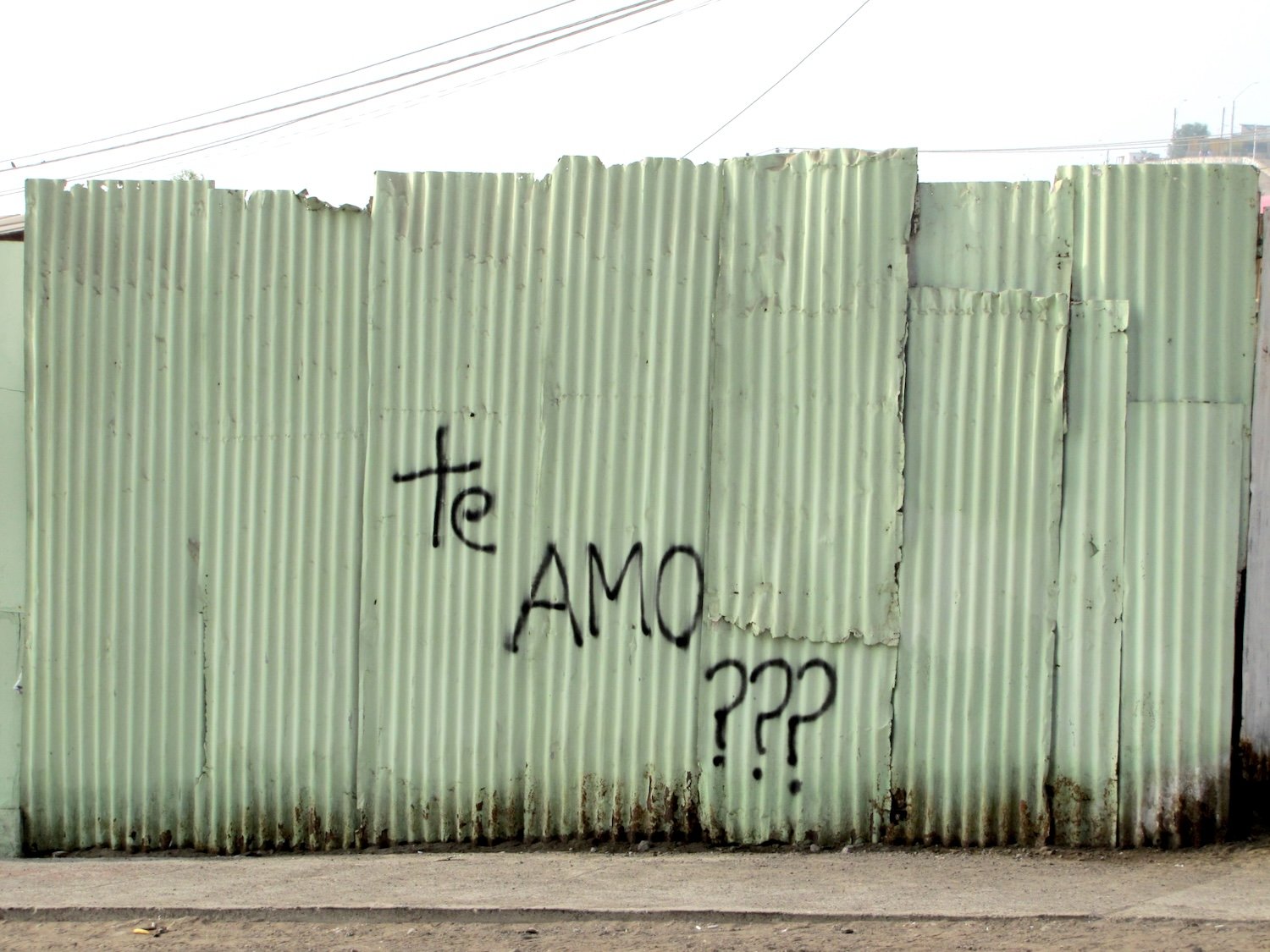
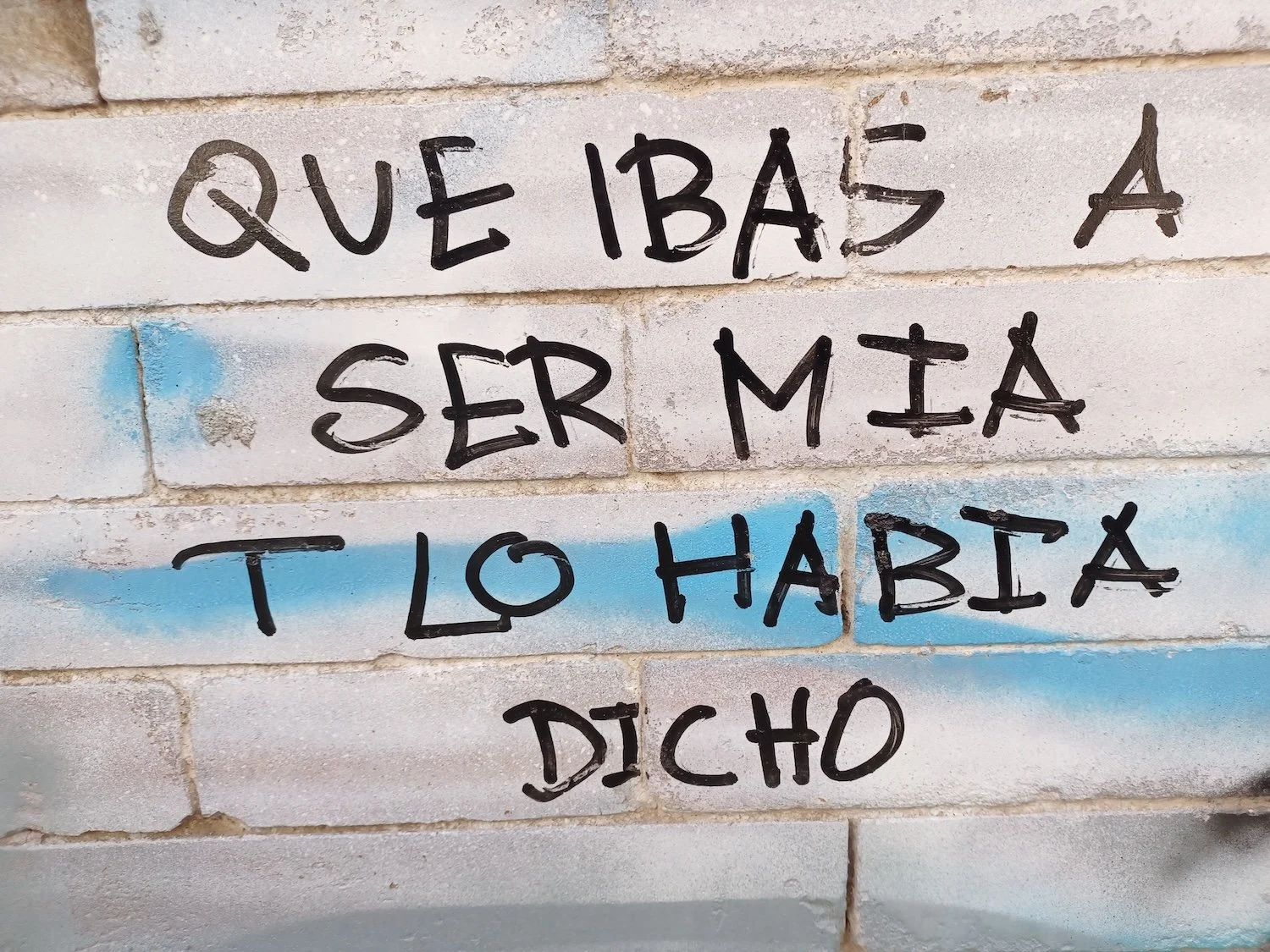
JUNE: BEYOND WORDS
In a conversation that arose during a recent collective art project, several themes emerged which I felt were worth revisiting within the Love Walls archive. This prompted me to reflect upon errors, doubts, and going beyond words.
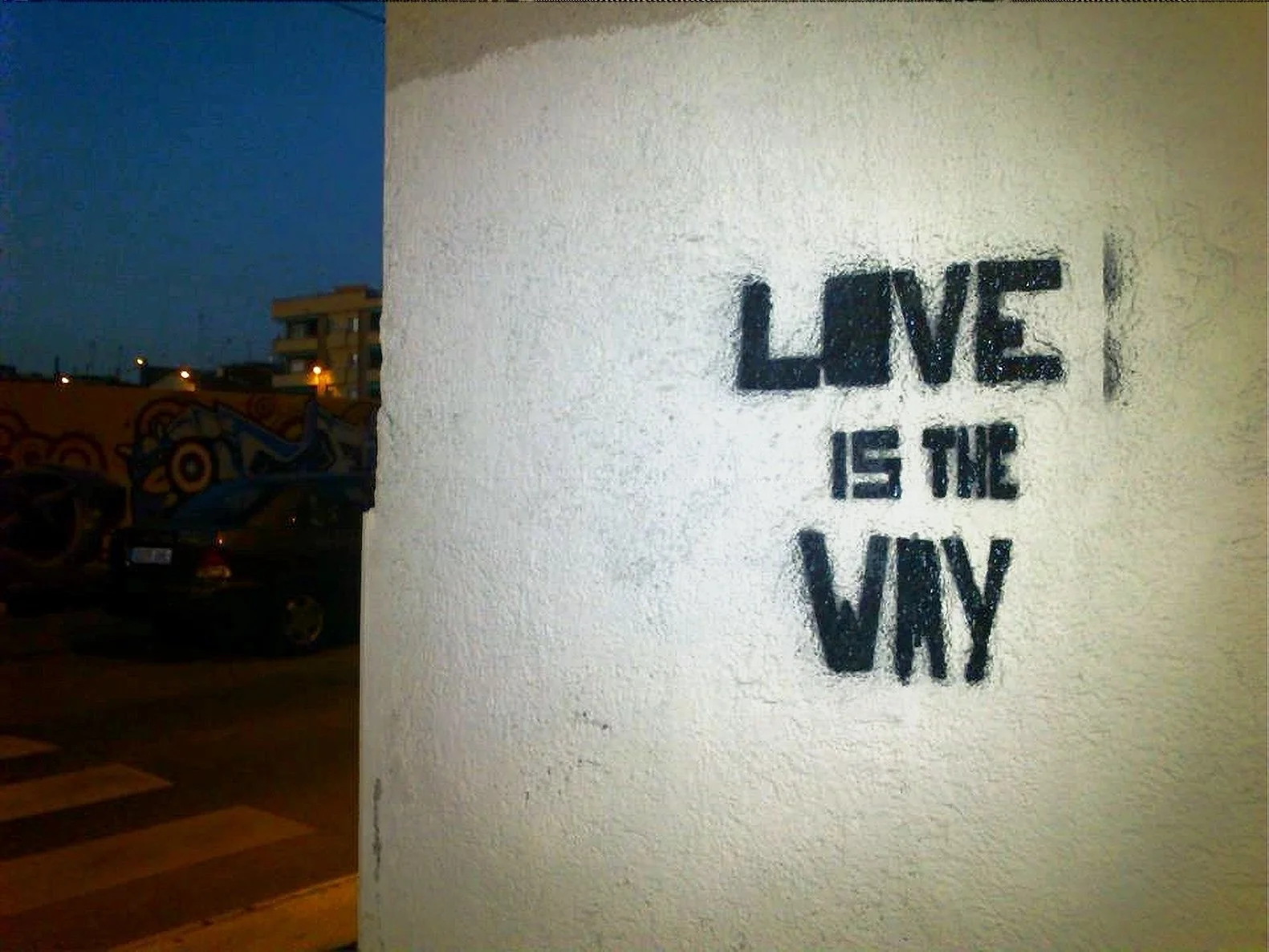
As for the messages themselves, there are simple phrases such as: I love you, I’m sorry, and forgive me. There are also messages that appeal to personal experiences—shared or otherwise—in which the other is the light, the stars, life, and eternity while, at the same time, the absence or indifference of the other is represented as chaos, silence, or darkness. There are as well more complex messages in which a movement or a smile from the other, or the arrival or the departure of the other, can provoke a myriad of sensations and emotions. There are those messages which give thanks, express wishes, grief, anger, reproach; then there are those which lurk, threaten, blame;—and even those expressing self-immolation and;—frequently—those which suggest an unhappy, and perhaps even a tragic ending.
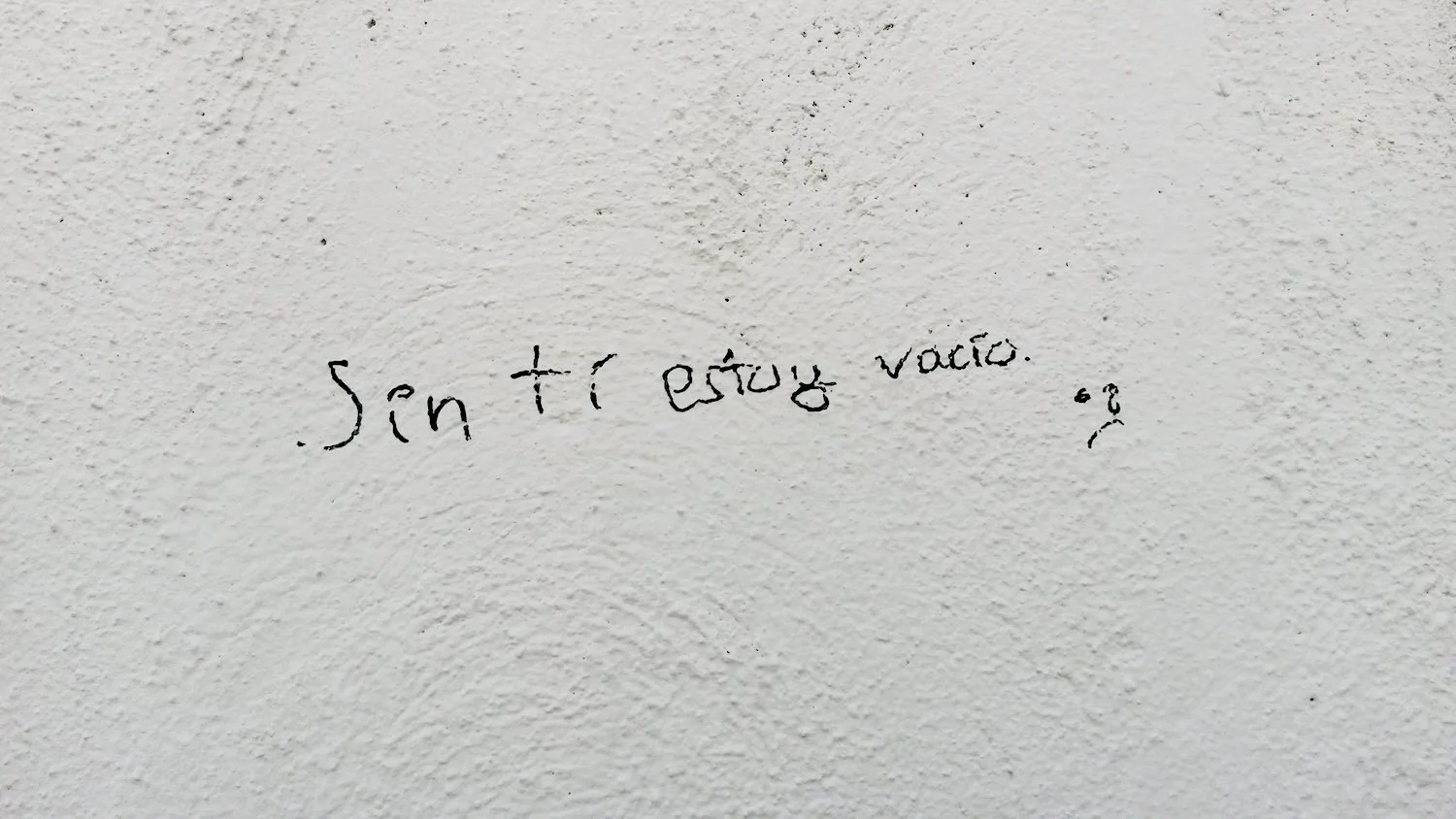
Within this whole range of brief narratives of encounters and misunderstandings, what stands out—beyond the very act of expressing a desire, affection, or personal conflict in a public space or on street furniture—is the amount of time devoted to writing them. On the one hand, we have messages written in great detail: long declarations of love, more or less poetic; colourful texts with hearts drawn in them; repetitions of names and dates in different sizes and designs—all of them demanding attention and designed to make passers-by stop and read them. Conversely, other messages appear written in small letters, hidden, brief, shaky, as if written in fear of being discovered. The latter are particularly difficult to spot, though it is understood that, either the object of desire passes by the site where the message is, or this act is a solitary cry released into the void.
In any case, a common thread which has emerged from a wide collection of messages from different cities is the sense of haste evident in many of them. This is particularly evident in the half-written words or spelling mistakes and, as in other messages, which have later been crossed out, revealing the passage of time. Many messages reveal actions which conflict with the primary meaning of the message sent, calling into question a relationship, a commitment, or the care and value that the writer places upon the relationship. Sometimes doubt appears to represent a message of love.
JULY
I accepted Nicolás’s invitation to take over the In the Wilderness section for several months as a challenge, a chance to look back in order to move forward, revisiting a body of research that began over 20 years ago. Over these past few months, the aim has not so much been to bring a process to a close, but rather to review its evolution, what has been learnt, what has been shared, what it has come to mean, and whether or not it is time to bind the images together—to bring the journey to an end or whether, on the contrary, we need to keep talking—to keep discovering messages of love in our daily lives.
Several years ago, during a series of meetings with women of different ages, showing the images collected here sparked a conversation about the theme of love, and its representation—as an emotion—as something that, in one way or another, unites us. The session was enjoyable, passionate, and full of memories, but it was by no means straightforward. The conclusion was somewhat disconcerting. When talking about love, it was almost always drawn from memory, from adolescence, from youth, as if those were the only times for such feelings. Those memories, mostly happy ones, came to an end once marriage occurred; there, in that matrimonial state, the feelings were different—not necessarily of lesser value or intensity—but that love no longer belonged, in some way, to the realm of emotion. From those memories of young love, the songs remained—some of them vulgar/sentimental—which seemed to have no other purpose than to represent an eternal longing for something that would never be attained.
This month, my last at In the Wilderness, three occasions have reminded me of that session with the group of women and, fortunately, the conversation has been very different.
In early June, I met with the Feminist Reading Circle at the La Yerbabuena Social Centre. The occasion was to present the Love Walls project, and from there, themes emerged relating to love, affection, care, and need, as well as to others such as obsession, vulnerability, desire, decision-making or tension, to mention a few. All of these arose from our shared experience, but also from a much broader understanding of what care and affection mean, expressed in our own words. We shared love messages, and the session ended with the feeling of having connected with those intimate dimension that gives new meaning to our everyday surroundings.
Also, last week, while watching the news about a recent music festival, I noticed that part of that ephemeral community, set up for just one day, was dedicated to coming together, making friends, and sharing expressions of self-affirmation. That the element of care and affection shines through even in something as mundane as a musical festival strikes me, on the one hand, as commendable, as it indicates a significant willingness to listen, particularly to the younger generations. On the other hand, it is a sign of a general need for affection which seems to be overlooked in times of escalating crises and uncertain futures.
To round off, today, I was chatting with a friend I haven’t seen in a long time due to circumstances and the distance between us, and it was lovely to be able to share a little chat and realise that distance and time have nothing to do with loving someone and feeling loved. She told me that, after speaking to me, she went back to work with her heart full of joy.
Having reached this point, even though not every love message I come across will receive a reply, or the reply it had sought, I believe that following them up, and sharing them is important, so that spaces for connection remain open, and conversations about affection can continue—from unexpected places—cropping up in our path at any moment, so that, as my friend Eleonora says, our hearts may overflow with happiness, something that has been in such short supply lately.
Dedicated to MariaPaz Montecinons, Eleonora Ozanne, and Mirapordonde.
Thanks to Nicolás Dumit
Nicolás: Muchas gracias, Anna, for taking us on this journey through the often overlooked love language that arises in urban spaces, as well as for for the heart-center writings and images that accompany your investigations for this virtual residency with The Salon.