A Theology of the Flesh
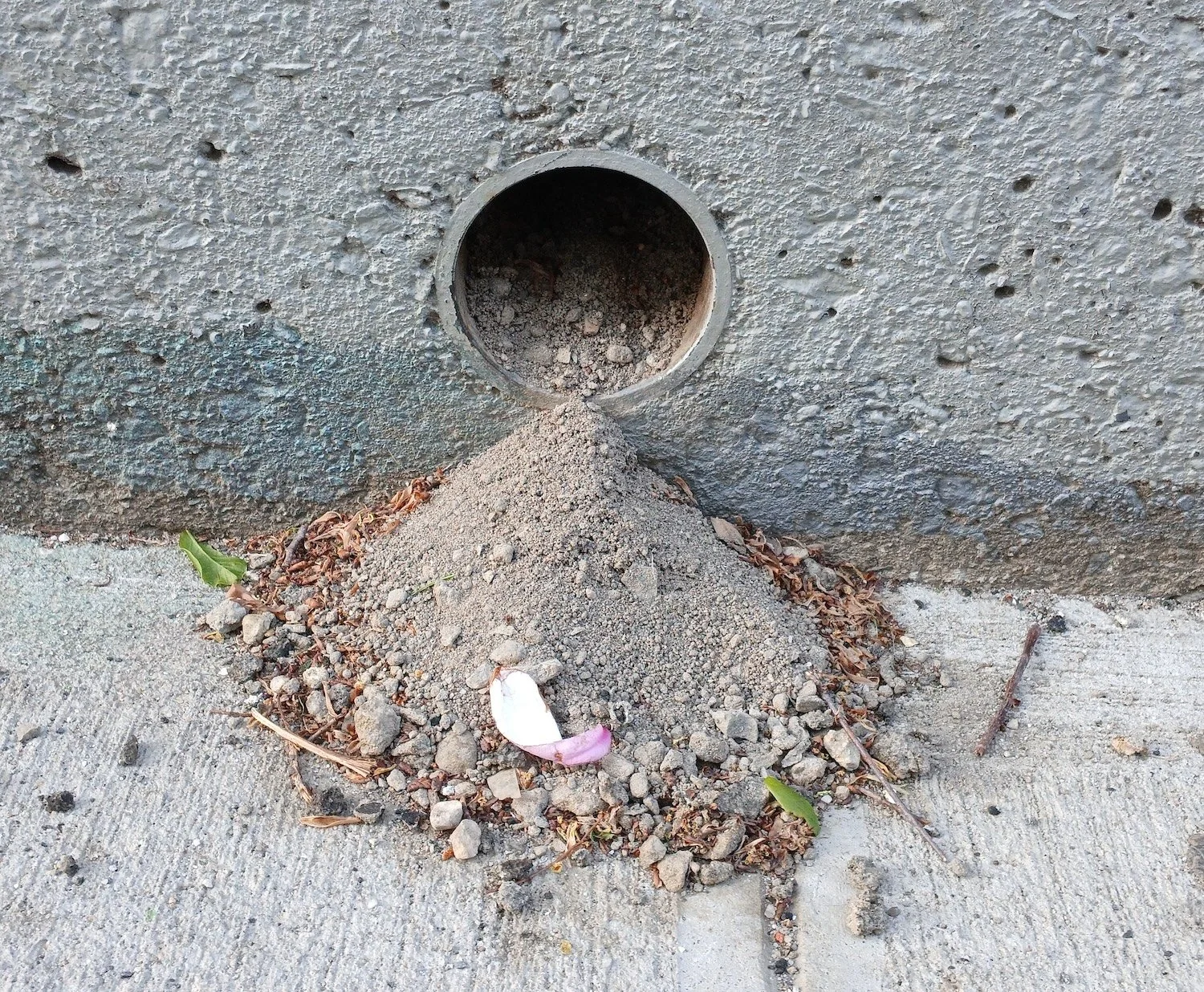
Photo: Nicolás Dumit Estévez Raful
In the realm of the senses, even sound can elicit a form. It thus must be the concept of synesthesia that has inspired my relationship to Spirit, that is, the ability to conflate several sensorial experiences into one. In engaging the unnamable/ungraspable I resort to the tactile in order to see, surrounding myself with the signs of one of the spiritualities I was raised in, Catholicism. There is the broken plaster Virgin that I keep gluing after each unintended decapitation or similar severing. With time, I have learned to listen to the parts she keeps missing, like the tip of her nose. I have some Elmer’s glue at hand for when the next repair might need to happen, which is the way my theology has been shaping through the years; in connection to collisions, impacts, and heads on. This is when visions and sounds rapidly meld with touch.
In this interview I am up for staying with each of the theological, maybe existential, questions that my teachers at Sati Center for Buddhist Studies have placed in front of me like a candle I can sit with mindfully in dialogue or that I can extinguish at will. I would like to keep the flame going for the length of this piece. My responses are not meant to represent categorical statements, and instead to make visible/audible/touchable my struggles with subjects for which there might be no responses.
Why do we suffer? Because God and I attend the same school, and there is a desperate attempt to change that which is perceived as uncomfortable. In my search for safety, I would look to forgo the sharp edges rather than learning to elucidate their messages and use their teachings to avoid further discomfort. Growing up, I developed severe allergies that would send me to the hospital. Doctors would warn me to keep an eye on how the rash would progress, actually exacerbating the condition. I would bathe with the delicate flowers of the violet bush to get a respite from the uncontrollable need to scratch. Suffering is said to be optional. However, I can see God itching under the hairshirts that life throw at the two of us. We are in this together, and when the going has gotten rough, we have shared the Benadryl cream. Do not take cold showers. Do not go out in the rain. Eat some boiled casaba root. Pray if you remember to, while your skin seems to be on fire.
What is spiritual suffering in particular? Are you asking me if I am a spirit within a body or the other way around? I do not see a distinction between the dark morning of the soul and the boil that grew on the left side of my chin as a result of the friction the Covid mask inflicted on my skin. The staff at the clinic at The Hub in the South Bronx went about their duties as angels in lab coats. They could not help me, though, and sent me to Lincoln Hospital at the height of the pandemic to have the infected abscess drained, meaning having a doctor puncture it with a sharp scalpel. They all kept talking about the scar tissue that the lesion could cause if not surgically treated. I opted for a course of strong antibiotics that would get to the core of my soul. It worked. To query me about spiritual suffering in 2020-21 and 22 was to prompt me to step on an ambo to offer a sermon on the grief that revealed no separation between flesh and more subtle realms. Many around the globe wore our inner strength as a protective cloak, and if you were willing to, you could see Spirit in plain view.
What happens between us? The skin is indeed a protective barrier and at the same time a porous membrane. I walk out into the world with this, my largest organ, in plain view, except for those parts I resign to cover with clothes. As a child of the Caribbean, I struggle in my home in New York City to abide by the weather’s demands. My impulse is to shed as many layers as possible, and that is where I find some freedom. No shoes, of course.
Between us there is only the gap that is mentally-emotionally-spiritually-politically-culturally constructed; nothing else. So, to answer what happens within that space pushes me to ponder on my understanding of interconnection. It is in that void where the deepening happens, or else you and I you remain as water bags skillfully contained by epidermis. Between us is the distance or nearness that informs how much are we willing to belong to each other and to all. No. Allergies are not contagious. The mother whose baby I hold rushes to snatch him away from my arms.
Why are we here? Why not? I squeeze down my arms to come back to my body, to this body, to the body. This is no illusion. Go ask the mother in Palestine whose child has been massacred by imperial Israel. Go ask the person crossing on foot the perilous Darien Gap to reach Amerikkka. Go have a conversation with the being seeking asylum in the US and raped by an unscrupulous coyote. You can go ask the bear caged for the purpose of getting his bile harvested. The chickens forced to lay eggs while sleep-deprived by the glare of constant florescent lights so that so-called humans can have sunny side up cheaply. I refuse to concede that none of this is real and to dispatch to the outhouse the nonsense of new age manifesting and the law of attraction. No theology to me can explain all of this suffering, or whether or not suffering is a choice. I am certainly not here in the role of the sufferer. I am here because I might be part of this unfolding that many call God, and therefore because God and I are in this business as one, with its many shortcomings. I am the eyes, ears, tongue, feet, and the tender skin of a God that in some of us receives mosquito bites and becomes uneven with ailments, and wrinkled with time.
What is a guiding light? The Sun. The Moon. The Stars. An ethically sourced candle would do. I can’t pray under a nervous florescent tube. TV projections in a sacred space get under my skin. This leaves me dealing with the regressive politics embedded in a compelling orthodox ritual or opting for its more horizontal counterpart with whatever disturbing lighting is available. The staged darkness can be mesmerizing and I must keep my eyes open to any oppressive systems. Light and dark are complex concepts that require being peeled like an onion, layer by layer. The guiding light could well be a misguiding sign pointing with its intensity into my eyes to the point where I cannot see where I am going. Darkness can be a soothing field, a postponed encounter with the substrata I tread superficially– but that is asking me to dig into its bedrock. Plus, light makes shadow, because one is connected to the other beyond theological binaries, opening a doorway into Jungian psychology. In the dark, I rest while seeds germinate and skin is composted into Earth. The blisters that appear on my back and shoulders are the result of an overexposure to the sun’s rays. I have learned to bathe in the Caribbean Atlantic before 9 AM and after 6 PM. Nausea, and chills are the echo of my excessive time under the day star. I balance this by sitting under the foliage of a beach almond tree boasting its reddish fruit. Good luck with breaking into one of its pits.
What happens when we die? I continue participating in the process of becoming. Reincarnation makes complete sense to me from a materialistic perspective–even when I have trouble comprehending its theological core. Simply said, nothings remain a constant and all is always undergoing transformation. I was once an alley cat and will, in time, become a tabby. I too was way back a prickly nopal in Austin, an unruly wave in the Pacific, a slithering snake in Joshua Tree, a damp clay jar in Morelia, my mother’s mother and that one being I try not to hate with such intensity. Do I need to say his name? Let’s say, neither he nor I learned the lesson. He with his hatred for others and I with my contempt for him. Death is not a sudden occurrence. It is not an emergency. Let the dead one once fully dead catch up some respite from life. I am dying every time my eyelashes blink to mark what is thought of as time. One more death. One more breath. I imagine the flaking skin of the man in the room I peeked into at Montefiore Hospital in the North Bronx turning into an apple. I am stopped in my tracks by his sight. MetroCard in hand, he scrapes the dried film covering his arms and legs, minuscule particles showering the otherwise spotless floor.
What teachings inspire you? Earth, may I be your pupil. Not being keen on canonical sources, I rely on guidance from the being of which I am made. I am to sit in the classroom of mountains and valleys to hear the messages of rivers and the secrets of the stones. In my search for transcendence, I have been sent to walk the path of immanence, and gather the ancient prayers inscribed on the leaves of trees. Palm fronds are in particular difficult to decipher, since the lines written on them translate into spontaneous praises to the wind. What am I to do with the holy books so zealously guarded by fundamentalists? All is out in the open for anyone to see, touch, taste, listen, intuit, roll over it—like the wet sands just licked by salty waters. The meaning of parables and koans arise for me from the muck, with each foot I lift up from the sensual ground. Thich Nhat Hanh could come across Clouds in Each Paper because, “If you are a poet, you will see clearly that there is a cloud floating in this sheet of paper. Without a cloud, there will be no rain; without rain, the trees cannot grow: and without trees, we cannot make paper. The cloud is essential for the paper to exist. If the cloud is not here, the sheet of paper cannot be here either. So we can say that the cloud and the paper inter-are.” [1] “The blotches are not bruises,” I explain. They are the result from ingesting iron pills. Is that another allergy or an organic conversation, a disagreement, between body and Earth? I study both of them as I would the text in a divinely revealed scroll.
What doctrine of my faith tradition am I using? Doctrine is often employed to subjugate, keep others out of touch from who they are called to be, to maintain structures that are harmful to many, and to condone the misuse of power. The chalk religious icon in my story, the broken one, the Madonna I have been patching together for years, is the antithesis of a theology that has equated women to material goods, an object that must remain mint until purchased. No patina can hide the travails of the Madonna in my home. No plastic–plaster–surgery is supposed to conceal her troubled passage through life. Bought for a dollar at a flea market, the icon who lives with me is free to be herself as she is, blemished, prayed for, as well as revered. Forgotten for weeks at a time, then suddenly remembered. Dusted. Swiftly. Offered all my attention when the going gets rough. The Madonna is the subject of sexist doctrine in the case of Christianity; the subject of an awareness of impermanence in my case. The chipped plaster; my wrinkled skin. She comes to my encounter, getting up from her hospital bed. I am only 18 and already in medical school. This is the age of acne and blackheads. I feel an embrace slightly padded by the white doctor’s coat I wear. Her body full of lumps–all over. Unsure what to do, I surrender to my patient’s demonstration of affection at a public hospital in the Caribbean archipelago.
What shapes my thinking and understanding about spiritual care? Presence. Can I be with the suffering of others without wanting to change it? How far am I willing to stay with those in acute distress? What is it that I cannot face within me that can prompt me to run away at the sight of an emotional wound? Is it possible to witness the pain of others without succumbing to it? I was still in my teens when I approached a man in a hospital room about his medical condition. The assignment given to me was to go through his records and learn from the case. No training on compassion was shared with me prior to this. It was as if I/we were thrown together into this encounter, matter of fact. Patient and the wannabe physician. Asked why he was hospitalized the man dropped his pants—his penis—what little remained of it, eaten by syphilis. Not knowing how to respond, the other student accompanying me on the rounds broke into almost uncontrollable laugher. I stood face to face with the man in silence. Although it is for sure too late to go back to his room after 40 plus years, this sight continues to haunt me unexpectedly. I see him more clearly now than then.
What religious teachings inform or influence my spiritual caregiving? I had a person asked me if I was religious or spiritual. “Both,” I replied to her astonishment. I am aware that there was some shock valued involved in my answer, and thinking in retrospect I could not care less what she thought of me. Religious, I imagine brought her images of a pious person kneeling when praying, or beating his heart in his search for atonement. Spiritual would have been a more sophisticated disclosure. It probably meant that I was not in alignment with orthodoxies supporting all kinds of isms, and that I was progressive enough not to discuss crosses, Rosaries and bleeding saints’ wounds. But once a Catholic…as the saying goes, I could not see the world otherwise. But then I had to explain a system so thoroughly emmeshed in male hierarchy, sexual abuse, homophobia, and misogyny. The best way I can explain myself without attempting to apologize for the institution is that so much of the rituals I need are there, and that access to them can be a trial. Many of them have been misguided, misused, held hostage. I must hence sit with this holy mess, as I contemplate the spiritual caregiving–secular or interfaith oriented–I may be able to extend to others from my own ethical struggles. It could be that care partnership rather than caregiving would provide the space for an honest conversation. During the Christmas Mass, a sculpture of a cute baby Jesus is circulated for those in attendance to kiss. After the Covid pandemic, I am still contending with the memory of the virus. Even Jesus’ young skin can spell trouble during such periods of collective devastation and menacing microorganisms luring under the pink patina that colors the flesh of the dark Middle Eastern radical.
What directs my thinking and actions from the dharma? Gratitude. Looking back into the challenging paths I have taken I am increasingly aware of all those who have been sending me forward. This includes from teachers to elders and from family members to neighbors. Gratitude moves me into lovingkindness, into wishing everyone who has helped me or harmed me that they may be spared as much as possible from suffering and pain, that they prosper doing work what supports our planet, and that they enjoy moments of ease and happiness. In this regard, the dharma’s teachings are interconnected. I cannot sincerely extend lovingkindness to someone I cannot relate to compassionately. Note that I am using here the Buddhist term dharma to refer to teachings, yet I do not think of gratitude, compassion or lovingkindness as the exclusive domain of this spirituality or to “humanity.” They do have their counterparts in other religions and apply to all beings seen and unseen. An example of this is Saint Francis of Assisi’s vision of all creatures as kin; part of the divine family–a planetary awareness of consciousness and oneness that relates to Thich Nhat Hanh being able to spot Clouds in Each Paper.[2] The skin is the embodiment of an oxymoron. It acts as a protective barrier that keeps many pathogens and infections at bay. It is also porous, meaning that it allows for the inside and outside to be in dialogue. I rely on compassion not to make me turn away from the man sitting on the sidewalk on the main street in the Caribbean city where my family lives. His wounds out in the open for all to see the most careless systems in power, from colonialism to imperialism. Who can afford medical care? How have extractive policies put into place by oppressive nations go as far as to affect the most vulnerable around the globe? I can look straight at the store window neatly decorated or I can dive into a suffering that does not have many channels to be assuaged, and which is therefore not optional but imposed upon.
What is liberation? Awareness of the oneness. Liberation is a relational process that sheds light into the most intricate connections between beings, no exception to this. Rocks and glaciers included. Is it possible? Yes, and to the same extent that the Bodhisattva’s vision can come to be realized. No one is to be left behind in the pursuit of enlightenment, because my enlightenment is inextricable from that of all others. Liberation is both utopian in nature and completely possible to bring about, inasmuch as I am committed to dismantling narratives deluding mind and heart with pseudo spiritual projects hinting at capitalist do-it-yourself kits on individual salvation, coveting a seat in an exclusive heaven, and securing a personal line to the divine. This is not to discard inner movements toward consciousness, and so to expand the range of spiritual vision. That also includes an engagement with social justice, because my spirit has been sacredly clad in skin.
I saw the Madonna in my room out in the streets lined by palm trees. She was asking for money at a traffic intersection in the Dominican Republic. Her nose was gone. I turned to my friend Arelis driving me through the rush hour jam. She read my thoughts, providing answers before I would ask any questions. “Some think she lost her nose by doing cocaine. I do not believe so.” I do not remember if Arelis lowered her window to hand her some money. I want to think she did. Charity for sure does not solve this systemic issue. It does not get to its roots. Arelis and I only had a bit of time to be with this suffering instead of deliberating on the ramifications of resource disparity, and Spirit became flesh.
[1]. Thich Nhat Hanh, “Clouds in Each Paper,” Awakin.org, accessed April 24, 2026, https://www.awakin.org/v2/read/view.php?tid=222.
[2]. Thich Nhat Hanh, “Clouds in Each Paper,” Awakin.org, accessed April 24, 2026, https://www.awakin.org/v2/read/view.php?tid=222.
A Theology of the Flesh ©2026 Nicolás Dumit Estévez Raful
To return to Out There main menu, click HERE